
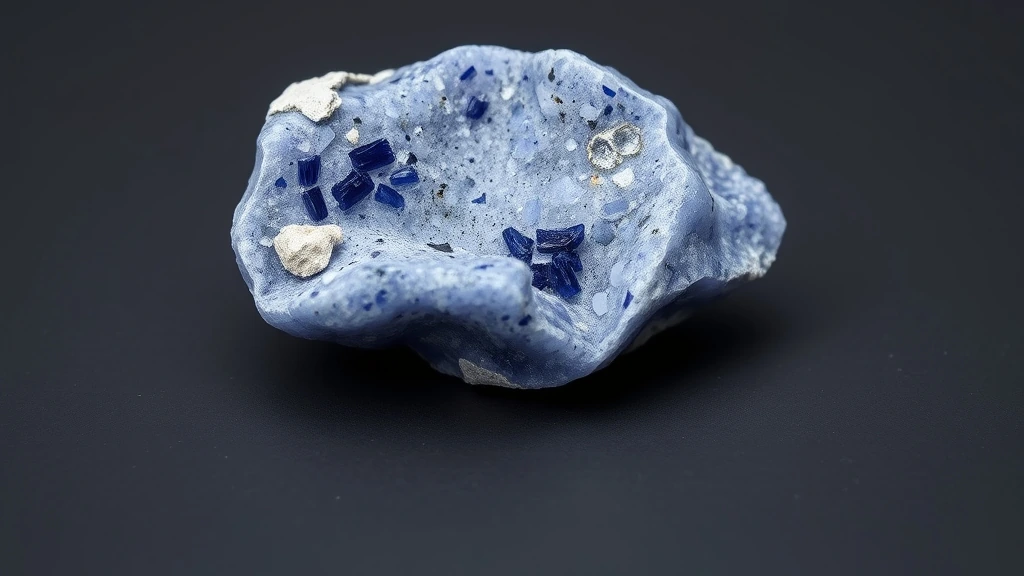
Blueberry Fluorite belongs to the halide mineral family, whose members are defined by simple anionic complexes of halogen ions with metal cations. As a member of the isometric (cubic) crystal system, it forms well‑developed cubes and octahedra that can exhibit perfect cleavage on four directions. Its vivid coloration arises from trace rare‑earth activators that create color‑center defects, while its density of 3.175–3.20 g/cm³ reflects the compact packing of calcium and fluoride ions in a face‑centered cubic lattice.
What is Blueberry Fluorite? Geological Overview & Definition
Blueberry Fluorite is a hydrothermal mineral that precipitates in veins, cavities, and fissures within limestone, marble, and volcanic rocks. The mineral’s formation requires low‑temperature fluids rich in calcium and fluorine, often associated with lead‑zinc ore deposits.
Across ancient lapidary traditions, the deep blue‑violet shade has been linked to mental clarity and spiritual insight, prompting its use in ornamental carvings and amulets. Modern collectors value the stone for its strong fluorescence under ultraviolet light, which accentuates the berry‑colored zones. Similarly, the silky, multicolored bands of Silk Fluorite are prized for their calming energy and complementary fluorescence, making them a harmonious counterpart to the blueberry hues.
Blueberry Fluorite Chemical Composition & Crystallographic Properties
The fundamental chemistry of blueberry fluorite is calcium fluoride (CaF₂), a simple binary halide where each calcium cation is surrounded by eight fluoride anions in a cubic arrangement. The crystal lattice belongs to the isometric (cubic) system, producing characteristic cubes, octahedra, and occasionally dodecahedra. In comparative mineralogical collections, practitioners and geologists frequently study Rainbow Fluorite alongside this crystal to appreciate their subtle energetic and structural differences.
Color in blueberry fluorite is not due to a distinct impurity but to color‑center defects created when trace rare‑earth ions (such as europium or yttrium) replace calcium and capture electrons. These centers absorb specific wavelengths, yielding the characteristic blue‑violet hue that intensifies under UV radiation.
Fluorite is acid‑sensitive; exposure to dilute acids can dissolve the lattice, releasing calcium and fluoride ions. This reactivity underscores the need for careful cleaning and storage, especially for pieces set in jewelry.
Thermally, blueberry fluorite exhibits thermo‑chromic behavior: heating above ~200 °C can bleach the color by annealing the color centers, while rapid cooling may restore some hue. This reversible change is a diagnostic property used by gemologists to confirm authenticity.
| Property | Specification |
|---|---|
| Mineral Group | Halides (Calcium Fluoride) |
| Chemical Formula | CaF₂ (Calcium Fluoride) |
| Mohs Hardness | 4.0 |
| Crystal System | Isometric / Cubic (Cubic and octahedral crystals) |
| Specific Gravity (Density) | 3.175 – 3.20 |
| Refractive Index | 1.433 – 1.435 |
| Color & Optical Properties | Natural Blueberry Fluorite color spectrum and optical dispersion |
| Primary Mining Localities | China, United Kingdom (Derbyshire), Mexico, Germany, USA |
| Water & Chemical Resistance | Moderate (Brief lukewarm water contact is safe; avoid hot water and acids) |
| Chakra Alignment (Traditional) | Third Eye Chakra and Crown Chakra |
| Zodiac Affinity (Traditional) | Capricorn, Pisces, Aquarius |
| Symbolic Meaning (Traditional) | Mental order, focus, auric cleansing, and learning facilitation |
Blueberry Fluorite Varieties & Color Spectrum
Blueberry Fluorite displays distinct mineralogical characteristics across its geological varieties and structural habits. Gemologists evaluate these natural varieties based on crystal habit, trace chromophore concentrations, and visual luster.
Primary Natural Blueberry Fluorite
The benchmark natural variety exhibiting diagnostic color saturation and classic crystallographic symmetry.
Distinct Geological Morphs of Blueberry Fluorite
Secondary regional and structural varieties formed under localized geological temperature and pressure conditions.
Alpine Blueberry
Formed in high‑altitude pegmatitic veins of the Alps, Alpine Blueberry fluorite crystallizes as octahedral aggregates with a vivid violet‑blue hue tinged by subtle pink undertones. Microscopic fluid inclusions of quartz and calcite create a characteristic milky veil that softens the color. This variety is prized for its rarity, as only a few dozen sizable specimens have been documented from the Swiss and Italian localities.
Chinese Blueberry
In the Hunan and Sichuan provinces, hydrothermal fluids percolate through limestone, depositing cubic fluorite crystals that display a deep indigo core surrounded by a halo of pale lavender. The presence of rare earth element traces such as yttrium imparts a faint fluorescence under UV light, a hallmark of the Chinese Blueberry. Trade markets consider it moderately scarce, with most stones sourced from small, family‑run mines that operate under strict environmental regulations.
Mexican Blueberry
The Sierra de los Tuxtlas region yields Mexican Blueberry fluorite, where carbonate‑rich host rocks foster the growth of large, tabular crystals with a striking electric‑blue center. Inclusions of zinc sulfide and minute calcite crystals generate a speckled, star‑like pattern visible under magnification. Although the deposits are relatively abundant, high‑quality, eye‑clean stones command premium prices due to their intense saturation and uniformity.
Canadian Blueberry
Northern Ontario’s granite‑bound pegmatites produce Canadian Blueberry fluorite, distinguished by a muted periwinkle tone overlaid with delicate pink striations. The mineral often contains fluid‑filled micro‑fractures that scatter light, giving the stone a subtle internal glow. This variety is considered uncommon in the global market, as extraction is limited to seasonal operations in remote, environmentally sensitive areas.
Tanzanian Blueberry
In the Katanga plateau of Tanzania, fluorite forms within metamorphic schist under low‑temperature conditions, resulting in a deep navy‑blue coloration with occasional hematite specks that add a metallic shimmer. The crystals are typically dodecahedral, and their rarity is heightened by the difficulty of accessing the steep, jungle‑covered veins. Collectors value Tanzanian Blueberry for its unique combination of color depth and mineralogical context.
Russian Blueberry
The Ural Mountains host Russian Blueberry fluorite, where alkaline igneous intrusions generate cubic crystals with a pastel blue base accented by fine, violet‑colored growth bands. Trace amounts of strontium cause a faint luminescence that is detectable in daylight. Though the region has a long mining tradition, high‑grade specimens are scarce, making this variety a sought‑after addition to curated gemstone collections.
Where is Blueberry Fluorite Found? Geological Mining & Extraction
Blueberry fluorite typically occurs in isometric crystal habit within pegmatitic veins that intersect limestone, marble, or granite host rocks. The mineral precipitates from fluorine‑rich hydrothermal fluids at temperatures between 150 °C and 300 °C, often accompanied by calcite, quartz, and barite, which together create the distinctive banded and speckled patterns prized by gem cutters.
Major extraction zones include the Alpine belt of Europe, the Hunan‑Sichuan corridor of China, the Sierra de los Tuxtlas in Mexico, and the Ural‑Katanga complexes of Russia and Tanzania. Modern mining employs selective hand‑picking and low‑impact blasting to preserve crystal integrity, followed by careful washing and sorting to separate high‑clarity, gem‑grade material from lower‑quality matrix.
Historical Significance & Cultural Lore of Blueberry Fluorite
Across ancient lapidary traditions, blue‑hued fluorite was valued for its perceived ability to clarify the mind and enhance scholarly pursuits. In Greco‑Roman texts, scholars referenced “*lazurite*” stones—likely early descriptions of fluorite—to aid in the study of astronomy and philosophy, linking the mineral to the Third Eye Chakra and intellectual focus.
In early Chinese alchemy, blueberry‑colored fluorite appeared in burial caches as a talisman for auric cleansing and learning facilitation, reflecting the stone’s association with the Crown Chakra. Vedic manuscripts similarly praised the crystal’s capacity to bring mental order, recommending its placement in study chambers to promote concentration and spiritual insight.
Modern Uses & Jewelry Applications of Blueberry Fluorite
Blueberry fluorite is prized for its vivid indigo hue and relatively soft hardness, making it ideal for lapidary cutting into cabochons that highlight its internal fluorescence. Jewelers often polish the stone to a high luster, then set it in rings, pendants, or earrings where its color can be showcased. The mineral’s cubic crystal habit also lends itself to ornamental carving, producing geometric motifs that echo its natural symmetry.
- Cabochon and faceted cuts emphasize internal fluorescence.
- Set in silver or gold to contrast the deep blue.
- Carved into decorative panels for architectural accents.
Metaphysical Properties & Traditional Meaning of Blueberry Fluorite
According to historical traditions and metaphysical lore, blueberry fluorite is believed to enhance mental clarity and support spiritual insight. Across ancient Mediterranean and Vedic lapidary lore, the stone is associated with the Third Eye Chakra, encouraging intuition and perception beyond the physical realm. In many cultures, it is also linked to the Crown Chakra, symbolizing a connection to higher consciousness and universal wisdom. The gemstone’s calming vibration is thought to soothe emotional turbulence, fostering a balanced mindset and facilitating learning.
Which Chakra and Zodiac Signs Align with Blueberry Fluorite?
Blueberry fluorite aligns with the Third Eye Chakra, the center of intuition and insight, and the Crown Chakra, the gateway to higher consciousness. These energetic centers are believed to harmonize the mind and spirit, promoting clarity and spiritual growth.
The stone’s celestial affinity is specifically tied to the zodiac signs Capricorn, Pisces, and Aquarius. These signs are associated with discipline, compassion, and visionary thinking, qualities that blueberry fluorite is said to amplify in its wearer.
How to Identify Real vs. Fake Blueberry Fluorite
Artificial imitations of blueberry fluorite often appear as dyed glass or synthetic crystals that lack the stone’s characteristic fluorescence and density. Synthetic glass may display a uniform, glassy luster, whereas natural fluorite shows subtle internal inclusions and a slightly duller surface. Dyed replicas typically exhibit a more saturated color that fades under UV light, unlike the true stone’s persistent glow.
Practical At-Home Authenticity Tests
- Temperature Test (Thermal Feel): Hold the stone in your hand; real fluorite feels noticeably cooler than synthetic glass due to its lower thermal conductivity.
- Specific Gravity & Weight Test: Compare the weight of a similarly sized sample to a known density of 3.18 g/cm³; a lighter weight suggests a glass imitation.
- Scratch & Hardness Test (Mohs Comparison): Use a steel nail (Mohs 5.5) to lightly scratch the surface; real fluorite may show a faint mark, whereas glass may scratch more easily.
- Microscopic & Loupe Inspection (Internal Inclusions): Examine the stone under a loupe; natural fluorite often contains tiny mineral inclusions or crystal growth lines, while synthetic versions appear more homogeneous.
Blueberry Fluorite Valuation Factors, Grading & Pricing
The market’s primary driver is color saturation; the vivid blue‑purple hues that mimic ripe berries command the highest premiums. Specimens displaying uniform, deep coloration without surface fading are prized for both collectors and metaphysical users. A natural, luminous luster that catches light enhances perceived value and often justifies a price jump of 20‑30 % over paler material.
Crystal size & weight (grams) is the second key metric, with larger, heavier pieces fetching exponentially higher rates. Raw, unpolished crystals are valued for their natural form, while tumbled specimens with a smooth, glassy finish attract jewelry makers and healers seeking tactile comfort. Inclusions of matrix or banding can either add character or diminish price, depending on clarity and aesthetic integration.
The third valuation pillar is ethical sourcing & locality premium, especially in markets that emphasize sustainable mining practices. Blueberry fluorite from historically documented sites in the United States or Europe often carries a provenance premium, while responsibly sourced stones that support local communities command higher bids among conscientious collectors. Transparency in extraction methods can add 10‑15 % to the final price.
How to Clean and Care for Blueberry Fluorite
Because fluorite ranks only 4 on the Mohs scale and possesses perfect cleavage, it is inherently fragile and must be handled with extreme care. Avoid any contact with water, including lukewarm rinses, as moisture can promote surface damage; instead, gently dust the stone using a completely dry, soft microfiber cloth or a camel‑hair brush. Store the specimen in a low‑humidity environment, preferably in a padded pouch or a sealed display case, to guard against accidental spills or condensation.
Never place Blueberry Fluorite in an ultrasonic cleaner; the vibrations can fracture the crystal lattice and cause loss of the prized color. Likewise, refrain from using chemical cleaners, soaps, or any abrasive polishing pads, as these can scratch the surface and diminish the natural luster that defines its market appeal.
Cleansing and Recharging Blueberry Fluorite (Energetic Care)
For energetic maintenance, a brief session of herbal smudging with sage or cedar can clear residual negative fields without exposing the stone to moisture; hold the crystal a few inches above the smoke and allow the aromatic vapors to drift over it for one to two minutes. This dry method respects the mineral’s sensitivity while restoring a sense of vibrancy in line with traditional lapidary practices.
Moonlight exposure offers a gentle, non‑thermal recharging technique; place the fluorite on a windowsill or a natural stone slab under a clear night sky for several hours, allowing lunar photons to interact with the crystal’s lattice. Alternatively, resting the stone on a clean selenite charging slab transfers subtle energetic frequencies without any physical contact, preserving both the visual brilliance and the metaphysical attributes prized by users.
Frequently Asked Questions About Blueberry Fluorite
Blueberry Fluorite displays distinct mineralogical characteristics across its geological varieties and structural habits. Gemologists evaluate these natural varieties based on crystal habit, trace chromophore concentrations, and visual luster.
Primary Natural Blueberry Fluorite
The benchmark natural variety exhibiting diagnostic color saturation and classic crystallographic symmetry.
Distinct Geological Morphs of Blueberry Fluorite
Secondary regional and structural varieties formed under localized geological temperature and pressure conditions.
What is the chemical composition of blueberry fluorite?
Blueberry fluorite is composed of calcium fluoride (CaF₂). This simple ionic compound crystallizes in the isometric system, forming characteristic cubic and octahedral crystals that give the gemstone its distinctive blue‑green hues. The purity of the calcium fluoride lattice contributes to its relatively high refractive index and vibrant color.
How durable is blueberry fluorite for everyday wear?
Blueberry fluorite has a Mohs hardness of 4, making it relatively soft and prone to scratching. Its perfect cleavage further increases fragility, so it should be protected from hard impacts and abrasive surfaces. Jewelry designers often set it in protective settings or pair it with sturdier stones to mitigate wear.
Can I wear blueberry fluorite in the shower or while swimming?
Blueberry fluorite tolerates brief contact with lukewarm water but should be removed before exposure to hot water or acidic substances. Prolonged immersion or harsh chemicals can degrade the stone’s surface, so it is best to keep it away from pools, hot tubs, and soaps containing strong acids.
Is it safe to clean blueberry fluorite with an ultrasonic bath?
Never clean blueberry fluorite in an ultrasonic bath. Its low hardness and perfect cleavage make it vulnerable to ultrasonic vibrations, which can cause fractures or surface damage. Instead, use a dry microfiber cloth or a soft brush for gentle dust removal.
What are the recommended cleaning methods for blueberry fluorite?
The safest cleaning approach is a dry microfiber cloth or a soft brush for routine dusting. Avoid any wet or chemical cleaners; if a gentle wipe is needed, use a very mild, lukewarm water solution and immediately dry the stone with a soft cloth to prevent moisture retention.
Which zodiac signs are associated with blueberry fluorite?
Blueberry fluorite is linked to Capricorn, Pisces, and Aquarius. These signs are believed to resonate with the stone’s calming energy, supporting emotional balance and intuitive insight for those born under these constellations.
Which chakras does blueberry fluorite influence?
Blueberry fluorite aligns with the Third Eye Chakra and the Crown Chakra. These energy centers are associated with higher consciousness, clarity of thought, and spiritual connection, making the stone popular among practitioners of meditation and energy healing.
Does blueberry fluorite have any special metaphysical properties?
Blueberry fluorite is reputed to enhance mental order, focus, and learning, while also aiding in aura cleansing. Its vibrant color and crystal structure are thought to stimulate intellectual clarity and support the development of disciplined thought patterns, making it a favored stone for students and scholars.