
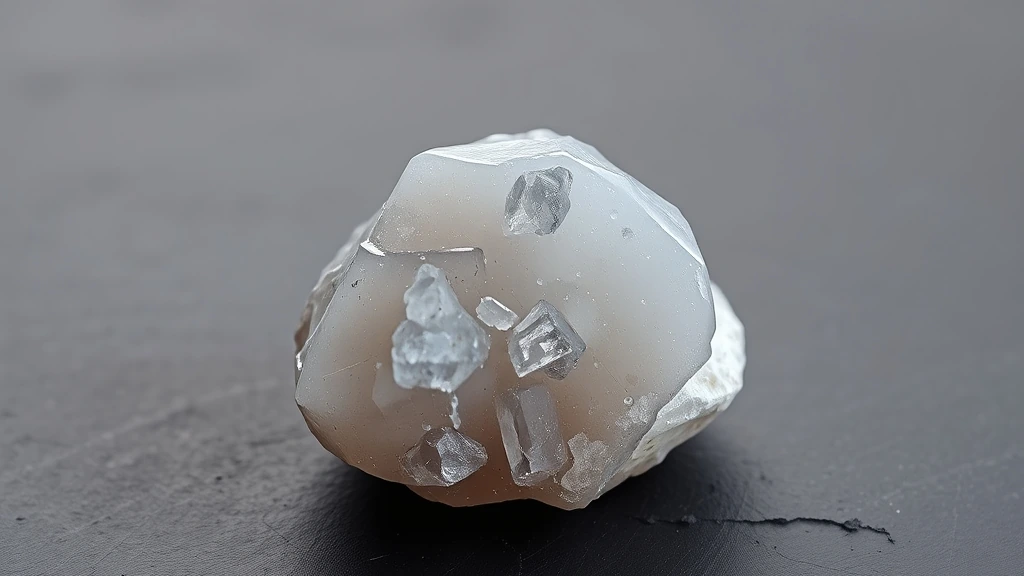
Silk fluorite belongs to the halide family, specifically the mineral fluorite, whose chemical composition is calcium fluoride (CaF₂). It crystallizes in the isometric (cubic) system, forming well‑developed cubes and octahedra that can exhibit a silky, fibrous sheen when light interacts with internal growth zones. Worldwide deposits occur in sedimentary veins, hydrothermal fissures, and metamorphic skarns, where fluorite precipitates from fluoride‑rich fluids under moderate temperatures. The stone’s delicate hardness and high refractive index (≈1.434) give it a subtle sparkle prized by collectors and metaphysical practitioners alike.
What is Silk Fluorite? Geological Overview & Definition
Silk fluorite is a gem‑quality variety of fluorite distinguished by its silky, fibrous optical effect, often described as a “silk” or “pearl” sheen. This visual phenomenon arises from microscopic parallel growths that diffract light, producing a soft, iridescent glow across the stone’s surface. The mineral is found in veins and cavities within limestone, marble, and volcanic rocks, where low‑temperature hydrothermal fluids deposit calcium fluoride crystals.
Historically, fluorite has been mined since antiquity for its use in metallurgy, optics, and decorative arts; the silk variant gained popularity in the 19th‑century European lapidary market for its unique luster. Across ancient lapidary traditions, fluorite was associated with clarity of thought and was often set into amulets intended to aid learning and mental focus. If you’re drawn to the mental clarity offered by silk fluorite, you may also appreciate the gentle, uplifting energy of Sherbet Calcite, which similarly supports focus and optimism.
Silk Fluorite Chemical Composition & Crystallographic Properties
Silk fluorite’s chemistry is pure calcium fluoride (CaF₂), a simple halide with a stoichiometric ratio of one calcium cation to two fluoride anions. The crystal lattice is a face‑centered cubic (fcc) arrangement, where each calcium ion is surrounded by eight fluoride ions, creating a highly symmetric structure that repeats in all three spatial dimensions. This is why fluorite crystals commonly appear as cubes, octahedra, or combinations such as dodecahedra. In comparative mineralogical collections, practitioners and geologists frequently study Rainbow Fluorite alongside this crystal to appreciate their subtle energetic and structural differences.
Although the ideal formula is CaF₂, trace impurities—most notably rare earth elements like yttrium or lanthanides—can substitute for calcium, generating color centers that absorb specific wavelengths and produce the silk’s pastel hues. These chromophore centers are sensitive to radiation; exposure to ultraviolet light can enhance or fade the coloration, a property exploited in laboratory fluorescence studies.
Fluorite is acid‑sensitive; dilute hydrochloric acid reacts with the fluoride lattice, releasing hydrogen fluoride gas and dissolving the crystal surface. This reactivity underscores the need for careful handling in jewelry settings, especially when cleaning or setting the stone.
Thermally, silk fluorite exhibits a modest thermal expansion coefficient and can undergo a reversible phase transition near 140 °C, where the crystal lattice slightly contracts, sometimes altering the silk sheen. Heating above 500 °C leads to decomposition, releasing calcium fluoride vapor and destroying the gemstone’s structure. These thermal behaviors are critical for lapidary processes such as annealing, which aim to stabilize the stone’s appearance without compromising its integrity.
| Property | Specification |
|---|---|
| Mineral Group | Halides (Calcium Fluoride) |
| Chemical Formula | CaF₂ (Calcium Fluoride) |
| Mohs Hardness | 4.0 |
| Crystal System | Isometric / Cubic (Cubic and octahedral crystals) |
| Specific Gravity (Density) | 3.175 – 3.20 |
| Refractive Index | 1.433 – 1.435 |
| Color & Optical Properties | Natural Silk Fluorite color spectrum and optical dispersion |
| Primary Mining Localities | China, United Kingdom (Derbyshire), Mexico, Germany, USA |
| Water & Chemical Resistance | Moderate (Brief lukewarm water contact is safe; avoid hot water and acids) |
| Chakra Alignment (Traditional) | Third Eye Chakra and Crown Chakra |
| Zodiac Affinity (Traditional) | Capricorn, Pisces, Aquarius |
| Symbolic Meaning (Traditional) | Mental order, focus, auric cleansing, and learning facilitation |
Silk Fluorite Varieties & Color Spectrum
Silk Fluorite displays distinct mineralogical characteristics across its geological varieties and structural habits. Gemologists evaluate these natural varieties based on crystal habit, trace chromophore concentrations, and visual luster.
Primary Natural Silk Fluorite
The benchmark natural variety exhibiting diagnostic color saturation and classic crystallographic symmetry.
Distinct Geological Morphs of Silk Fluorite
Secondary regional and structural varieties formed under localized geological temperature and pressure conditions.
Classic Silk Fluorite
The most celebrated form of silk fluorite displays a soft, translucent silky sheen that diffuses light across its surface. It typically forms in cubic pegmatites where slow cooling allows large, well‑formed crystals. Inclusions of fluorite twinning or minute quartz veins give it a subtle opalescent quality, making it highly prized among collectors. Its relative abundance in the United States and Canada keeps it moderately accessible, yet its lustrous appearance still commands premium prices.
Prismatic Silk Fluorite
Prismatic silk fluorite is distinguished by its elongated, needle‑like crystals that exhibit a crystalline translucency. These crystals form in high‑temperature, low‑pressure environments where calcium fluoride precipitates from hydrothermal fluids. The resulting prismatic shapes often contain fluorite‑to‑fluorite inclusions that create a striking banded effect. Though less common than the classic variety, prismatic specimens are sought after for their dramatic optical play.
Pseudomorph Silk Fluorite
Pseudomorph silk fluorite arises when a calcite or dolomite crystal is replaced by fluorite while retaining the original crystal shape. The substitution process leaves behind a delicate, lace‑like texture that enhances the material’s silky luster. These pseudomorphs are typically found in the Appalachian region of the United States, where limestone formations are rich in fluorine. Their rarity and unique morphology make them a favorite among gemologists and decorative artisans.
Fluorite‑Infused Silk Quartz
This hybrid variety consists of quartz crystals encrusted with fine filaments of silk fluorite, creating a dual‑material appearance. The quartz provides a sturdy framework while the fluorite filaments add a translucent, silvery glow. The filaments are often oriented along the quartz growth axis, producing a striking visual contrast. Such specimens are rare, primarily sourced from the Carpathian Mountains, and are prized for their artistic and scientific value.
Fluorite‑Stained Silk Amethyst
In this rare combination, amethyst crystals are stained by interstitial fluorite, producing a color‑shifted effect that ranges from deep violet to translucent lavender. The fluorite inclusions are typically filamentous and create a subtle, shimmering overlay on the amethyst. These specimens are most commonly found in the Czech Republic’s Bohemian region, where volcanic activity introduced fluorine into the quartz veins. Their scarcity and unique color palette make them highly coveted by collectors.
Silk Fluorite from the Kola Peninsula
The Kola Peninsula in Russia yields silk fluorite with a distinctive milky translucency and a faint greenish hue. The crystals form in pegmatitic veins that are rich in fluorine and trace elements, giving them a subtle iridescence. Inclusions of fluorite‑to‑fluorite twinning are common, adding to the stone’s visual complexity. Though less widely known, these specimens are prized for their unique regional characteristics and are often used in high‑end jewelry.
Where is Silk Fluorite Found? Geological Mining & Extraction
Silk fluorite is predominantly hosted in cubic pegmatites and hydrothermal veins where calcium and fluoride ions precipitate from cooling magma or circulating fluids. The mineral’s formation requires a stable, low‑temperature environment that allows large crystals to grow without significant deformation.
Major global deposits include the United States (particularly in the Appalachian and Colorado regions), Canada (Ontario and Quebec), Russia (Kola Peninsula), and Czech Republic (Bohemian Basin). Extraction typically involves open‑pit or underground mining followed by careful hand‑sorting to preserve the delicate crystal structures.
Historical Significance & Cultural Lore of Silk Fluorite
Across ancient Greco‑Roman lapidary traditions, fluorite was prized for its vibrant colors and used in ornamental mosaics and jewelry. Archaeological finds from Roman villas in Italy reveal small, polished fluorite beads that were believed to enhance mental clarity.
In Egyptian funerary contexts, fluorite was occasionally incorporated into amulets and burial goods, reflecting its perceived protective qualities. Chinese artisans of the Han dynasty also valued fluorite for its translucency, incorporating it into jade‑like decorative pieces. These historical uses underscore the mineral’s enduring appeal across diverse cultures, affirming its role as both a decorative and metaphysical symbol.
Modern Uses & Jewelry Applications of Silk Fluorite
Silk fluorite is primarily valued for its unique internal inclusions, which lapidaries exploit to create visually striking cabochon cuts that emphasize the silky texture. Because the mineral possesses a relatively low Mohs hardness of 4.0, it is rarely faceted for high-wear rings but excels in protective settings for pendants and earrings. Artisans often select specimens with distinct, parallel needle-like inclusions to maximize the visual depth and iridescence of the final piece.
- Cabochon Polishing: Smooth, domed surfaces are preferred to showcase the internal “silk” without risking fracture during complex faceting.
- Ornamental Carving: Skilled carvers use the mineral for small figurines and decorative objects, taking advantage of its ease of workability.
- Protective Settings: Jewelry designers typically use bezel or channel settings to shield the softer stone from accidental impacts.
- Display Pieces: Large, uncut crystals are often mounted as desk ornaments to highlight their natural cubic or octahedral geometry.
Metaphysical Properties & Traditional Meaning of Silk Fluorite
According to historical traditions and metaphysical lore, silk fluorite is revered for its capacity to promote mental order and deep concentration. Practitioners believe the stone’s internal structure mirrors the mind’s need for organized thought, aiding in the retention of complex information. In ancient Mediterranean lapidary practices, fluorite was associated with clarity of vision, both literal and spiritual, serving as a tool for introspection.
The mineral is also traditionally linked to auric cleansing, where it is said to remove stagnant energy from the body’s energy field. This attribute makes it a popular choice for meditation practitioners seeking to enhance their learning facilitation and spiritual awareness. The gentle, soothing energy of the stone is thought to bridge the gap between conscious thought and higher intuition.
Which Chakra and Zodiac Signs Align with Silk Fluorite?
In esoteric systems, silk fluorite is specifically aligned with the Third Eye Chakra, which governs intuition and inner vision. It also resonates strongly with the Crown Chakra, the center of spiritual connection and higher consciousness. This dual alignment suggests the stone aids in connecting personal insight with universal wisdom, fostering a state of heightened awareness.
Astrologically, the mineral is traditionally associated with Capricorn, Pisces, and Aquarius. These zodiac signs are believed to benefit from the stone’s stabilizing and clarifying properties. Capricorns may use it for disciplined focus, while Pisces and Aquarians might leverage its intuitive and intellectual energies for creative and spiritual growth.
How to Identify Real vs. Fake Silk Fluorite
Artificial imitations of silk fluorite are common, often crafted from synthetic glass or dyed quartz to mimic the stone’s distinctive internal patterns. These replicas may feature artificially induced inclusions or surface treatments designed to replicate the natural “silk” effect. Understanding the physical properties of genuine fluorite is essential for distinguishing it from these manufactured alternatives.
Practical At-Home Authenticity Tests
- Temperature Test (Thermal Feel): Genuine fluorite feels distinctly cool to the touch when first held, a property known as thermal conductivity. Glass imitations may also feel cool initially but warm up faster than the natural mineral.
- Specific Gravity & Weight Test: With a density of 3.175 – 3.20, real fluorite feels heavier than its size suggests. Glass imitations often have a different specific gravity, making them feel either lighter or disproportionately heavy.
- Scratch & Hardness Test (Mohs Comparison): Fluorite has a Mohs hardness of 4.0, meaning it can be scratched by a steel knife (hardness 5.5) but will scratch glass (hardness 5.0) only with difficulty. Synthetic glass is generally harder and will not scratch easily with a steel knife.
- Microscopic & Loupe Inspection (Internal Inclusions): Under a 10x loupe, genuine silk fluorite displays natural, irregular needle-like inclusions. Imitations often show trapped bubbles, swirls, or perfectly uniform patterns that lack the organic randomness of natural crystal growth.
Silk Fluorite Valuation Factors, Grading & Pricing
Market value hinges primarily on Color Saturation, where deep, uniform violet hues command the highest premiums. Stones exhibiting intense, even coloration without zoning or pale patches are considered top-grade specimens. The natural luster should appear vitreous and bright, enhancing the visual impact of the internal silk inclusions.
Crystal Size & Weight (Grams) directly influences pricing, with larger, well-formed specimens fetching higher rates per gram. Raw crystals are valued for their geometric integrity, while tumbled stones are graded by the smoothness of their polish. Natural matrix inclusions, such as quartz or calcite, can either enhance or detract from value depending on aesthetic preference.
Ethical Sourcing & Locality Premium significantly affects demand in both holistic and collector markets. Provenance from renowned sites like China or Germany adds a distinct premium to the final price. Buyers increasingly prioritize documentation that confirms responsible mining practices and transparent supply chain origins.
How to Clean and Care for Silk Fluorite
Due to its Mohs hardness of 4.0 and perfect octahedral cleavage, silk fluorite is physically fragile and prone to chipping. You must never place this mineral in ultrasonic cleaners, as the high-frequency vibrations will shatter the crystal structure. Avoid abrasive materials that could scratch the surface or expose the delicate internal silk fibers.
For routine maintenance, gently dust the specimen using a completely dry, soft microfiber cloth or a camel-hair brush. Brief contact with lukewarm water is acceptable for stubborn dirt, but you must avoid hot water and acidic substances. Always dry the stone immediately after any necessary water exposure to prevent potential surface degradation.
Cleansing and Recharging Silk Fluorite (Energetic Care)
Holistic practitioners often recommend herbal smudging with sage or palo santo to clear perceived energetic stagnation. This dry method avoids any risk of moisture damage or thermal shock to the crystal lattice. The gentle smoke is believed to purify the stone’s vibrational field without physical contact.
Alternatively, resting the stone on a selenite charging slab overnight under moonlight is a popular recharging technique. This approach leverages the selenite’s natural energetic properties to restore the fluorite’s balance. Ensure the stone is in a secure, low-traffic area to prevent accidental drops or physical impact.
Frequently Asked Questions About Silk Fluorite
Silk Fluorite displays distinct mineralogical characteristics across its geological varieties and structural habits. Gemologists evaluate these natural varieties based on crystal habit, trace chromophore concentrations, and visual luster.
Primary Natural Silk Fluorite
The benchmark natural variety exhibiting diagnostic color saturation and classic crystallographic symmetry.
Distinct Geological Morphs of Silk Fluorite
Secondary regional and structural varieties formed under localized geological temperature and pressure conditions.
Is Silk Fluorite safe to wear in the shower?
Brief lukewarm water contact is safe, but avoid hot water and acids. Silk Fluorite’s moderate water resistance means it can tolerate short exposures to cool or room‑temperature water. However, prolonged soaking or exposure to hot water can cause surface etching, and acidic soaps may dissolve the crystal’s surface, so it is best kept dry during showers.
How should I clean Silk Fluorite to avoid damage?
Use a dry microfiber cloth or a soft brush for dusting; never use ultrasonic cleaners. The mineral’s low Mohs hardness of 4 and perfect cleavage make it fragile. Mechanical vibrations from ultrasonic baths can fracture the crystal, so gentle hand‑cleaning is the safest method to preserve its clarity and structural integrity.
Can I expose Silk Fluorite to sunlight for extended periods?
Short, indirect sunlight is fine, but prolonged direct exposure can fade colors. Silk Fluorite’s vibrant hues are sensitive to UV radiation; extended sun exposure may cause color loss or surface weathering. Store the stone in a cool, shaded place when not in use to maintain its brilliance.
What are the zodiac signs associated with Silk Fluorite?
Capricorn, Pisces, and Aquarius are the aligned zodiac signs. These signs are traditionally linked to the stone’s energetic qualities, such as mental clarity and focus, which resonate with the disciplined nature of Capricorn, the intuitive depth of Pisces, and the visionary spirit of Aquarius.
Which chakras does Silk Fluorite correspond to?
It aligns with the Third Eye Chakra and Crown Chakra. These chakras govern intuition, insight, and higher consciousness, and Silk Fluorite is believed to enhance mental order, focus, and spiritual awareness through its crystal energy.
Does Silk Fluorite dissolve in water or acids?
It is moderately water‑resistant but dissolves in acidic solutions. While brief contact with lukewarm water is safe, acids such as vinegar or lemon juice will etch or dissolve the crystal’s surface, so avoid exposing Silk Fluorite to any acidic environment.
Is Silk Fluorite suitable for jewelry that will be exposed to sweat?
Yes, but it should be removed before prolonged sweat exposure. Sweat contains mild acids that can gradually erode the crystal’s surface. Removing the stone during intense physical activity or when sweating heavily helps preserve its clarity and structural integrity.
Can I use Silk Fluorite in a humid environment?
Moderate humidity is acceptable, but avoid high moisture levels. The stone’s moderate water resistance means it can tolerate everyday humidity, but prolonged exposure to damp or humid conditions may encourage surface etching or mineral growth, so keep it in a dry, well‑ventilated area.