
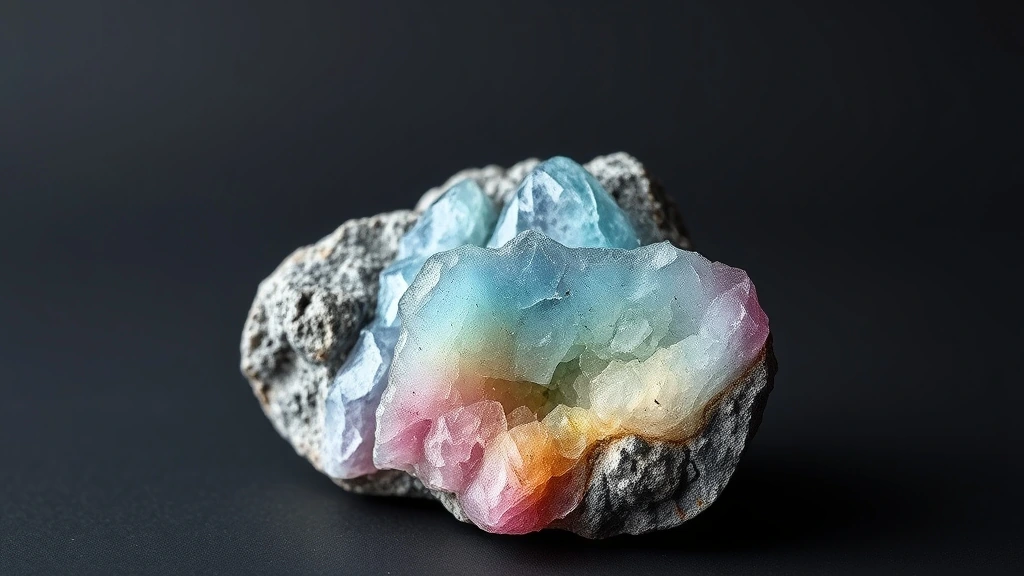
Rainbow fluorite belongs to the halide family, the Calcium Fluoride subgroup, and crystallizes exclusively in the isometric (cubic) system. Its habit ranges from well‑formed cubes and octahedra to massive aggregates that display the characteristic “rainbow” zoning caused by internal color centers. The mineral’s density (≈3.18 g/cm³) and low refractive index (≈1.434) further distinguish it among decorative gemstones.
What is Rainbow Fluorite? Geological Overview & Definition
Rainbow fluorite is a halide mineral composed of calcium and fluorine, forming in hydrothermal veins, limestone caverns, and sedimentary basins worldwide. The vivid multicolored zones arise from radiation‑induced color centers that trap electrons, producing the famed spectral display.
In ancient lapidary traditions, the stone was valued for its purported ability to clarify the mind and balance the Third Eye and Crown chakras, a belief reflected in its modern metaphysical attributions. Its rarity in high‑quality, transparent specimens makes it a collector’s favorite across cultures. Similarly, Silk Fluorite, with its soft, silky luster and subtle banding, is prized for enhancing mental clarity and supporting the same Third Eye and Crown chakra work celebrated in rainbow fluorite.
Rainbow Fluorite Chemical Composition & Crystallographic Properties
The mineral’s formula, CaF₂, reflects a simple ionic lattice where calcium cations occupy cubic sites surrounded by fluoride anions. This arrangement yields a face‑centered cubic (fcc) lattice with a lattice constant near 4.12 Å, producing the characteristic cubic and octahedral crystal forms. In comparative mineralogical collections, practitioners and geologists frequently study Lemon Calcite alongside this crystal to appreciate their subtle energetic and structural differences.
Although the ideal composition is stoichiometric, trace impurities such as rare‑earth ions or exposure to natural radiation can substitute for calcium, creating color centers that generate the rainbow hues. These substitutions do not alter the overall halide classification but modify optical properties.
Fluorite is highly sensitive to acidic environments; exposure to dilute acids can dissolve the lattice, releasing calcium and fluoride ions. Consequently, cleaning and setting practices must avoid acidic cleaners to preserve the stone’s integrity.
Thermally, rainbow fluorite exhibits thermo‑chromic behavior: heating above ~150 °C can bleach or alter its colors as trapped electrons are released, while rapid cooling may re‑induce fluorescence. This reversible change underscores the delicate balance between crystal chemistry and external conditions.
| Property | Specification |
|---|---|
| Mineral Group | Halides (Calcium Fluoride) |
| Chemical Formula | CaF₂ (Calcium Fluoride) |
| Mohs Hardness | 4.0 |
| Crystal System | Isometric / Cubic (Cubic and octahedral crystals) |
| Specific Gravity (Density) | 3.175 – 3.20 |
| Refractive Index | 1.433 – 1.435 |
| Color & Optical Properties | Natural Rainbow Fluorite color spectrum and optical dispersion |
| Primary Mining Localities | China, United Kingdom (Derbyshire), Mexico, Germany, USA |
| Water & Chemical Resistance | Moderate (Brief lukewarm water contact is safe; avoid hot water and acids) |
| Chakra Alignment (Traditional) | Third Eye Chakra and Crown Chakra |
| Zodiac Affinity (Traditional) | Capricorn, Pisces, Aquarius |
| Symbolic Meaning (Traditional) | Mental order, focus, auric cleansing, and learning facilitation |
Rainbow Fluorite Varieties & Color Spectrum
Rainbow Fluorite displays distinct mineralogical characteristics across its geological varieties and structural habits. Gemologists evaluate these natural varieties based on crystal habit, trace chromophore concentrations, and visual luster.
Primary Natural Rainbow Fluorite
The benchmark natural variety exhibiting diagnostic color saturation and classic crystallographic symmetry.
Distinct Geological Morphs of Rainbow Fluorite
Secondary regional and structural varieties formed under localized geological temperature and pressure conditions.
Classic Rainbow Fluorite
Classic Rainbow Fluorite displays a spectrum of colors—violet, blue, green, and yellow—within a single crystal. It forms in cubic pegmatites where slow cooling allows intergrowths of different fluorite zones. The inclusions of fluorite‑rich quartz give it a subtle iridescence, and its rarity is heightened by the precise temperature–pressure conditions required for multi‑color zoning.
Black Rainbow Fluorite
Black Rainbow Fluorite is distinguished by a deep black matrix that hosts bright, contrasting color bands. This variety originates from high‑fluorine, low‑silica pegmatites where iron and manganese impurities darken the host. The striking contrast between the black background and vivid hues makes it a prized specimen among collectors, though it is comparatively scarce due to the narrow compositional window.
Green‑Blue Rainbow Fluorite (Bavarian Fluorite)
Green‑Blue Rainbow Fluorite, often sourced from Bavaria, showcases a dominant green‑blue band with subtle yellow accents. It crystallizes in hydrothermal veins that introduce trace amounts of barium and strontium, enhancing the green‑blue coloration. The mineral’s smooth, glassy luster and well‑defined color zoning render it a sought‑after trade variety, yet its limited geographic distribution keeps it relatively rare.
Rainbow Fluorite from the United States (Colorado)
Colorado Rainbow Fluorite is known for its intense violet and blue bands, occasionally interrupted by pale yellow streaks. It forms in metamorphosed limestone that has been intruded by copper‑bearing hydrothermal fluids, which introduce copper‑induced color centers. The combination of vivid hues and the region’s well‑documented mining history makes this variety both popular and accessible to hobbyists.
Rainbow Fluorite from the United Kingdom (England)
English Rainbow Fluorite, often found in the Cotswolds, displays a muted palette of pale green, blue, and yellow. It develops in granite‑associated pegmatites where the slow crystallization of fluorite allows for subtle color gradations. Though less vivid than its continental counterparts, its historical mining sites and well‑preserved specimens contribute to its enduring appeal.
Rainbow Fluorite from the United States (California)
California Rainbow Fluorite is prized for its sharp, saturated color bands and occasional white veining. It forms in metamorphic quartzite that has been intruded by fluorine‑rich hydrothermal fluids. The rarity of such high‑quality specimens, combined with the region’s extensive mining records, makes this variety a favorite among serious collectors.
Where is Rainbow Fluorite Found? Geological Mining & Extraction
Rainbow Fluorite is typically hosted in cubic pegmatites associated with granitic intrusions, where slow cooling allows for the development of large, well‑formed crystals. The mineral is also found in hydrothermal veins that traverse metamorphic rocks, especially in areas with significant fluorine flux.
Primary extraction regions include the United States (Colorado, California, and the Appalachian region), Europe (Bavaria, England, and the Czech Republic), and Asia (China’s Sichuan province). In each locale, mining operations range from open‑pit to underground, with the latter often yielding the most color‑rich specimens due to deeper, more stable pegmatite bodies.
Historical Significance & Cultural Lore of Rainbow Fluorite
Across ancient Greco‑Roman lapidary traditions, Rainbow Fluorite was prized for its vibrant hues and used in ornamental carvings and jewelry. In Egyptian tombs, fragments of multicolored fluorite were incorporated into amulets, believed to protect the soul during the afterlife.
In Chinese alchemical texts, Rainbow Fluorite was associated with the Third Eye and Crown chakras, symbolizing mental clarity and spiritual insight. Vedic lore also references fluorite’s “rainbow” qualities as a conduit for divine communication, underscoring its enduring metaphysical significance.
Modern Uses & Jewelry Applications of Rainbow Fluorite
Rainbow fluorite is prized for its vivid, multi‑color bands, making it a favorite for lapidary artisans. Skilled cutters transform the stone into smooth cabochons or intricately faceted pieces that highlight its chromatic play. The gemstone also serves as an ornamental carving material in architectural panels, vases, and decorative plaques, where its translucency and color gradients enhance visual impact.
- Cabochon: Polished, domed surfaces that showcase banding.
- Faceted: Precision cuts that amplify refractive sparkle.
- Carving: Intricate reliefs or sculptural elements in interior design.
Metaphysical Properties & Traditional Meaning of Rainbow Fluorite
According to historical traditions and metaphysical lore, rainbow fluorite is believed to balance the mind and spirit. Ancient Mediterranean lapidary texts describe the stone as a conduit for mental clarity, aiding scholars and navigators in decision‑making. Vedic practitioners regard it as a catalyst for spiritual insight, fostering a deeper connection to the divine. Across general lapidary lore, the gemstone is associated with emotional healing, encouraging the release of negative patterns and the cultivation of calm focus.
Which Chakra and Zodiac Signs Align with Rainbow Fluorite?
Rainbow fluorite is traditionally linked to the Third Eye Chakra, the center of intuition and perception, and the Crown Chakra, the gateway to higher consciousness. These associations suggest that the stone supports mental expansion and spiritual awakening.
The gemstone’s celestial alignment is firmly rooted in the Capricorn, Pisces, and Aquarius zodiac signs. Individuals born under these signs are thought to resonate with the stone’s qualities of discipline, empathy, and visionary thinking, respectively.
How to Identify Real vs. Fake Rainbow Fluorite
Artificial imitations of rainbow fluorite often involve dyed glass or synthetic crystals that lack the stone’s natural banding and optical properties. Synthetic glass may appear too clear or exhibit uniform coloration, while dyed replicas typically show abrupt color changes rather than gradual, natural gradients.
Practical At-Home Authenticity Tests
- Temperature Test (Thermal Feel): Real fluorite feels cool to the touch, cooling faster than most synthetic stones due to its lower thermal conductivity.
- Specific Gravity & Weight Test: Measure the stone’s weight in water; authentic fluorite has a specific gravity of about 3.18, noticeably heavier than glass or dyed acrylic.
- Scratch & Hardness Test (Mohs Comparison): Use a steel nail or quartz; fluorite scratches easily (Mohs 4), whereas glass may resist scratching or show a different scratch pattern.
- Microscopic & Loupe Inspection (Internal Inclusions): Under magnification, true fluorite often displays fine, natural inclusions or growth lines, whereas synthetic versions tend to be flawless or show artificial striations.
Rainbow Fluorite Valuation Factors, Grading & Pricing
Color saturation drives the bulk of market value; specimens that display vivid, rainbow‑hued bands command premium prices. Buyers assess the intensity of each hue, the sharpness of transition, and the presence of a natural energetic luster that seems to glow from within. Even modestly sized pieces can outprice larger, duller stones when the chromatic brilliance is exceptional.
Crystal size and weight, expressed in grams, are the second key metric. Larger, well‑formed cubes or octahedra that weigh several grams fetch higher bids, especially when the surface is polished to a glassy finish without excessive matrix inclusions. Raw, unpolished material is priced lower, but collectors may pay a premium for natural matrix patterns that enhance the stone’s character.
Ethical sourcing and locality premium increasingly influence collector demand. Fluorite mined from regions with transparent supply chains and minimal environmental impact earns a reputation for responsible stewardship. When provenance can be traced to historic mines known for high‑quality rainbow fluorite, the ethical premium can add a noticeable surcharge in both wholesale and retail markets.
How to Clean and Care for Rainbow Fluorite
Because rainbow fluorite has a Mohs hardness of 4 and perfect cleavage, it is fragile and must be handled with care. Avoid any contact with water, especially warm or soapy solutions, as the mineral can be damaged by moisture. Gently dust the specimen using a completely dry, soft microfiber cloth or a camel‑hair brush, and store it in a low‑humidity environment away from liquids. Never place the stone in an ultrasonic cleaner; the vibration can cause fractures along its cleavage planes.
Cleansing and Recharging Rainbow Fluorite (Energetic Care)
For energetic maintenance, a brief session of herbal smudging with sage or cedar can clear lingering static without introducing moisture. Hold the stone at a safe distance from the smoke, allowing the gentle aromatics to pass over its surface for a few breaths.
Moonlight exposure offers a non‑thermal method to revitalize the stone’s vibrational field; place the fluorite on a windowsill during a clear night and let the soft lunar glow bathe it for several hours. Alternatively, resting the specimen on a clean selenite slab allows the selenite’s neutral energy to absorb and release any accumulated negativity, leaving the fluorite refreshed and ready for use.
Frequently Asked Questions About Rainbow Fluorite
Rainbow Fluorite displays distinct mineralogical characteristics across its geological varieties and structural habits. Gemologists evaluate these natural varieties based on crystal habit, trace chromophore concentrations, and visual luster.
Primary Natural Rainbow Fluorite
The benchmark natural variety exhibiting diagnostic color saturation and classic crystallographic symmetry.
Distinct Geological Morphs of Rainbow Fluorite
Secondary regional and structural varieties formed under localized geological temperature and pressure conditions.
Is rainbow fluorite safe to wear in the shower?
Brief lukewarm water contact is safe, but hot water and acids should be avoided. Prolonged exposure to heat can cause micro‑fractures in the crystal lattice, while acidic soaps may etch the surface. For everyday wear, rinse quickly with tepid water and dry with a soft cloth to preserve its vivid color zoning.
How should I clean my rainbow fluorite jewelry?
Use a dry microfiber cloth or a soft brush to dust the stone; avoid liquids whenever possible. Because the mineral’s Mohs hardness of 4 and perfect octahedral cleavage make it prone to scratching, gentle dry cleaning removes debris without risking surface damage or loss of its characteristic fluorescent bands.
Can I place rainbow fluorite in an ultrasonic cleaner?
No—ultrasonic cleaning is contraindicated for rainbow fluorite. The combination of low hardness and perfect cleavage means the high‑frequency vibrations can cause the crystal to chip or split along its natural planes, compromising the delicate rainbow iridescence that defines the gem.
What zodiac signs are most compatible with rainbow fluorite?
Capricorn, Pisces, and Aquarius are the astrological signs traditionally linked to rainbow fluorite. In historical lapidary lore, these water‑element signs are thought to benefit from the stone’s ability to enhance mental clarity and support the intuitive faculties associated with their charts.
Which chakras does rainbow fluorite balance?
The stone is associated with the Third Eye Chakra and the Crown Chakra. Aligning the crystal with these energy centers is believed to promote auric cleansing, sharpen focus, and facilitate higher‑order learning, echoing its long‑standing use in meditative practices across cultures.
Does rainbow fluorite fade when exposed to sunlight?
Rainbow fluorite’s colors are stable under normal indoor lighting but can fade with prolonged direct UV exposure. The fluorescent zones are caused by trace rare‑earth elements that may undergo photobleaching; storing the gem in a dim drawer helps retain its vibrant spectral bands.
Is rainbow fluorite a good for everyday wear?
It can be worn daily if handled with care, given its moderate hardness and cleavage. Selecting settings that protect the stone—such as bezel or protective prongs—reduces the risk of chipping, while regular gentle cleaning maintains the stone’s rainbow play of light.
How can I tell if a fluorite is genuine rainbow fluorite or a synthetic?
Natural rainbow fluorite exhibits irregular, multi‑colored zoning and occasional inclusions, whereas synthetics often show uniform color and flawless clarity. A careful examination under magnification reveals natural fracture patterns and subtle growth lines that are hallmarks of authentic geological formation.