
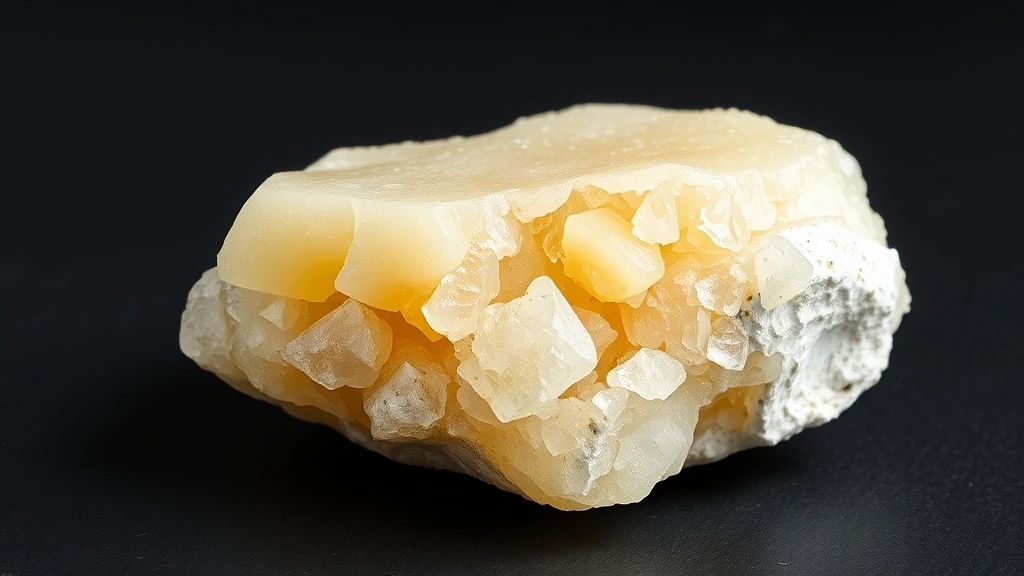
Lemon calcite belongs to the broad family of natural carbonate minerals, specifically the calcite group, which crystallizes in the trigonal system. As a member of the Natural Mineral / Crystal parent group, it forms rhombohedral aggregates that can be cut into cabochons or faceted stones. Its formation is typically associated with hydrothermal veins, limestone caverns, and sedimentary environments where calcium‑rich fluids precipitate calcite crystals. The lemon‑yellow coloration arises from trace impurities and structural defects that absorb specific wavelengths of light, giving the stone its characteristic glow.
What is Lemon Calcite? Geological Overview & Definition
Lemon calcite is a variety of calcite distinguished by its vivid, citrus‑yellow color, which ranges from pale pastel to a deep, buttery hue. It occurs as well‑formed rhombohedral crystals or massive aggregates, often filling fissures in limestone or forming nodules in sedimentary deposits. While lemon calcite is prized for its vibrant yellow energy, collectors often pair it with the rare pink Thulite to create a balanced crystal set that addresses both solar plexus vitality and heart-centered emotional healing.
Across ancient lapidary traditions, this stone has been valued for both ornamental and metaphysical purposes, with early Mediterranean cultures carving it into beads and amulets. Its trigonal crystal symmetry governs the way light interacts with the lattice, producing a characteristic double‑refraction that enhances its luminous appearance. While Lemon Calcite’s trigonal symmetry creates a subtle double-refraction, other stones like Sunset Sodalite rely on different structural alignments to achieve their distinct visual character.
Lemon Calcite Chemical Composition & Crystallographic Properties
Calcite’s fundamental composition is calcium carbonate, CaCO₃, but lemon calcite lacks a unique stoichiometric formula because its hue is produced by trace chromophore elements such as iron, manganese, or organic inclusions. These minor substitutions replace calcium ions in the lattice, creating localized color centers that absorb blue‑green light and transmit the lemon shade.
The mineral crystallizes in the trigonal crystal system, forming a hexagonal‑like lattice with threefold rotational symmetry around the c‑axis. Unit cells consist of calcium ions coordinated by carbonate groups, stacked in a repeating pattern that yields the familiar rhombohedral habit. This arrangement imparts a modest cleavage on the {104} plane, allowing the stone to be split into smooth, flat surfaces.
Lemon calcite is acid‑sensitive; exposure to dilute hydrochloric or acetic acid triggers effervescence as carbon dioxide gas is released, confirming its carbonate nature. The reaction is a diagnostic test used by gemologists to differentiate calcite from silicate look‑alikes.
Thermally, lemon calcite is stable up to about 825 °C, the temperature at which calcite decomposes to calcium oxide and carbon dioxide. Heating below this threshold can cause subtle color changes, as heat may alter the oxidation state of trace chromophores, sometimes deepening the yellow tone.
| Property | Specification |
|---|---|
| Mineral Group | Natural Mineral / Crystal |
| Mohs Hardness | 6.5 – 7.0 |
| Crystal System | Trigonal |
| Color & Optical Properties | Natural Lemon Calcite color spectrum and optical dispersion |
| Primary Mining Localities | Global primary localities |
| Water & Chemical Resistance | EXTREMELY SENSITIVE: Water Soluble / Moisture Sensitive! (Avoid liquids) |
| Chakra Alignment (Traditional) | Third Eye Chakra (Ajna) |
| Zodiac Affinity (Traditional) | Leo, Sagittarius |
| Symbolic Meaning (Traditional) | Spiritual awareness and universal harmony |
Lemon Calcify Varieties & Color Spectrum
Lemon Calcite displays distinct mineralogical characteristics across its geological varieties and structural habits. Gemologists evaluate these natural varieties based on crystal habit, trace chromophore concentrations, and visual luster.
Primary Natural Lemon Calcite
The benchmark natural variety exhibiting diagnostic color saturation and classic crystallographic symmetry.
Distinct Geological Morphs of Lemon Calcite
Secondary regional and structural varieties formed under localized geological temperature and pressure conditions.
Lemon Calcite (Pure Lemon)
Formed in low‑temperature hydrothermal veins, pure lemon calcite displays a bright, buttery yellow caused by trace manganese. The crystals are typically tabular, often exhibiting rhombohedral cleavage and fine, needle‑like inclusions of quartz. Found chiefly in Mexico’s Oaxaca region, this variety is relatively common but prized for its uniform hue.
Golden‑Yellow Calcite
Golden‑yellow calcite originates in limestone caverns where iron oxide staining imparts a warm amber tone. Its internal structure frequently contains fluid‑filled cavities that produce a subtle chatoyancy when cut. Deposits in the United States (Arkansas) and Italy (Umbria) yield stones of medium rarity, valued for their luminous depth.
Lemon‑Green Calcite (Lemon‑Chartreuse)
A transitional morph, lemon‑green calcite forms where trace amounts of nickel substitute for calcium, giving a pale chartreuse coloration. The mineral often shows growth banding and occasional calcite‑dolomite intergrowths. Notable occurrences in the Democratic Republic of Congo make this variety less abundant and sought after by collectors.
Lemon‑Orange Calcite (Citrus)
Citrus‑hued calcite develops in oxidizing environments rich in organic matter, producing a vivid orange‑yellow shade. Microscopic organic inclusions create a honey‑comb pattern visible under magnification. Primary sources in Brazil’s Minas Gerais state render this variety moderately rare and popular for cabochon settings.
Lemon‑White Calcite (Milky)
Milky lemon calcite forms in sedimentary basins where fine‑grained calcite particles scatter light, resulting in a translucent white with a faint lemon tint. The stone often contains microscopic calcite veining that softens its color intensity. Large deposits in Spain’s Andalusia region make this the most accessible variety for commercial use.
Lemon‑Blue Calcite (Rare)
An exceptionally rare morph, lemon‑blue calcite acquires its hue from trace amounts of copper and a unique structural coloration effect. Crystals display a bluish‑yellow iridescence that changes with viewing angle. Documented only in a few pockets of Madagascar, this variety commands high prices among specialty gem markets.
Where is Lemon Calcite Found? Geological Mining & Extraction
Lemon calcite typically occurs in trigonal calcite veins within limestone and dolostone host rocks, often associated with gypsum, barite, and quartz. Hydrothermal fluids deposit the mineral at temperatures between 50 °C and 150 °C, creating well‑formed tabular crystals that are extracted through careful underground mining or surface pit methods to preserve clarity.
Major production zones include the Oaxaca region of Mexico, the Arkansas Ozarks in the United States, and the Minas Gerais province of Brazil, each offering distinct color morphs linked to local geochemistry. Smaller but notable sources exist in the Democratic Republic of Congo, Spain’s Andalusian quarries, and Madagascar’s southern outcrops, where artisanal miners employ hand‑sorting to separate lemon calcite from accompanying calcite aggregates.
Historical Significance & Cultural Lore of Lemon Calcite
Across ancient lapidary traditions, lemon calcite was prized for its luminous hue and believed to stimulate mental clarity. In Greco‑Roman texts, the stone was called “*calcites flavus*” and used in amulets to enhance spiritual awareness, a practice echoed in Egyptian burial goods where lemon‑colored calcite beads adorned the necks of elite mummies.
In Vedic astrology, the gemstone aligns with the Third Eye Chakra (Ajna), promoting inner vision and universal harmony, a belief that traveled to Chinese Daoist alchemy where lemon calcite was ground into powders for meditative elixirs. Throughout medieval European alchemy, the stone symbolized the sun’s vitality, reinforcing its enduring role as a conduit for insight and balance.
Modern Uses & Jewelry Applications of Lemon Calcite
Lemon calcite is prized for its vibrant yellow hue and moderate hardness, making it suitable for a range of decorative applications. Skilled lapidaries cut the stone into smooth cabochons or subtle facets, allowing light to play across its translucent surface. The mineral is also carved into ornamental motifs for tableware, figurines, and architectural accents.
- Cabochon or lightly faceted earrings, pendants, and rings
- Decorative carvings for vases, bowls, and architectural inlays
- Accent pieces in mixed‑material jewelry sets
Metaphysical Properties & Traditional Meaning of Lemon Calcite
According to historical traditions and metaphysical lore, lemon calcite is believed to stimulate spiritual awareness and promote a sense of inner clarity. Across ancient Mediterranean and Vedic lapidary traditions, the stone is associated with the Third Eye Chakra (Ajna), encouraging intuition and insight. Its bright yellow tone is thought to uplift mood, alleviate emotional tension, and foster a harmonious connection between mind and body.
Which Chakra and Zodiac Signs Align with Lemon Calcite?
Lemon calcite is traditionally linked to the Third Eye Chakra (Ajna), the energetic center governing perception, intuition, and higher consciousness. This alignment is reflected in its use in meditation practices and spiritual rituals that aim to expand awareness.
The stone is also said to resonate with the zodiac signs Leo and Sagittarius. Those born under these signs are believed to find balance and inspiration through the stone’s energetic qualities, enhancing confidence and adventurous spirit.
How to Identify Real vs. Fake Lemon Calcite
Artificial imitations of lemon calcite often appear as dyed glass or synthetic crystals that lack the mineral’s natural internal structure. Genuine lemon calcite displays subtle internal inclusions and a characteristic refractive index, whereas replicas may show uniform coloration or glassy luster.
Practical At-Home Authenticity Tests
- Temperature Test (Thermal Feel): Hold the stone in your hand; real calcite feels cool to the touch initially and warms slowly, whereas glass warms quickly.
- Specific Gravity & Weight Test: Compare the stone’s weight to a known sample of calcite; genuine lemon calcite should be denser than glass but lighter than quartz.
- Scratch & Hardness Test (Mohs Comparison): Use a standard Mohs hardness kit; lemon calcite should scratch materials with hardness 6.5–7.0, such as a steel file, but not glass.
- Microscopic & Loupe Inspection (Internal Inclusions): Examine under a loupe for natural fibrous or needle‑like inclusions typical of calcite; synthetic versions usually show uniform, glass‑like clarity.
Lemon Calcite Valuation Factors, Grading & Pricing
Market value hinges primarily on Color Saturation, where deep, uniform yellow hues command higher premiums than pale or mottled variants. Visual vibrancy and a consistent, natural energetic luster significantly enhance aesthetic appeal for collectors. Stones exhibiting intense, unbroken color without zoning defects are considered top-tier specimens.
Pricing is determined by Crystal Size & Weight (Grams), with larger, well-proportioned pieces fetching substantial premiums in the raw market. Tumbled stones are graded by polish quality, where a smooth, glassy finish indicates superior lapidary craftsmanship. Natural matrix inclusions may add geological interest but can slightly reduce value if they compromise structural integrity.
Ethical Sourcing & Locality Premium plays a critical role in holistic and collector markets, favoring verified, sustainable origins. Buyers increasingly prioritize provenance documentation that ensures responsible extraction practices and fair labor standards. Specific localities known for exceptional clarity or color intensity often carry a distinct market premium.
How to Clean and Care for Lemon Calcite
Lemon Calcite is extremely sensitive to moisture, as water can dissolve or permanently damage the mineral structure. Never wash the specimen with water, liquid soap, or damp cloths, as these liquids cause irreversible surface erosion. Ultrasonic cleaning is strictly forbidden due to the mineral’s susceptibility to liquid penetration and structural weakening.
To maintain surface integrity, gently dust the stone using a completely dry, soft microfiber cloth or a camel-hair brush. Store the specimen in a low-humidity environment, away from all liquids and high-moisture areas. This dry maintenance protocol preserves the crystal’s natural luster and prevents chemical degradation over time.
Cleansing and Recharging Lemon Calcite (Energetic Care)
Holistic practitioners recommend herbal smudging with dried sage or palo santo to clear energetic stagnation without exposing the stone to moisture. This dry method allows aromatic smoke to circulate around the crystal, respecting its water-soluble nature while addressing metaphysical concerns. Ensure the area is well-ventilated to prevent ash residue from settling on the delicate surface.
For recharging, place the Lemon Calcite on a selenite charging slab or expose it to gentle moonlight overnight. Avoid direct intense sunlight or any form of domestic heating, as thermal stress can fracture the crystal lattice. These passive, dry techniques align with the mineral’s physical limitations while supporting traditional energetic care practices.
Frequently Asked Questions About Lemon Calcite
Lemon Calcite displays distinct mineralogical characteristics across its geological varieties and structural habits. Gemologists evaluate these natural varieties based on crystal habit, trace chromophore concentrations, and visual luster.
Primary Natural Lemon Calcite
The benchmark natural variety exhibiting diagnostic color saturation and classic crystallographic symmetry.
Distinct Geological Morphs of Lemon Calcite
Secondary regional and structural varieties formed under localized geological temperature and pressure conditions.
Is Lemon Calcite safe to wear in the shower?
No, Lemon Calcite is strictly prohibited from exposure to water or high humidity. As a calcium carbonate mineral, it is moisture sensitive and can undergo chemical alteration when wet. Prolonged contact with shower steam or liquid water risks surface erosion and loss of luster.
How should I clean my Lemon Calcite jewelry?
Clean it exclusively using a dry, soft microfiber cloth to gently remove dust and oils. Never use water, liquid soap, or chemical cleaners, as moisture will damage the crystal structure. Regular dry dusting preserves the stone’s natural translucency and prevents potential clouding.
Can I put Lemon Calcite in an ultrasonic cleaner?
Absolutely not; ultrasonic cleaning is strictly forbidden for this mineral. The combination of water and high-frequency vibrations will dissolve or fracture the delicate crystal lattice. Always rely on dry mechanical cleaning methods to maintain structural integrity.
Which zodiac signs are aligned with Lemon Calcite?
This gemstone resonates most strongly with Leo and Sagittarius. These fire signs benefit from the stone’s energetic properties, which support confidence and spiritual expansion. Wearing it may enhance personal vitality and align with the solar energy associated with these constellations.
What chakra does Lemon Calcite activate?
It primarily activates the Third Eye Chakra (Ajna), located between the eyebrows. This connection supports intuition, mental clarity, and heightened spiritual awareness. Practitioners use this stone to deepen meditative states and enhance psychic perception without engaging other chakras.
How hard is Lemon Calcite on the Mohs scale?
It rates between 6.5 and 7.0 on the Mohs hardness scale, making it relatively durable for daily wear. However, its trigonal crystal system means it can still cleave along specific planes if struck sharply. Handle it with care to avoid accidental chipping or breakage.
What is the chemical composition of Lemon Calcite?
It consists primarily of calcium carbonate (CaCO₃), with trace impurities giving it the characteristic yellow hue. These inclusions, often involving iron or manganese, create the lemon-colored appearance. The mineral forms within the trigonal crystal family, distinct from other carbonate varieties.
Is Lemon Calcite soluble in water?
Yes, it is water soluble and highly reactive to liquid exposure. Calcium carbonate minerals slowly dissolve in aqueous environments, leading to permanent structural degradation. Keep this stone away from rain, humidity, and any liquid contact to ensure longevity.