
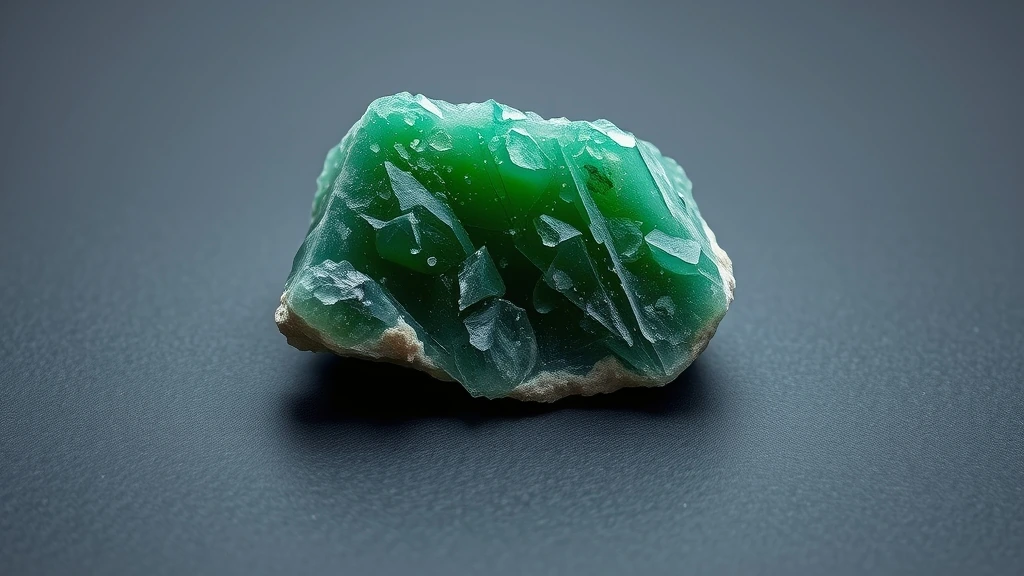
Its geological significance and aesthetic appeal have captivated collectors and researchers alike. Green Calcite is a naturally occurring mineral, belonging to the parent mineral group of Natural Mineral / Crystal.
Green Calcite is classified as a Trigonal crystal system mineral, which provides insight into its internal structure and symmetry. This classification is crucial in understanding the mineral’s optical and physical properties. The Trigonal system is characterized by a three-fold axis of rotation, which influences the mineral’s crystal shape and lattice structure. Green Calcite’s geological classification is rooted in its composition and crystallographic properties. In comparative mineralogical collections, practitioners and geologists frequently study Green Apophyllite alongside this crystal to appreciate their subtle energetic and structural differences.
What is Green Calcite? Geological Overview & Definition
Green Calcite is a mineral species that owes its color to the presence of chromophores, which are impurities or defects in the crystal lattice that absorb certain wavelengths of light. The green coloration can range from pale to intense, depending on the concentration and type of chromophores present. Green Calcite’s geological occurrence is often associated with sedimentary and metamorphic rocks. Its formation is influenced by diagenetic processes, which involve the alteration of sediments into rocks.
Green Calcite’s definition is closely tied to its chemical and crystallographic properties, which distinguish it from other mineral species. The mineral’s birefringence and refractive index are key optical properties that help identify it. Green Calcite’s density and Mohs hardness are also important physical properties that contribute to its definition. These properties are essential in understanding the mineral’s behavior and characteristics.
Green Calcite Chemical Composition & Crystallographic Properties
Green Calcite’s chemical composition is based on the CaCO3 formula, which consists of calcium, carbon, and oxygen atoms arranged in a Trigonal crystal lattice. The mineral’s lattice structure is characterized by a repeating pattern of calcium and carbonate ions. This arrangement is responsible for Green Calcite’s optical and physical properties, including its birefringence and cleavage. The Trigonal crystal system is a fundamental aspect of Green Calcite’s mineralogy.
The cation substitution process can occur in Green Calcite, where calcium ions are replaced by other ions, such as magnesium or iron. This substitution can affect the mineral’s color and physical properties. Green Calcite is also sensitive to acids, which can cause it to react and release carbon dioxide gas. The mineral’s thermal behavior is characterized by its response to heat, which can cause it to decompose or undergo phase transitions.
Green Calcite’s crystallographic properties are influenced by its lattice structure and the arrangement of its atoms. The mineral’s refractive index and optical axis are important properties that help identify it. Green Calcite’s cleavage and fracture are also significant physical properties that contribute to its mineralogy. These properties are essential in understanding the mineral’s behavior and characteristics under different conditions.
The chromophore color centers in Green Calcite are responsible for its green coloration, which can range from pale to intense. These color centers are caused by impurities or defects in the crystal lattice, which absorb certain wavelengths of light. The Trigonal crystal system and lattice structure of Green Calcite provide a framework for understanding its optical and physical properties. The mineral’s density and Mohs hardness are also important physical properties that contribute to its definition and mineralogy.
| Property | Specification |
|---|---|
| Mineral Group | Natural Mineral / Crystal |
| Chemical Formula | CaCO₃ |
| Mohs Hardness | 3 (defining mineral) |
| Crystal System | Trigonal |
| Specific Gravity (Density) | 2.71 |
| Refractive Index | ”n” ω = 1.640–1.660br ”n” ε = 1.486 |
| Color & Optical Properties | Natural Green Calcite color spectrum and optical dispersion |
| Primary Mining Localities | Global primary localities |
| Water & Chemical Resistance | EXTREMELY SENSITIVE: Water Soluble / Moisture Sensitive! (Avoid liquids) |
| Chakra Alignment (Traditional) | Crown Chakra (Sahasrara) |
| Zodiac Affinity (Traditional) | Gemini, Virgo |
| Symbolic Meaning (Traditional) | Grounding, vitality and protection |
Green Calcite Varieties & Color Spectrum
Green Calcite is a versatile mineral with various natural varieties, each with unique characteristics. The Prasiolite variety, for example, is a rare and vibrant green calcite. It is formed through the metamorphism of calcite deposits, resulting in a distinct crystal structure. This variety is highly prized for its intense green color.
Prasiolite
Prasiolite is characterized by its inclusions of iron oxide and manganese, which contribute to its vibrant green hue. The refractive index of Prasiolite is similar to that of other calcite varieties, ranging from 1.640 to 1.660. This variety is relatively rare, making it highly sought after by collectors.
Cobaltoan Calcite
Cobaltoan Calcite is another variety of Green Calcite, known for its pastel green to blue-green color. This variety is formed through the replacement of calcite with cobalt, resulting in a unique chemical composition. Cobaltoan Calcite is often found in hydrothermal veins, where it forms crystalline aggregates.
Manganoan Calcite
Manganoan Calcite is a pink to green variety of calcite, characterized by its manganese content. This variety is formed through the metasomatism of calcite deposits, resulting in a distinct mineral assemblage. Manganoan Calcite is often found in pegmatites, where it forms euhedral crystals.
Honey Calcite
Honey Calcite is a yellow to orange variety of calcite, known for its iron oxide inclusions. This variety is formed through the oxidation of calcite deposits, resulting in a unique color morph. Honey Calcite is often found in caverns, where it forms stalactites and stalagmites.
Blue Calcite
Blue Calcite is a rare variety of calcite, characterized by its cobalt content. This variety is formed through the replacement of calcite with cobalt, resulting in a distinct chemical formula. Blue Calcite is often found in hydrothermal veins, where it forms crystalline aggregates.
Where is Green Calcite Found? Geological Mining & Extraction
Green Calcite is found in various parts of the world, including Mexico, Brazil, and the United States. The primary extraction regions are often pegmatites and hydrothermal veins, where calcite forms crystalline aggregates. The host rock of Green Calcite is typically limestone or dolostone, which provides a unique geological setting for its formation.
The mining and extraction of Green Calcite often involve open-pit mining and underground mining methods. The density of Green Calcite, which ranges from 2.71, is an important factor in its extraction, as it affects the separation of calcite from other minerals. The refractive index of Green Calcite, which ranges from 1.640 to 1.660, is also an important factor in its identification and extraction.
Historical Significance & Cultural Lore of Green Calcite
Across ancient lapidary traditions, Green Calcite was highly valued for its vibrant color and metaphysical properties. In ancient Greco-Roman and Egyptian cultures, Green Calcite was believed to possess healing properties, and was often used in jewelry and ornaments. The Crown Chakra association of Green Calcite was also recognized in ancient Vedic and Chinese cultures, where it was believed to promote spiritual growth and balance.
In historical metaphysical lore, Green Calcite was believed to provide protection and grounding, and was often used in rituals and ceremonies. The zodiac associations of Green Calcite, including Gemini and Virgo, were also recognized in ancient cultures, where it was believed to influence personality traits and behavior. Throughout early archaeological records, Green Calcite has been found in various artifacts and treasures, highlighting its significance in ancient cultures.
Modern Uses & Jewelry Applications of Green Calcite
Green Calcite is a popular choice for lapidary cutting and is often used in cabochon and faceted jewelry. Its unique green color makes it a desirable stone for ornamental carving. Some common applications of Green Calcite include:
- Pendants and rings
- Earrings and brooches
- Decorative objects and sculptures
- Beads and other jewelry components
Metaphysical Properties & Traditional Meaning of Green Calcite
According to historical traditions and metaphysical lore, Green Calcite is believed to possess grounding and protective properties. Across ancient lapidary traditions, this stone is thought to promote vitality and emotional balance. In historical metaphysical lore, Green Calcite is associated with spiritual growth and inner peace.
Which Chakra and Zodiac Signs Align with Green Calcite?
Green Calcite is aligned with the Crown Chakra (Sahasrara), which is believed to facilitate spiritual connection and higher states of consciousness. This alignment is thought to enhance the stone’s metaphysical properties and promote a sense of unity and oneness.
The canonical zodiac signs aligned with Green Calcite are Gemini and Virgo. These signs are associated with intellectual curiosity, communication, and analytical thinking. The alignment of Green Calcite with these zodiac signs is believed to enhance the stone’s properties and promote a sense of clarity and mental focus.
How to Identify Real vs. Fake Green Calcite
Green Calcite can be imitated by artificial means, such as synthetic glass or dyed replicas. These imitations can be difficult to distinguish from the real stone, but there are several tests that can be used to verify authenticity.
Practical At-Home Authenticity Tests:
- Temperature Test (Thermal Feel): Real Green Calcite will feel cool to the touch, while synthetic or dyed replicas may feel warmer or more neutral.
- Specific Gravity & Weight Test: Green Calcite has a specific gravity of 2.71, which can be used to distinguish it from lighter or heavier imitations.
- Scratch & Hardness Test (Mohs Comparison): Green Calcite has a Mohs hardness of 3, which can be used to distinguish it from softer or harder imitations.
- Microscopic & Loupe Inspection (Internal Inclusions): Real Green Calcite will often have unique internal inclusions, such as calcite crystals or mineral veins, that can be visible under magnification.
Green Calcite Valuation Factors, Grading & Pricing
The value of Green Calcite is significantly influenced by its Color Saturation, with more vibrant and evenly colored specimens commanding higher prices. Visual vibrancy and natural energetic luster also play a crucial role in determining the market value of this mineral. The more intense and uniform the color, the more valuable the Green Calcite specimen.
The Crystal Size & Weight (Grams) of Green Calcite is another key factor in its valuation, with larger and heavier specimens generally being more valuable. The quality of the polish, whether raw or tumbled, also affects the price, as does the presence of natural matrix inclusions. The size and weight of the crystal, combined with its polish quality, determine its overall value in the market.
In holistic and collector markets, Ethical Sourcing & Locality Premium can significantly impact the price of Green Calcite. Specimens sourced from reputable and environmentally responsible mines or locations may command a premium due to their rarity and the guarantee of their origin. This premium can vary depending on the location and the reputation of the source, making some Green Calcite specimens more valuable than others.
How to Clean and Care for Green Calcite
Green Calcite is extremely sensitive to water and moisture, which can cause it to dissolve or become damaged. To clean Green Calcite, it is essential to use a dry soft microfiber cloth to gently dust the specimen, avoiding any contact with liquids or moisture. Ultrasonic cleaning is strictly forbidden, as it can cause irreparable damage to the mineral. By following this careful cleaning procedure, the longevity and beauty of the Green Calcite can be preserved.
Cleansing and Recharging Green Calcite (Energetic Care)
To cleanse and recharge Green Calcite, it is recommended to use safe dry holistic methods, such as herbal smudging or gentle moonlight exposure. These methods can help to restore the mineral’s natural energy without causing damage. By placing the Green Calcite on a selenite charging slab, its energetic properties can be gently rejuvenated, ensuring its continued metaphysical effectiveness. This approach allows for a harmonious and non-invasive way to care for the mineral.
The use of gentle moonlight exposure or herbal smudging can be an effective way to cleanse and recharge Green Calcite, as these methods do not involve heat or moisture. By resting the Green Calcite on a selenite charging slab, its energetic properties can be balanced and restored, promoting a sense of harmony and well-being. This holistic approach to caring for Green Calcite ensures that its natural beauty and metaphysical properties are preserved, allowing it to continue being a valued and cherished mineral.
Frequently Asked Questions About Green Calcite
Green Calcite displays distinct mineralogical characteristics across its geological varieties and structural habits. Gemologists evaluate these natural varieties based on crystal habit, trace chromophore concentrations, and visual luster.
Primary Natural Green Calcite
The benchmark natural variety exhibiting diagnostic color saturation and classic crystallographic symmetry.
Distinct Geological Morphs of Green Calcite
Secondary regional and structural varieties formed under localized geological temperature and pressure conditions.
Is Green Calcite water-resistant?
Green Calcite is extremely sensitive to water and moisture. Avoid exposing it to liquids, as it is water soluble and may damage or dissolve. Handle with care to maintain its integrity.
Can I wear Green Calcite in the shower?
No, it’s not recommended to wear Green Calcite in the shower. The moisture and water can cause damage or dissolution, so it’s best to avoid exposure to liquids. Remove the gemstone before showering or bathing.
How do I clean my Green Calcite?
Use a dry soft microfiber cloth to clean Green Calcite. Gently wipe away dirt and dust, avoiding any liquid or moisture that may damage the gemstone. Regular cleaning will help maintain its appearance.
Is ultrasonic cleaning safe for Green Calcite?
No, ultrasonic cleaning is strictly forbidden for Green Calcite. The water and moisture used in ultrasonic cleaning can cause damage or dissolution, so it’s best to avoid this method altogether.
Which zodiac signs are associated with Green Calcite?
Green Calcite is associated with Gemini and Virgo. These zodiac signs are believed to resonate with the gemstone’s energies, making it a popular choice for individuals born under these signs.
Which chakra is aligned with Green Calcite?
Green Calcite is aligned with the Crown Chakra (Sahasrara). This chakra is associated with higher states of consciousness, and the gemstone is believed to promote grounding and vitality.
Can I use soap and water to clean my Green Calcite jewelry?
No, avoid using soap and water to clean Green Calcite jewelry. The moisture and liquid can cause damage or dissolution, so it’s best to use a dry soft microfiber cloth instead.
How can I protect my Green Calcite from damage?
Handle Green Calcite with care, avoiding exposure to liquids and moisture. Store the gemstone in a dry place, and clean it regularly with a dry soft microfiber cloth to maintain its integrity and prevent damage.