
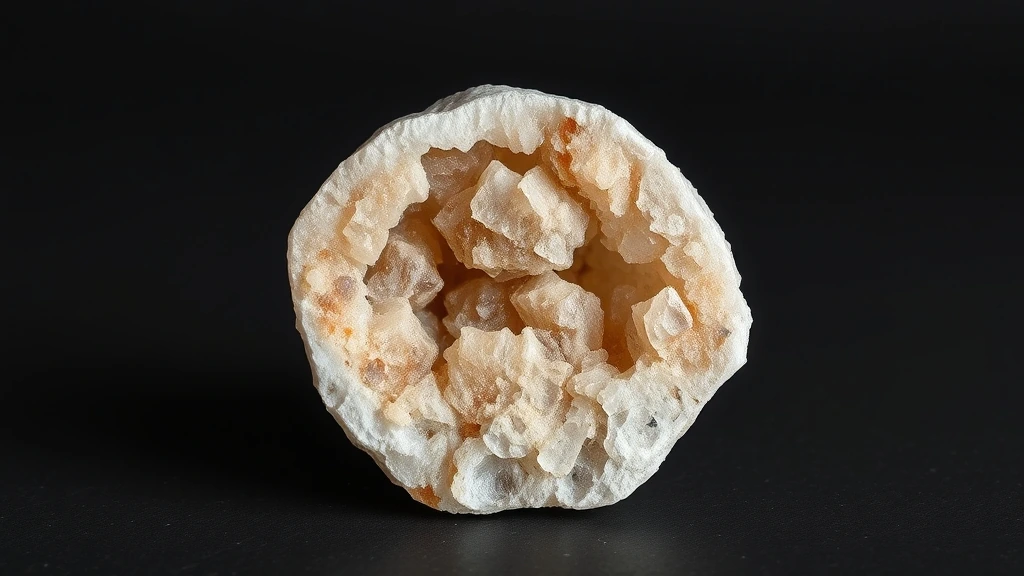
Cobaltoan calcite belongs to the broader calcite family, a carbonate mineral that crystallizes in the trigonal system. As a member of the natural mineral/crystal group, it forms well‑defined rhombohedral crystals that can be cut into faceted gems or polished cabochons. Its cobalt content replaces calcium in the lattice, imparting distinctive coloration while retaining the host mineral’s characteristic cleavage and solubility in dilute acids.
What is Cobaltoan Calcite? Geological Overview & Definition
Cobaltoan calcite is a cobalt‑bearing carbonate where Co²⁺ ions substitute for Ca²⁺ within the calcite lattice. This solid‑solution series occurs in hydrothermal veins, skarn deposits, and metamorphosed limestone where cobalt‑rich fluids interact with calcium carbonate.
Across ancient lapidary traditions, the stone’s pink‑violet palette was prized for ornamental and amuletic purposes, though its softness limited widespread use. Modern collectors value it for its rarity and the striking chromophore effect produced by cobalt ions. Collectors often compare its delicate chromophore-driven hues to those of Blue Dolomite, another cobalt-bearing mineral that shares a similar aesthetic appeal despite differing in hardness and crystal structure.
Cobaltoan Calcite Chemical Composition & Crystallographic Properties
The mineral crystallizes in the trigonal crystal system, forming rhombohedral habit typical of calcite. Its unit cell retains the same space group (R 3̅c) as pure calcite, but the lattice parameters contract slightly as cobalt ions, which are smaller than calcium, occupy the A‑site. If you’re intrigued by how trace elements alter calcite’s structure, you might also explore Blue Apatite In Orange Calcite, which showcases a strikingly different chemical substitution while retaining a comparable rhombohedral habit.
Cation substitution is expressed by the formula Ca₁₋ₓCoₓCO₃, where x generally ranges from 0.01 to 0.10. This limited substitution preserves the overall carbonate framework while introducing Co²⁺ electronic transitions that generate the stone’s characteristic pink to violet colors.
Like all calcites, cobaltoan calcite is acid‑sensitive; dilute hydrochloric acid effervesces, releasing CO₂ gas. However, the presence of cobalt can slightly reduce reaction rates, a nuance noted in laboratory dissolution studies.
Thermally, the mineral is stable up to about 400 °C, beyond which de‑cobaltization and recrystallization to pure calcite may occur. Heating can also cause color fading as cobalt ions migrate to defect sites, a factor gem cutters consider when annealing specimens.
| Property | Specification |
|---|---|
| Mineral Group | Natural Mineral / Crystal |
| Chemical Formula | Ca₁₋ₓCoₓCO₃ |
| Mohs Hardness | 3.0 |
| Crystal System | Trigonal |
| Specific Gravity (Density) | 2.70 – 2.90 |
| Refractive Index | 1.628 – 1.652 |
| Color & Optical Properties | Natural Cobaltoan Calcite color spectrum and optical dispersion |
| Primary Mining Localities | Global primary localities |
| Water & Chemical Resistance | EXTREMELY SENSITIVE: Water Soluble / Moisture Sensitive! (Avoid liquids) |
| Chakra Alignment (Traditional) | Crown Chakra, Third Eye Chakra |
| Zodiac Affinity (Traditional) | Aquarius, Virgo |
| Symbolic Meaning (Traditional) | Mental clarity, spiritual expansion, and emotional balance |
Cobaltoan Calcite Varieties & Color Spectrum
Cobaltoan calcite exhibits a distinct chromatic range driven by the precise substitution of cobalt ions within the calcite crystal lattice. The intensity of the blue hue correlates directly with the concentration of Co²⁺ ions replacing calcium atoms in the carbonate structure. This ionic substitution alters the electronic band gap, resulting in the characteristic vivid azure to deep sapphire tones observed in gem-quality specimens.
Vivid Azure Cobaltoan Calcite
This primary variety displays a bright, electric blue coloration indicative of moderate cobalt substitution levels. Formed in hydrothermal veins, these crystals often feature trigonal prismatic habits with well-defined cleavage planes. The visual signature includes high transparency and a vitreous luster that enhances the perception of internal depth.
Deep Sapphire Cobaltoan Calcite
Richer in cobalt content, this morph presents a darker, more saturated navy-blue appearance. Geological formation occurs in cooler, later-stage hydrothermal environments where cobalt saturation is higher. These specimens are rarer due to the specific chemical conditions required to achieve such intense chromatic saturation without inducing opacity.
Pale Sky-Blue Cobaltoan Calcite
Characterized by a delicate, light blue tint, this variety contains lower concentrations of cobalt impurities. It frequently occurs in massive aggregates rather than discrete crystals, making it suitable for cabochon cutting. The low cobalt index results in a softer, more ethereal aesthetic compared to its vivid counterparts.
Mottled Cobaltoan Calcite
This variety features irregular patches of blue interspersed with white or colorless calcite zones. The mottling arises from fluctuating cobalt availability during the crystallization process in the host rock. Such specimens are valued for their unique textural contrast and artistic potential in lapidary work.
Cobaltoan Calcite with Fluorescent Inclusions
Some specimens contain trace elements that induce strong fluorescent reactions under ultraviolet light. These inclusions often appear as bright blue or white spots within the crystal matrix. This optical property adds a dynamic visual element, distinguishing these stones from standard cobaltoan calcite varieties.
Where is Cobaltoan Calcite Found? Geological Mining & Extraction
Cobaltoan calcite primarily forms in hydrothermal vein deposits associated with metamorphic and igneous host rocks. These veins often intersect schist, gneiss, or granite, where mineral-rich fluids precipitated cobalt-bearing calcite. The trigonal crystal system is consistently preserved, reflecting the stable growth conditions within these geological structures.
Major extraction sites include regions with significant cobalt mineralization, such as parts of the Democratic Republic of Congo and certain deposits in Europe. Mining operations typically involve careful hand-picking to preserve the integrity of the delicate crystals. Selective extraction is crucial to avoid fracturing the soft calcite, which has a Mohs hardness of only 3.0.
Historical Significance & Cultural Lore of Cobaltoan Calcite
Ancient Greco-Roman texts reference blue calcite varieties as symbols of celestial connection and divine protection. Archaeological findings suggest these stones were used in amulets and ceremonial objects, valued for their striking azure pigmentation. The association with the sky and water reinforced their role in spiritual rituals across the Mediterranean basin.
In Vedic traditions, blue stones were linked to the Ajna chakra, representing wisdom and inner vision. Cobaltoan calcite, with its deep blue hues, aligns with these metaphysical attributes, promoting mental clarity and spiritual expansion. Throughout early archaeological records, such minerals were revered for their ability to bridge the physical and ethereal realms.
Modern Uses & Jewelry Applications of Cobaltoan Calcite
Cobaltoan calcite is prized for its vibrant blue‑green hues, making it a favorite in contemporary lapidary work. Skilled cutters transform the mineral into polished cabochons or intricately faceted gemstones, while artisans carve it into ornamental pieces for decorative panels and architectural accents. The material’s moderate hardness allows for detailed engraving, and its refractive index enhances brilliance in jewelry settings.
- Precision lapidary cutting yields smooth, polished surfaces that showcase the stone’s natural color.
- Cabochons are favored for engagement rings, pendants, and cufflinks, offering a sleek, polished look.
- Faceted cuts accentuate the mineral’s refractive index, creating sparkle in earrings and brooches.
- Carved ornamental panels are used in interior design, wall art, and ceremonial objects.
Metaphysical Properties & Traditional Meaning of Cobaltoan Calcite
According to historical traditions and metaphysical lore, cobaltoan calcite is believed to foster mental clarity and promote spiritual expansion. Ancient Mediterranean lapidary texts describe the stone as a conduit for higher consciousness, while Vedic practitioners regard it as a catalyst for emotional balance. Across these universal traditions, the mineral is thought to harmonize the mind, encouraging insight and calmness during meditation.
Which Chakra and Zodiac Signs Align with Cobaltoan Calcite?
The Crown Chakra and the Third Eye Chakra are the primary energetic centers associated with cobaltoan calcite. These chakras govern higher awareness, intuition, and the ability to connect with universal wisdom.
Aquarius and Virgo are the zodiac signs canonically linked to this gemstone. Individuals born under these signs are believed to resonate with the stone’s qualities of intellectual curiosity and analytical precision, enhancing their natural inclinations toward insight and balance.
How to Identify Real vs. Fake Cobaltoan Calcite
Artificial imitations of cobaltoan calcite often appear as dyed glass, synthetic crystals, or color‑enhanced calcite. These replicas may mimic the natural hue but lack the mineral’s characteristic density, refractive index, and internal inclusions.
Practical At-Home Authenticity Tests
- Temperature Test (Thermal Feel): Hold the stone in your hand; genuine cobaltoan calcite feels cool to the touch, whereas glass or dyed replicas heat up quickly.
- Specific Gravity & Weight Test: Compare the stone’s weight to a known sample of calcite; real cobaltoan calcite will be slightly heavier due to cobalt substitution.
- Scratch & Hardness Test (Mohs Comparison): Use a standard Mohs hardness kit; cobaltoan calcite should scratch glass (Mohs 5.5) but not a steel file (Mohs 6.5).
- Microscopic & Loupe Inspection (Internal Inclusions): Examine the stone under a loupe; authentic specimens display fine, natural inclusions or fibrous growths, unlike the uniform appearance of synthetic glass.
Cobaltoan Calcite Valuation Factors, Grading & Pricing
Market valuation primarily hinges on Color Saturation, where intense cobalt blue hues command the highest premiums. A deep, uniform blue indicates optimal cobalt substitution within the calcite lattice, enhancing visual appeal. Stones exhibiting vibrant, saturated tones are significantly more desirable than pale or washed-out specimens.
Crystal Size & Weight (Grams) directly influences pricing, with larger, intact specimens valued by gram rather than carat. Raw crystals with well-defined trigonal faces fetch higher prices than heavily fractured material. Tumbled stones are graded based on polish quality, where a smooth, high-gloss finish highlights the stone’s natural luster.
Ethical Sourcing & Locality Premium plays a crucial role in the holistic and collector markets. Specimens from verified, environmentally responsible mines carry a distinct price advantage. Documented provenance, such as specific localities known for high-quality cobalt deposits, adds significant prestige and value to the piece.
How to Clean and Care for Cobaltoan Calcite
Cobaltoan calcite is extremely sensitive to moisture, as water can dissolve or permanently damage the mineral structure. Never wash this stone with water, liquid soap, or damp cloths, as these liquids compromise its integrity. Ultrasonic cleaning is strictly forbidden due to the risk of structural failure and surface etching.
To maintain the stone’s appearance, gently dust the surface using a completely dry, soft microfiber cloth. A camel-hair brush is also effective for removing loose dust from crevices without applying pressure. Store the specimen in a low-humidity environment, away from any potential liquid sources or high-moisture areas.
Cleansing and Recharging Cobaltoan Calcite (Energetic Care)
For energetic maintenance, practitioners often employ herbal smudging with dried sage or palo santo to clear stagnant energy. This dry method avoids any contact with moisture, ensuring the mineral’s physical stability remains intact. The gentle smoke is believed to purify the stone’s energetic field without altering its crystal lattice.
Alternatively, placing the stone on a selenite charging slab allows for passive recharging through crystal resonance. This method is safe and effective, avoiding the risks associated with heat or direct liquid exposure. Gentle moonlight exposure is another popular technique, offering a soft, non-invasive way to restore the stone’s perceived energetic balance.
Frequently Asked Questions About Cobaltoan Calcite
Cobaltoan Calcite displays distinct mineralogical characteristics across its geological varieties and structural habits. Gemologists evaluate these natural varieties based on crystal habit, trace chromophore concentrations, and visual luster.
Primary Natural Cobaltoan Calcite
The benchmark natural variety exhibiting diagnostic color saturation and classic crystallographic symmetry.
Distinct Geological Morphs of Cobaltoan Calcite
Secondary regional and structural varieties formed under localized geological temperature and pressure conditions.
Is cobaltoan calcite safe to wear in the shower?
No, it is strictly unsafe for shower exposure. Water solubility poses a severe risk to the stone’s structural integrity. Prolonged contact with moisture causes the calcite matrix to degrade rapidly. Always remove jewelry before bathing or swimming to prevent irreversible chemical dissolution.
How should I clean my cobaltoan calcite jewelry?
Use only a dry, soft microfiber cloth for gentle dusting. Liquid soap and water are strictly prohibited due to the mineral’s high moisture sensitivity. Avoid all aqueous solutions that could initiate chemical weathering. Regular dry maintenance preserves the surface luster without risking structural damage or dissolution.
Can I use an ultrasonic cleaner on this stone?
Absolutely not; ultrasonic cleaning is strictly forbidden for this material. The vibrations combined with liquid exposure will accelerate the breakdown of the cobalt-bearing calcite. Such aggressive methods compromise the crystal lattice and surface finish. Stick exclusively to dry, manual cleaning methods to ensure long-term preservation.
Which zodiac signs are aligned with cobaltoan calcite?
Aquarius and Virgo are the primary astrological correspondences for this mineral. In traditional lapidary lore, these signs resonate with the stone’s mental clarity properties. The trigonal crystal system is often associated with these earth and air element signs. This alignment supports introspective practices and intellectual focus for these specific zodiacal identities.
What chakras does cobaltoan calcite activate?
It primarily activates the Crown and Third Eye chakras. These energy centers correspond to spiritual expansion and heightened intuition. The stone’s unique cobalt substitution within the calcite structure is linked to these upper chakra frequencies. Practitioners use it to enhance mental perception and connect with higher consciousness states.
Why is cobaltoan calcite so soft and fragile?
It possesses a low Mohs hardness of 3.0, making it susceptible to scratching. The trigonal crystal structure lacks the rigidity found in silicate minerals. This inherent softness requires careful handling to prevent physical abrasion. Store it separately from harder gems to maintain its pristine surface condition.
What causes the blue color in cobaltoan calcite?
The hue results from cobalt ions substituting for calcium in the crystal lattice. This isomorphous substitution alters the light absorption properties of the standard calcite. The intensity of the blue depends on the concentration of Co²⁺ ions. This geological process creates the distinctive gemological appearance of this variety.
Is cobaltoan calcite durable for everyday jewelry?
It is not recommended for daily wear due to its fragility. The combination of low hardness and water sensitivity makes it vulnerable to rapid wear. Accidental exposure to rain or sweat can cause significant surface erosion. Reserve this stone for occasional display or special occasion jewelry to maximize its lifespan.