
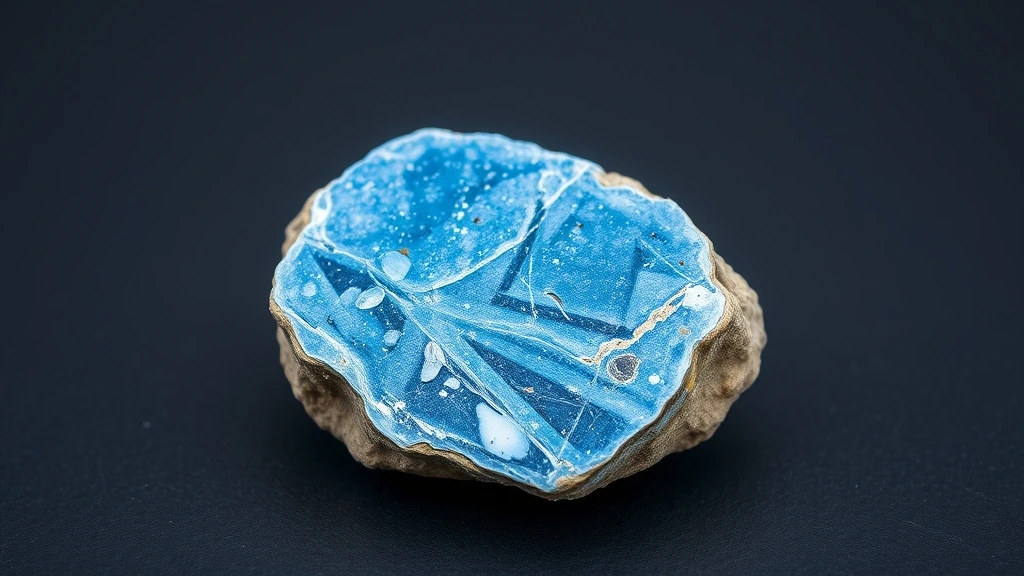
Dolomite belongs to the natural mineral group of carbonates, forming through the replacement of calcium ions in limestone by magnesium. This geological process creates a stable, dense structure that resists weathering better than pure calcite. As a crystal, it exhibits distinct cleavage and a vitreous luster, making it a significant subject in mineralogical studies.
What is Blue Dolomite? Geological Overview & Definition
Blue Dolomite is a specific color variant of the primary mineral dolomite, which forms in sedimentary environments. It is not a separate species but a chromatic expression of the same trigonal crystal structure. The blue tint results from microscopic inclusions or trace elements like cobalt or copper.
Geologically, it often occurs in metamorphic rocks or as veins within limestone deposits. Its formation requires specific chemical conditions where magnesium-rich fluids interact with calcium carbonate. This process ensures the mineral maintains its characteristic rhombohedral habit and physical properties. A notable example of this calcium carbonate family is Cobaltoan Calcite, which shares similar crystalline structures but distinguishes itself through its intense blue hue derived from cobalt impurities.
Blue Dolomite Chemical Composition & Crystallographic Properties
The mineral crystallizes in the trigonal system, characterized by a hexagonal lattice with a distinct three-fold symmetry. This structure allows for perfect cleavage along three directions, creating rhombohedral fragments. The unit cell parameters reflect the ordered arrangement of calcium and magnesium ions. The trigonal symmetry that gives Blue Dolomite its distinctive hexagonal lattice also appears in Chocolate Calcite, whose rhombohedral fragments reveal a similarly ordered arrangement of calcium and magnesium ions.
The chemical formula CaMg(CO₃)₂ indicates a 1:1 ratio of calcium to magnesium cations. This specific stoichiometry differentiates it from calcite, which lacks magnesium. The cation substitution of calcium by magnesium stabilizes the lattice, increasing the mineral’s overall density and resistance to dissolution.
Dolomite reacts slowly with dilute hydrochloric acid, a key diagnostic test for identification. Unlike calcite, which fizzes immediately, dolomite requires powdered samples or stronger acids to react visibly. This acid sensitivity profile helps geologists distinguish it from other carbonate minerals in the field.
The blue coloration is attributed to chromophore centers, likely involving trace transition metals. These impurities absorb specific wavelengths of light, reflecting the blue spectrum to the observer. Thermal behavior remains stable at room temperature, with no significant phase changes until high heat is applied.
| Property | Specification |
|---|---|
| Mineral Group | Natural Mineral / Crystal |
| Chemical Formula | CaMg(CO₃)₂ |
| Mohs Hardness | 3.5 – 4.0 |
| Crystal System | Trigonal |
| Specific Gravity (Density) | 2.83 – 3.10 |
| Refractive Index | 1.486 – 1.501 |
| Color & Optical Properties | Natural Blue Dolomite color spectrum and optical dispersion |
| Primary Mining Localities | Global primary localities |
| Water & Chemical Resistance | Sensitive (Avoid prolonged water soaking) |
| Chakra Alignment (Traditional) | Heart Chakra, Root Chakra |
| Zodiac Affinity (Traditional) | Taurus, Virgo, Capricorn |
| Symbolic Meaning (Traditional) | Emotional grounding, inner strength, and stability |
Blue Dolomite Varieties & Color Spectrum
Blue Dolomite displays distinct mineralogical characteristics across its geological varieties and structural habits. Gemologists evaluate these natural varieties based on crystal habit, trace chromophore concentrations, and visual luster.
Primary Natural Blue Dolomite
The benchmark natural variety exhibiting diagnostic color saturation and classic crystallographic symmetry.
Distinct Geological Morphs of Blue Dolomite
Secondary regional and structural varieties formed under localized geological temperature and pressure conditions.
Blue Dolomite (Standard Blue)
Blue Dolomite is the most common variant, forming in trigonal crystal systems within carbonate-rich pegmatites. Its deep azure hue results from trace Fe²⁺ and Mn²⁺ substitutions, giving a uniform blue that fades to a lighter tint when exposed to light. The stone typically shows fine fibrous inclusions of calcite, which create a subtle lattice effect. Though widely available, high‑clarity specimens are prized by collectors.
Sky‑Blue Dolomite
Sky‑Blue Dolomite develops in shallow, high‑temperature hydrothermal veins where silica-rich fluids introduce minor Al³⁺ and Fe³⁺. The resulting pale blue is lighter than the standard variety and often displays a silky luster due to microscopic fibrous inclusions. Its rarity stems from the narrow temperature window required for formation, making large, flawless stones uncommon.
Blue‑Green Dolomite
Blue‑Green Dolomite emerges when magnesium is partially replaced by Fe²⁺ in a cooler, low‑pressure environment. The color ranges from turquoise to slate blue, with occasional greenish streaks from iron oxidation. Inclusions of quartz and mica give a subtle speckled appearance, and the stone is valued for its dual‑tone visual appeal.
Blue‑Red Dolomite
Blue‑Red Dolomite is a rare hybrid where red iron oxide inclusions are trapped within a blue matrix. The contrasting colors create a striking marbled effect, often used in ornamental carvings. Geological formation occurs in oxidizing zones of dolomite‑rich deposits, where iron precipitates as hematite or goethite. Its scarcity and unique pattern make it a sought‑after collector’s piece.
Blue‑White Dolomite
Blue‑White Dolomite forms in highly purified carbonate environments where trace Na⁺ and K⁺ ions are minimal. The result is a pale blue with a near‑white background, giving a translucent quality. The stone’s delicate appearance is enhanced by fine, needle‑like calcite inclusions. Due to its delicate color balance, large, clear specimens are exceptionally rare.
Blue‑Grey Dolomite
Blue‑Grey Dolomite develops in metamorphosed dolomite beds exposed to low‑grade metamorphism. The grey tint arises from iron oxidation, while the underlying blue remains due to residual carbonate. The stone often contains planar mica inclusions, giving it a subtle sheen. Its formation in specific metamorphic settings makes it a niche variety for geological study.
Where is Blue Dolomite Found? Geological Mining & Extraction
Blue Dolomite is predominantly extracted from carbonate‑rich pegmatite veins in metamorphic terranes where dolomite has undergone partial recrystallization. The mineral’s ideal host environment is a low‑temperature hydrothermal system that facilitates the incorporation of trace metals responsible for its blue hue.
Major mining regions include the Aravalli Range in Rajasthan, India, where extensive dolomite deposits yield high‑quality blue specimens, and the Bavarian Alps in Germany, known for its fine‑grained, transparent varieties. Smaller, artisanal operations in the Sierra Madre of Mexico also produce distinctive blue‑green dolomite, prized for its unique color palette.
Historical Significance & Cultural Lore of Blue Dolomite
Across ancient Greco‑Roman lapidary traditions, blue dolomite was valued for its soothing hue, often carved into amulets believed to promote emotional balance and protect against envy. In Egyptian tombs, fragments of blue‑colored dolomite were incorporated into jewelry, reflecting the civilization’s reverence for the color blue as a symbol of the heavens and eternal life.
In Vedic lore, the stone was associated with the Heart Chakra, believed to stabilize emotional grounding and inner strength. Chinese artisans, too, utilized blue dolomite in jade‑like carvings, attributing to it qualities of calmness and resilience. These cross‑cultural uses underscore the mineral’s enduring appeal as both a decorative and metaphysical gem.
Modern Uses & Jewelry Applications of Blue Dolomite
Due to its relatively low Mohs hardness of 3.5 to 4.0, blue dolomite is primarily fashioned into smooth, polished cabochons rather than faceted gems. This softness makes it ideal for pendants, beads, and ornamental carvings that emphasize its gentle luster and unique coloration. Lapidaries often select specimens with uniform blue hues to maximize aesthetic appeal in contemporary jewelry designs.
- Cabochon Cutting: The most common cut, showcasing the stone’s translucency and internal patterns without risking chipping.
- Ornamental Carvings: Used in small sculptures and inlays where its earthy tones complement other minerals.
- Beaded Jewelry: Frequently strung into necklaces and bracelets due to its ease of drilling and polishing.
- Lapidary Polishing: Requires careful handling to prevent surface scratching during the final finishing stages.
Metaphysical Properties & Traditional Meaning of Blue Dolomite
According to historical traditions and metaphysical lore, blue dolomite is revered for its capacity to foster emotional grounding and inner stability. Ancient Mediterranean and Vedic lapidary practices often associated carbonate minerals with the earth element, symbolizing resilience and calm. Practitioners believe this stone helps dissipate anxiety, allowing the wearer to maintain a centered and balanced state of mind.
In broader esoteric contexts, the stone is linked to inner strength and the ability to navigate life’s challenges with composure. It is thought to bridge the gap between physical endurance and emotional well-being, promoting a sense of security. This dual nature makes it a popular choice for those seeking harmony between their mental and physical selves.
Which Chakra and Zodiac Signs Align with Blue Dolomite?
Blue dolomite is energetically aligned with the Heart Chakra and the Root Chakra, facilitating a connection between emotional love and physical stability. The Heart Chakra association supports compassion and emotional healing, while the Root Chakra link grounds the wearer in reality and security. This dual alignment helps balance the upper and lower energy centers of the body.
Astrologically, this stone resonates strongly with Taurus, Virgo, and Capricorn. These earth signs share a natural affinity for stability, practicality, and enduring strength, which mirrors the stone’s metaphysical properties. Wearing blue dolomite is believed to amplify these innate traits, providing additional support during periods of transition or stress.
How to Identify Real vs. Fake Blue Dolomite
Artificial imitations of blue dolomite often include synthetic glass, dyed calcite, or plastic replicas designed to mimic its hue. These fakes may lack the natural inclusions and subtle color variations found in genuine specimens. Understanding the physical properties of the real mineral is essential for distinguishing it from these manufactured alternatives.
Practical At-Home Authenticity Tests
- Temperature Test (Thermal Feel): Genuine dolomite feels cool to the touch initially and warms slowly, whereas plastic imitations tend to feel neutral or warm immediately upon contact.
- Specific Gravity & Weight Test: Real blue dolomite has a density of 2.83 to 3.10 g/cm³, making it noticeably heavier than similarly sized glass or plastic substitutes.
- Scratch & Hardness Test (Mohs Comparison): With a Mohs hardness of 3.5 to 4.0, the stone can be scratched by a steel knife or a copper coin, while harder fakes like quartz will not.
- Microscopic & Loupe Inspection (Internal Inclusions): Using a 10x loupe, look for natural fractures, mineral inclusions, or color zoning; synthetic glass often appears too perfect or contains bubble-like artifacts.
Blue Dolomite Valuation Factors, Grading & Pricing
Color saturation drives the market premium for blue dolomite, as deeper, evenly distributed hues signal minimal alteration and superior natural beauty. Collectors prize a vivid, blue‑gray to sapphire tone that retains its brilliance under varied lighting. Stones displaying a uniform, luminous luster command higher prices than those with washed‑out or patchy coloration.
Crystal size and weight, expressed in grams, are the primary quantitative metrics for valuation. Larger, well‑proportioned specimens that weigh more per unit volume fetch a premium, especially when the surface is expertly tumbled to a high polish. Natural matrix inclusions such as thin calcite veins can enhance character, but excessive fracturing or porous zones reduce the gram‑based price.
Ethical sourcing and locality premium increasingly influence both holistic practitioners and serious collectors. Blue dolomite mined from regions with transparent labor practices and minimal environmental impact earns a reputation bonus, often reflected in a modest price uplift. Provenance from historically noted deposits, documented through reputable channels, further validates authenticity and adds market confidence.
How to Clean and Care for Blue Dolomite
Gently wipe the surface with a lightly dampened cloth, then immediately dry with a soft, lint‑free microfiber towel to prevent moisture retention. This brief, controlled contact removes dust without compromising the mineral’s delicate carbonate structure. Avoid any prolonged soaking, submersion, or exposure to humid environments that could weaken the crystal lattice.
Ultrasonic cleaning devices must be avoided, as the high‑frequency vibrations can create micro‑fractures within the dolomite’s trigonal framework. Instead, rely on manual cleaning methods and store the stone in a low‑humidity display case or pouch when not in use. Regular inspection for surface cracks ensures early detection of any stress‑related damage.
Cleansing and Recharging Blue Dolomite (Energetic Care)
For energetic maintenance, a brief session of herbal smudging with sage or cedar can gently clear residual fields without introducing moisture. Pass the stone through the smoke for no more than ten seconds, then place it on a clean surface to air‑dry, allowing the subtle aromatic vibration to reset its metaphysical balance.
Moonlight exposure offers a natural, heat‑free recharging method; position the dolomite on a windowsill during a clear night and allow the soft lunar glow to bathe the crystal for several hours. Alternatively, resting the stone on a selenite charging slab transfers a steady flow of pure energy, enhancing its emotional grounding qualities without risking thermal stress.
Frequently Asked Questions About Blue Dolomite
Blue Dolomite displays distinct mineralogical characteristics across its geological varieties and structural habits. Gemologists evaluate these natural varieties based on crystal habit, trace chromophore concentrations, and visual luster.
Primary Natural Blue Dolomite
The benchmark natural variety exhibiting diagnostic color saturation and classic crystallographic symmetry.
Distinct Geological Morphs of Blue Dolomite
Secondary regional and structural varieties formed under localized geological temperature and pressure conditions.
What is the chemical composition of blue dolomite?
Blue dolomite is CaMg(CO₃)₂. This carbonate mineral contains calcium and magnesium, giving it a distinct blue hue in certain varieties. Its trigonal crystal system and moderate density (2.83–3.10 g/cm³) make it recognizable in both geological and gemological contexts.
How durable is blue dolomite for everyday wear?
Blue dolomite has a Mohs hardness of 3.5–4.0, making it relatively soft. It is suitable for jewelry only when set in protective settings; otherwise, it can scratch or chip easily. Avoid rough handling and store it separately from harder stones.
Can blue dolomite be worn in the shower or exposed to water?
Blue dolomite is water‑sensitive and should not be soaked or worn in prolonged wet conditions. Brief contact with rain or a quick splash is tolerable, but extended exposure can cause surface erosion or internal stress, potentially leading to fractures.
What is the best way to clean blue dolomite without damaging it?
Wipe blue dolomite briefly with a damp microfiber cloth and dry immediately; avoid ultrasonic cleaners. The mineral’s delicate structure can fracture under ultrasonic vibrations, so gentle hand cleaning is essential to preserve its integrity.
Does blue dolomite have any metaphysical or chakra associations?
Blue dolomite is linked to the Heart Chakra and Root Chakra. In esoteric traditions, it is believed to promote emotional grounding, inner strength, and stability, aligning with the energies of Taurus, Virgo, and Capricorn zodiac signs.
Which zodiac signs are traditionally associated with blue dolomite?
Blue dolomite is traditionally linked to Taurus, Virgo, and Capricorn. These signs are thought to resonate with the stone’s grounding and stabilizing properties, enhancing personal balance and confidence.
Is blue dolomite safe for children or pets to handle?
Blue dolomite is safe to handle but should be kept out of reach of small children and pets. Its softness means it can be easily broken, and ingestion of small fragments could pose a choking hazard; supervision is advised.
How can I identify authentic blue dolomite versus imitations?
Authentic blue dolomite displays a uniform blue tone, low refractive index (1.486–1.501), and a trigonal crystal habit. In contrast, synthetic or dyed imitations often show irregular coloration, higher hardness, or a different crystal system, so professional testing is recommended for verification.