
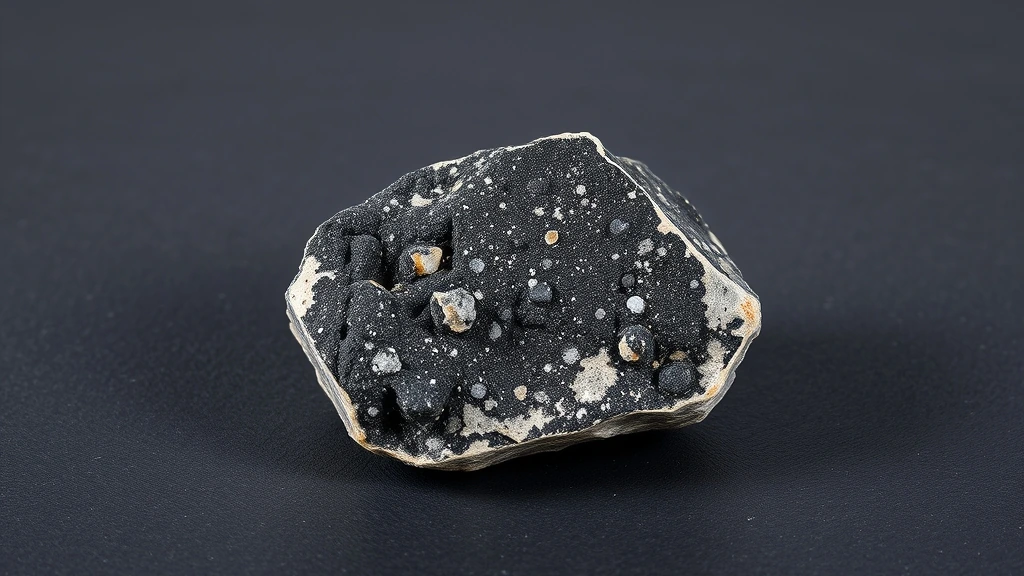
Brucite belongs to the natural mineral class, specifically forming within the hydroxide group. It is a primary alteration product of olivine and serpentine in ultramafic rocks. This mineral rarely occurs in large, gem-quality crystals. Instead, it often appears as fine-grained masses or foliated sheets. Its geological significance lies in its role as a key indicator of specific metamorphic conditions. Understanding its formation helps geologists map ancient tectonic environments.
What is Brucite? Geological Overview & Definition
Brucite forms through the hydration of magnesium silicates during low-grade metamorphism. It is commonly found in serpentinites and altered peridotites. The mineral typically occurs as thin, flexible plates or fibrous aggregates. Its physical softness makes it susceptible to mechanical weathering. In comparative mineralogical collections, practitioners and geologists frequently study Pyrophyllite alongside this crystal to appreciate their subtle energetic and structural differences.
In gemological contexts, brucite is rarely cut into faceted stones. Collectors often value its translucent, pearly luster over its durability. The mineral serves as a crucial marker for hydrothermal alteration zones. Its presence indicates significant water-rock interaction in the Earth’s crust. In comparative mineralogical collections, practitioners and geologists frequently study Purple Jade alongside this crystal to appreciate their subtle energetic and structural differences.
Brucite Chemical Composition & Crystallographic Properties
Brucite crystallizes in the trigonal crystal system, exhibiting a distinct layered structure. The lattice consists of sheets of magnesium ions coordinated by hydroxyl groups. These layers are held together by weak hydrogen bonds. This arrangement results in perfect basal cleavage and low hardness.
The chemical composition is strictly stoichiometric, with minimal cation substitution. Trace impurities may slightly alter the refractive index. The mineral is highly sensitive to acids, dissolving rapidly in dilute solutions. This acid sensitivity is a key diagnostic property for identification.
Color in brucite is generally due to structural purity rather than chromophores. Pure specimens appear colorless or white. Slight yellowing may occur from minor iron inclusions. The mineral lacks significant pleochroism due to its low birefringence.
Thermal behavior reveals that brucite dehydrates at relatively low temperatures. Heating above 350°C converts it to periclase (MgO). This phase transition is irreversible under standard conditions. The material loses its structural water, collapsing the layered lattice.
| Property | Specification |
|---|---|
| Mineral Group | Natural Mineral / Crystal |
| Chemical Formula | Mg(OH)₂ |
| Mohs Hardness | 2.5 to 3 |
| Crystal System | Trigonal |
| Specific Gravity (Density) | 2.39 to 2.40 |
| Refractive Index | n ω = 1.56–1.59 n ε = 1.58–1.60 |
| Color & Optical Properties | Natural Brucite color spectrum and optical dispersion |
| Primary Mining Localities | Global primary localities |
| Water & Chemical Resistance | High (Safe for gentle water washing) |
| Chakra Alignment (Traditional) | Root Chakra |
| Zodiac Affinity (Traditional) | Taurus, Virgo, Capricorn |
| Symbolic Meaning (Traditional) | Grounding, stability, and emotional balance |
Brucite Varieties & Color Spectrum
Brucite displays distinct mineralogical characteristics across its geological varieties and structural habits. Gemologists evaluate these natural varieties based on crystal habit, trace chromophore concentrations, and visual luster.
Primary Natural Brucite
The benchmark natural variety exhibiting diagnostic color saturation and classic crystallographic symmetry.
Distinct Geological Morphs of Brucite
Secondary regional and structural varieties formed under localized geological temperature and pressure conditions.
Pure White Brucite
Formed in low‑temperature hydrothermal veins, pure white brucite crystallizes as slender, tabular plates within serpentinized ultramafic rocks. Hydrothermal alteration of peridotite introduces trace magnesium hydroxide that remains free of chromophoric impurities, giving a milky translucence. This variety is common in the Carrara region of Italy but is considered modestly rare as a gemstone due to its delicate Mohs hardness of 2.5–3.
Pale Green Brucite (Verdigris)
Pale green brucite develops where iron‑bearing fluids infiltrate the host limestone, imparting a subtle Fe³⁺ coloration. The crystals often exhibit fine, parallel growth striations and occasional calcite inclusions that enhance their visual depth. Found chiefly in the Kalahari Basin of Botswana, this hue is prized by collectors for its gentle chroma and relative scarcity.
Deep Blue Brucite (Azurite‑Like)
Deep blue brucite is a regional trade name for specimens that incorporate minute copper-bearing inclusions, producing a vivid azure tint reminiscent of azurite. These crystals typically occur in the oxidized zones of copper‑rich skarn deposits in the Zambian Copperbelt. Their intense color and limited geographic distribution make them the most valuable commercial variety.
Pinkish‑Orange Brucite (Rosy)
The rosy variety emerges when trace manganese substitutes for magnesium within the lattice, yielding a soft pink to orange hue. Often associated with dolomitic marble host rocks in the Carpathian Mountains, the crystals display a characteristic honeycomb habit and occasional fluid‑filled cavities. Its rarity is heightened by the delicate balance required for manganese incorporation without destabilizing the mineral.
Yellow‑Brown Brucite (Sahara Sun)
Yellow‑brown brucite forms in arid desert sabkhas where evaporitic brines precipitate magnesium hydroxide alongside iron oxides. The resulting iron oxide staining creates a warm, sun‑kissed appearance, especially noted in deposits near the Sahara’s Algerian margins. Though abundant locally, the gem‑quality crystals are uncommon due to frequent surface weathering.
Black Brucite (Carbonaceous)
Black brucite is a metamorphic product of organic‑rich shale undergoing low‑grade greenschist facies alteration, incorporating fine carbon particles that darken the mineral. The crystals retain a glossy, almost metallic luster and are typically found in the Appalachian foothills of the United States. Its unique appearance and limited occurrence render it a niche collector’s item.
Where is Brucite Found? Geological Mining & Extraction
Brucite primarily occurs as a secondary mineral in serpentinized ultramafic complexes, where magnesium‑rich fluids alter peridotite and harzburgite. In these settings, it fills fractures and voids, often intergrown with serpentine, talc, and chlorite, creating the tabular aggregates prized by gem cutters. Major mining districts include the Carrara marble quarries of Italy, the Kalahari Basin of Botswana, and the Zambian Copperbelt skarn zones.
Extraction relies on careful manual separation because brucite’s low hardness precludes conventional crushing. Workers employ soft‑tipped picks and fine sieving to isolate intact plates from host rock, followed by gentle washing to remove clays. In regions such as the Carpathians and the Algerian Sahara, artisanal miners harvest the mineral directly from surface outcrops, preserving its delicate crystal habit for the gemstone market.
Historical Significance & Cultural Lore of Brucite
Across ancient lapidary traditions, brucite was valued for its cooling tactile quality, making it a favored material for ceremonial cooling stones in Greco‑Roman baths. Egyptian tomb inventories from the New Kingdom list “magnesium stone” tablets, likely brucite, used as amulets to ward off heat‑related ailments, reflecting early recognition of its thermal properties.
In Vedic texts, the mineral appears under the name “Shila‑Matsya,” associated with the Root Chakra and employed in grounding rituals to promote emotional stability. Chinese alchemical manuscripts of the Han dynasty describe brucite as “qing shui,” a component in elixirs intended to balance the body’s yin energy, underscoring its cross‑cultural reputation as a stabilizing agent.
Modern Uses & Jewelry Applications of Brucite
Due to its low Mohs hardness of 2.5 to 3, brucite is rarely suitable for high-wear faceted gemstones. Lapidaries typically cut this soft mineral into cabochons or ornamental carvings to preserve its delicate structure. Its translucent to opaque nature allows for smooth polishing, highlighting its characteristic white to pale green hues.
- Cabochon Cutting: Standard practice for maximizing surface area and displaying the stone’s soft luster without risking fracture during faceting.
- Ornamental Carvings: Used in small-scale decorative objects, pendants, and beads where mechanical stress is minimal.
- Collector Specimens: Often displayed in mineral collections rather than daily-worn jewelry due to its susceptibility to scratching and chemical weathering.
Metaphysical Properties & Traditional Meaning of Brucite
According to historical traditions and metaphysical lore, brucite is associated with grounding and emotional stability. Ancient Mediterranean and Vedic lapidary practices often linked magnesium-rich minerals to the earth’s foundational energies. Practitioners believe this stone helps anchor the spirit, fostering a sense of security during turbulent times.
In esoteric contexts, brucite is viewed as a stabilizer for the root chakra. It is thought to promote physical vitality and reduce anxiety by connecting the wearer to the planet’s magnetic field. This alignment supports the belief that the mineral aids in achieving emotional balance and resilience.
Which Chakra and Zodiac Signs Align with Brucite?
Brucite is canonically aligned with the Root Chakra, which governs survival, safety, and physical well-being. This connection stems from the stone’s association with earthy, stabilizing energies that anchor the body’s energy field. The mineral’s soft, white appearance symbolizes purity and foundational strength in chakra healing practices.
Astrologically, brucite resonates with the earth signs: Taurus, Virgo, and Capricorn. These zodiac signs value stability, practicality, and long-term security, mirroring the stone’s metaphysical attributes. Wearing brucite is believed to enhance the natural traits of these signs, promoting patience and grounded decision-making.
How to Identify Real vs. Fake Brucite
Because brucite is soft and relatively rare in the jewelry market, it is frequently imitated by synthetic materials. Common fakes include dyed calcite, synthetic glass, or plastic replicas designed to mimic its pale color. Understanding the physical properties of genuine brucite is essential for distinguishing it from these artificial substitutes.
Practical At-Home Authenticity Tests
- Temperature Test (Thermal Feel): Genuine brucite feels cool to the touch initially but warms up quickly in the hand due to its low thermal conductivity, whereas glass remains cool longer.
- Specific Gravity & Weight Test: With a density of 2.39 to 2.40, brucite feels lighter than many similar-looking dense minerals like quartz, which has a specific gravity of 2.65.
- Scratch & Hardness Test (Mohs Comparison): A copper coin (Mohs 3.5) will easily scratch genuine brucite, while a fingernail (Mohs 2.5) may leave a faint mark, confirming its low hardness.
- Microscopic & Loupe Inspection (Internal Inclusions): Use a 10x loupe to check for natural crystal boundaries or minor inclusions; synthetic glass often contains tiny air bubbles or swirls not found in natural brucite.
Brucite Valuation Factors, Grading & Pricing
The market value of brucite hinges first on color saturation, where a vivid green or blue‑green hue signals high purity and enhances visual vibrancy. Natural energetic luster, often described as a subtle sheen, further elevates desirability among collectors seeking metaphysical resonance.
Second, crystal size and weight (grams) play a decisive role. Larger, well‑formed crystals with a smooth tumbled polish command higher prices than smaller, raw specimens. The presence of natural matrix inclusions can add character, but excessive inclusions may reduce overall value.
Finally, ethical sourcing and locality premium influence pricing in holistic and collector markets. Specimens mined from responsibly managed deposits, particularly those with documented provenance from renowned localities, attract a premium due to their traceability and environmental stewardship.
How to Clean and Care for Brucite
Cleaning brucite requires gentle handling because the mineral is soft and can fracture under stress. Use warm soapy water and a soft cloth to wipe the surface, ensuring the water is not too hot to avoid thermal shock. After cleaning, dry the specimen with a clean, dry microfiber cloth and store it in a low‑humidity environment away from moisture.
Cleansing and Recharging Brucite (Energetic Care)
To recharge brucite’s energetic properties, place the stone in a quiet space and allow gentle moonlight to bathe it overnight. Alternatively, resting the mineral on a selenite charging slab can help restore its vibrational balance, as selenite’s conductive qualities facilitate energy transfer without exposing brucite to heat or direct sunlight.
Frequently Asked Questions About Brucite
Brucite displays distinct mineralogical characteristics across its geological varieties and structural habits. Gemologists evaluate these natural varieties based on crystal habit, trace chromophore concentrations, and visual luster.
Primary Natural Brucite
The benchmark natural variety exhibiting diagnostic color saturation and classic crystallographic symmetry.
Distinct Geological Morphs of Brucite
Secondary regional and structural varieties formed under localized geological temperature and pressure conditions.
What is the chemical composition of brucite?
Brucite is magnesium hydroxide, Mg(OH)₂. This simple hydroxide mineral forms in the trigonal crystal system and is the primary source of magnesium in geological settings. Its low Mohs hardness of 2.5–3 makes it relatively soft, limiting its use in jewelry.
How hard is brucite compared to other gemstones?
Brucite rates 2.5 to 3 on the Mohs scale. This places it below common gemstones such as quartz (7) and topaz (8), meaning it scratches easily with a fingernail. Collectors handle it with care, storing it separately from harder stones to avoid surface damage.
Can brucite be worn in water or the shower?
Yes, brucite tolerates gentle water washing. Its high water resistance allows safe cleaning with warm, soapy water, but prolonged submersion should be avoided to prevent surface etching. After washing, pat the stone dry with a soft cloth to preserve its luster.
What is the recommended cleaning method for brucite jewelry?
Use warm soapy water and a soft cloth, avoiding ultrasonic cleaners. The mineral’s delicate structure can fracture under ultrasonic vibrations, so manual cleaning is safest. Gently rub with a microfiber cloth, rinse lightly, and air‑dry to maintain clarity.
Which zodiac signs are associated with brucite?
Brucite aligns with Taurus, Virgo, and Capricorn. In astrological tradition, these earth signs appreciate the stone’s grounding qualities. The mineral’s stable density (2.39–2.40 g/cm³) mirrors the steady, reliable nature attributed to these signs.
Which chakra does brucite influence?
Brucite is linked to the Root Chakra. This energy center governs feelings of safety, stability, and physical grounding. Wearing the stone is believed to enhance emotional balance and reinforce a sense of connection to the earth.
Is brucite safe for everyday wear despite its softness?
Brucite can be worn daily if protected from impact. Its low hardness makes it vulnerable to scratches from hard surfaces, so setting it in protective bezels or using it in pendants that avoid frequent contact is advisable. Regular gentle cleaning helps retain its appearance.
Where is brucite typically found in nature?
Brucite occurs in metamorphic and hydrothermal environments worldwide. It often forms as a secondary mineral in serpentine‑rich rocks and can be a by‑product of magnesium‑bearing ore deposits. Its trigonal crystals may appear as translucent, pale green to white aggregates.