
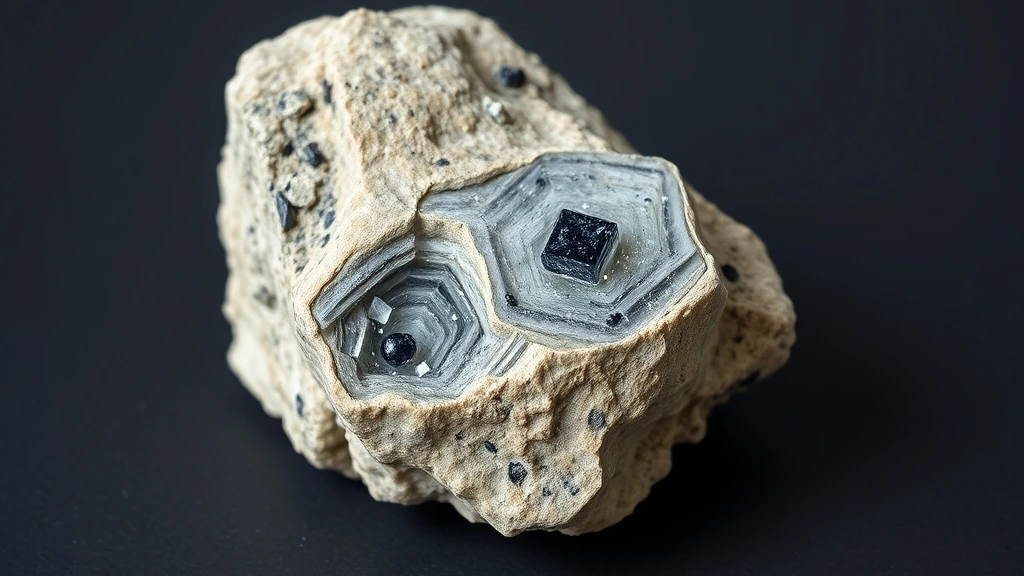
Phlogopite belongs to the mica subgroup of sheet silicates and is classified as a natural mineral/crystal. It crystallises in the monoclinic system, forming perfect basal cleavage that yields thin, flexible sheets. Typically found in metamorphic marbles and ultramafic rocks, its formation reflects high‑temperature, low‑pressure conditions. The mineral’s layered structure imparts a characteristic pearly luster prized by collectors.
What is Phlogopite Gemstone? Geological Overview & Definition
Phlogopite is the magnesium‑rich end‑member of the mica series, distinguished from its iron‑rich counterpart biotite by its lighter hue and lower density. In gemological contexts it is valued for its transparent to translucent sheets that can be cut into cabochons or used as decorative veneers.
The gemstone occurs as tabular, flexible plates that split easily along the (001) plane, a hallmark of sheet silicates. Its formation is linked to contact metamorphism where carbonate rocks interact with magnesium‑rich fluids, producing the characteristic monoclinic symmetry and layered lattice.
Phlogopite Gemstone Chemical Composition & Crystallographic Properties
The ideal chemical formula KMg₃(AlSi₃O₁₀)(F,OH)₂ reflects a framework of tetrahedral SiO₄ sheets balanced by octahedral Mg²⁺ sites. Substitutions of Fe²⁺, Ti⁴⁺, or Na⁺ for Mg²⁺ can occur, subtly altering density and color without breaking the monoclinic lattice.
Phlogopite’s crystal structure consists of T‑O‑T (tetrahedral‑octahedral‑tetrahedral) layers linked by interlayer potassium ions, producing perfect basal cleavage. This sheet architecture yields a low hardness (2–2.5) and a flexible, elastic response to mechanical stress.
Acid sensitivity is moderate; dilute hydrochloric acid attacks the OH/F groups, gradually dissolving the interlayer bonds while the silicate framework remains relatively resistant. This behavior is crucial for cleaning and setting the gemstone.
Color in phlogopite arises from chromophore centers such as Fe²⁺/Fe³⁺ and Mn²⁺, which absorb specific wavelengths and produce the familiar yellow‑brown spectrum. Upon heating above 600 °C, these color centers can be altered or bleached, leading to a paler appearance—a property exploited in heat‑treatment experiments.
| Property | Specification |
|---|---|
| Mineral Group | Natural Mineral / Crystal |
| Chemical Formula | KMg₃ (AlSi₃ O₁₀ )(F,OH)₂ |
| Mohs Hardness | 2–2.5 |
| Crystal System | Monoclinic |
| Specific Gravity (Density) | 2.78–2.85 |
| Refractive Index | nα = 1.530–1.573 nβ = 1.557–1.617 nγ = 1.558–1.618 |
| Color & Optical Properties | Natural Phlogopite Gemstone color spectrum and optical dispersion |
| Primary Mining Localities | Global primary localities |
| Water & Chemical Resistance | High (Safe for gentle water washing) |
| Chakra Alignment (Traditional) | Heart Chakra |
| Zodiac Affinity (Traditional) | Taurus, Virgo, Capricorn |
| Symbolic Meaning (Traditional) | Grounding, stability, and emotional balance |
Phlogopite Gemstone Varieties & Color Spectrum
Phlogopite exhibits a diverse range of hues driven by trace element substitutions within its crystal lattice. The most commercially significant forms display warm, earthy tones that appeal to collectors seeking unique gemological characteristics. Understanding these variations is essential for accurate identification and valuation in the mineral market.
Golden Phlogopite
This variety features a rich, metallic gold to bronze coloration caused by high iron content. It often displays a distinct pleochroism, showing different shades when viewed from various crystal angles. Such specimens are typically found in mica schists and are prized for their lustrous, sheet-like appearance.
Green Phlogopite
Green phlogopite arises from the presence of chromium or vanadium impurities replacing magnesium in the structure. These stones often exhibit a deep, forest-green hue with a vitreous to pearly luster. They are less common than golden varieties and are frequently associated with ultramafic rock formations.
Brown Phlogopite
Commonly known as “copper mica,” this variety ranges from light tan to deep chocolate brown. The coloration results from varying degrees of oxidation within the monoclinic crystal system. It is the most abundant form and is widely used in industrial applications due to its thermal stability.
Clear Phlogopite
Rare transparent specimens appear colorless to pale yellow, allowing light to pass through the thin sheets. These high-clarity stones are highly sought after for lapidary work and display excellent refractive index values. Their scarcity makes them valuable curiosities among serious gem collectors and mineralogists.
Where is Phlogopite Gemstone Found? Geological Mining & Extraction
Phlogopite primarily forms in pegmatite dikes and metamorphic schists, where slow cooling allows large, well-formed crystals to develop. It is also found in igneous rocks such as gabbro and diorite, often associated with other sheet silicates. The geological setting dictates the crystal size and clarity available for extraction.
Major mining regions include the United States, particularly in New Hampshire and Maine, as well as parts of Africa and South America. These locations host significant deposits where phlogopite is extracted for both industrial insulation and gemstone purposes. Careful extraction is required to preserve the fragile, platy nature of the mineral.
Historical Significance & Cultural Lore of Phlogopite Gemstone
Ancient civilizations utilized phlogopite for its heat resistance and decorative potential, often incorporating it into ritualistic objects. Archaeological evidence suggests its use in early metallurgical processes, where it served as a protective lining for furnaces. This practical application highlights its importance beyond mere aesthetic value in ancient societies.
In modern metaphysical traditions, phlogopite is linked to the Heart Chakra, promoting emotional stability and grounding. Believers associate it with zodiac signs like Taurus and Virgo, valuing its earthy energy for balance. This enduring cultural relevance ensures its continued popularity in contemporary wellness practices.
Modern Uses & Jewelry Applications of Phlogopite Gemstone
Phlogopite’s silky luster and translucent to pearly appearance make it a favored material for cabochon and faceted settings, despite its modest Mohs hardness of 2–2.5. Lapidaries typically employ gentle sawing and polishing techniques to avoid chipping, while ornamental carving showcases its mica‑sheet structure in intricate motifs. Designers often pair phlogopite with harder stones to protect its surface in everyday wear.
- Cabochon pendants: polished domes set in silver or gold backings.
- Faceted earrings: shallow cuts that highlight birefringence without risking fracture.
- Ornamental carvings: decorative panels, inlays, and small figurines for interior décor.
Safety & Mineral Profile of Phlogopite
Phlogopite is a member of the mica group and is chemically a potassium‑rich magnesium‑rich mica (K(Mg,Fe)₃AlSi₃O₁₀(OH)₂). It is mechanically soft (Mohs hardness 2–2.5) and exhibits a pronounced cleavage that allows it to split into thin, flexible sheets. The mineral is generally non‑toxic; it contains no significant amounts of heavy metals such as lead or arsenic. However, dust generated from grinding or handling thin flakes can become airborne and may irritate the respiratory tract if inhaled in large quantities, so collectors should use a mask or work in a well‑ventilated area. Phlogopite does not react violently with acids or bases, but prolonged exposure to strong oxidizing acids can cause surface oxidation. Because of its softness, tendency to cleave, and lack of durable luster, phlogopite is usually displayed as a collector specimen rather than fashioned into jewelry or industrial components.
In museum and research contexts, phlogopite serves as a valuable indicator of metamorphic grade and pressure–temperature conditions. Its presence in schists and gneisses can help reconstruct the thermal history of a rock. The mineral’s ability to incorporate trace elements (e.g., Fe, Mn, Ti) makes it useful for geochemical zoning studies. In mineralogical collections, phlogopite is prized for its characteristic sheet structure and the way it reflects light, providing an educational example of mica’s unique anisotropy and cleavage properties.
Mineralogical Group and Planetary Lore of Phlogopite
Historically, phlogopite was first described in the early 19th century from specimens collected in the Alps and the Carpathian Mountains. The name derives from the Greek *phlogos* (fire) and *koptos* (cut), referencing the mineral’s fiery sheen and its tendency to cleave into thin, translucent sheets. According to early mineralogists, phlogopite was classified alongside other mica species such as muscovite and biotite, with distinctions made on the basis of chemical composition and crystal habit. In lapidary texts, phlogopite has occasionally been associated with the planet Mars, symbolizing its reddish‑brown coloration in some varieties, though this association remains anecdotal and not supported by modern planetary science.
How to Identify Real vs. Fake Phlogopite Gemstone
Artificial imitations of phlogopite include dyed mica sheets, synthetic glass, and resin‑filled composites that mimic its pearly sheen. These substitutes often lack the characteristic layered structure and the specific refractive indices of genuine phlogopite, making careful testing essential for collectors and jewelers.
Practical At-Home Authenticity Tests
- Temperature Test (Thermal Feel): Genuine phlogopite feels cool to the touch and retains its temperature longer than glass or plastic imitations, which quickly warm to hand temperature.
- Specific Gravity & Weight Test: With a density of 2.78–2.85 g/cm³, authentic phlogopite feels slightly heavier than synthetic glass of similar size; a simple water displacement test can confirm the range.
- Scratch & Hardness Test (Mohs Comparison): Using a copper coin (hardness ~3), a real phlogopite will be scratched easily, whereas many glass replicas will resist the mark.
- Microscopic & Loupe Inspection (Internal Inclusions): Under 10× magnification, natural phlogopite shows thin, parallel lamellae and occasional tiny bubbles, while synthetic glass appears uniformly clear with no layered inclusions.
Phlogopite Gemstone Valuation Factors, Grading & Pricing
Color Saturation serves as the primary determinant for market value in phlogopite specimens. Ideal stones exhibit a deep, uniform olive-green to golden-brown tone without zoning. High optical clarity and a distinct pearly luster further enhance the gem’s visual appeal.
Carat Weight significantly influences pricing, as large, clean crystals are exceedingly rare in the global market. Facet symmetry is critical for maximizing light return in cut stones, though many remain cabochons. Matrix presence and internal inclusions typically reduce the overall grade and commercial desirability.
Geographical Provenance Premium often elevates the value of phlogopite from renowned localities like Namibia or the United States. Wholesale prices remain modest, but high-quality retail pieces command significant premiums. Market trends show steady demand for unique, large-format decorative gemstones.
How to Clean and Care for Phlogopite Gemstone
Given its low Mohs Hardness of 2–2.5, phlogopite requires gentle handling to prevent surface abrasion. Always use warm soapy water and a soft cloth for routine maintenance. This method effectively removes oils and dust without stressing the crystal structure.
Ultrasonic cleaners must be strictly avoided to prevent structural fractures in the mica sheets. The mineral’s perfect basal cleavage makes it susceptible to splitting under high-frequency vibrations. Store phlogopite separately to avoid scratches from harder gemstones in your collection.
Cleansing and Recharging Phlogopite Gemstone (Energetic Care)
For energetic maintenance, utilize safe dry methods that respect the mineral’s physical fragility. Smoke smudging with sage or palo santo is an excellent non-invasive technique. This practice clears stagnant energy without exposing the stone to moisture or heat.
Moonlight exposure and placement on a selenite plate provide gentle, continuous recharging. These methods align with the stone’s association with the Heart Chakra. Ensure the environment remains dry to maintain the integrity of the crystal lattice.
Frequently Asked Questions About Phlogopite Gemstone
Is phlogopite safe to wear in the shower?
Yes, phlogopite is safe for gentle water washing due to its high water resistance. While it tolerates brief exposure, prolonged soaking is discouraged. The monoclinic crystal structure can weaken over time if subjected to constant moisture. Always dry the stone thoroughly after showering to maintain its luster and structural integrity.
Can I use an ultrasonic cleaner on phlogopite?
No, you must avoid ultrasonic cleaners to prevent structural fractures in the stone. The low Mohs hardness of 2–2.5 makes it susceptible to vibration damage. Instead, use warm soapy water and a soft cloth for safe cleaning. This gentle method preserves the delicate cleavage planes without risking internal cracks or surface abrasion.
What is the chemical formula of phlogopite?
The chemical formula is KMg₃(AlSi₃O₁₀)(F,OH)₂, defining it as a potassium magnesium aluminum silicate. This composition classifies it within the mica group of minerals. The presence of fluorine and hydroxyl groups influences its physical properties and color variations. Understanding this formula helps identify its specific geological origin and stability characteristics.
Which zodiac signs are aligned with phlogopite?
Phlogopite is traditionally aligned with Taurus, Virgo, and Capricorn. These earth signs resonate with the stone’s grounding and stabilizing energies. In esoteric practices, it supports emotional balance and practical stability for these individuals. Wearing phlogopite is believed to enhance their natural connection to the earth element.
Which chakra does phlogopite activate?
Phlogopite is primarily associated with the Heart Chakra. This alignment supports emotional healing and fosters a sense of inner peace. It helps balance the emotional and physical heart, promoting compassion and love. Practitioners use it to clear blockages and enhance the flow of positive energy within this specific energy center.
How hard is phlogopite on the Mohs scale?
Phlogopite has a Mohs hardness of 2–2.5, making it relatively soft. This low hardness means it is prone to scratching and abrasion. You should store it separately from harder gemstones to prevent damage. Its perfect basal cleavage also makes it susceptible to splitting if subjected to significant pressure or impact.
What is the refractive index of phlogopite?
The refractive index ranges from 1.530 to 1.618, indicating moderate brilliance. This optical property contributes to its characteristic glassy to pearly luster. The birefringence between the alpha and gamma axes affects how light travels through the crystal. These values help gemologists distinguish phlogopite from other similar-looking micas under a microscope.
What is the specific gravity of phlogopite?
Phlogopite has a specific gravity of 2.78–2.85, which is moderate for a silicate. This density helps identify it during gemological testing. It is lighter than many common gemstones but heavier than some organic materials. Accurate density measurement is a reliable method for confirming the stone’s identity in a laboratory setting.