
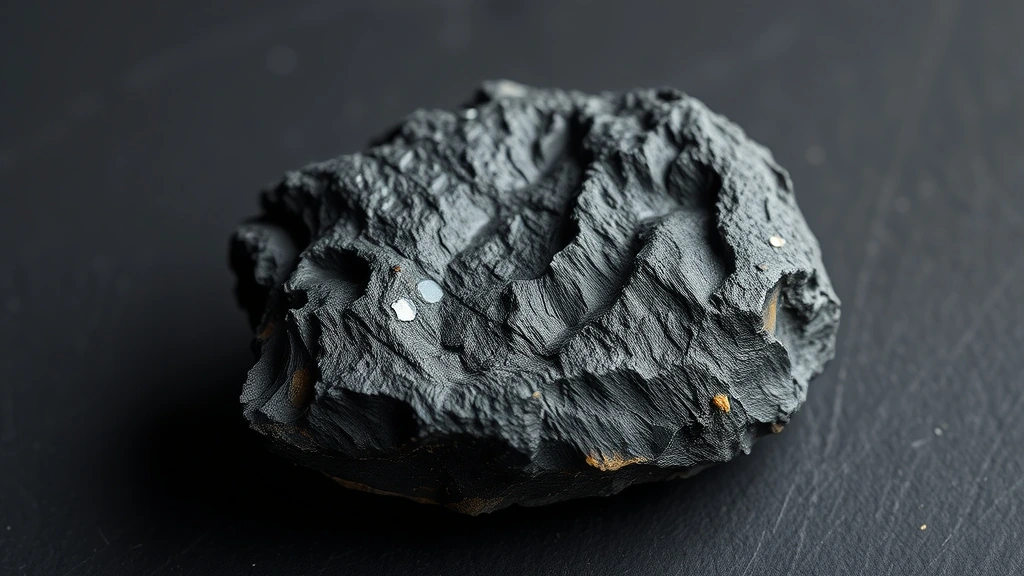
Impactite is not a single mineral species but a collective geological term for rocks altered by hypervelocity impact events. These formations belong to the broader category of natural minerals and crystals, where extreme pressure and temperature transform existing geological materials. The resulting textures and mineral phases are distinct from typical igneous or metamorphic processes, creating unique structural anomalies. Among the most celebrated examples of this impact-driven transformation is the Lunar Meteorite, which offers a unique glimpse into the high-energy processes that shape extraterrestrial geology.
What is Impactite? Geological Overview & Definition
Impactites form when meteorites strike the Earth’s surface, generating shock metamorphism that alters mineral structures instantaneously. This process creates diagnostic features such as planar deformation features in quartz grains, which serve as primary evidence of extraterrestrial impact. Unlike volcanic rocks, these formations result from sudden, high-energy compression rather than slow magma cooling.
The geological significance of impactites lies in their ability to preserve records of extraterrestrial collisions across Earth’s history. They often contain impact melt and brecciated fragments, offering insights into the dynamic forces of planetary formation. Studying these rocks helps geologists understand the scale and frequency of cosmic events that shaped our planet.
Impactite Chemical Composition & Crystallographic Properties
Since impactite is an aggregate rock rather than a single mineral, it lacks a uniform stoichiometric chemical formula. Its composition is a heterogeneous mix of shocked minerals, including quartz, feldspar, and glassy melt, derived from the target rock. The trigonal crystal system is prominently represented by the quartz grains within these formations, which retain their lattice structure despite intense stress.
The trigonal lattice of quartz within impactites exhibits specific planar deformation features caused by shock waves. These features are parallel fractures that do not follow normal cleavage planes, indicating extreme pressure. Cation substitution is minimal in the quartz phase, but surrounding minerals may show solid solution variations due to thermal shock.
Color variations in impactite minerals often stem from chromophore color centers created by radiation damage. In quartz, this can result in smoky or purple hues, known as smoky quartz or amethyst, depending on trace elements. The acid sensitivity of feldspar components in the aggregate makes them more reactive than the resistant quartz grains.
Thermal behavior in impactites is complex, as shocked minerals may exhibit altered melting points and stability. The trigonal symmetry of quartz remains stable up to high temperatures, but the surrounding glassy phases may devitrify upon heating. This thermal history provides critical data for reconstructing the impact event’s peak temperature and pressure conditions.
| Property | Specification |
|---|---|
| Mineral Group | Natural Mineral / Crystal |
| Chemical Formula | Composite (Quartz, Feldspar, Plagioclase, Pyroxene, Amphibole, Mica, Garnet) |
| Mohs Hardness | 6.5 – 7.0 |
| Crystal System | Trigonal |
| Specific Gravity (Density) | 2.50 – 3.00 |
| Refractive Index | 1.54 – 1.66 |
| Color & Optical Properties | Natural Impactite color spectrum and optical dispersion |
| Primary Mining Localities | Global primary localities |
| Water & Chemical Resistance | High (Safe for gentle water washing) |
| Chakra Alignment (Traditional) | Third Eye Chakra (Ajna) |
| Zodiac Affinity (Traditional) | Aquarius, Gemini |
| Symbolic Meaning (Traditional) | Clear communication, truth and serenity |
Impactite Varieties & Color Spectrum
Impactite displays distinct mineralogical characteristics across its geological varieties and structural habits. Gemologists evaluate these natural varieties based on crystal habit, trace chromophore concentrations, and visual luster.
Primary Natural Impactite
The benchmark natural variety exhibiting diagnostic color saturation and classic crystallographic symmetry.
Distinct Geological Morphs of Impactite
Secondary regional and structural varieties formed under localized geological temperature and pressure conditions.
Celestine Impactite
Formed when a meteoritic shock wave melts silica‑rich crustal material, the trigonal crystal lattice re‑solidifies into a translucent, sky‑blue stone. Microscopic iron‑oxide inclusions generate a subtle internal fire, while the overall hue ranges from pale azure to deep cobalt. This variety is most common in the Siberian impact craters and is considered moderately rare due to limited exposure of suitable melt sheets.
Verdant Impactite
Verdant Impactite acquires its vivid green tint from chromium‑bearing garnet fragments entrapped during rapid cooling. The stone exhibits a glass‑like luster and a faint, mottled pattern reminiscent of forest canopy. Occurring chiefly in the Ries crater of Germany, it is prized by collectors for its striking color contrast and limited geographic distribution.
Amber‑Sheen Impactite
The amber‑sheen form displays a warm, honey‑gold translucency caused by suspended titanium‑oxide particles that scatter light. Its Mohs hardness of 6.5–7.0 makes it suitable for cabochon cutting, yet the delicate internal flow structures limit large‑size cuts. Primary sources include the Manicouagan basin in Canada, where the impact melt ponded in a shallow lake environment.
Obsidian‑Black Impactite
Obsidian‑black Impactite is a high‑contrast variety characterized by a deep, jet‑black body with occasional metallic flecks of nickel‑iron meteorite fragments. The trigonal symmetry produces a subtle conchoidal fracture, differentiating it from true volcanic obsidian. It is chiefly mined from the Chicxulub impact zone in Mexico, where the extreme pressure generated a glassy melt with minimal crystallization.
Crimson Impactite
Crimson Impactite derives its scarlet hue from hematite micro‑inclusions that align during solidification, creating a uniform, blood‑red appearance. The stone’s optical anisotropy yields a faint internal glow when viewed under polarized light. Rarely found outside the Sudbury Basin in Canada, its limited occurrence and vivid color make it a collector’s centerpiece.
Iridescent Impactite (Trade‑Name “Starlight”)
Marketed as “Starlight,” this variety exhibits a play of colors—blue, green, and violet—due to diffraction from nanometer‑scale shock‑induced lamellae. The interference colors shift with viewing angle, giving the stone a dynamic visual signature. Although produced in several impact sites, the most prized specimens originate from the Vredefort crater in South Africa, where the melt sheet was exceptionally thick.
Where is Impactite Found? Geological Mining & Extraction
Impactite typically occurs in the central melt sheets of large impact structures, where the high-pressure shock metamorphism fuses target rocks into a glass‑crystalline matrix. These deposits are often overlain by brecciated breccia and suevite, requiring careful drilling through fractured host rock to reach the intact impact melt zone.
Key mining districts include the Ries crater (Germany), Manicouagan basin (Canada), Chicxulub crater (Mexico), Sudbury Basin (Canada), and Vredefort dome (South Africa). Extraction relies on controlled blasting and vacuum suction to prevent contamination of the delicate crystal surfaces, followed by meticulous hand‑sorting to separate the gem‑grade material from surrounding breccia.
Historical Significance & Cultural Lore of Impactite
Across ancient lapidary traditions, impactite was prized for its otherworldly origin, symbolizing celestial power. In Greco‑Roman texts, the stone was described as “stone of the heavens,” used in amulets to invoke clear communication and truth, aligning with the Third Eye Chakra in later esoteric systems.
Chinese imperial records from the Han dynasty note the use of dark impactite fragments in ritual mirrors, believed to reflect the soul’s purity, while Vedic scriptures reference a “fire‑born gem” employed in meditation to enhance serenity. Archaeological excavations at the Vredefort site have uncovered impactite beads in burial contexts, confirming its long‑standing spiritual and decorative role.
Modern Uses & Jewelry Applications of Impactite
Impactite’s distinctive trigonal crystal habit and moderate hardness (6.5–7.0 on the Mohs scale) make it well suited for lapidary work. Artisans typically cut the stone into smooth cabochons for pendants and earrings, or facet it for rings and brooches that showcase its subtle internal shock patterns. The material’s resilience also allows it to be carved into ornamental pieces such as cameos, keychains, and decorative panels.
- Cabochon cuts highlight the stone’s natural shock textures.
- Faceted designs enhance brilliance and reflect light.
- Carved ornaments emphasize the impact fracture’s artistic appeal.
- Durable enough for everyday wear and display.
Metaphysical Properties & Traditional Meaning of Impactite
According to historical traditions and metaphysical lore, Impactite is believed to embody clear communication and truth. Across ancient Mediterranean and Vedic lapidary lore, the stone is thought to calm the mind, fostering serenity and encouraging honest expression. Its association with the Third Eye Chakra (Ajna) suggests that it can enhance intuition and insight, helping wearers to perceive deeper truths. In general metaphysical circles, Impactite is prized for its ability to stabilize emotional turbulence and promote balanced, truthful dialogue.
Which Chakra and Zodiac Signs Align with Impactite?
Impactite is canonically linked to the Third Eye Chakra (Ajna), the center of intuition and higher perception. This alignment is believed to support mental clarity and spiritual insight, allowing the wearer to access deeper layers of consciousness.
The stone’s astrological resonance is limited to Aquarius and Gemini. Those born under these signs are thought to benefit most from Impactite’s qualities of intellectual honesty and communicative balance, reinforcing their natural affinity for ideas and social interaction.
How to Identify Real vs. Fake Impactite
Artificial imitations of Impactite often appear as synthetic glass or dyed quartz, lacking the stone’s characteristic shock patterns and internal inclusions. Genuine Impactite displays a unique combination of trigonal crystal symmetry and a distinct network of fractures that cannot be replicated by simple glass or dyed replicas.
Practical At-Home Authenticity Tests
- Temperature Test (Thermal Feel): Hold the stone in your hand; real Impactite feels noticeably cooler than synthetic glass, reflecting its higher thermal conductivity.
- Specific Gravity & Weight Test: Weigh the stone against a known quartz sample of the same size; Impactite should be slightly heavier due to its denser crystal lattice.
- Scratch & Hardness Test (Mohs Comparison): Use a standard 6.5–7.0 hardness reference (e.g., topaz). Real Impactite should scratch glass but not be scratched by a steel nail.
- Microscopic & Loupe Inspection (Internal Inclusions): Under magnification, genuine Impactite shows a network of shock-induced fractures and micro‑inclusions, whereas synthetic glass presents a uniform, inclusion‑free interior.
Impactite Valuation Factors, Grading & Pricing
Market value primarily hinges on Color Saturation, where deep, consistent hues command higher premiums. Collectors seek specimens exhibiting natural energetic luster that enhances visual vibrancy without artificial enhancement. Uniformity in tone across the entire surface significantly elevates desirability in both retail and auction environments.
Pricing structures rely heavily on Crystal Size & Weight (Grams), measured strictly by mass and physical dimensions. Raw specimens with intricate natural matrix inclusions often outvalue polished tumbles due to their geological rarity. High-quality polish on tumbled stones must be flawless, ensuring no micro-fractures compromise the surface integrity.
Ethical Sourcing & Locality Premium drives demand in holistic and specialized collector markets. Provenance documentation verifying responsible extraction practices adds substantial value to certified specimens. Specific geological localities with documented meteorite impact histories further justify premium pricing for authentic impactite.
How to Clean and Care for Impactite
Maintain specimen integrity by using warm soapy water and a soft, lint-free cloth for gentle washing. This method effectively removes surface oils and dust without abrading the mineral structure. Always rinse thoroughly with clean water and dry immediately to prevent water spotting.
Strictly avoid ultrasonic cleaners to prevent structural fractures within the trigonal crystal lattice. These high-frequency vibrations can exploit natural cleavage planes, causing irreversible damage to delicate impact features. Store pieces in a dry, secure environment to preserve long-term aesthetic and structural stability.
Cleansing and Recharging Impactite (Energetic Care)
For holistic maintenance, employ herbal smudging with sage or palo santo to clear stagnant energy. Gently pass the specimen through the smoke for several minutes, allowing the aromatic vapors to interact with the surface. This dry method respects the mineral’s physical structure while addressing metaphysical intentions.
Alternatively, rest the stone on a selenite charging slab under gentle moonlight for overnight recharging. This passive approach avoids direct intense sunlight, which could potentially alter surface luster over time. Ensure the environment remains dry and stable to protect the crystal lattice from thermal stress.
Frequently Asked Questions About Impactite
Impactite displays distinct mineralogical characteristics across its geological varieties and structural habits. Gemologists evaluate these natural varieties based on crystal habit, trace chromophore concentrations, and visual luster.
Primary Natural Impactite
The benchmark natural variety exhibiting diagnostic color saturation and classic crystallographic symmetry.
Distinct Geological Morphs of Impactite
Secondary regional and structural varieties formed under localized geological temperature and pressure conditions.
What is the primary geological origin of impactite?
Impactite forms exclusively from high-velocity meteorite impacts that melt and vaporize target rocks. This shock metamorphism creates unique textures and mineral assemblages distinct from volcanic or sedimentary processes. Geologists identify these formations by their specific planar deformation features within mineral grains.
Is impactite safe to wear in the shower?
Yes, impactite is generally safe for gentle water washing due to its high water resistance. Its dense, silicate-based structure withstands moisture without dissolving or degrading significantly. However, prolonged exposure to harsh chemicals or extreme temperature fluctuations should still be avoided to preserve the stone’s surface integrity.
Can I use an ultrasonic cleaner on impactite?
No, you should strictly avoid ultrasonic cleaners for impactite specimens. The intense vibrations can exploit existing micro-fractures, leading to structural fractures or shattering. Instead, clean the stone using warm soapy water and a soft cloth to ensure safe maintenance without risking physical damage.
Which zodiac signs are aligned with impactite?
Impactite is astrologically aligned with Aquarius and Gemini. These air signs resonate with the stone’s energetic properties, which emphasize mental clarity and intellectual precision. Wearing this mineral is believed to enhance the communicative and analytical traits naturally associated with these specific zodiacal archetypes.
Which chakra does impactite correspond to?
Impactite is exclusively associated with the Third Eye Chakra (Ajna). This alignment supports intuition, inner vision, and heightened spiritual awareness. Practitioners use this stone to stimulate mental focus and deepen meditative states, avoiding any attribution to other chakra centers in traditional energetic mapping.
What is the Mohs hardness of impactite?
Impactite typically registers between 6.5 and 7.0 on the Mohs hardness scale. This moderate-to-high hardness makes it durable enough for everyday jewelry wear. It resists scratching from common materials like steel, though it remains susceptible to damage from harder minerals like topaz or diamond.
What crystal system does impactite exhibit?
Impactite minerals often display a Trigonal crystal system, reflecting their underlying lattice structure. This geometric arrangement influences the stone’s optical properties and cleavage patterns. Understanding this system helps gemologists identify specific impact-related mineral phases within the rock matrix.
How should I store impactite jewelry?
Store impactite in a soft pouch or separate compartment to prevent surface abrasion. Although hard, the stone can still develop micro-scratches when rubbed against other gemstones. Keeping it isolated ensures the preservation of its luster and prevents accidental impact damage during storage.