
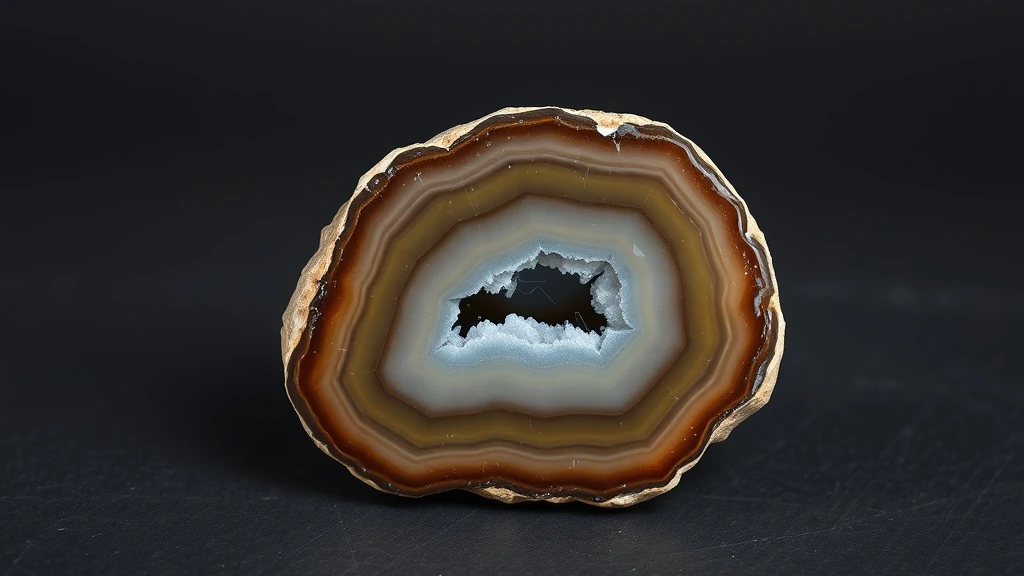
Tree agate belongs to the vast silicate mineral group, specifically classified as a chalcedony. It forms through the slow precipitation of silica-rich solutions within volcanic rock cavities. This process creates delicate, fern-like patterns that mimic natural tree structures. The stone’s identity is defined by its fibrous, microcrystalline nature rather than large, visible crystals.
What is Tree Agate Gemstone? Geological Overview & Definition
Tree agate is a chalcedony variety characterized by its unique dendritic inclusions. These patterns result from manganese or iron oxide precipitating along crystal growth planes. The host rock is typically cryptocrystalline quartz, which lacks a distinct crystal structure to the naked eye. This geological formation occurs over millions of years in geode cavities.
The term “tree” refers to the branching, plant-like motifs visible in polished slices. These inclusions are not organic but are mineral dendrites formed by chemical diffusion. The stone’s value depends on the clarity and symmetry of these patterns. Collectors prize specimens where the dendritic structures appear vibrant and well-defined against the background.
Tree Agate Gemstone Chemical Composition & Crystallographic Properties
The fundamental chemical formula is SiO₂, with trace elements causing coloration. Its crystal system is Trigonal (Microcrystalline / Cryptocrystalline fibrous aggregates), meaning it lacks large, single crystals. Instead, it consists of interlocking fibers of alpha-quartz. This structure gives the stone its characteristic waxy luster and conchoidal fracture.
Color variations arise from chromophore color centers and included impurities. Manganese oxides often create the dark, tree-like patterns, while iron yields brown or yellow hues. The stone is chemically stable and resistant to most acids, though prolonged exposure to strong alkalis can damage it. Thermal behavior is stable, but rapid temperature changes may cause fracturing due to internal stress.
| Property | Specification |
|---|---|
| Mineral Group | Silicates (Chalcedony / Cryptocrystalline Quartz) |
| Chemical Formula | SiO₂ (Silicon Dioxide) |
| Mohs Hardness | 6.5 – 7.0 |
| Crystal System | Trigonal (Microcrystalline / Cryptocrystalline fibrous aggregates) |
| Specific Gravity (Density) | 2.60 – 2.65 |
| Refractive Index | 1.544 – 1.553 |
| Color & Optical Properties | Natural Tree Agate Gemstone color spectrum and optical dispersion |
| Primary Mining Localities | Brazil, Uruguay, Turkey, India, Madagascar |
| Water & Chemical Resistance | High (Safe for gentle warm water and mild soap; avoid harsh acids and chlorine) |
| Chakra Alignment (Traditional) | Root Chakra and Sacral Chakra |
| Zodiac Affinity (Traditional) | Gemini, Virgo, Taurus |
| Symbolic Meaning (Traditional) | Grounding, emotional balance, physical endurance, and protection |
Agate Varieties & Comprehensive Sub-Types
Blue Lace Agate
Formed in low‑temperature silica‑rich cavities of volcanic tuff, Blue Lace Agate develops ultra‑fine, sky‑blue and white laminae through the self‑assembly of microscopic chalcedony fibers. Light diffraction across these fibers creates the characteristic lace‑like pattern that is prized by lapidaries. The stone enjoys steady demand for its reputed throat‑chakra alignment and gentle calming frequency, making it a staple in both jewelry and metaphysical markets.
Moss Agate
Moss Agate crystallizes in sedimentary breccias and alluvial gravels where green hornblende or chlorite dendrites infiltrate translucent chalcedony. The dendritic inclusions mimic delicate foliage, giving the stone a vivid botanical appearance that has been celebrated as an agricultural talisman for centuries. Its opaque‑to‑translucent base and striking green “moss” make it a favorite for carved cabochons and ornamental beads.
Fire Agate
In volcanic lava flows of northern Mexico and Arizona, Fire Agate forms as botryoidal chalcedony layers interleaved with iron‑oxide (limonite/goethite) films. The alternating silica‑rich and iron‑rich laminae produce a dynamic iridescent Schiller effect that flashes red, orange, and gold when the stone is moved. Because of its rarity and vivid play of color, fire agate commands premium prices in high‑end collectors’ circles.
Botswana Agate
Botswana Agate originates in ancient basaltic lava flows where slow cooling yields ultrafine, concentric banding in muted greys, peach, salmon, and lilac hues. The dense, tightly packed bands are a hallmark of the region’s unique geothermal history. International trade lists Botswana agate as a “premium decorative stone,” prized for its subtle elegance in inlay work and high‑polish cabochons.
Dendritic Agite
Developing in manganese‑rich sedimentary deposits, Dendritic Agate displays dramatic fern‑like branching patterns of iron and manganese oxides against a milky‑white or clear matrix. These dark dendrites are the result of mineral precipitation along micro‑fractures during diagenesis. Lapidaries prize dendritic agate for its natural “landscape” motifs, often setting it in pendants that showcase the stone’s scenic character.
Crazy Lace Agate
Found primarily in the Chihuahua region of Mexico, Crazy Lace Agate forms in volcanic tuff where iron‑pigmented silica precipitates as twisting, multicolored ribbons. The stone’s vivid zig‑zag bands of yellow, red, orange, and cream create a lively “laughter” pattern that earned it the nickname Laughter Stone. Its bold coloration and high contrast make it a popular choice for statement jewelry and artisanal carvings.
Tree Agate
Tree Agate crystallizes in silica‑rich veins where a solid white chalcedony host incorporates deep‑green chlorite dendrites that resemble foliage. Unlike the translucent base of Moss Agate, Tree Agate’s opaque matrix gives the “tree” pattern a more graphic, high‑contrast appearance. The stone is mined chiefly from alluvial deposits in Brazil and the United States, where it is marketed for both ornamental use and metaphysical practices.
Flower Agate
Rarely encountered, Flower Agate originates in Madagascar’s weathered volcanic soils, where 3‑D calcic inclusions grow within a pink‑to‑caramel chalcedony matrix. These inclusions form delicate, petal‑like structures that mimic blooming cherry blossoms, creating a three‑dimensional floral tableau. Because of its scarcity and striking visual effect, Flower Agate commands high collector interest and is often set in high‑end pendants.
Modern Uses & Jewelry Applications of Tree Agate Gemstone
Lapidaries primarily cut Tree Agate into cabochons to showcase its intricate dendritic patterns, as faceting would obscure the natural “tree” inclusions. This organic aesthetic makes it ideal for pendants, rings, and earrings that emphasize earthy, nature-inspired designs.
- Cabochon Cutting: Polished domes that highlight the 2D cross-sections of manganese or iron oxide dendrites.
- Ornamental Carving: Used in intaglio carvings, cameos, and decorative architectural elements due to its hardness and durability.
- Pendant Design: Often set in silver or gold to complement the stone’s natural brown, green, and black tones.
Metaphysical Properties & Traditional Meaning of Tree Agate Gemstone
According to historical traditions and metaphysical lore, Tree Agate is revered as a stone of grounding energy and spiritual growth. Practitioners believe its dendritic structures symbolize the connection between the physical earth and the higher self, fostering stability during times of change. This symbolic resonance encourages wearers to remain rooted while navigating personal transformation.
The stone is traditionally associated with emotional balance and the release of stagnant feelings. Many users report a calming effect that helps process grief or anxiety, aligning the wearer’s energy with natural rhythms. This perceived emotional resonance supports a sense of security and inner peace.
Which Chakra and Zodiac Signs Align with Tree Agate Gemstone?
Tree Agate is canonically aligned with the Root Chakra and the Sacral Chakra, supporting both physical stability and creative flow. The Root Chakra connection anchors the wearer to the earth, while the Sacral Chakra link enhances emotional expression and vitality. This dual alignment promotes a harmonious balance between grounding and creative energy.
In astrological practice, this gemstone resonates strongly with Gemini, Virgo, and Taurus. These earth and air signs benefit from the stone’s ability to stabilize mental chatter and enhance practical focus. Wearing Tree Agate is believed to amplify the natural traits of these zodiac signs, fostering clarity and grounded action.
How to Identify Real vs. Fake Tree Agate Gemstone
Artificial imitations of Tree Agate often involve dyed chalcedony or synthetic glass designed to mimic natural dendritic patterns. These fakes may lack the subtle color variations and depth found in genuine stones, appearing overly uniform or artificially vibrant. Understanding these distinctions is crucial for collectors and buyers seeking authentic specimens.
Practical At-Home Authenticity Tests
- Temperature Test (Thermal Feel): Genuine agate feels cool to the touch initially and warms slowly, whereas glass imitations may feel warmer or heat up more rapidly due to different thermal conductivity.
- Specific Gravity & Weight Test: Real Tree Agate has a specific gravity of approximately 2.6, making it feel heavier than similarly sized glass or plastic replicas, which are typically lighter.
- Scratch & Hardness Test (Mohs Comparison): With a Mohs hardness of 6.5-7, authentic agate will not be scratched by a steel knife (hardness 5.5), while lower-quality fakes might show visible marks.
- Microscopic & Loupe Inspection (Internal Inclusions): Use a 10x loupe to check for natural dendritic inclusions that look organic and irregular; fakes often display trapped air bubbles or perfectly symmetrical, artificial patterns.
Tree Agate Gemstone Valuation Factors, Grading & Pricing
The primary driver of value is Color Saturation, which dictates the visual impact of the dendritic patterns. Experts assess the depth of the manganese or iron oxide inclusions against the agate matrix. High-grade specimens display uniform tone and exceptional optical clarity, ensuring the tree-like structures remain distinct and vibrant.
Market pricing heavily depends on Carat Weight, as larger, flawless stones command significant premiums over smaller fragments. Facet symmetry is critical for cut gems, maximizing light reflection and enhancing the natural beauty of the inclusions. The presence of a clean, unfractured matrix further elevates the stone’s desirability among collectors.
Geographical Provenance Premium significantly influences final retail prices, with stones from renowned locales fetching higher bids. Wholesale values fluctuate based on supply chains, but retail margins often triple the base cost. Understanding these market trends helps buyers identify fair value for their specific specimen.
How to Clean and Care for Tree Agate Gemstone
For routine maintenance, warm soapy water is the ideal cleaning method for solid agate specimens. Gently scrub the stone with a soft-bristled brush to remove dirt from crevices and facets. Avoid harsh chemicals, as they can degrade the surface luster or damage any existing treatments.
Strictly avoid using ultrasonic cleaners if the specimen is dyed, heavily fractured, or treated. These high-frequency vibrations can dislodge colorants or propagate existing cracks within the delicate dendritic structures. Always air-dry the stone completely after washing to prevent moisture from trapping in inclusions.
Cleansing and Recharging Tree Agate Gemstone (Energetic Care)
To energetically cleanse your stone, use smoke smudging with sage or palo santo for a dry, safe purification method. This traditional practice clears stagnant energy without exposing the mineral to moisture or heat. Ensure the smoke circulates around the stone for several minutes before storing it.
For recharging, place the agate on a selenite plate or under moonlight overnight. Selenite is non-conductive and gentle, making it perfect for delicate gemstones that cannot withstand water immersion. This method restores the stone’s vibrancy while preserving its physical integrity.
Frequently Asked Questions About Tree Agate Gemstone
Is tree agate safe to wear in the shower?
Yes, tree agate can be worn in the shower with care. Its high water resistance means gentle warm water and mild soap will not damage the stone, but you should avoid harsh acids, chlorine, or prolonged soaking to preserve any natural inclusions or surface treatments.
How should I clean my tree agate jewelry?
Warm, soapy water is the preferred cleaning method for solid tree agate. Submerge the piece briefly, use a soft brush to loosen debris, then rinse with clean water and pat dry. Ultrasonic cleaners are discouraged, especially for dyed or fractured specimens, as they can cause micro‑fractures.
Can I use an ultrasonic cleaner on tree agate that has been dyed?
No, ultrasonic cleaning is not recommended for dyed tree agate. The high‑frequency vibrations can strip color treatments and exacerbate existing cracks. Stick to hand‑washing with mild detergent to maintain both the stone’s appearance and structural integrity.
What zodiac signs are associated with tree agate?
Tree agate is linked to Gemini, Virgo, and Taurus. These signs are said to benefit from the stone’s grounding energy, which supports analytical thinking for Gemini, practical organization for Virgo, and steady determination for Taurus.
Which chakras does tree agate balance?
Tree agate resonates with the Root Chakra and the Sacral Chakra. Activation of the Root Chakra enhances stability and security, while the Sacral Chakra promotes creativity and emotional flow, making the stone a useful tool for grounding and personal expression.
Does tree agate improve fertility or reproductive health?
Tree agate is traditionally believed to support reproductive vitality. By stimulating the Sacral Chakra, the stone may help harmonize hormonal balance and encourage a nurturing environment, though scientific validation is limited and it should not replace medical advice.
Will tree agate fade or change color over time?
Solid, untreated tree agate retains its color stability for decades. Natural iron‑oxide inclusions give the characteristic “tree‑like” patterns, which are resistant to fading. However, dyed or heavily treated pieces can lose hue when exposed to harsh cleaning agents or prolonged sunlight.
Is tree agate suitable for everyday wear?
Yes, tree agate is durable enough for daily use when properly cared for. Its hardness of 6.5–7 on the Mohs scale resists scratches, and its high water resistance allows routine cleaning. Avoid exposing it to extreme temperature shocks or abrasive impacts to maintain its natural beauty.