
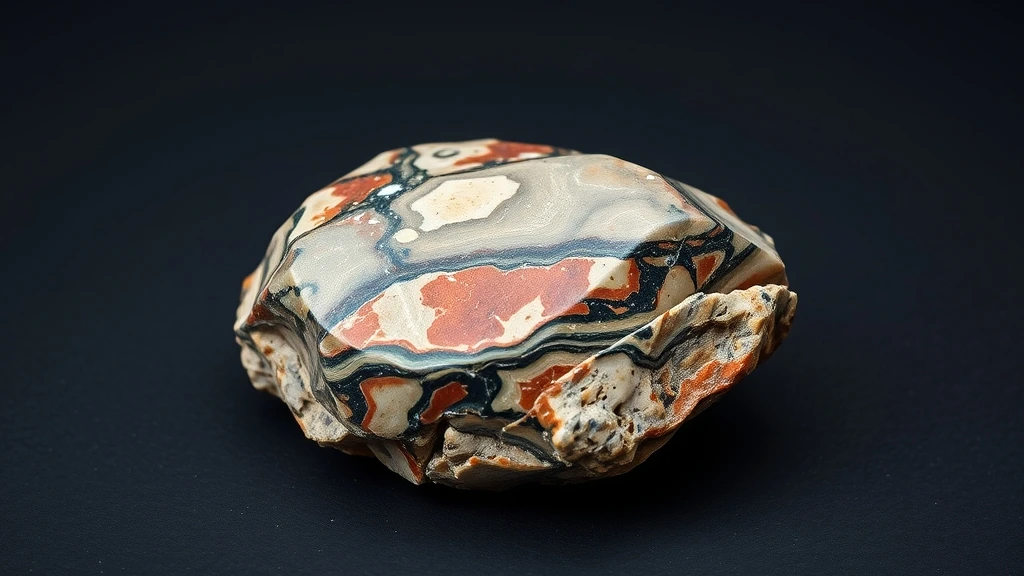
Kambaba Jasper belongs to the Natural Mineral / Crystal group, specifically within the silica-based chalcedony family. It forms through the slow precipitation of silica-rich fluids in volcanic basalt cavities. This geological process creates a dense, microcrystalline aggregate rather than a single large crystal. The stone’s unique identity relies on its intimate association with iron-bearing minerals during formation.
What is Kambaba Jasper Gemstone? Geological Overview & Definition
Kambaba Jasper is a cryptocrystalline silica rock originating from the Kambaba region in the Democratic Republic of Congo. It is classified as a jaspilite due to its banded or mottled appearance. The stone forms within vesicles of basaltic lava flows, where silica gel fills empty spaces. This specific environment allows for the incorporation of various trace elements.
The defining characteristic is its polychromatic pattern, featuring greens, browns, and grays. These colors result from iron oxide impurities distributed throughout the silica matrix. Unlike macro-crystalline quartz, Kambaba Jasper lacks visible crystal faces. Instead, it exhibits a fine-grained, microcrystalline texture that provides exceptional structural integrity.
Kambaba Jasper Gemstone Chemical Composition & Crystallographic Properties
The primary constituent is chalcedony, a microcrystalline form of quartz with the formula SiO₂. The crystal system is strictly trigonal, reflecting the underlying atomic arrangement of the silica lattice. Individual crystals are too small to resolve optically, creating a continuous, dense mass. This structure ensures high resistance to mechanical stress and abrasion.
Coloration is driven by hematite (Fe₂O₃) inclusions, which act as the primary chromophore. These iron-rich particles create the characteristic earthy green and brown tones. The cation substitution of silicon by iron is minimal, as iron exists mostly as discrete inclusions. This separation preserves the pure silica framework of the host mineral.
The stone exhibits low acid sensitivity, remaining stable in most standard cleaning solutions. However, prolonged exposure to strong acids can degrade surface luster. Thermal behavior is stable, with no significant phase transitions at typical jewelry temperatures. The refractive index ranges from 1.530 to 1.544, consistent with pure silica.
| Property | Specification |
|---|---|
| Mineral Group | Natural Mineral / Crystal |
| Chemical Formula | SiO₂ (Chalcedony/Quartz) with Fe₂O₃ (Hematite) inclusions |
| Mohs Hardness | 6.5 – 7.0 |
| Crystal System | Trigonal |
| Specific Gravity (Density) | 2.60 – 2.65 |
| Refractive Index | 1.530 – 1.544 |
| Color & Optical Properties | Natural Kambaba Jasper Gemstone color spectrum and optical dispersion |
| Primary Mining Localities | Global primary localities |
| Water & Chemical Resistance | High (Safe for gentle water washing) |
| Chakra Alignment (Traditional) | Root Chakra, Sacral Chakra |
| Zodiac Affinity (Traditional) | Taurus, Virgo |
| Symbolic Meaning (Traditional) | Grounding, emotional stability, and connection to the earth |
Jasper Varieties & Comprehensive Sub-Types
Red Jasper
This classic variety consists of opaque chalcedony heavily pigmented with micro-particles of hematite, creating a deep terracotta-red hue. Its uniform coloration and high density make it a staple in traditional lapidary work for beads and carvings.
Miners often extract it from ancient volcanic regions, where it serves as a supreme grounding stone in metaphysical practices. The consistent quality ensures it remains a top-tier choice for affordable, durable jewelry components.
Ocean Jasper (Orbicular Jasper)
Originating from Madagascar, this rare gem is a silicified rhyolite featuring multi-colored concentric spherical eyes. These distinctive orbicular patterns form as silica-rich fluids cool rapidly within volcanic rock, creating unique geometric inclusions.
The trade values these stones highly due to their vivid blue, green, and orange hues. Unlike standard jaspers, the spherical inclusions provide a three-dimensional aesthetic that appeals to collectors seeking one-of-a-kind specimens.
Picture Jasper (Landscape Jasper)
This variety displays warm tan and desert brown tones with dendritic sediment layers resembling miniature landscape paintings. The intricate patterns arise from mineral infiltration into porous volcanic rock, creating natural artistic compositions within the stone.
Gemologists appreciate its sedimentary banding for creating striking visual depth in polished slabs. It is widely traded as a decorative material, prized for its ability to mimic topographical maps or scenic vistas.
Bumblebee Jasper
Formed from volcanic sedimentary rock, this vibrant stone contains bands of sulfur, arsenic, and hematite. The striking yellow and black stripes mimic a bumblebee’s coat, resulting from rapid cooling of mineral-rich lava flows.
Sourced primarily from Indonesian volcanoes, it is valued for its high-contrast banding and energetic appearance. Careful cutting is required to reveal the full spectrum of its volcanic mineral composition and vivid coloration.
Mookaite Jasper
Discovered near Mooka Creek in Western Australia, this gem is silicified radiolarian sediment with rich burgundy and mustard swirls. The intricate patterns reflect ancient marine life preserved in silica, offering a complex visual texture.
Its cream and red swirls make it highly sought after for modern jewelry design. The stone’s unique origin story and radiolarian fossil content distinguish it from other opaque quartz varieties in the market.
Dalmatian Jasper
This distinctive stone features a creamy feldspar-quartz host rock spotted with black arfvedsonite amphibole inclusions. The resemblance to a Dalmatian dog’s coat makes it instantly recognizable and popular in casual jewelry.
The amphibole spots form from mineral crystallization within the lighter matrix, creating a high-contrast pattern. It is widely available and affordable, making it a favorite for beginners in the gemstone collecting community.
Gemologists differentiate these varieties by analyzing their mineral inclusions and formation processes, such as volcanic cooling or sedimentary deposition. Each type offers unique aesthetic and metaphysical properties, catering to diverse market preferences.
Where is Kambaba Jasper Gemstone Found? Geological Mining & Extraction
Kambaba Jasper forms within silicified volcanic ash deposits, where iron oxides create its distinctive green and brown patterns. These rocks are typically found in regions with significant volcanic activity, such as the Congo Basin in Central Africa.
Primary extraction occurs in the Democratic Republic of Congo, where artisanal miners harvest the stone from riverbeds and surface outcrops. The opaque microcrystalline quartz structure allows for easy cutting and polishing, facilitating local trade and export.
Historical Significance & Cultural Lore of Kambaba Jasper Gemstone
While not as ancient as other jaspers, Kambaba Jasper has gained prominence in modern holistic healing practices. Its unique green hues are associated with emotional stability and a deep connection to the earth, resonating with contemporary spiritual trends.
Archaeological evidence for its ancient use is limited, but it is increasingly valued in alternative medicine circles. This stone is believed to enhance root chakra energy, promoting a sense of security and balance in daily life.
Modern Uses & Jewelry Applications of Kambaba Jasper Gemstone
Lapidaries value Kambaba Jasper for its distinctive, organic patterns that resemble topographical maps or cellular structures. The stone’s moderate hardness allows for precise cabochon cutting, which best showcases its intricate surface details and earthy tones. Faceting is less common due to the stone’s translucency and internal complexity, which can obscure brilliance.
- Cabochon Jewelry: Polished domes highlight the unique “cellular” inclusions, making them ideal for rings, pendants, and earrings.
- Ornamental Carvings: Skilled carvers use the stone for decorative boxes, intaglio seals, and architectural accents.
- Beads and Tumbling: The durable Mohs hardness of 6.5–7.0 makes it suitable for tumbling processes and beaded bracelets.
Metaphysical Properties & Traditional Meaning of Kambaba Jasper Gemstone
According to historical traditions and metaphysical lore, Kambaba Jasper is revered as a powerful stone for grounding and emotional stability. Practitioners believe it helps anchor the user to the physical world, reducing anxiety and fostering a deep sense of security. Its earthy tones are said to mirror the stability of the soil, promoting patience and resilience.
This gemstone is often associated with emotional stability, helping individuals process complex feelings without becoming overwhelmed. It is believed to enhance one’s connection to nature, encouraging a balanced and calm approach to life’s challenges. Users often report a heightened sense of clarity and focus during meditation or stressful periods.
Which Chakra and Zodiac Signs Align with Kambaba Jasper Gemstone?
In esoteric practice, Kambaba Jasper is primarily aligned with the Root Chakra (Muladhara). This energy center governs survival, security, and basic needs, which resonates with the stone’s grounding properties. By stimulating this chakra, the gemstone is thought to provide a strong foundation for personal growth and physical vitality.
Additionally, the stone connects with the Sacral Chakra (Svadhisthana), influencing creativity, emotions, and pleasure. This dual alignment supports both stability and emotional flow, creating a balanced energy profile. Astrologically, it is considered a protective stone for Taurus and Virgo, enhancing their innate earth-element traits.
How to Identify Real vs. Fake Kambaba Jasper Gemstone
Artificial imitations of Kambaba Jasper are increasingly common, often using synthetic glass, dyed quartz, or plastic composites. These fakes may mimic the stone’s color but lack the natural, irregular inclusion patterns found in genuine specimens. Synthetic versions often appear too uniform or possess an artificial, plastic-like luster that differs from natural chalcedony.
Practical At-Home Authenticity Tests
- Temperature Test (Thermal Feel): Genuine Kambaba Jasper feels cool to the touch initially and warms slowly. Plastic imitations, however, tend to feel warm almost immediately upon contact with skin.
- Specific Gravity & Weight Test: Real jasper has a density of 2.60–2.65 g/cm³. It should feel noticeably heavier than similarly sized glass or plastic replicas, which are generally lighter.
- Scratch & Hardness Test (Mohs Comparison): With a Mohs hardness of 6.5–7.0, genuine Kambaba Jasper can scratch glass (hardness 5.5). It should not be easily scratched by a steel knife blade (hardness 5.5).
- Microscopic & Loupe Inspection (Internal Inclusions): Use a 10x loupe to examine the surface. Natural stones display unique, chaotic hematite inclusions. Fakes often show bubbles, swirls, or perfectly uniform patterns that lack natural variation.
Kambaba Jasper Gemstone Valuation Factors, Grading & Pricing
The primary driver of value is Color Saturation, specifically the vividness of the green and yellow hues against the brown matrix. Experts assess tone uniformity to ensure the stone lacks dull, grayish patches that diminish its visual appeal. High optical clarity and a consistent waxy luster further elevate the gem’s aesthetic grade in professional evaluations.
Market pricing heavily depends on Carat Weight, as larger, flaw-free specimens are rare and command significant premiums over smaller stones. Facet symmetry is critical for cabochons, ensuring the distinctive landscape patterns are displayed without distortion. The presence of well-defined hematite inclusions creates the unique matrix, which is essential for authentic identification and value.
Geographical Provenance Premium applies to stones sourced directly from the Kambaba region in Zambia, where mining history adds prestige. Wholesale prices for high-grade material remain stable, while retail values fluctuate based on artisan craftsmanship and demand. Collectors often pay more for certified origins, ensuring the stone’s authenticity and ethical sourcing standards are met.
How to Clean and Care for Kambaba Jasper Gemstone
To maintain the stone’s integrity, always use warm soapy water and a soft, lint-free cloth for gentle hand washing. This method effectively removes oils and dirt without stressing the mineral structure or damaging the surface finish. Rinse thoroughly with lukewarm water and dry immediately with a clean towel to prevent water spots.
It is strictly necessary to avoid ultrasonic cleaners because the vibrations can cause structural fractures in the chalcedony matrix. The stone’s density and inclusion structure make it susceptible to internal stress from high-frequency sound waves. Stick to manual cleaning methods to preserve the gem’s longevity and prevent irreversible physical damage.
Cleansing and Recharging Kambaba Jasper Gemstone (Energetic Care)
For energetic maintenance, utilize safe dry methods such as smoke smudging with sage or palo santo to clear stagnant energy. This technique respects the stone’s physical properties while addressing metaphysical needs without exposing it to moisture. Alternatively, placing the gem on a selenite plate overnight allows for gentle purification through crystal resonance.
Moonlight bathing is another effective, non-invasive method to recharge the stone’s vibrational frequency. This approach aligns with the mineral’s grounding nature, promoting emotional stability without risking water damage. These dry techniques ensure the jasper remains energetically balanced while maintaining its physical structural integrity.
Frequently Asked Questions About Kambaba Jasper Gemstone
Is Kambaba Jasper safe to wear in the shower?
Yes, it is safe for gentle water exposure. The stone’s high water resistance allows it to withstand brief contact with shower water without damage. However, prolonged soaking or exposure to harsh soaps should be avoided to maintain its natural luster.
Can I clean Kambaba Jasper in an ultrasonic cleaner?
No, you should avoid ultrasonic cleaners entirely. The vibrations can cause structural fractures within the stone’s matrix. Instead, use warm soapy water and a soft cloth for safe and effective cleaning.
What is the chemical composition of Kambaba Jasper?
It consists primarily of SiO₂ with hematite inclusions. This unique combination of chalcedony and iron oxide creates its distinctive green and brown patterns. The Fe₂O₃ inclusions are responsible for the stone’s earthy, moss-like appearance.
Which zodiac signs are compatible with Kambaba Jasper?
Taurus and Virgo are the aligned signs. These earth signs resonate with the stone’s grounding energy. Wearing this gemstone can enhance their natural stability and connection to the physical world.
Which chakras does Kambaba Jasper activate?
It aligns with the Root and Sacral Chakras. These energy centers govern survival instincts and creative flow. The stone’s earthy tones support emotional stability and a strong connection to the ground.
How hard is Kambaba Jasper on the Mohs scale?
It measures between 6.5 and 7.0. This high Mohs hardness makes it durable enough for everyday jewelry use. It resists scratches from common materials, ensuring long-lasting wear in rings or bracelets.
What is the refractive index of this gemstone?
The range is 1.530 to 1.544. This optical property indicates how light bends through the stone. It contributes to the subtle sheen and depth visible in polished chalcedony specimens.
Is Kambaba Jasper suitable for daily jewelry wear?
Yes, its durability supports regular use. With a density of 2.60 to 2.65, it feels substantial on the skin. Its hardness protects it from minor impacts, making it ideal for everyday accessories like pendants.