
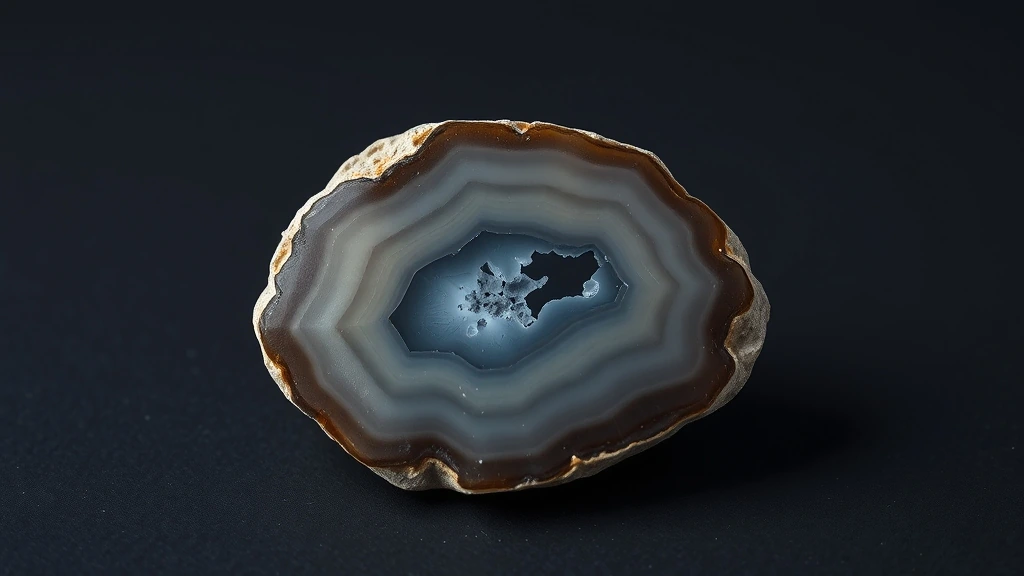
Dendritic agate belongs to the silicate mineral group, specifically within the chalcedony subgroup. It forms through the slow precipitation of silica gel in cavities within volcanic or sedimentary rocks. This process creates a cryptocrystalline structure where individual crystals are too small to be seen without magnification. The resulting stone displays complex, branching inclusions that mimic botanical structures, distinguishing it from other quartz varieties.
What is Dendritic Agate Gemstone? Geological Overview & Definition
Dendritic agate is defined by its ferroan inclusions, typically manganese or iron oxides, which precipitate along crystal growth planes. These dendritic patterns form as silica gel fills voids, trapping metallic ions that oxidize into distinct, fern-like shapes. The host rock is usually chalcedony, providing a translucent to opaque matrix for these intricate designs.
Geologically, these stones often originate from volcanic ash deposits or basaltic lava flows. The secondary mineralization process occurs over millions of years, allowing for the development of detailed, three-dimensional branching patterns. This unique formation mechanism results in high aesthetic value, making it a sought-after cabochon material for lapidaries.
Dendritic Agate Gemstone Chemical Composition & Crystallographic Properties
The fundamental crystal system is trigonal, characterized by microcrystalline fibrous aggregates of silica. Although macroscopically amorphous, the internal structure consists of interlocking, needle-like quartz crystals. This cryptocrystalline lattice lacks the large, visible crystal faces typical of macrocrystalline quartz, resulting in a waxy luster.
Chemically, it is primarily hydrated silica (SiO₂·nH₂O) with trace impurities. Cation substitution is minimal, but manganese and iron ions act as chromophores, creating the characteristic green, brown, or black dendrites. The stone is chemically stable but susceptible to strong acids, which can dissolve the silica matrix and alter its appearance.
Thermal behavior indicates high thermal stability up to significant temperatures, though rapid heating may cause fracturing. The silicon-oxygen tetrahedra form a robust network, contributing to its Mohs hardness of 6.5 to 7. This structural integrity ensures the stone retains its luster and pattern clarity under normal environmental conditions.
| Property | Specification |
|---|---|
| Mineral Group | Silicates (Chalcedony / Cryptocrystalline Quartz) |
| Chemical Formula | SiO₂ (Silicon Dioxide) |
| Mohs Hardness | 6.5 – 7.0 |
| Crystal System | Trigonal (Microcrystalline / Cryptocrystalline fibrous aggregates) |
| Specific Gravity (Density) | 2.60 – 2.65 |
| Refractive Index | 1.544 – 1.553 |
| Color & Optical Properties | Natural Dendritic Agate Gemstone color spectrum and optical dispersion |
| Primary Mining Localities | Brazil, Uruguay, Turkey, India, Madagascar |
| Water & Chemical Resistance | High (Safe for gentle warm water and mild soap; avoid harsh acids and chlorine) |
| Chakra Alignment (Traditional) | Root Chakra and Sacral Chakra |
| Zodiac Affinity (Traditional) | Gemini, Virgo, Taurus |
| Symbolic Meaning (Traditional) | Grounding, emotional balance, physical endurance, and protection |
Agate Varieties & Comprehensive Sub-Types
Blue Lace Agate
Formed in low‑temperature hydrothermal veins where silica‑rich fluids replace limestone, microcrystalline chalcedony fibers align to produce delicate sky‑blue and white lace‑like bands. Light diffraction across the fine fibers creates a soft, almost translucent sheen prized by collectors. The stone enjoys steady market demand for its reputed throat‑chakra balancing properties and is widely cut into cabochons for jewelry.
Moss Agate
Moss Agate originates in volcanic tuff and sedimentary basalts where green hornblende or chlorite dendrites infiltrate translucent chalcedony, mimicking mossy foliage. The inclusions grow as feathery, three‑dimensional patterns during slow cooling, giving the stone a natural “forest” appearance. Historically valued as an agricultural talisman, it remains popular in ornamental beads and cameos, commanding moderate prices in the trade.
Fire Agate
This variety crystallizes in basaltic lava flows of Mexico and Arizona, where alternating layers of iron‑oxide limonite/goethite and silica produce a botryoidal texture. The micro‑layering creates a vivid iridescent Schiller effect that flashes red, orange, and gold when the stone is moved. Because of its rarity and dramatic play of color, fire agate is a premium material for high‑end cabochons and collector pieces.
Botswana Agate
Botswana Agate develops in ancient basaltic lava chambers, where slow silica deposition yields ultrafine, concentric bands in muted greys, peach, salmon, and lilac. The tight banding results from repeated cycles of silica‑rich fluid infiltration and crystallization. Its subtle palette and consistent patterning make it a favorite for luxury watch dials and fine jewelry, sustaining a strong export market.
Dendritic Agate
Dendritic Agate forms in silica‑filled cavities of volcanic tuffs, where manganese and iron oxides precipitate as fern‑like, black or dark‑brown branching inclusions. The host chalcedony remains milky‑white or clear, providing a striking contrast that resembles miniature landscapes. Lapidaries prize it for dramatic cabochons and ornamental carvings, and it commands solid mid‑range prices in the gemstone market.
Crazy Lace Agate
Originating in the Chihuahua region of Mexico, Crazy Lace Agate grows in volcanic ash deposits where iron‑rich fluids create multicolored zig‑zag ribbons of yellow, red, orange, and cream. The ribbons intertwine in a chaotic yet harmonious pattern, earning the nickname “Laughter Stone.” Its vivid coloration and unique design drive high demand for statement jewelry and collector pieces.
Tree Agate
Tree Agate is an opaque white chalcedony that forms in sedimentary iron‑rich layers, where chlorite dendrites develop a deep green, foliage‑like network on a solid white base. Unlike the translucent Moss Agate, the base remains non‑translucent, giving the stone a bold, graphic appearance. It is frequently used in ornamental carvings and as a focal point in metaphysical jewelry.
Flower Agate
Rarely found in Madagascar, Flower Agate consists of a pink‑to‑caramel translucent matrix embedding opaque 3‑D chalcedony/calcic inclusions that resemble blooming cherry‑blossom petals. The floral forms arise from localized silica supersaturation during slow cooling of hydrothermal fluids. Because of its scarcity and distinctive aesthetic, it commands premium prices among collectors and high‑end designers.
Modern Uses & Jewelry Applications of Dendritic Agate Gemstone
Lapidaries typically cut dendritic agate into cabochons to fully showcase the intricate, fern-like manganese or iron oxide inclusions. This polished, domed shape maximizes the visual impact of the natural patterns without obscuring them with facets. The stone’s hardness and durability make it ideal for everyday wear in rings, pendants, and earrings.
- Cabochon Cutting: The primary method used to display the dendritic patterns clearly.
- Ornamental Carving: Artisans carve the stone into decorative boxes, vases, and intaglio seals.
- Faceted Jewelry: Less common, but used when the pattern is subtle or the stone is clear.
- Architectural Elements: Large slabs are sometimes used for tabletops and wall accents.
Metaphysical Properties & Traditional Meaning of Dendritic Agate Gemstone
According to historical traditions and metaphysical lore, dendritic agate is revered for its ability to ground the wearer and enhance emotional stability. The branching patterns are often interpreted as symbols of growth, connection, and the flow of life energy. Practitioners believe this stone helps balance the mind and body, promoting a sense of calm during stressful periods.
The stone’s earthy tones and organic structure resonate with those seeking inner peace and clarity of thought. It is frequently used in meditation to anchor the spirit and facilitate a deeper connection to nature. Many users report feeling a renewed sense of purpose and creative inspiration after handling the gemstone.
Which Chakra and Zodiac Signs Align with Dendritic Agate Gemstone?
In metaphysical practice, dendritic agate is primarily aligned with the Root Chakra and the Sacral Chakra. The Root Chakra connection supports feelings of safety, stability, and physical grounding, which are essential for emotional well-being. The Sacral Chakra alignment encourages creativity, passion, and the healthy flow of emotional energy within the body.
Astrologically, this stone is canonically associated with Gemini, Virgo, and Taurus. Taurus finds comfort in the stone’s grounding nature, which complements their earth element affinity. Virgo appreciates the clarity and orderliness of the dendritic patterns, while Gemini values the stone’s ability to stimulate mental focus and communication.
How to Identify Real vs. Fake Dendritic Agate Gemstone
Artificial imitations of dendritic agate often involve synthetic glass or dyed chalcedony that lacks the natural complexity of genuine specimens. These fakes may feature uniform, repetitive patterns that appear too perfect or artificial under close inspection. Understanding the subtle differences in texture, weight, and internal structure is crucial for buyers to avoid purchasing low-quality replicas.
Practical At-Home Authenticity Tests
- Temperature Test (Thermal Feel): Genuine agate feels cool to the touch initially and warms up slowly, whereas plastic imitations warm up almost instantly.
- Specific Gravity & Weight Test: Real agate has a specific gravity of approximately 2.6, making it feel heavier than similarly sized glass or plastic fakes.
- Scratch & Hardness Test (Mohs Comparison): With a Mohs hardness of 6.5-7, agate will not be scratched by a steel knife (hardness 5.5), while softer imitations may show marks.
- Microscopic & Loupe Inspection (Internal Inclusions): Use a 10x loupe to check for natural, irregular dendritic patterns; fakes often show bubbles, swirls, or perfectly uniform branching.
Dendritic Agate Gemstone Valuation Factors, Grading & Pricing
Color Saturation significantly drives market demand, with deep, vivid greens or rich browns commanding higher premiums. Tone uniformity across the stone ensures visual consistency, preventing distracting color banding or zoning. Furthermore, high optical clarity and a polished luster enhance the stone’s overall aesthetic appeal.
Carat Weight influences pricing, though dendritic agates often remain affordable even at larger sizes due to their abundance. Facet symmetry is critical for maximizing light reflection, particularly in cabochon cuts that highlight the fern-like patterns. The presence of a clean matrix without excessive inclusions further elevates the specimen’s grade.
Geographical Provenance Premium can elevate prices for stones from renowned localities like Brazil or Mexico. Wholesale values typically range from low to mid-tier, while retail prices reflect artisanal cutting and polishing costs. Market trends show steady demand for unique, nature-inspired designs in jewelry settings.
How to Clean and Care for Dendritic Agate Gemstone
Warm soapy water is the ideal method for maintaining the integrity of solid agate specimens. Gently scrub the surface with a soft-bristled brush to remove accumulated oils and dust. This approach safely preserves the delicate dendritic patterns without risking chemical damage.
Avoid using ultrasonic cleaners if the specimen is dyed, heavily fractured, or treated. These devices can exacerbate existing cracks or strip away artificial colorants, leading to permanent aesthetic degradation. Always inspect the stone for fractures before selecting any cleaning method.
Cleansing and Recharging Dendritic Agate Gemstone (Energetic Care)
Dry methods such as smoke smudging with sage or palo santo are safe for energetic cleansing. These techniques avoid moisture exposure, which is crucial for preserving the stone’s structural stability. Ensure the smoke dissipates completely before storing the gemstone in a dry environment.
Placing the agate on a selenite plate or under moonlight offers gentle recharging without physical stress. These passive methods respect the mineral’s solubility limits and prevent potential damage from heat or water. Regular dry maintenance ensures the stone retains its visual and energetic properties.
Frequently Asked Questions About Dendritic Agate Gemstone
What is dendritic agate and how does it form?
Dendritic agate is a banded chalcedony displaying fern‑like mineral inclusions. It forms when silica‑rich hydrothermal fluids fill cavities in volcanic rock, and manganese or iron oxides precipitate as branching, tree‑like patterns during slow cooling, creating the characteristic “dendrite” designs prized by collectors.
Is dendritic agate safe to wear in the shower or pool?
Yes, it is highly water‑resistant and can be cleaned with gentle warm water and mild soap. Avoid harsh acids, chlorine, or abrasive scrubbing, as prolonged exposure may dull the surface polish. Routine rinsing keeps the stone’s luster intact without compromising its structural integrity.
Can I clean dendritic agate with an ultrasonic cleaner?
Warm soapy water is the preferred cleaning method for solid dendritic agate. Ultrasonic cleaners should be avoided, especially if the stone is dyed, heavily fractured, or has undergone surface treatments, because the vibrations can loosen pigments or exacerbate micro‑cracks.
Which zodiac signs are associated with dendritic agate?
Gemini, Virgo, and Taurus are the aligned zodiac signs for dendritic agate. Enthusiasts believe the stone amplifies the analytical and communicative traits of Gemini, the grounded practicality of Taurus, and the meticulous attention to detail favored by Virgo, enhancing personal insight.
Which chakras does dendritic agate balance?
The stone is linked to the Root Chakra and the Sacral Chakra. By grounding energy at the base of the spine and stimulating creative flow in the lower abdomen, dendritic agate is thought to promote stability, vitality, and emotional expression in daily life.
How can I tell if a dendritic agate is genuine or dyed?
Look for natural, irregular dendrite patterns and a consistent silica feel. Dyed specimens often exhibit overly bright, uniform colors or a glossy film on the surface; a simple water test—dropping a few drops of isopropyl alcohol—will reveal fading if the color is superficial.
Does dendritic agate have any therapeutic properties?
Many practitioners attribute calming and grounding effects to dendritic agate. The stone is believed to reduce anxiety, enhance focus, and support emotional balance by channeling the Earth’s stabilizing energy, making it a popular tool in meditation and holistic healing practices.
How should I store dendritic agate to prevent damage?
Store the gemstone in a soft pouch or lined jewelry box away from harder minerals. Keeping it separate from quartz, topaz, or metal clasps prevents scratches, while a stable, room‑temperature environment avoids thermal shock that could cause micro‑fractures in the chalcedony matrix.