
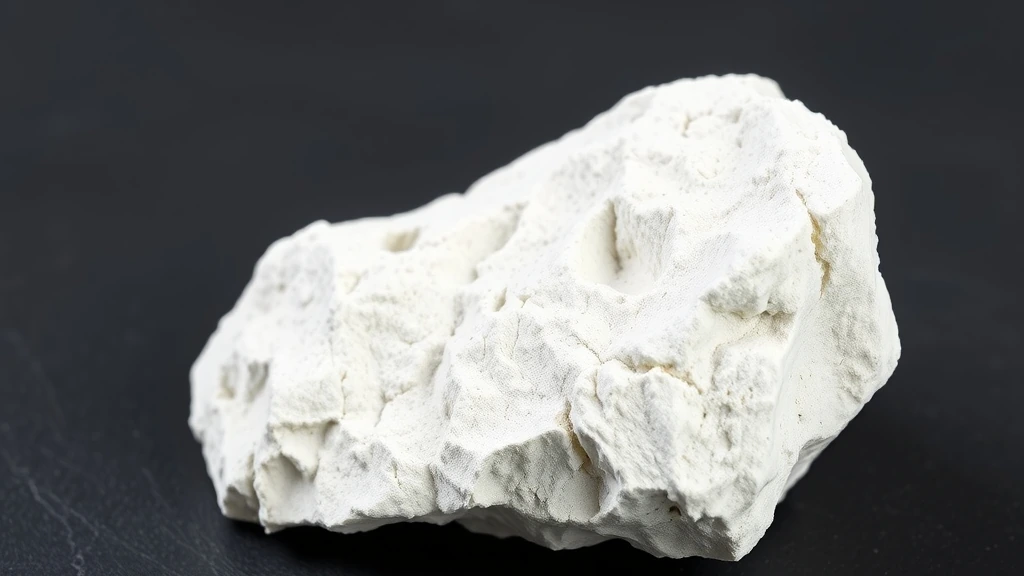
Talc belongs to the natural mineral family of silicate sheets and is classified as a phyllosilicate. Its formation occurs in metamorphic environments where magnesium‑rich rocks are altered by low‑grade hydrothermal fluids, producing fine‑grained, platy crystals. As a member of the Natural Mineral / Crystal group, talc is extracted as a bulk mineral rather than as a gemstone cut from a single crystal, though it is sometimes polished for ornamental use. In comparative mineralogical collections, practitioners and geologists frequently study Golden Mica alongside this crystal to appreciate their subtle energetic and structural differences.
What is Talc? Geological Overview & Definition
Talc is the end‑member of the talc‑serpentine series, a group of sheet silicates that share a layered crystal lattice. It forms in metamorphic belts such as serpentinite bodies, where ultramafic rocks undergo hydration and carbonation at temperatures below 300 °C.
The mineral’s characteristic softness and greasy feel arise from weak interlayer bonding, allowing the sheets to slide over one another. This property makes talc a key industrial lubricant and the benchmark for the lowest point on the Mohs hardness scale.
Talc Chemical Composition & Crystallographic Properties
The true crystal system of talc is Monoclinic or triclinic, reflecting subtle variations in lattice symmetry among specimens. Its structure consists of silicate tetrahedral sheets bonded to magnesium‑hydroxide octahedral sheets, creating a 2:1 layer that repeats along the c‑axis.
Cation substitution is limited; magnesium may be partially replaced by iron or zinc, subtly shifting the refractive indices and density (2.58–2.83 g cm⁻³). Talc is highly acid‑sensitive: dilute hydrochloric acid attacks the hydroxide layers, producing a faint effervescence and releasing silica.
Color variations stem from trace chromophore ions such as Fe²⁺ (green) or Mn³⁺ (pink), which occupy octahedral sites and alter light absorption. The mineral’s refractive indices range from nα = 1.538–1.550 to nγ = 1.589–1.600, contributing to its pearly luster.
Thermally, talc remains stable up to about 800 °C, beyond which dehydroxylation yields enstatite and releases water vapor. This transformation is exploited in refractory applications, where talc’s low thermal conductivity and high heat resistance are valuable.
| Property | Specification |
|---|---|
| Mineral Group | Natural Mineral / Crystal |
| Chemical Formula | Mg₃Si₄O₁₀(OH)₂ |
| Mohs Hardness | 1 (defining mineral) |
| Crystal System | Monoclinic or triclinic |
| Specific Gravity (Density) | 2.58–2.83 |
| Refractive Index | n α = 1.538 – 1.550 n β = 1.589 – 1.594 n γ = 1.589 – 1.600 |
| Color & Optical Properties | Natural Talc color spectrum and optical dispersion |
| Primary Mining Localities | Global primary localities |
| Water & Chemical Resistance | High (Safe for gentle water washing) |
| Chakra Alignment (Traditional) | Root Chakra, Sacral Chakra |
| Zodiac Affinity (Traditional) | Taurus, Virgo |
| Symbolic Meaning (Traditional) | Grounding, emotional stability, and gentle protection |
Talc Varieties & Color Spectrum
Talc exhibits a diverse range of natural colorations driven by trace elemental substitutions within its crystal lattice. The most common form is white, resulting from pure magnesium silicate composition. However, impurities such as iron, nickel, or manganese create distinct green, pink, or brown hues. Understanding these chemical impurities is essential for accurate gemological identification and valuation.
White Talc
Pure white talc represents the highest aesthetic grade for lapidary work and commercial applications. This variety forms in low-impurity metamorphic environments where magnesium silicate remains chemically stable. Its soft, powdery texture and brilliant white appearance make it highly sought after for decorative stone.
Green Talc
Green talc, often referred to as serpentine-tinged talc, owes its color to trace amounts of iron oxide. It typically occurs in contact metamorphic zones where hydrothermal fluids interact with ultramafic rocks. The subtle greenish hue provides a unique visual contrast against the mineral’s characteristic pearly luster.
Pink Talc
Pink talc is a rarer variety caused by minute inclusions of manganese or iron-bearing minerals. This color morph is frequently found in specific metamorphic schists across certain geological belts. Its delicate pinkish tone distinguishes it from more common white or green specimens in the market.
Brown Talc
Brown talc results from higher concentrations of iron oxides and organic matter within the host rock. This variety often displays a duller luster compared to its purer counterparts due to oxidation processes during formation. It is commonly used in industrial applications where color is less critical than chemical purity.
Where is Talc Found? Geological Mining & Extraction
Talc primarily forms through contact metamorphism of dolomitic limestones or ultramafic rocks near intrusive igneous bodies. These geological processes create talc schists and massive talc deposits that are rich in magnesium silicate. The mineral is often associated with other metamorphic minerals like serpentine and chlorite.
Major commercial deposits are located in the United States, Canada, China, and Russia. Mining operations typically involve open-pit extraction followed by crushing and wet classification to separate talc from gangue materials. The global supply chain relies heavily on these primary sources for both industrial and gemstone-grade material.
Historical Significance & Cultural Lore of Talc
Ancient civilizations utilized talc for its softness and absorbency, often applying it as a cosmetic powder. Archaeological evidence from Egypt and Rome reveals its use in personal hygiene and ritualistic practices. The mineral’s high lubricity made it valuable for polishing tools and reducing friction in early mechanical devices.
Cultural lore often associates talc with purity and protection, reflecting its gentle physical properties. In traditional medicine, it was believed to soothe skin irritations and promote emotional balance. This enduring legacy highlights the mineral’s dual role in both practical application and spiritual significance.
Modern Uses & Jewelry Applications of Talc
Talc serves as a foundational material in industrial and decorative contexts due to its unique physical properties. Its extreme softness allows for precise shaping without the risk of shattering during the cutting process. Lapidaries often favor this mineral for creating smooth, tactile surfaces that require minimal polishing effort.
- Cabochon Cutting: Artisans typically cut talc into smooth, domed cabochons to highlight its waxy luster and subtle color variations.
- Ornamental Carving: The mineral’s low hardness makes it ideal for intricate sculpting and detailed ornamental pieces.
- Faceted Jewelry: While rare, faceted talc is occasionally used in low-stress jewelry settings where durability is not a primary concern.
Metaphysical Properties & Traditional Meaning of Talc
According to historical traditions and metaphysical lore, talc is revered for its calming and stabilizing energies. Practitioners believe this mineral promotes emotional stability and helps individuals navigate periods of stress with grace. It is often associated with fostering a sense of inner peace and mental clarity.
In spiritual contexts, talc is viewed as a stone of gentle protection and grounding. It is said to anchor the wearer to the earth, providing a steady foundation during turbulent times. This mineral is frequently recommended for those seeking to cultivate patience and tranquility in their daily lives.
Which Chakra and Zodiac Signs Align with Talc?
Talc is canonically aligned with the Root Chakra and the Sacral Chakra. The Root Chakra connection supports feelings of safety, security, and physical grounding. Meanwhile, the Sacral Chakra alignment enhances creativity, emotional flow, and personal vitality.
Astrologically, talc resonates strongly with the earth signs Taurus and Virgo. Taurus individuals may find talc’s steady energy complementary to their own grounded nature. Virgos often appreciate the mineral’s association with order, precision, and meticulous care.
How to Identify Real vs. Fake Talc
Artificial imitations of talc are increasingly common in the gemstone market, posing challenges for casual buyers. Synthetic glass and dyed replicas are frequently used to mimic the appearance of natural talc. These fakes often lack the distinct physical characteristics of the genuine mineral.
Practical At-Home Authenticity Tests
- Temperature Test (Thermal Feel): Genuine talc feels cool to the touch initially but warms up quickly due to its low thermal conductivity. Synthetic glass imitations may retain their temperature differently or feel uniformly cold.
- Specific Gravity & Weight Test: Real talc has a specific gravity of 2.58–2.83, making it feel relatively light for its size. Heavier imitations, such as certain dense glasses, will feel noticeably denser in the hand.
- Scratch & Hardness Test (Mohs Comparison): Talc has a Mohs hardness of 1, meaning it can be easily scratched by a fingernail or a copper coin. If the stone resists scratching, it is likely a harder imitation material.
- Microscopic & Loupe Inspection (Internal Inclusions): Under a 10x loupe, natural talc often displays a fibrous or foliated internal structure. Synthetic glass may show bubbles, swirls, or a perfectly uniform interior lacking natural mineral inclusions.
Talc Valuation Factors, Grading & Pricing
Color saturation drives the first tier of market value. Deep, uniform hues—ranging from soft ivory to rich green‑gray—signal minimal alteration and high visual vibrancy, which collectors prize for display. When the stone exhibits a natural energetic luster, it commands a premium because the sheen indicates a well‑preserved crystal lattice and low surface contamination.
Crystal size & weight (grams) are the next decisive metrics. Larger, heavier specimens that retain a solid, unfractured form fetch higher prices, especially when presented in raw blocks versus tumbled polish, where the latter may lose some mass but gain surface smoothness. Natural matrix inclusions such as mica or serpentine can enhance appeal if they are aesthetically integrated, yet excessive fracture lines or powdery edges reduce the grade.
Ethical sourcing & locality premium increasingly shape collector demand. Talc extracted from regions with transparent labor practices and minimal environmental impact earns a reputation boost, often reflected in higher auction bids. Additionally, historic deposits—such as those from the Appalachian basin or the French Massif Central—carry a provenance premium that appeals to both holistic practitioners and mineral enthusiasts.
How to Clean and Care for Talc
Use warm soapy water and a soft cloth to gently cleanse talc specimens, taking care to avoid abrasive motions that could abrade the delicate surface. Rinse briefly with lukewarm water, then pat dry with a lint‑free microfiber towel to prevent water spots. Ultrasonic cleaners must be avoided, as the vibrations can induce micro‑fractures in the mineral’s layered structure. Store the cleaned piece in a low‑humidity display case to maintain its softness and prevent accidental scratching.
Cleansing and Recharging Talc (Energetic Care)
For holistic maintenance, gently smudge the talc with dried sage or rosemary, allowing the aromatic smoke to drift over the stone without direct flame contact. This dry method clears residual energetic debris while respecting the mineral’s susceptibility to heat‑induced lattice damage.
Alternatively, place the talc under soft moonlight for several hours or rest it on a clean selenite charging slab, both of which provide a non‑thermal means of revitalizing its grounding properties. The subtle lunar illumination and the neutral energy of selenite help restore the stone’s grounding and emotional stability without compromising its physical integrity.
Frequently Asked Questions About Talc
Is talc safe to wear in the shower or while swimming?
Yes, talc is water‑resistant and can tolerate gentle water exposure. Its layered silicate structure repels water, so routine showering or light swimming won’t degrade the stone, though prolonged soaking should be avoided to prevent surface dulling. Use a soft cloth to dry afterward.
How should I clean a talc after it gets dirty?
Clean talc with warm soapy water and a soft cloth. Gently rub the surface, then rinse with lukewarm water and pat dry. Because talc’s Mohs hardness of 1 makes it extremely soft, abrasive pads or harsh chemicals can cause scratches or loss of polish.
Can I use an ultrasonic cleaner on talc jewelry?
No, ultrasonic cleaning is not recommended for talc. The high‑frequency vibrations can create micro‑fractures in its delicate, sheet‑like lattice, leading to flaking or breakage. Stick to manual cleaning methods to preserve the stone’s integrity.
What zodiac signs are associated with talc?
Talc is linked to Taurus and Virgo. These earth signs are said to resonate with talc’s grounding energy, supporting stability and practicality. In astrology, the stone is believed to enhance the methodical traits of these signs while providing gentle emotional balance.
Which chakras does talc activate?
Talc aligns with the Root Chakra and the Sacral Chakra. The Root Chakra connection reinforces physical grounding, whereas the Sacral Chakra influence promotes emotional fluidity and creative flow. Together they foster a sense of secure, balanced wellbeing.
Is talc suitable for everyday jewelry such as rings or pendants?
Talc can be set in jewelry but requires careful handling. Its extreme softness means it scratches easily and can chip under impact, so protective settings like bezel or pendant mounts are advisable. Avoid wearing talc pieces during heavy manual work or sports.
Does talc have any therapeutic or metaphysical properties?
Talc is prized for grounding, emotional stability, and gentle protection. Practitioners claim that its low‑frequency vibration helps anchor scattered energy, soothing anxiety and fostering a calm, centered mindset. It is often placed in meditation spaces for subtle support.
How can I identify genuine talc versus synthetic look‑alikes?
Natural talc exhibits a greasy feel, perfect cleavage, and a Mohs hardness of 1. In contrast, synthetic substitutes may feel harder, lack the characteristic perfect basal cleavage, and display a higher refractive index. A simple scratch test with a fingernail can confirm authenticity.