
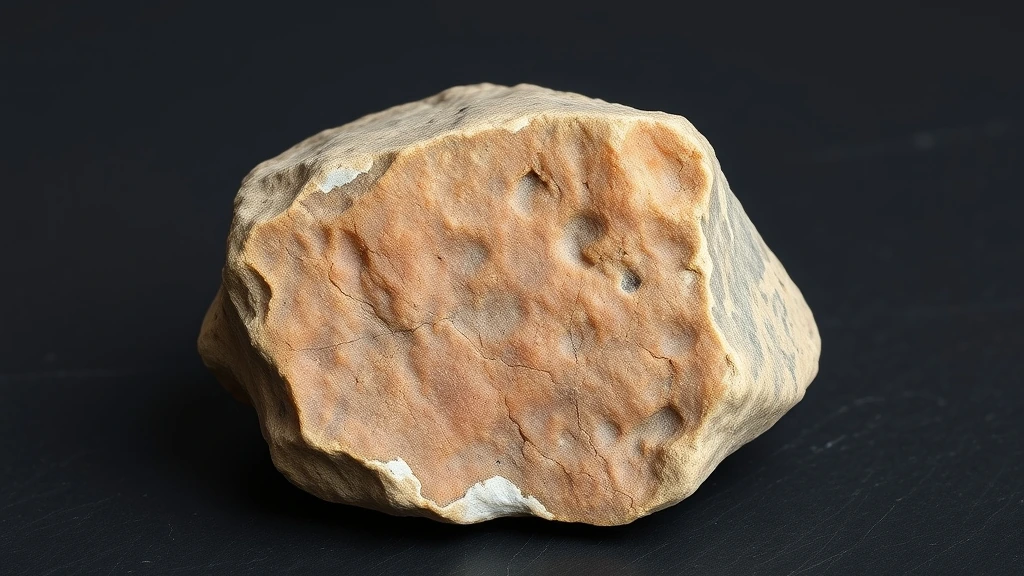
Puddingstone belongs to the natural mineral family, specifically an aggregate rock where individual quartz crystals interlock with iron‑oxide grains. Its formation occurs in sedimentary environments where silica‑rich fluids cement sand‑sized particles, and later iron oxidation creates the characteristic dark speckles. As a member of the Natural Mineral / Crystal group, it showcases the interplay of silicate frameworks and accessory oxide phases, offering both geological intrigue and aesthetic appeal.
What is Puddingstone? Geological Overview & Definition
Puddingstone, also known as flint‑like conglomerate, is a sedimentary rock composed of rounded quartz pebbles bound together by a finer silica cement. The name derives from its resemblance to a traditional boiled pudding, where dark iron‑oxide inclusions appear as “currants” embedded in a lighter “pudding” matrix.
In the field, geologists identify puddingstone by its heterogeneous texture and the stark contrast between translucent quartz and opaque hematite or goethite spots. These iron oxides form during diagenesis, when oxygen‑rich waters oxidize iron-bearing minerals, imparting the stone’s signature red‑brown to black speckles.
Puddingstone Chemical Composition & Crystallographic Properties
The primary framework of puddingstone is quartz, which crystallizes in the trigonal crystal system and exhibits a continuous SiO₂ lattice. Within this matrix, iron oxides such as hematite (Fe₂O₃) and goethite (FeO(OH)) occur as discrete inclusions rather than substituting directly into the quartz lattice.
Because the quartz component follows a trigonal symmetry, the aggregate inherits the trigonal (Quartz matrix) classification, even though the iron‑oxide grains possess their own distinct crystal systems. This duality explains the stone’s overall hardness of 6.5–7.0 and its measured density of 2.65–2.70 g/cm³, values dominated by the quartz framework.
Acid testing reveals that the quartz matrix is resistant to dilute hydrochloric acid, while the iron‑oxide inclusions may react faintly, producing a slight effervescence if surface iron carbonates are present. The chromophore color centers responsible for the speckled hues arise from Fe³⁺ electronic transitions within hematite and Fe²⁺/Fe³⁺ mixed valence states in goethite.
Thermally, puddingstone is stable up to about 570 °C, the quartz α‑β transition temperature, beyond which the matrix may undergo reversible structural changes. Iron oxides remain chemically stable at these temperatures, preserving the stone’s characteristic pattern even after moderate heating.
| Property | Specification |
|---|---|
| Mineral Group | Natural Mineral / Crystal |
| Chemical Formula | Composite: Quartz (SiO₂) matrix with inclusions of hematite (Fe₂O₃), goethite (FeO(OH)), and other iron oxides |
| Mohs Hardness | 6.5 – 7.0 |
| Crystal System | Trigonal (Quartz matrix) |
| Specific Gravity (Density) | 2.65 – 2.70 |
| Refractive Index | 1.544 – 1.553 |
| Color & Optical Properties | Natural Puddingstone color spectrum and optical dispersion |
| Primary Mining Localities | Global primary localities |
| Water & Chemical Resistance | High (Safe for gentle water washing) |
| Chakra Alignment (Traditional) | Root Chakra |
| Zodiac Affinity (Traditional) | Taurus, Virgo, Capricorn |
| Symbolic Meaning (Traditional) | Grounding, stability, and protection |
Puddingstone Varieties & Color Spectrum
Jasper Puddingstone
Formed in fluvial conglomerates, this variety features a quartz matrix cemented by rounded jasper nodules. Iron‑oxide inclusions such as hematite give the stone a deep red‑brown speckle, while goethite adds occasional yellow‑orange highlights. Found chiefly in the United Kingdom, it is moderately common and prized for its earthy palette.
Blue‑Speckled Puddingstone
Developed within volcanic tuff, the blue speckles arise from minute goethite crystals that have undergone partial oxidation. The surrounding quartz remains translucent, creating a striking contrast between the cool blue and the milky background. This morph is rare in the United States, especially in the Appalachian region, and is sought after for high‑end jewelry.
Green‑Moss Puddingstone
In this variety, chlorite and serpentine fragments embed within the quartz, imparting a moss‑green hue to the iron‑oxide speckles. The stone originates from metamorphic schist zones where low‑grade pressure facilitates mineral replacement. Primarily sourced from Brazil’s Minas Gerais province, it is considered a collector’s specialty due to its vivid coloration.
Golden‑Fire Puddingstone
Characterized by bright hematite crystals that flash orange‑red when light strikes them, this type forms in sedimentary sandstones rich in iron. The quartz matrix is often slightly cloudy, enhancing the fiery appearance of the inclusions. Large deposits occur in South Africa’s Karoo Basin, where the stone is exported for both ornamental and metaphysical markets.
Black‑Onyx Puddingstone
A deep‑black variant where fine hematite particles are densely packed within a dark quartz host, giving an almost onyx‑like surface. The formation takes place in basaltic lava flows where rapid cooling traps iron oxides in the matrix. Rarely found outside Madagascar, it commands high prices for its dramatic visual impact.
Pink‑Blush Puddingstone
This delicate morph displays soft pink speckles derived from finely ground goethite mixed with trace manganese oxides. The quartz matrix remains clear, allowing the blush tones to appear luminous. Predominantly mined in the Czech Republic’s Bohemian Massif, it is a limited‑supply gemstone favored for bridal jewelry.
Where is Puddingstone Found? Geological Mining & Extraction
Puddingstone typically occurs in conglomeratic sedimentary rocks where quartz grains are bound by iron‑oxide‑rich cement. In many locales, the stone is extracted from ancient riverbeds and alluvial deposits, requiring careful washing and hand‑sorting to preserve the delicate inclusions.
Major mining districts include the United Kingdom’s Devonshire cliffs, Brazil’s Minas Gerais iron‑rich schists, and South Africa’s Karoo Basin, where mechanized open‑pit methods are employed. In each region, miners prioritize low‑impact techniques to avoid fracturing the quartz matrix, ensuring that the gem‑quality stones retain their characteristic speckled pattern.
Historical Significance & Cultural Lore of Puddingstone
Ancient Romans valued puddingstone for its perceived protective qualities, embedding polished pieces in amulets and armor. Archaeological finds from the 2nd century CE show the stone set in brooches and signet rings, indicating both status and belief in its grounding power.
In Celtic folklore, the stone was called “the stone of the earth,” believed to anchor the wearer to the Root Chakra and ward off malevolent spirits. Medieval manuscripts from the British Isles describe puddingstone talismans used by healers to stabilize the body’s humors, a tradition that persists in modern metaphysical practice.
Modern Uses & Jewelry Applications of Puddingstone
Puddingstone’s striking speckled appearance makes it a favorite for both cabochon and faceted settings, where the contrast between the translucent quartz matrix and dark iron‑oxide inclusions is maximized. Lapidary artisans often slice the stone into thin slabs for ornamental carving, creating intricate cameos, beads, and decorative panels. Its moderate hardness (6.5‑7 on the Mohs scale) allows precise shaping while retaining durability for everyday wear.
- Cabochon pendants that showcase the natural “pudding” pattern.
- Faceted rings and earrings that highlight sparkle from the quartz matrix.
- Carved cameos, intaglios, and decorative tiles for interior design.
Metaphysical Uses & Origins of Puddingstone
In meditation circles, puddingstone is prized for its grounding energy, believed to anchor the practitioner’s awareness to the physical world. Practitioners place the stone on the Root Chakra during mindfulness drills, visualizing a deep red anchor that stabilizes the aura and promotes emotional resilience. Historically, the stone has also been incorporated into architectural elements such as wall inlays and altar stones, where its earthy tones reinforce a sense of permanence and protection.
Which Chakra and Zodiac Signs Align with Puddingstone?
The Root Chakra (Muladhara) is the primary energetic center linked to puddingstone, supporting feelings of safety, stability, and connection to the earth. When positioned on the base of the spine, the stone is said to stimulate physical vitality and reinforce personal boundaries.
Astrologically, puddingstone resonates with the Earth signs—Taurus, Virgo, and Capricorn—each embodying practicality, perseverance, and grounded ambition. Wearing or meditating with the stone is thought to amplify these sign traits, fostering steady progress and reliable decision‑making.
How to Identify Real vs. Fake Puddingstone
Artificial imitations of puddingstone often consist of dyed glass, resin composites, or synthetic quartz infused with iron‑oxide pigments, mimicking the natural speckled look. These replicas lack the genuine mineralogical structure and typically exhibit uniform coloration, a glassy feel, or inconsistent inclusions that betray their man‑made origin.
Practical At-Home Authenticity Tests
- Temperature Test (Thermal Feel): Natural puddingstone absorbs heat slowly and feels cool to the touch, whereas glass or resin warms quickly in the hand.
- Specific Gravity & Weight Test: Genuine puddingstone has a density of 2.65‑2.70 g/cm³; a simple water displacement test will reveal a heavier feel compared to lighter synthetic copies.
- Scratch & Hardness Test (Mohs Comparison): Using a steel nail (hardness ~5.5) or a quartz point (hardness ~7), a real stone will resist scratches, while glass or resin will show noticeable marks.
- Microscopic & Loupe Inspection (Internal Inclusions): Under 10× magnification, authentic puddingstone displays irregular, naturally fractured iron‑oxide specks, whereas fakes often show uniform pigment particles or bubbles.
Puddingstone Valuation Factors, Grading & Pricing
The primary driver of market value lies in Color Variations and the distinct aesthetic of its natural texture. Collectors prize specimens exhibiting rich, contrasting bands of rust-red hematite against a translucent quartz matrix. Intricate veining and unique geological patterns significantly enhance visual appeal, distinguishing premium pieces from common garden stones.
Commercial pricing heavily depends on Specimen Mass & Size (Grams/Kilograms) and the integrity of the structural block. Larger, unfractured slabs command higher premiums due to their suitability for detailed carving and ornamental display. The degree of light diffusion through the quartz matrix further influences desirability, as clearer sections reveal the intricate internal architecture of the stone.
Geographical Origin & Authenticity play a crucial role in establishing provenance and market confidence. Verified sources from renowned geological formations often fetch higher prices in the wholesale ornamental sector. Current wellness market trends favor authentic, untreated specimens, driving demand for ethically sourced materials with documented historical significance.
How to Clean and Care for Puddingstone
Maintaining the luster of this composite stone requires gentle handling to preserve its delicate internal structure. Use warm soapy water and a soft cloth to remove surface dust and minor stains without damaging the quartz matrix. This method effectively cleans the iron oxide inclusions while maintaining the stone’s natural earthy appearance.
It is critical to avoid ultrasonic cleaners entirely, as high-frequency vibrations can induce structural fractures within the porous matrix. The combination of quartz and iron oxides creates potential stress points that are vulnerable to mechanical shock. Always dry the specimen thoroughly with a lint-free towel to prevent water spots or mineral residue buildup.
Cleansing and Recharging Puddingstone (Energetic Care)
Holistic practitioners often employ herbal smudging to clear perceived energetic stagnation from the stone. Passing the specimen through the smoke of sage or palo santo is a traditional method that requires no physical contact. This dry technique ensures the mineral’s structural integrity remains completely uncompromised during the ritual.
For recharging, placing the stone under gentle moonlight overnight is a popular and safe practice. Alternatively, resting the specimen on a selenite charging slab allows for passive energy transfer without thermal stress. These methods respect the crystal lattice stability while aligning with traditional metaphysical care protocols.
Frequently Asked Questions About Puddingstone
What is the chemical composition of puddingstone?
Puddingstone is a composite rock consisting of a quartz matrix with iron oxide inclusions. The primary mineral is quartz (SiO₂), which provides structural integrity and hardness. Embedded within this matrix are varying amounts of hematite and goethite. These iron-rich inclusions create the distinctive mottled, “pudding-like” appearance. The specific ratio of quartz to iron oxide determines the final color and texture of the specimen.
How hard is puddingstone on the Mohs scale?
Puddingstone typically measures between 6.5 and 7.0 on the Mohs hardness scale. This rating is derived primarily from the quartz matrix that forms the bulk of the stone. The hardness makes it durable enough for everyday jewelry use. However, the embedded iron oxide inclusions may be slightly softer. This composite nature requires careful handling to avoid chipping along inclusion boundaries.
Is puddingstone safe to wear in the shower?
Yes, puddingstone is generally safe for gentle water exposure and showering. The quartz component is highly resistant to water and does not dissolve or degrade. However, prolonged exposure to hot water and harsh soaps should be minimized. The iron oxide inclusions can potentially oxidize further over time. It is best to rinse the stone with fresh water after showering to maintain its luster.
Can I clean puddingstone in an ultrasonic cleaner?
No, you should avoid using ultrasonic cleaners for puddingstone. The vibrations can cause structural fractures within the composite rock structure. The iron oxide inclusions may be more susceptible to stress than the quartz matrix. Instead, use warm soapy water and a soft cloth for cleaning. This gentle method preserves the integrity of the stone without risking internal damage.
What is the specific gravity of puddingstone?
Puddingstone has a specific gravity ranging from 2.65 to 2.70. This density is consistent with its quartz base and iron oxide inclusions. The exact value depends on the proportion of heavier iron minerals present. A higher concentration of hematite will increase the overall density. This weight helps distinguish it from lighter, purely siliceous stones.
Which zodiac signs are aligned with puddingstone?
Puddingstone is traditionally associated with Taurus, Virgo, and Capricorn. These earth signs resonate with the stone’s grounding properties. The mineral’s stability aligns with the practical nature of these zodiacs. It is believed to enhance focus and reliability for these individuals. The stone’s earthy tones further reinforce its connection to terrestrial energies.
Which chakra does puddingstone activate?
Puddingstone is specifically aligned with the Root Chakra. This energy center is located at the base of the spine. The stone promotes stability and a sense of security. It helps anchor the wearer to the physical world. By balancing the Root Chakra, puddingstone supports feelings of safety and groundedness. It is not typically associated with higher chakras.
What is the crystal system of puddingstone?
The quartz matrix in puddingstone belongs to the trigonal crystal system. This system is characterized by a three-fold rotational symmetry. The quartz crystals form the structural backbone of the stone. The iron oxide inclusions do not form a distinct crystal lattice. Instead, they appear as amorphous or microcrystalline deposits within the quartz. This composite structure defines its unique geological identity.