
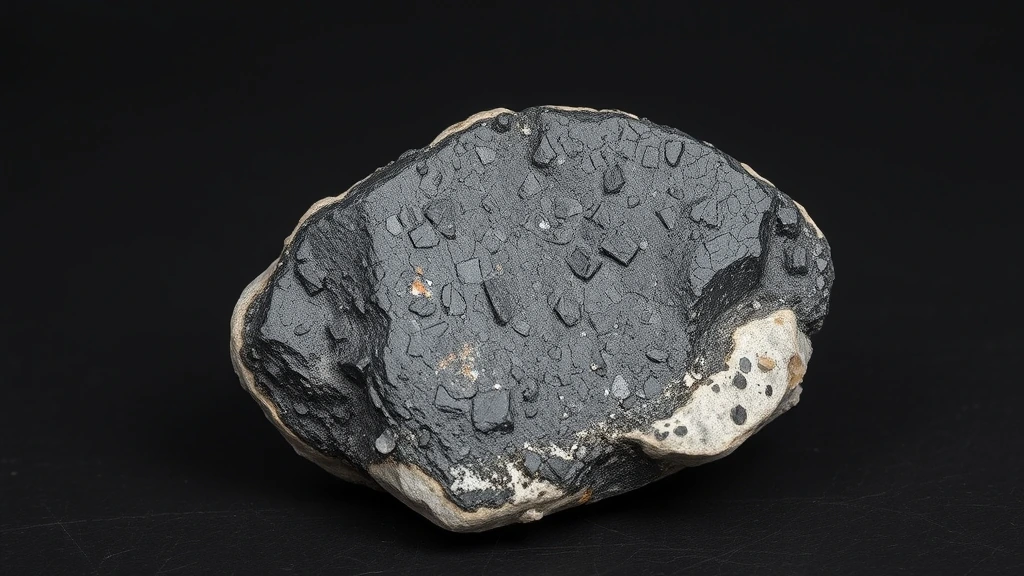
Glauconite belongs to the natural mineral family of silicate crystals and is classified within the monoclinic crystal system. Formed in marine sedimentary environments, it precipitates from iron‑rich, low‑oxygen seawater, often filling the pores of sandstones and shales. Its structure incorporates potassium, iron, and aluminum within a layered framework, giving rise to its distinctive earthy green coloration. Though soft, the stone’s subtle glow and grounding energy have attracted both collectors and metaphysical practitioners worldwide.
What is Glauconite Gemstone? Geological Overview & Definition
Glauconite is a greenish‑brown silicate that occurs as granular or massive aggregates in marine deposits, especially in the Upper Cretaceous and Paleogene strata. The mineral’s name derives from the Greek *glaukos* (“blue‑green”), reflecting its characteristic hue that ranges from pale sea‑foam to deep olive.
In gemological terms, glauconite is considered a semi‑precious gemstone when cut into cabochons or beads, prized for its earthy tone and rarity. Because of its low hardness, it is best suited for pendants, earrings, or ornamental pieces that avoid abrasion, and it is often stabilized with resin to enhance durability.
Glauconite Gemstone Chemical Composition & Crystallographic Properties
The idealized formula is (K,Na)₀.₅(Fe²⁺,Mg,Al)₂(Si,Al)₄O₁₀(OH)₂, but natural glauconite incorporates substantial amounts of K, Fe²⁺/Fe³⁺, Al, and Mn within its layered silicate sheets, producing the formula (K,Na)(Fe³⁺,Al,Mg)₂(Si,Al)₄O₁₀(OH)₂. This cation substitution is responsible for the mineral’s variable color intensity and its modest density of 2.4–2.95 g cm⁻³.
Crystallographically, glauconite crystallizes in the monoclinic system, featuring a single two‑fold axis and a mirror plane that generate its characteristic platy habit. The lattice consists of tetrahedral SiO₄ sheets linked to octahedral Fe–Al layers, creating a flexible framework that expands slightly upon heating.
The stone’s chromophore arises from Fe³⁺ ions occupying octahedral sites, which absorb specific wavelengths and impart the signature green coloration. Exposure to acidic environments can leach these iron ions, leading to a fading of color and a slight increase in surface porosity.
Thermally, glauconite is stable up to about 300 °C; beyond this, dehydroxylation occurs, releasing water and causing irreversible structural collapse. This thermal sensitivity explains why the gemstone must be set in low‑heat processes and why heat treatment is rarely employed in its enhancement.
| Property | Specification |
|---|---|
| Mineral Group | Natural Mineral / Crystal |
| Chemical Formula | (K,Na)0.5(Fe²⁺,Mg,Al)₂(Si,Al)₄O₁₀(OH)₂ |
| Mohs Hardness | 2.0 – 2.5 |
| Crystal System | Monoclinic |
| Specific Gravity (Density) | 2.60 – 2.90 |
| Refractive Index | 1.55 – 1.60 |
| Color & Optical Properties | Natural Glauconite Gemstone color spectrum and optical dispersion |
| Primary Mining Localities | Global primary localities |
| Water & Chemical Resistance | High (Safe for gentle water washing) |
| Chakra Alignment (Traditional) | Root Chakra, Heart Chakra |
| Zodiac Affinity (Traditional) | Taurus, Cancer, Virgo, Capricorn |
| Symbolic Meaning (Traditional) | Grounding, stability, and connection to the earth |
Glauconite Gemstone Varieties & Color Spectrum
Glauconite presents a diverse range of visual characteristics, primarily defined by its chlorite-rich matrix and distinct green hues. While not a traditional gemstone, its aesthetic appeal lies in its earthy, organic texture. Collectors often categorize specimens based on their specific geological origin and mineralogical composition.
Classic Marine Glauconite
This variety forms within marine sedimentary environments, typically in shallow, low-energy ocean basins. The grains exhibit a characteristic olive-green to dark green coloration due to iron oxide impurities. Its platy crystal habit creates a subtle, metallic luster that is highly prized by mineral collectors.
Egyptian Green Sand
Found extensively in the Nile Delta, this trade variety is renowned for its uniform grain size and vibrant green tone. The high concentration of glauconite pellets makes it a significant source for industrial and ornamental uses. Its consistent quality has supported a robust market presence for centuries.
Irish Coastal Deposit
Originating from the coastal cliffs of Ireland, this variety often displays a muted, greyish-green appearance. The grains are frequently mixed with quartz and feldspar, creating a speckled visual effect. This specific morph is valued for its unique sedimentary layering and historical significance.
Brazilian Glauconite
Specimens from Brazil often feature a richer, emerald-like green hue compared to other global sources. The mineral occurs in association with other heavy minerals, enhancing its visual complexity. This variety is less common in the international market, making it a sought-after find for connoisseurs.
Where is Glauconite Gemstone Found? Geological Mining & Extraction
Glauconite is primarily extracted from sedimentary rock formations such as sandstones and shales, rather than traditional igneous pegmatites. These deposits are typically located in ancient marine environments where slow oxidation rates allowed the mineral to form. The host rock matrix plays a crucial role in determining the purity and color of the extracted grains.
Major mining regions include the Nile Delta in Egypt, the coastal areas of Ireland, and parts of Brazil and India. Extraction methods usually involve open-pit mining or dredging from riverbeds and coastal sands. The material is then processed to separate the glauconite-rich fractions from surrounding silicate minerals.
Historical Significance & Cultural Lore of Glauconite Gemstone
Ancient civilizations, particularly the Egyptians, recognized glauconite for its distinctive green color and used it in archaeological artifacts and decorative objects. The mineral was often ground into pigments or incorporated into jewelry, symbolizing fertility and the life-giving waters of the Nile. Its presence in tombs and temples underscores its cultural importance in ancient religious practices.
In modern esoteric traditions, glauconite is associated with grounding energy and a deep connection to the earth. Practitioners believe it supports stability and emotional balance, aligning with the Root and Heart Chakras. This spiritual lore complements its geological history, bridging ancient usage with contemporary metaphysical applications.
Modern Uses & Jewelry Applications of Glauconite Gemstone
Glauconite is most often fashioned as a cabochon to showcase its soft, sea‑green translucency, though skilled lapidaries can also produce modest faceted pieces when the stone is of sufficient clarity. Its relatively low Mohs hardness (2) limits it to earrings, pendants, and brooches that are less prone to abrasion. Artisans also carve ornamental beads and small figurines, capitalizing on the mineral’s natural earthy hue.
- Cabochon pendants for pendants and necklaces
- Simple faceted rings (protected by protective settings)
- Carved beads for mala strands and decorative tassels
- Inlay work in wooden or metal jewelry components
Safety & Mineral Profile of Glauconite
Glauconite is a soft, greenish‑brown mineral with a Mohs hardness of 3–4, making it susceptible to abrasion and scratching during handling. The specimen is generally stable under ambient conditions, but prolonged exposure to strong acids or bases can alter its surface, leading to discoloration or dissolution. While glauconite itself is not known to contain hazardous heavy metals, fine dust generated during cutting or polishing may become airborne and pose inhalation risks; therefore, specimens should be handled with gloves and, when necessary, a dust mask. Due to its softness and tendency to flake, glauconite is typically displayed as a collector’s specimen rather than fashioned into jewelry, where wear would quickly damage the crystal and compromise its aesthetic integrity.
From a scientific perspective, glauconite serves as a valuable indicator of sedimentary environments and diagenetic processes. Its iron‑rich, green coloration reflects the presence of reduced iron in marine sediments, and its occurrence in fine‑grained, laminated strata provides insights into paleo‑environmental conditions. In museum collections, glauconite specimens are used to illustrate sedimentary petrology, mineral formation, and the role of iron‑bearing minerals in the geologic record. Researchers also study glauconite to refine biostratigraphic dating techniques and to model iron cycling in ancient oceanic settings.
Mineralogical Group and Planetary Lore of Glauconite
Historically, glauconite was first described in the early 19th century from sedimentary deposits in the North Sea region, where it was noted for its distinctive green hue. According to early mineralogists, the mineral was classified within the phyllosilicate group due to its sheet‑like crystal structure, although later analyses placed it in the phyllosilicate‑like subclass of the phyllosilicate group. In lapidary texts, glauconite has occasionally been referenced as a “green mica” because of its foliated appearance, yet its softness and lack of cleavage limit its use in ornamental contexts.
In planetary geology, glauconite has not been detected on other celestial bodies; however, its green coloration has occasionally been cited in speculative discussions about potential iron‑rich minerals on Mars. According to early planetary scientists, the presence of iron‑bearing, green minerals on Mars could indicate past aqueous activity, though no definitive evidence has been found to date. Thus, glauconite remains primarily a terrestrial mineral of interest for its sedimentary context and its role in understanding Earth’s past environments.
How to Identify Real vs. Fake Glauconite Gemstone
Artificial imitations of glauconite include dyed quartz, colored glass, and low‑cost polymer resins that mimic its characteristic green hue. Synthetic glass may exhibit a uniform clarity that natural glauconite rarely possesses, while dyed replicas often lack the subtle internal texture of genuine mineral. Recognizing these differences requires careful observation and simple tests.
Practical At-Home Authenticity Tests
- Temperature Test (Thermal Feel): Real glauconite feels cool to the touch and retains that coolness longer than glass or plastic, which quickly equilibrates to ambient temperature.
- Specific Gravity & Weight Test: With a density of 2.4–2.95 g/cm³, genuine glauconite is noticeably heavier than glass (≈2.5 g/cm³) but lighter than many silicate minerals; a simple water‑displacement test can confirm the range.
- Scratch & Hardness Test (Mohs Comparison): Using a fingernail (hardness ≈2.5) or a copper coin (hardness ≈3), a real glauconite will be scratched easily, whereas glass or synthetic substitutes will resist scratching.
- Microscopic & Loupe Inspection (Internal Inclusions): Under 10× magnification, natural glauconite shows fine, irregular inclusions and a slightly grainy texture, while glass or dyed stones appear uniformly smooth and free of internal features.
Glauconite Gemstone Valuation Factors, Grading & Pricing
The primary driver of value is Color Saturation, specifically the depth of olive-green to blue-green hues. Uniformity in tone across the entire specimen significantly enhances its aesthetic appeal and market desirability. Additionally, a distinct earthy luster contributes to the overall visual quality of the stone.
Carat Weight plays a secondary role, as larger specimens are rare due to the mineral’s fragile nature. Facet symmetry is often less critical than preserving the natural form, given its low Mohs hardness of 2. The presence of matrix or inclusions can either detract from value or add unique geological character.
Geographical Provenance Premium is notable for specimens from specific, historically significant mining regions. Wholesale prices remain modest, reflecting its status as a semi-precious mineral rather than a high-end gem. Retail values increase with exceptional clarity and provenance, but remain accessible to most collectors.
How to Clean and Care for Glauconite Gemstone
Due to its low hardness and sensitivity, glauconite requires gentle handling during maintenance. You must use warm soapy water and a soft cloth to remove surface dust and oils effectively. This method ensures the stone’s delicate structure remains intact without abrasive damage.
It is crucial to avoid ultrasonic cleaners entirely, as the vibrations can cause structural fractures. Prolonged water soaking should also be prevented to maintain the mineral’s integrity. Always dry the stone immediately after cleaning with a lint-free cloth.
Cleansing and Recharging Glauconite Gemstone (Energetic Care)
For energetic maintenance, utilize dry methods that respect the mineral’s physical limitations. Smoke smudging with sage or palo santo is an excellent way to clear negative energy without moisture exposure. This technique allows for spiritual cleansing while keeping the stone completely dry and safe.
Alternatively, place the gemstone on a selenite plate or under moonlight for recharging. These methods align with its grounding properties and avoid any risk of water damage. Ensure the stone is stored in a soft pouch to prevent scratches.
Frequently Asked Questions About Glauconite Gemstone
What is the chemical composition of glauconite?
Glauconite is a complex phyllosilicate mineral, not pure silica. It belongs to the mica group with a monoclinic crystal structure. Its green color arises from iron substitution within the silicate lattice. Understanding this phyllosilicate nature explains its softness and earthy appearance.
How hard is glauconite on the Mohs scale?
Glauconite has a Mohs hardness of 2, making it quite soft. This low hardness means it scratches easily against common materials like glass or steel. You must handle it with extreme care to prevent surface damage. Its monoclinic crystal system also contributes to its tendency to cleave under pressure.
Can I wear glauconite jewelry in the shower?
No, you should avoid prolonged water soaking. The mineral is sensitive to moisture, which can weaken its structural integrity over time. Brief exposure to rain is generally acceptable, but submersion is risky. Always dry it thoroughly if it gets wet to maintain its structural stability.
Is glauconite safe for ultrasonic cleaners?
Never place glauconite in an ultrasonic cleaner. The high-frequency vibrations can cause severe structural fractures due to its low hardness. Instead, use warm soapy water and a soft cloth for gentle cleaning. This method preserves the delicate monoclinic structure without risking breakage.
Which zodiac signs resonate with glauconite?
Taurus, Cancer, Virgo, and Capricorn are the aligned signs. These earth and water signs share the mineral’s grounding energy. Wearing glauconite can enhance their natural stability and connection to the earth. This alignment supports the Root Chakra and promotes emotional balance.
What chakras does glauconite activate?
It primarily activates the Root and Heart Chakras. This dual alignment bridges physical grounding with emotional openness. The mineral helps stabilize the base while nurturing the center. This connection fosters a sense of stability and earthy connection in the wearer.
What is the specific gravity of glauconite?
The density ranges from 2.4 to 2.95 g/cm³. This relatively low specific gravity makes it lighter than many common gemstones. It feels substantial yet manageable in jewelry settings. The variation depends on the specific iron content within the mineral structure.
How should I store glauconite safely?
Store it separately to prevent scratching. Its low hardness makes it vulnerable to damage from harder minerals. Use a soft pouch or a lined jewelry box. This protects the surface from abrasion and maintains its natural luster and integrity.