
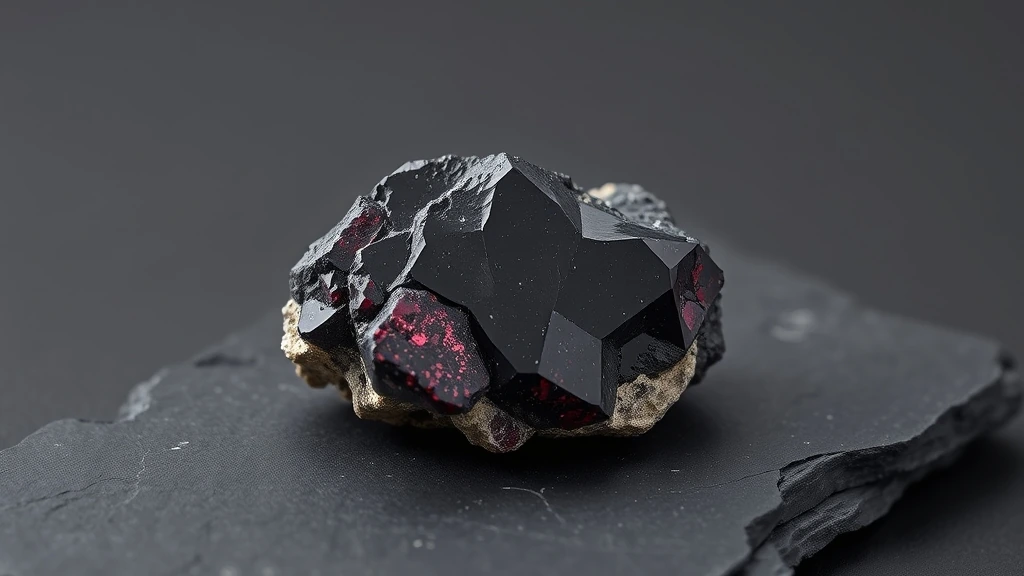
Uvarovite belongs to the garnet group within the silicate mineral family. Specifically, it is classified as a nesosilicate, meaning its silicon-oxygen tetrahedra are isolated rather than linked. This structural arrangement distinguishes it from chain or sheet silicates. The mineral forms under high-pressure metamorphic conditions, typically within ultramafic rocks. Its geological setting often involves contact with chromium-rich minerals. In comparative mineralogical collections, practitioners and geologists frequently study Tsavorite Garnet alongside this crystal to appreciate their subtle energetic and structural differences.
What is Uvarovite Garnet? Geological Overview & Definition
Uvarovite is a rare chromium-rich garnet found in specific metamorphic environments. It typically occurs in serpentinite or ultramafic rocks where chromium is abundant. The mineral was first described in 1830 from the Ural Mountains in Russia. Its discovery highlighted the link between chromium content and color intensity. In comparative mineralogical collections, practitioners and geologists frequently study Maxixe Blue Beryl alongside this crystal to appreciate their subtle energetic and structural differences.
The stone is named after Count Sergei Uvarov, a Russian statesman. It is the only garnet species that is naturally green. This unique coloration results from chromium substitution within the crystal lattice. Uvarovite is rarely found in large, gem-quality crystals. Most specimens are small, making high-grade faceted stones exceptionally valuable.
Uvarovite Garnet Chemical Composition & Crystallographic Properties
Uvarovite crystallizes in the isometric system, forming dodecahedral or trapezohedral crystals. Its lattice structure is defined by the Ca₃Cr₂(SiO₄)₃ stoichiometry. The calcium ions occupy the dodecahedral sites, while chromium occupies the octahedral sites. This specific arrangement ensures high symmetry and optical isotropy.
The vibrant green color stems from Cr³⁺ chromophores replacing iron or magnesium. This ionic substitution creates specific energy gaps that absorb red light. The mineral exhibits a refractive index between 1.714 and 1.888. It is generally stable under normal conditions but may alter under extreme heat.
Thermal behavior indicates that uvarovite is sensitive to high temperatures. Prolonged heating can cause oxidation of the chromium ions. This process may shift the color toward brown or black. Acid sensitivity is low, as the silicate structure is robust. However, physical abrasion remains the primary risk during cutting.
The density of uvarovite ranges from 3.50 to 4.30 g/cm³. This high specific gravity aids in identification during gemological testing. The Mohs hardness of 6.5 to 7.5 allows for faceting. Proper mounting is essential to prevent chipping during wear.
| Property | Specification |
|---|---|
| Mineral Group | Silicates (Nesosilicates / Garnet Group) |
| Chemical Formula | X₃Y₂(SiO₄)₃ (Complex Silicate / Nesosilicate Group) |
| Mohs Hardness | 6.5 – 7.5 |
| Crystal System | Isometric / Cubic (Dodecahedral or trapezohedral crystals) |
| Specific Gravity (Density) | 3.50 – 4.30 |
| Refractive Index | 1.714 – 1.888 |
| Color & Optical Properties | Natural Uvarovite Garnet color spectrum and optical dispersion |
| Primary Mining Localities | India, Madagascar, Sri Lanka, Mozambique, USA |
| Water & Chemical Resistance | High (Water-resistant; safe for gentle warm water washing) |
| Chakra Alignment (Traditional) | Root Chakra (Muladhara) and Sacral Chakra |
| Zodiac Affinity (Traditional) | Capricorn, Aquarius, Aries |
| Symbolic Meaning (Traditional) | Grounding, passion, loyalty, physical vitality, and steadfast courage |
Uvarovite Garnet Varieties & Color Spectrum
Uvarovite presents a remarkably uniform color profile, primarily defined by its intense neon green to deep bottle-green hues. This distinct chromatic signature arises from chromium substitution within the silicate lattice, distinguishing it sharply from other garnet species. While minor variations exist, the mineral rarely exhibits secondary color zones or pleochroism.
Classic Uralian Uvarovite
This type originates from the Ural Mountains in Russia, where it forms in serpentinite rocks. The crystals typically display a vibrant, saturated green with exceptional clarity and sharp dodecahedral terminations. Historically, this variety established the global standard for uvarovite quality and color intensity.
Canadian Uvarovite
Found in the Kootenay region of British Columbia, this variety often exhibits slightly darker, olive-green tones. It frequently occurs in association with chlorite and other metamorphic minerals, creating complex matrix specimens. The crystals are generally smaller but possess high luster and well-defined geometric faces.
Italian Uvarovite
Sourced from the Apennine Mountains, this variety is known for its rich, forest-green coloration. It commonly forms in metamorphic schists and may contain minor inclusions of pyrite or quartz. These specimens are prized for their robust crystal habit and consistent color saturation.
Swiss Uvarovite
Discovered in the Alps, this rare variety features a deep, emerald-like green hue. It often occurs in ophiolite complexes, reflecting its ophiolitic geological origin. The crystals are typically small but exhibit remarkable transparency and brilliance under direct light.
Mexican Uvarovite
This variety from the Sierra Madre region displays a slightly bluer green tint compared to Russian specimens. It forms in ultramafic rocks and is often found in association with chromite. The crystals are generally small, making high-quality gem material extremely scarce and valuable.
Where is Uvarovite Garnet Found? Geological Mining & Extraction
Uvarovite forms exclusively in ultramafic and mafic rocks, specifically within serpentinite and ophiolite complexes. These geological settings indicate subduction zone processes where high-pressure metamorphism occurs. The mineral is rarely found in granitic pegmatites, distinguishing it from many other gem-bearing formations.
Primary extraction sites include the Ural Mountains in Russia, the Kootenay region in Canada, and various locations in Italy and Switzerland. Mining operations often involve careful hand-picking from weathered outcrops or small-scale open-pit excavations. The rarity of large, clean crystals necessitates meticulous processing to preserve crystal integrity.
Historical Significance & Cultural Lore of Uvarovite Garnet
Uvarovite was first described in 1830 by German mineralogist G. Rose, who named it after Count Sergei Uvarov, the Russian Minister of Education. Its discovery in the Ural Mountains marked a significant milestone in the understanding of chromium-bearing silicates. Early specimens were primarily collected for scientific study rather than commercial gem use.
In modern gemology, uvarovite is valued for its unique color and rarity, often serving as a collector’s item. It is associated with grounding energies and physical vitality in esoteric traditions, though these beliefs lack scientific basis. The mineral’s limited availability ensures its status as a rare and prestigious specimen in mineral collections.
Modern Uses & Jewelry Applications of Uvarovite Garnet
Uvarovite’s vivid emerald‑green hue and high refractive index make it a favorite for high‑end lapidary work, though its relative rarity limits large‑scale production. Artisans often cut the stone into cabochons to showcase its uniform color, while skilled faceters produce dodecahedral or trapezohedral gems that sparkle with fire. In addition to rings and pendants, the mineral is prized for ornamental carving, appearing in decorative boxes, inlays, and bespoke watch bezels.
- Faceted rings, earrings, and pendants emphasizing the stone’s bright green
- Cabochon pendants and brooches that highlight color uniformity
- Intricate carvings for luxury watch crowns, cufflinks, and ornamental boxes
Carat, Quality Grades & Value Factors of Uvarovite Garnet
The market value of uvarovite hinges on the classic 4Cs—Color, Clarity, Cut, and Carat weight—with color being the most decisive factor. Stones displaying a saturated, vivid emerald green without brown or gray overtones command premium prices, while any noticeable zoning or dullness reduces desirability. Clarity is typically high; most uvarovite lacks inclusions, yet any internal fractures or cloudiness are penalized. A precise cut that maximizes light return, especially in dodecahedral or trapezohedral forms, enhances brilliance and therefore price. Carat weight influences rarity, as larger flawless crystals are exceptionally scarce, often pushing the price per carat upward dramatically.
Durability considerations also affect valuation. With a Mohs hardness of 6.5–7.5, uvarovite is suitable for most jewelry but requires protective settings to guard against scratches in high‑impact pieces. Lapidary grading standards follow the GIA framework, assigning a grade based on the combined assessment of the 4Cs and overall craftsmanship. Certified stones with documented provenance and consistent green coloration command the highest market confidence and resale value.
Zodiac and Astrological Lore of Uvarovite Garnet
In traditional astrology, uvarovite is aligned with Capricorn, Aquarius, and Aries, linking its grounding green energy to the pragmatic ambition of Capricorn, the innovative spirit of Aquarius, and the dynamic drive of Aries. Practitioners believe the stone amplifies grounding and physical vitality, supporting the Root (Muladhara) and Sacral chakras during meditation and daily wear.
Culturally, uvarovite has been revered since its discovery in the Uvarovite mines of the Ural Mountains, where it was considered a talisman of loyalty and steadfast courage. Its rarity and striking hue have made it a symbol of noble patronage in European courts, and modern gemstone enthusiasts continue to honor its heritage by incorporating it into heirloom jewelry and ceremonial objects.
How to Identify Real vs. Fake Uvarovite Garnet
Artificial imitations of uvarovite include glass or crystal substitutes dyed green, as well as synthetic garnet produced in labs that may lack the stone’s characteristic density and refractive properties. Dyed replicas often exhibit uneven coloration, surface bubbles, or a glossy sheen inconsistent with natural uvarovite’s subtle luster. Recognizing these differences requires careful visual and tactile examination, supplemented by simple at‑home tests.
Practical At-Home Authenticity Tests
- Temperature Test (Thermal Feel): Natural uvarovite feels cool to the touch and retains that coolness longer than glass or plastic imitations, which quickly warm to skin temperature.
- Specific Gravity & Weight Test: Weigh the stone on a precision scale; genuine uvarovite’s density (3.50‑4.30 g/cm³) makes it noticeably heavier than glass or quartz of comparable size.
- Scratch & Hardness Test (Mohs Comparison): Using a steel file (hardness ~5.5) or a quartz point (hardness ~7), a real uvarovite will resist scratching, whereas glass or lower‑hardness simulants will show surface marks.
- Microscopic & Loupe Inspection (Internal Inclusions): Examine the gem under 10×–30× magnification; authentic uvarovite typically shows minute, well‑distributed inclusions or growth lines, while synthetic glass appears uniformly clear or contains bubbles.
Uvarovite Garnet Valuation Factors, Grading & Pricing
The market places the highest premium on color saturation, with vivid emerald‑green hues that are uniform throughout the stone commanding top prices. Clarity is equally critical; specimens that display a bright, glassy luster without inclusions are graded more favorably. Even subtle variations in hue or surface sheen can shift a gem’s value by several percentage points.
Carat weight plays a decisive role, but it is evaluated alongside facet symmetry and the traditional 4Cs (cut, color, clarity, carat). Well‑cut stones that maximize light return and maintain proportional geometry receive higher grades, often offsetting modest weight differences. Lapidary standards require precise measurements, and any asymmetry reduces both aesthetic appeal and price.
A geographical provenance premium is evident for uvarovite sourced from classic localities such as the Ural Mountains or Namibia, where mineralogical history adds collector allure. Certified gems from these regions consistently outperform generic market averages, reflecting both rarity and documented authenticity. Market trends show a steady increase in demand for responsibly sourced, laboratory‑verified specimens.
How to Clean and Care for Uvarovite Garnet
Cleaning uvarovite is straightforward: immerse the stone in warm soapy water, gently rub with a soft cloth, and rinse with lukewarm water before patting dry. This method removes surface oils without harming the crystal lattice. Ultrasonic cleaners should generally be avoided or used with extreme caution, as high-frequency vibrations can cause microscopic fissures. After cleaning, store the gem in a padded compartment away from abrasive materials to preserve its brilliance.
Cleansing and Recharging Uvarovite Garnet (Energetic Care)
For holistic maintenance, place the stone on a clean selenite charging slab and allow ambient moonlight to bathe it for several hours, a practice believed to restore vibrational balance. Alternatively, a brief herbal smudging with sage or lavender can clear stagnant energy without introducing moisture or heat. Both methods respect the mineral’s physical integrity while supporting its esoteric qualities.
Gentle exposure to natural airflow in a low‑humidity environment further enhances the stone’s energetic resonance, especially when positioned near the Root Chakra or Sacral Chakra points during meditation. Avoid any direct, intense sunlight or artificial heating, as prolonged exposure can degrade the crystal’s structure. Regular dry dusting with a microfiber cloth completes the care routine, ensuring the gem remains both visually stunning and energetically vibrant.
Frequently Asked Questions About Uvarovite Garnet
Is uvarovite safe to wear in the shower or while swimming?
Yes, uvarovite is highly water‑resistant and can be exposed to gentle warm water. Its robust isometric crystal structure and dense composition (3.50–4.30 g/cm³) prevent water ingress, so routine activities like showering or swimming in fresh water pose no risk to the stone’s integrity.
How should I clean my uvarovite garnet jewelry?
Clean uvarovite with warm soapy water and a soft, lint‑free cloth. The stone tolerates mild detergents, and the soft cloth removes residues without scratching the dodecahedral faces. For stubborn grime, a brief ultrasonic cycle is safe, provided the stone is untreated and not set in fragile metal.
Can I use an ultrasonic cleaner on untreated uvarovite?
Yes, Ultrasonic cleaners should generally be avoided or used with extreme caution, as high-frequency vibrations can cause microscopic fissures. The high‑frequency vibrations dislodge particles from the nesosilicate lattice without damaging the crystal, as long as the temperature stays below 40 °C and no harsh chemicals are added.
What is the typical hardness of uvarovite on the Mohs scale?
Uvarovite rates between 6.5 and 7.5 on the Mohs hardness scale. This places it in the same range as quartz, making it resistant to everyday scratches, though prolonged contact with harder materials like diamonds can still cause abrasion on its trapezohedral facets.
Which zodiac signs are associated with uvarovite?
Uvarovite is linked to Capricorn, Aquarius, and Aries. These signs are said to benefit from the stone’s grounding energy, aligning with the esoteric keywords of loyalty and steadfast courage that resonate with the personalities of these fire and earth signs.
Which chakras does uvarovite influence?
Uvarovite works with the Root Chakra (Muladhara) and the Sacral Chakra. By stimulating these energy centers, the gem is believed to enhance physical vitality and promote a stable, passionate foundation for personal growth and creative expression.
How does uvarovite’s refractive index affect its appearance?
Its refractive index ranges from 1.714 to 1.888, giving a bright, glassy luster. Light entering the cubic crystal system is bent strongly, producing vivid green hues that can appear almost emerald‑like, especially when the stone is cut with optimal facet orientation.
Is uvarovite suitable for everyday wear in jewelry?
Yes, uvarovite’s hardness and density make it durable enough for daily use. When set securely in a protective metal setting, the stone resists chips and scratches, allowing its vivid emerald‑green color to remain vibrant in rings, pendants, or earrings.