
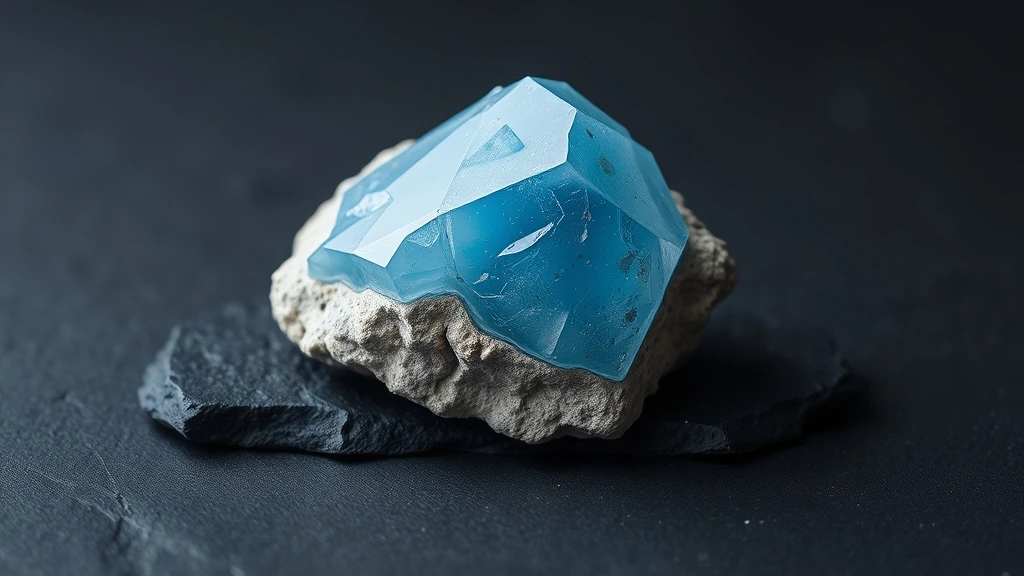
The gemstone belongs to the beryl family, a hexagonal silicate mineral that crystallizes in the hexagonal crystal system. As a member of the natural mineral/crystal group, Maxixe forms in pegmatitic veins where beryllium‑rich fluids infiltrate granite, yielding well‑developed prismatic crystals that can be faceted into brilliant gems.
What is Maxixe (blue Beryl) Gemstone? Geological Overview & Definition
Maxixe is the deep‑blue, often turquoise‑tinged, variety of beryl first identified in Brazil’s Minas Gerais region. Its rarity stems from the precise combination of trace elements and radiation‑induced color centers that produce the vivid hue, distinguishing it from the more common green emerald and pink morganite.
In geological terms, Maxixe is a hexagonal silicate that grows as elongated prisms with a characteristic hexagonal cross‑section. The crystals are typically found in granitic pegmatites, where slow cooling allows large, inclusion‑free specimens to develop, making them ideal for cutting and polishing.
Maxixe (blue Beryl) Gemstone Chemical Composition & Crystallographic Properties
The ideal formula Be₃Al₂Si₆O₁₈ reflects a framework of beryllium‑oxygen tetrahedra linked to aluminum‑silicate rings, all arranged in a hexagonal lattice. The unit cell parameters follow the P6/mcc space group, producing six‑fold symmetry that governs the crystal’s habit and cleavage.
Color in Maxixe arises from trace chromium (Cr³⁺) and iron (Fe³⁺) ions substituting for Al³⁺ within the lattice, coupled with radiation‑induced color centers that absorb specific wavelengths. These chromophores generate the deep blue to teal spectrum, which can fade if the stone is exposed to strong acids or prolonged heat.
Maxixe is acid‑sensitive; exposure to dilute hydrochloric acid can leach surface beryllium, dulling the color and damaging the surface. Consequently, gem cutters avoid acidic cleaning agents and instead use neutral pH solutions to preserve the stone’s brilliance.
Thermally, Maxixe exhibits stable refractive indices (1.565–1.595) up to about 400 °C, beyond which color centers may anneal, causing a gradual loss of blue intensity. Controlled heat treatment can sometimes enhance or modify the hue, but improper heating risks irreversible decoloration.
| Property | Specification |
|---|---|
| Mineral Group | Natural Mineral / Crystal |
| Chemical Formula | Be₃Al₂Si₆O₁₈ |
| Mohs Hardness | 7.5 – 8.0 |
| Crystal System | Hexagonal |
| Specific Gravity (Density) | 2.66 – 2.91 |
| Refractive Index | 1.565 – 1.595 |
| Color & Optical Properties | Natural Maxixe (blue Beryl) Gemstone color spectrum and optical dispersion |
| Primary Mining Localities | Global primary localities |
| Water & Chemical Resistance | High (Safe for gentle water washing) |
| Chakra Alignment (Traditional) | Throat Chakra, Heart Chakra |
| Zodiac Affinity (Traditional) | Virgo, Aquarius |
| Symbolic Meaning (Traditional) | Clarity of communication, emotional balance, and mental focus |
Beryl Varieties & Comprehensive Sub-Types
Emerald
Emerald forms in granite‑derived pegmatites where chromium (Cr³⁺) or vanadium (V³⁺) substitutes for aluminum in the beryl lattice, imparting its signature deep‑green hue. The stone commonly exhibits jardin inclusions—clusters of mineral crystals, fluid pockets, and hair‑like growths that create a garden‑like texture. These inclusions, together with characteristic four‑phase banding, are used by gemologists to grade clarity and to distinguish natural emerald from synthetics. Because of its vivid color and historic prestige, emerald commands the highest market price among beryl varieties, often traded in the “emerald cut” to maximize light return while protecting fragile inclusions.
Aquamarine
Aquamarine crystallizes in iron‑rich pegmatites where Fe²⁺ imparts a sea‑blue to cyan coloration, ranging from pale pastel to deep teal. Its typical inclusions are needle‑like rutile and silica crystals that run parallel to the c‑axis, producing a subtle “fish‑scale” effect visible under magnification. Unlike emerald, aquamarine rarely shows pronounced banding, allowing many stones to achieve VS‑1 to VVS‑2 clarity grades prized by collectors. The gemstone enjoys a robust trade, with Brazil and Madagascar supplying the bulk of the market and commanding stable, mid‑range prices.
Morganite
Morganite originates in manganese‑bearing pegmatites, where Mn²⁺ replaces aluminum to give the stone its delicate peach‑pink to salmon hue. Inclusions often consist of silica needles and minute fluid inclusions that can produce a soft “milky” sheen when viewed from certain angles. Banding is generally absent, allowing the stone’s color saturation to be the primary quality factor; stones with a vivid pink and high transparency fetch premium prices. Brazil, Mozambique, and Afghanistan dominate current production, and the market treats morganite as a fashionable alternative to pink sapphire.
Heliodor (Golden Beryl)
Heliodor develops in iron‑rich granitic pegmatites where Fe³⁺ yields a golden‑yellow to greenish‑yellow tint. The most common inclusions are tiny rutile needles and crystalline silica, which can create a subtle “spider web” pattern under magnification. Its crystal habit often displays parallel growth banding that accentuates the golden luster when cut as a brilliant or cushion shape. Heliodor enjoys steady demand for both jewelry and collector pieces, with major sources in Brazil, Russia, and the United States.
Goshenite
Goshenite is the colorless end‑member of the beryl group, formed in pegmatites that lack significant chromophore impurities. Because it contains virtually no color‑causing ions, its primary inclusions are fluid‑filled cavities and microscopic quartz crystals, which can affect optical clarity. The stone’s lack of banding makes it an ideal canvas for laser inscription and high‑precision cutting, often used as a testing ground for new cutting technologies. Although less valuable than colored beryls, high‑clarity goshenite commands respectable prices in the gem market, especially when sourced from Brazil and Madagascar.
Red Beryl (Bixbite)
Red beryl, or bixbite, forms in manganese‑rich, high‑temperature volcanic rhyolites of the Wah Wah Mountains in Utah, where Mn³⁺ creates its vivid raspberry color. The crystal habit is typically tiny, well‑formed hexagonal prisms with frequent silica and hematite inclusions that give a subtle “star‑burst” effect under polarized light. Banding is rare, and the rarity of the mineral—estimated to be 1,000 times rarer than gold—drives its price into the ultra‑luxury tier. Only a few specialized mines produce red beryl, and most stones are sold as museum specimens or high‑end collector pieces.
Comparative Summary – Gemologists differentiate these beryl varieties primarily through chromophore analysis (Cr³⁺, Fe²⁺/Fe³⁺, Mn²⁺/Mn³⁺), inclusion type (jardin, rutile needles, fluid cavities), and growth banding patterns observable under 10× magnification. Refractive index and specific gravity measurements further confirm identity, while cutting style is tailored to each variety’s typical inclusion profile to maximize brilliance and durability.
Where is Maxixe (blue Beryl) Gemstone Found? Geological Mining & Extraction
Maxixe occurs in deep‑seated granitic pegmatites where trace amounts of iron and titanium create its rare blue hue through charge‑transfer mechanisms. The most productive deposits are located in Brazil’s Minas Gerais region, particularly the São Domingos and Itabira pegmatite fields, where miners extract the stone via selective hand‑sorting of beryl crystals from host quartz‑feldspar matrices.
Additional occurrences have been reported in Madagascar’s Antsirabe district and the Ural Mountains of Russia, where similar pegmatitic environments host blue‑tinged beryl. Extraction in these locales follows conventional open‑pit or underground methods, with ore crushed and screened before gravity separation concentrates the dense beryl crystals for hand‑picking of the prized Maxixe specimens.
Historical Significance & Cultural Lore of Maxixe (blue Beryl) Gemstone
Ancient Mesoamerican cultures prized blue beryl for its striking color, incorporating Maxixe into ceremonial pendants and burial offerings, believing it to channel the sky’s clarity and protect the wearer from misfortune. Archaeological sites in the Olmec and Maya regions have yielded carved blue beryl beads, indicating early trade networks that moved the stone from Brazilian pegmatites to Central America.
In European alchemy of the 17th century, Maxixe was associated with the Throat Chakra and thought to enhance verbal expression, a belief that persists in modern metaphysical circles. The gemstone’s rarity also inspired legends of “the blue fire of the earth,” linking it to celestial phenomena and reinforcing its status as a talisman for clarity of communication, emotional balance, and mental focus.
Modern Uses & Jewelry Applications of Maxixe (blue Beryl) Gemstone
Lapidaries typically cut maxixe into faceted gemstones to maximize its brilliance and transparency. The stone’s moderate hardness allows for precise polishing without excessive wear during the cutting process.
- Ring Settings: Ideal for solitaire or halo designs due to its cool blue hue.
- Pendants: Frequently used in everyday jewelry for its durability and aesthetic appeal.
- Cabochons: Smooth, polished domes are used for vintage-style or bezel-set pieces.
- Ornamental Carving: Larger crystals may be carved into decorative beads or small figurines.
Carat, Quality Grades & Value Factors of Maxixe (blue Beryl) Gemstone
The value of maxixe is primarily determined by its color saturation and overall clarity. A deep, uniform blue with minimal visible inclusions commands a higher price in the market. Stones with a slightly greenish or grayish tint are generally considered less desirable.
Lapidary grading standards also assess the cut quality and carat weight. Well-proportioned cuts enhance the stone’s refractive index, making the blue color appear more vivid. Larger stones with excellent clarity are rare, significantly increasing their commercial value.
Zodiac and Astrological Lore of Maxixe (blue Beryl) Gemstone
In astrological traditions, maxixe is strongly associated with Virgo and Aquarius. These signs are believed to benefit from the stone’s calming energy and mental clarity. It is often recommended for individuals seeking balance in communication and emotional expression.
Culturally, the stone is linked to the Throat Chakra and Heart Chakra. Practitioners suggest wearing maxixe to promote clear communication and emotional harmony. Its gentle blue hue symbolizes tranquility and focused intention.
How to Identify Real vs. Fake Maxixe (blue Beryl) Gemstone
Artificial imitations of maxixe often include synthetic glass or dyed quartz. These fakes may mimic the blue color but lack the natural inclusions and specific gravity of genuine beryl. Careful inspection is essential to distinguish real stones from these common replicas.
Practical At-Home Authenticity Tests
- Temperature Test (Thermal Feel): Genuine maxixe feels cool to the touch initially but warms up quickly. Glass imitations may feel colder for a longer period due to different thermal conductivity.
- Specific Gravity & Weight Test: Maxixe has a specific gravity of 2.66–2.91. It should feel slightly lighter than similarly sized glass or heavier than quartz.
- Scratch & Hardness Test (Mohs Comparison): With a Mohs hardness of 7.5–8.0, maxixe can scratch quartz (7.0) but will not scratch topaz (8.0). Avoid testing on unknown surfaces to prevent damage.
- Microscopic & Loupe Inspection (Internal Inclusions): Use a 10x loupe to look for natural inclusions like rutile needles or fluid inclusions. Glass imitations often contain tiny bubbles or swirls.
Maxixe (blue Beryl) Gemstone Valuation Factors, Grading & Pricing
The primary driver of value is Color Saturation, which must exhibit deep, even blue tones without brownish or greenish tints. Uniformity across the stone’s surface ensures visual appeal, while high optical clarity enhances the gem’s natural luster. Stones with vibrant, consistent color command significantly higher premiums in the competitive gemstone market.
Carat Weight directly influences pricing, as larger specimens with exceptional facet symmetry are rarer and more desirable. The presence of visible inclusions or matrix material can detract from the stone’s brilliance and structural integrity. Flawless stones with precise cutting proportions achieve the highest grades among collectors and jewelers.
Geographical Provenance Premium often elevates the value of stones from renowned mines with historical significance. Wholesale prices fluctuate based on supply chains, while retail values reflect brand prestige and certification. Understanding these market trends helps buyers assess fair pricing for high-quality blue beryl specimens.
How to Clean and Care for Maxixe (blue Beryl) Gemstone
To maintain the stone’s brilliance, use warm soapy water and a soft cloth for gentle, regular cleaning. This method effectively removes oils and dust without risking damage to the gem’s surface or setting. Always dry the stone thoroughly with a lint-free cloth to prevent water spots.
For a deeper clean, this gemstone is safe for ultrasonic cleaning, allowing you to remove stubborn residue from hard-to-reach areas. Avoid harsh chemicals or abrasive materials that could compromise the stone’s finish. Regular professional inspections ensure the setting remains secure and the gemstone stays in optimal condition.
Cleansing and Recharging Maxixe (blue Beryl) Gemstone (Energetic Care)
For energetic cleansing, use smoke smudging with sage or palo santo to clear stagnant energy from the stone. This dry method respects the mineral’s physical structure while aligning with its esoteric properties for mental focus. Ensure the area is well-ventilated to avoid any moisture exposure during the ritual.
To recharge the gemstone, place it on a selenite plate under moonlight for several hours. This passive technique leverages natural lunar energy to restore the stone’s vibrational balance without water contact. These dry methods are ideal for maintaining both the spiritual and physical integrity of your blue beryl.
Frequently Asked Questions About Maxixe (blue Beryl) Gemstone
What is the chemical composition of Maxixe?
Maxixe is a beryl variety with the formula Be₃Al₂Si₆O₁₈. This hexagonal silicate combines beryllium, aluminum, silicon, and oxygen, giving the stone its characteristic deep blue hue and contributing to its high refractive index and moderate density (2.66–2.91 g/cm³).
How hard is Maxixe on the Mohs scale?
It rates between 7.5 and 8.0 on the Mohs hardness scale. This makes Maxixe suitable for most jewelry settings, though care should still be taken to avoid hard impacts that could cause chipping, especially along natural crystal edges.
Is Maxixe safe to wear in water or rain?
Yes – Maxixe has high water resistance and is safe for gentle water washing. A brief rinse or exposure to rain will not affect its color or structure; however, prolonged soaking in harsh chemicals should be avoided to preserve its surface luster.
Can I clean Maxixe with an ultrasonic cleaner?
Absolutely; use warm soapy water and a soft cloth, and it is safe for ultrasonic cleaning. The stone tolerates ultrasonic vibrations when the cleaning solution is mild, ensuring removal of oils without scratching the polished facets.
Which zodiac signs are associated with Maxixe?
The gemstone aligns with Virgo and Aquarius. In astrological tradition, these signs are believed to benefit from Maxixe’s stabilizing energy, enhancing mental focus and emotional balance for those born under these constellations.
Which chakras does Maxixe influence?
It is linked to the Throat Chakra and Heart Chakra. Activation of these energy centers is said to promote clarity of communication and a harmonious flow of feelings, supporting both expressive and compassionate qualities.
How does Maxixe’s refractive index affect its appearance?
Its refractive index ranges from 1.565 to 1.595, giving it a bright, glass‑like sparkle. Light entering the crystal is bent efficiently, producing vivid blue tones and a lively play of brilliance that distinguishes Maxixe from other beryl colors.
What care practices prolong Maxixe’s brilliance?
Store the gem separately in a soft pouch, avoid abrasive cleaners, and clean with warm soapy water using a lint‑free cloth. Regular gentle cleaning removes oils that can dull the surface, while proper storage prevents scratches from harder gemstones.