
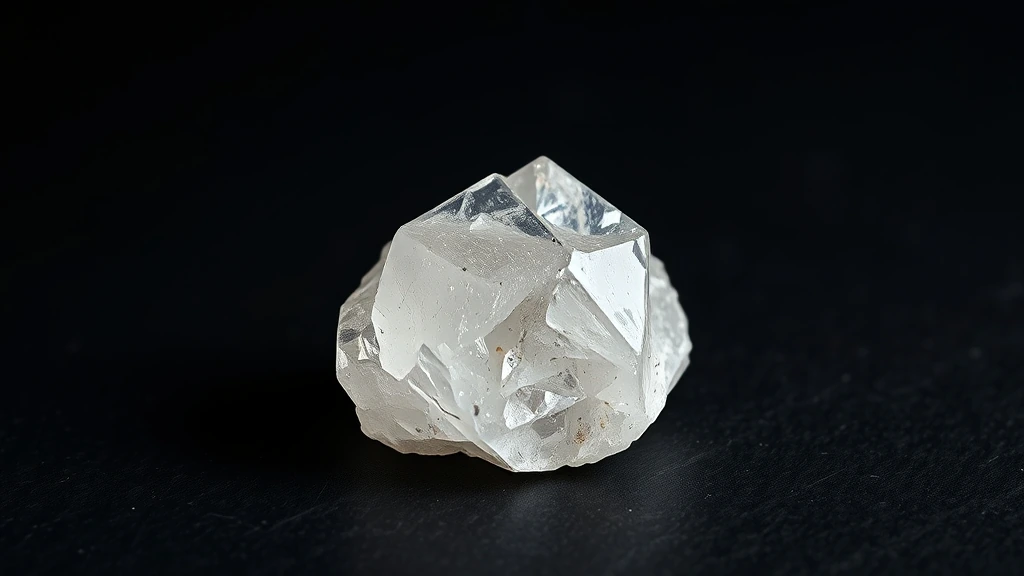
Rock crystal belongs to the silicate family, specifically the tectosilicate subgroup known as the Quartz Group. As a crystalline form of quartz, it crystallizes in the trigonal (rhombohedral / trapezohedral) crystal system, forming hexagonal prisms terminated by pyramidal faces. This mineral is ubiquitous in igneous, metamorphic, and sedimentary environments, where it precipitates from silica‑rich fluids during the late stages of rock formation.
What is Rock Crystal (necef Quartz) Gemstone? Geological Overview & Definition
Rock crystal is the colorless, transparent variety of quartz, prized for its clarity and lack of inclusions. Geologically, it occurs as well‑formed prisms or massive aggregates in veins, pegmatites, and alluvial deposits, often associated with feldspar, mica, and tourmaline.
In gemology, the term “rock crystal” designates pure quartz without any chromophoric impurities, distinguishing it from colored quartz varieties such as amethyst or citrine. Its optical purity makes it a universal energy amplifier, historically used in meditation and healing practices across cultures.
Rock Crystal (necef Quartz) Gemstone Chemical Composition & Crystallographic Properties
The fundamental chemical composition of rock crystal is SiO₂, a simple tetrahedral network of silicon atoms each bonded to four oxygen atoms. This tectosilicate framework creates a robust, three‑dimensional lattice that resists chemical weathering but is sensitive to strong acids, which can dissolve the silica network over time.
Crystallographically, rock crystal adopts the trigonal (rhombohedral / trapezohedral) system, characterized by a three‑fold rotational axis and a hexagonal lattice parameters a = b ≠ c. The unit cell contains three SiO₂ units arranged in a helical pattern, giving rise to its distinctive prism‑pyramidal habit.
Because it is chemically pure, rock crystal lacks significant cation substitution; however, trace amounts of Fe³⁺, Al³⁺, or Ti⁴⁺ can occupy silicon sites, creating color centers that may impart faint yellow or gray hues. These chromophore centers are responsible for subtle variations in transparency but do not alter the overall colorless appearance.
Thermally, rock crystal exhibits low thermal expansion and retains its structural integrity up to ~573 °C, the α‑β quartz transition temperature. Above this point, the crystal lattice transforms to the high‑temperature β‑quartz phase, causing a reversible change in symmetry that can be detected by birefringence under polarized light.
| Property | Specification |
|---|---|
| Mineral Group | Silicates (Tectosilicates / Quartz Group) |
| Chemical Formula | SiO₂ (Silicon Dioxide) |
| Mohs Hardness | 7.0 |
| Crystal System | Trigonal (Rhombohedral / Trapezohedral) |
| Specific Gravity (Density) | 2.65 |
| Refractive Index | 1.544 – 1.553 |
| Color & Optical Properties | Natural Rock Crystal (necef Quartz) Gemstone color spectrum and optical dispersion |
| Primary Mining Localities | Brazil, Madagascar, USA (Arkansas), Swiss Alps |
| Water & Chemical Resistance | High (Fully resistant to water and moisture) |
| Chakra Alignment (Traditional) | All Chakras (Universal Harmonizer) |
| Zodiac Affinity (Traditional) | All Zodiac Signs (Especially Leo and Aries) |
| Symbolic Meaning (Traditional) | Master energy amplifier, clarity, purification, and focus |
Quartz Varieties & Comprehensive Sub‑Types
Amethyst
Amethyst forms in high‑temperature hydrothermal veins where silica‑rich fluids encounter iron‑bearing host rocks. The characteristic violet hue arises from Fe⁴⁺ (FeO₄)⁴⁻ color centers created by natural irradiation. Macrocrystalline crystals display parallel banding and occasional dendritic inclusions, and the stone is graded as a premium gemstone for the crown and third‑eye chakras. Its Mohs hardness of 7.0 and stable refractive index (1.544‑1.553) secure a strong market presence worldwide.
Citrine
Citrine originates in similar pegmatitic environments but requires iron‑rich inclusions that, when heated, develop golden‑yellow to amber coloration through Fe³⁺ charge transfer. Naturally occurring citrine is scarce; most commercial material is heat‑treated amethyst, a process that stabilizes the color without compromising crystal integrity. The stone exhibits a uniform, often band‑free macrocrystalline habit, making it a favored solar‑plexus prosperity stone in the trade. Its physical properties mirror those of amethyst, ensuring durability in jewelry.
Rose Quartz
Rose quartz crystallizes in low‑temperature pegmatites where minute fibrous dumortierite‑like borosilicate inclusions scatter light, imparting a soft pink to rose‑red hue. The inclusions are typically sub‑micron and produce a milky translucency rather than true color zoning. This variety is prized for heart‑chakra work and commands a stable market due to its abundant deposits in Brazil and Madagascar. Its Mohs hardness of 7.0 and consistent refractive index make it easy to cut and polish.
Smoky Quartz
Smoky quartz develops when natural radioactive irradiation of aluminum impurities creates color centers that absorb visible light, yielding translucent brown to deep black tones. The crystals often display subtle internal clouding and occasional parallel growth striations, reflecting their pegmatitic origin. As a master grounding stone, it enjoys steady demand, especially in the United States and Europe. Its physical constants match those of clear quartz, allowing identical cutting techniques.
Rutilated Quartz
Rutilated quartz is clear quartz penetrated by acicular rutile (TiO₂) needles that may be golden, copper‑red, or black. These needles form during slow cooling of silica‑rich fluids, aligning parallel to the crystal’s c‑axis and creating striking asterism. The presence, density, and orientation of rutile are key grading criteria for lapidaries, influencing both aesthetic value and market price. High‑quality specimens from Brazil and Madagascar are especially sought after for high‑end jewelry.
Strawberry Quartz
Strawberry quartz consists of clear or pale pink quartz embedding red‑orange specks of lepidocrocite, hematite, or goethite that resemble tiny strawberries. These inclusions precipitate from iron‑rich hydrothermal solutions and are typically dispersed irregularly, giving each stone a unique “freckled” appearance. The variety is popular in ornamental carvings and metaphysical circles for its energizing properties. Commercially, it is sourced mainly from Brazil, where large, clean crystals are abundant.
Ametrine
Ametrine is a rare, naturally zoned quartz displaying distinct purple amethyst and golden citrine sectors within a single crystal lattice. The zoning results from localized variations in iron oxidation state during crystal growth in the Anahi mine, Bolivia. Because true ametrine is scarce, it commands premium prices, especially when the color transition is sharp and symmetrical. Gemologists assess the clarity of the zone boundary and the absence of heat‑treatment residues to certify authenticity.
Prasiolite (Green Quartz)
Prasiolite, or green quartz, is produced by controlled heat treatment of iron‑bearing amethyst, converting Fe³⁺ charge‑transfer bands into a leek‑green hue. The process preserves the crystal’s macrocrystalline form while eliminating the original violet coloration. Naturally occurring green quartz is extremely rare, so most market supply is treated material from Brazil and the United States. Its uniform color and high transparency make it a favored alternative to emerald in contemporary design.
Comparative Summary – Gemologists differentiate these quartz varieties primarily by color‑origin mechanisms (irradiation, heat treatment, inclusions) and the presence of diagnostic inclusions such as rutile needles or iron‑oxide specks. Refractive index and hardness remain constant across the group, so visual inspection under magnification, spectroscopy, and provenance documentation are essential for accurate classification and valuation.
Where is Rock Crystal (necef Quartz) Gemstone Found? Geological Mining & Extraction
Rock crystal, the pure, colorless form of SiO₂, crystallizes in granitic pegmatites where slow cooling allows large, well‑formed macrocrystals to develop. These pegmatites are typically associated with granitic intrusions in shield areas, providing the low‑stress environment needed for unhindered quartz growth.
Major extraction zones include the Alps (Switzerland), the Ural Mountains (Russia), and the Minas Gerais region (Brazil), each yielding transparent, inclusion‑free crystals prized by lapidaries. Modern mining employs selective blasting and hand‑sorting to preserve crystal integrity, followed by water‑based washing to remove host‑rock debris before export.
Historical Significance & Cultural Lore of Rock Crystal (necef Quartz) Gemstone
Since antiquity, clear quartz has been revered for its perceived purity and amplifying properties, appearing in Egyptian scarabs, Roman mosaics, and medieval reliquaries. Archaeological finds from the Indus Valley and Mesoamerica demonstrate its use in ceremonial mirrors, talismans, and early optical devices.
In folklore, rock crystal was believed to channel celestial energy, serving as a universal harmonizer for all chakras and zodiac signs, especially Leo and Aries. Its enduring allure across cultures underscores a timeless belief in the stone’s ability to clarify thought, purify spirit, and focus intention.
Modern Uses & Jewelry Applications of Rock Crystal (necef Quartz) Gemstone
Rock crystal is prized for its flawless transparency and high refractive index (1.544‑1.553), making it a versatile canvas for both classic and contemporary lapidary work. Artisans often cut the stone into elegant cabochons that showcase its natural glow, while precision faceting yields brilliant, chandelier‑like pieces for high‑end jewelry. In addition, skilled carvers transform large blocks into ornamental objects such as vases, candle holders, and intricate figurines that highlight the stone’s innate clarity.
- Faceted rings and pendants – maximize sparkle and light dispersion.
- Cabochon earrings or brooches – emphasize smooth, glass‑like surfaces.
- Ornamental carvings – large crystal blocks carved into decorative art.
- Beaded necklaces – drilled beads retain translucency for subtle shimmer.
Metaphysical Properties & Traditional Meaning of Rock Crystal (necef Quartz) Gemstone
According to historical traditions and metaphysical lore, rock crystal functions as a master energy amplifier, magnifying intentions while fostering mental clarity and emotional purification. Practitioners believe its pure, colorless nature reflects inner truth, helping users release negativity and focus on higher‑order goals. The stone’s resonance is said to support meditation, enhance psychic perception, and promote a sense of universal harmony across all life areas.
Which Chakra and Zodiac Signs Align with Rock Crystal (necef Quartz) Gemstone?
In esoteric systems, rock crystal is linked to all chakras, acting as a universal harmonizer that balances the root through the crown, allowing energy to flow unimpeded throughout the subtle body. This all‑encompassing alignment makes it a favored tool for those seeking comprehensive energetic alignment and spiritual integration.
Astrologically, the stone is compatible with all zodiac signs, with particular potency for Leo and Aries, whose fiery natures benefit from the crystal’s clarifying influence. Whether used by a steadfast Taurus or a mutable Gemini, rock crystal is believed to amplify personal power while encouraging honest self‑expression.
How to Identify Real vs. Fake Rock Crystal (necef Quartz) Gemstone
Artificial imitations of rock crystal include high‑quality glass, acrylic, and dyed quartz that mimic its brilliance but lack the authentic silicon dioxide lattice. Synthetic quartz may display uniform clarity without the subtle internal growth patterns typical of natural specimens, while colored or treated stones often exhibit surface coatings that can be scratched or peeled. Recognizing these differences requires a combination of visual inspection and simple physical tests.
Practical At-Home Authenticity Tests
- Temperature Test (Thermal Feel): Natural quartz feels cool to the touch and retains that coolness longer than glass, which quickly warms to skin temperature.
- Specific Gravity & Weight Test: With a density of ~2.65 g/cm³, genuine rock crystal feels heavier than glass of the same size; a simple water‑displacement test can confirm this.
- Scratch & Hardness Test (Mohs Comparison): Quartz rates 7 on the Mohs scale; it will scratch glass (≈5.5) but be scratched by a steel file (≈6.5‑7).
- Microscopic & Loupe Inspection (Internal Inclusions): Under 10× magnification, natural crystal shows minute growth lines, wispy inclusions, or cloudiness, whereas glass appears uniformly flawless.
Rock Crystal (necef Quartz) Gemstone Valuation Factors, Grading & Pricing
The primary determinant of value is Color Saturation, though rock crystal is prized for its lack of hue. Experts assess the stone’s optical clarity and vitreous luster to ensure it appears perfectly transparent. Any visible tint or internal haziness significantly diminishes the gem’s commercial appeal.
Carat Weight influences pricing, yet large crystals often contain natural inclusions that limit their value. Facet symmetry must be precise to maximize light return and brilliance in cut stones. The presence of a matrix or heavy inclusions typically lowers the grade, as collectors prefer pristine, eye-clean specimens.
Geographical Provenance Premium can elevate prices for crystals from renowned localities like Brazil or Madagascar. Wholesale costs remain low, but retail margins increase for high-clarity, large-carat pieces. Market trends favor flawless, transparent specimens for both jewelry and metaphysical applications.
How to Clean and Care for Rock Crystal (necef Quartz) Gemstone
Rock crystal is highly durable and fully resistant to water and moisture, making maintenance straightforward. You can easily clean the stone using warm water and mild soap to remove surface oils and dust. Gently rub the surface with a soft cloth to avoid scratching the polished facets.
This mineral is suitable for ultrasonic cleaning provided the specimen is not heavily fractured. Avoid using harsh chemicals or abrasive brushes that could damage delicate crystal terminations. Regular inspection for cracks ensures the stone remains safe for ultrasonic baths and daily wear.
Cleansing and Recharging Rock Crystal (necef Quartz) Gemstone (Energetic Care)
For energetic maintenance, place the crystal on a selenite plate overnight to facilitate passive energy transfer. This dry method avoids any risk of physical damage while allowing the stone to reset its vibrational frequency. Selenite is an ideal companion due to its own high purity and cleansing properties.
Alternatively, expose the rock crystal to moonlight during a full moon for gentle recharging. You may also use smoke smudging with sage or palo santo to purify the stone’s aura. These dry techniques respect the mineral’s physical integrity while addressing its metaphysical properties.
Frequently Asked Questions About Rock Crystal (necef Quartz) Gemstone
Is rock crystal safe to wear in water or rain?
Yes – it is fully water‑resistant. Rock crystal’s silica lattice makes it impervious to moisture, so it can be worn while swimming, showering, or caught in rain without damage. Its density of 2.65 g/cm³ and lack of cleavage planes prevent water ingress or weakening.
How should I clean rock crystal jewelry?
Clean it with warm water and a mild soap, then rinse and dry. This gentle method removes oils and dust without harming the stone. If the piece is solid and not heavily fractured, an ultrasonic cleaner can be used safely, as quartz tolerates the vibrations.
Does rock crystal have any zodiac associations?
It aligns with all zodiac signs, especially Leo and Aries. In astrological tradition, the crystal’s clear, amplifying energy is believed to support the boldness of Leo and the drive of Aries, while still resonating universally with every sign’s intent.
Which chakras does rock crystal balance?
It is a universal harmonizer for all chakras. The stone’s high refractive index (1.544‑1.553) is thought to transmit pure light energy, clearing blockages from the root up through the crown, making it a versatile tool for whole‑body alignment.
What is the hardness of rock crystal and how does that affect wearability?
It rates a 7 on the Mohs scale. This makes it resistant to scratches from most everyday objects, though it can be nicked by harder materials like diamond or corundum. Its trigonal crystal system contributes to a sturdy, durable lattice suitable for daily wear.
Can rock crystal be used in metaphysical practices for clarity?
Yes, it is prized as a master energy amplifier for clarity and focus. Practitioners place the clear quartz on the third eye or hold it during meditation to enhance purification and sharpen mental perception, leveraging its natural lattice vibrations.
Is rock crystal prone to any chemical damage?
No, it is chemically inert to most household substances. Being pure SiO₂, it does not react with acids, bases, or detergents commonly encountered in cleaning. However, prolonged exposure to hydrofluoric acid can etch quartz, a scenario unlikely in normal use.
Does rock crystal have any special care considerations for fractures?
Avoid ultrasonic cleaning if the stone is heavily fractured. While intact quartz tolerates ultrasonic baths, cracks can widen under vibration, leading to breakage. For fractured pieces, stick to hand‑washing with warm, soapy water and gentle pat‑drying.