
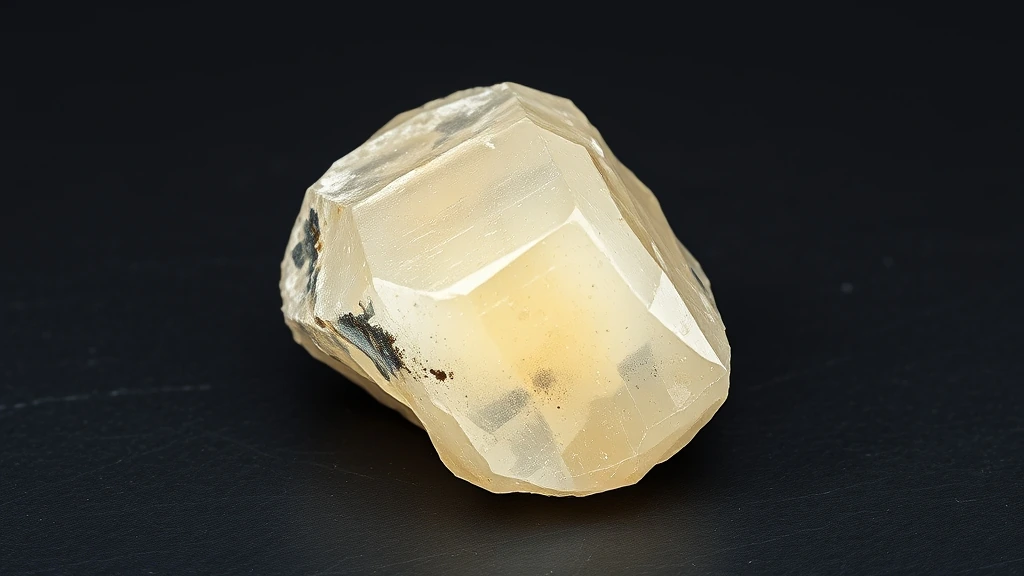
Lemon quartz belongs to the quartz family, a cornerstone of the tectosilicate (framework silicate) group that dominates the Earth’s crust. Formed in hydrothermal veins, pegmatites, and volcanic rhyolites, it crystallizes from silica‑rich fluids under low‑ to moderate‑temperature conditions. The stone’s characteristic lemon tint arises from trace iron or titanium impurities that alter its light‑absorption properties, while its robust trigonal lattice ensures durability and clarity prized by gem cutters worldwide.
What is Lemon Quartz Gemstone? Geological Overview & Definition
Lemon quartz is a variant of natural quartz distinguished by its pale yellow coloration, which results from subtle chromophoric impurities rather than a distinct chemical alteration. It occurs as well‑formed rhombohedral crystals or massive aggregates, often found alongside amethyst, citrine, and smoky quartz in the same geological settings.
In gemological terms, lemon quartz is classified as a transparent to translucent gemstone with a vitreous luster and a refractive index ranging from 1.544 to 1.553. Its hardness of 7.0 makes it suitable for most jewelry applications, though it is best protected from prolonged exposure to harsh chemicals that could etch its surface.
Lemon Quartz Gemstone Chemical Composition & Crystallographic Properties
The stone’s chemical formula is SiO₂, confirming its identity as pure quartz with only trace elemental substitutions. Its crystal lattice conforms to the trigonal (rhombohedral / trapezohedral) system, where each silicon atom is tetrahedrally coordinated to four oxygen atoms, creating a continuous three‑dimensional framework.
Color in lemon quartz is generated by cation substitution, typically Fe³⁺ or Ti⁴⁺ replacing a small fraction of Si⁴⁺ within the lattice, producing yellow‑hued color centers that absorb specific wavelengths of light. These impurities do not disrupt the overall stoichiometry but modify the stone’s optical properties, giving it its signature lemon glow.
Quartz is chemically resistant but sensitive to strong acids such as hydrofluoric acid, which can dissolve the Si–O bonds. In everyday use, lemon quartz tolerates mild acids and alkaline solutions, yet prolonged contact with harsh chemicals should be avoided to preserve its surface integrity.
Thermally, lemon quartz remains stable up to about 573 °C, the α‑β quartz transition temperature, where the crystal structure expands slightly before reverting to the high‑temperature β‑phase. Heating can sometimes enhance or fade the yellow hue, depending on the concentration and oxidation state of the chromophoric ions.
| Property | Specification |
|---|---|
| Mineral Group | Silicates (Tectosilicates / Quartz Group) |
| Chemical Formula | SiO₂ (Silicon Dioxide) |
| Mohs Hardness | 7.0 |
| Crystal System | Trigonal (Rhombohedral / Trapezohedral) |
| Specific Gravity (Density) | 2.65 |
| Refractive Index | 1.544 – 1.553 |
| Color & Optical Properties | Natural Lemon Quartz Gemstone color spectrum and optical dispersion |
| Primary Mining Localities | Brazil, Madagascar, USA (Arkansas), Swiss Alps |
| Water & Chemical Resistance | High (Fully resistant to water and moisture) |
| Chakra Alignment (Traditional) | All Chakras (Universal Harmonizer) |
| Zodiac Affinity (Traditional) | All Zodiac Signs (Especially Leo and Aries) |
| Symbolic Meaning (Traditional) | Master energy amplifier, clarity, purification, and focus |
Quartz Varieties & Comprehensive Sub‑Types
Amethyst
Amethyst forms in high‑temperature hydrothermal veins where silica‑rich fluids encounter iron‑bearing host rocks. Fe⁴⁺ (FeO₄)⁴⁻ color centers created by natural irradiation impart the characteristic violet to royal‑purple hue. The crystals grow as macrocrystalline trigonal prisms with occasional banded zoning, and the stone rates 7 on the Mohs scale. Globally, amethyst is a staple of the gemstone market, prized for its crown‑chakra resonance and third‑eye clarity.
Citrine
Citrine originates in the same hydrothermal environments as amethyst but requires a distinct iron oxidation state that yields golden‑yellow to amber coloration. Natural citrine is rare; most gem‑grade material is produced by controlled heat‑treatment of amethyst, which alters the Fe⁴⁺ centers to Fe³⁺. The resulting quartz exhibits a uniform, often slightly banded, macrocrystalline habit and retains a hardness of 7.0. In trade, citrine is marketed as the solar‑plexus prosperity stone and commands strong demand for jewelry and ornamental pieces.
Rose Quartz
Rose quartz crystallizes in pegmatitic pockets where minute dumortierite‑like borosilicate inclusions scatter light, creating its soft pink to rose‑red tone. The fibrous inclusions are typically sub‑microscopic, giving the stone a milky translucency without distinct banding. Its hardness matches other quartz varieties at 7, and it is widely harvested in Brazil and Madagascar for the heart‑chakra market. Rose quartz enjoys premium pricing as a premier crystal for emotional healing and decorative use.
Smoky Quartz
Smoky quartz develops when natural radioactive irradiation of aluminum impurities within the crystal lattice produces color centers that range from translucent brown to deep black. These centers are stable, so the stone retains its smoky hue even after exposure to light. The crystals often display subtle internal zoning and maintain the typical trigonal macrocrystalline form. Because of its grounding reputation, smoky quartz is a staple in both fine jewelry and metaphysical collections, with Brazil and the United States as primary sources.
Rutilated Quartz
Rutilated quartz is a clear rock‑crystal host pierced by acicular rutile (TiO₂) needles that appear golden, copper‑red, or black. The rutile inclusions form during slow crystallization in silica‑rich fluids, aligning parallel to the quartz c‑axis and creating striking needle‑like patterns. The stone retains quartz’s 7‑hardness and is prized for its dramatic visual contrast in high‑end lapidary work. Market demand is strong for both raw mineral specimens and polished cabochons used in luxury settings.
Strawberry Quartz
Strawberry quartz is essentially clear quartz infused with red‑orange specks of lepidocrocite, hematite, or goethite that give a strawberry‑like appearance. These iron‑oxide inclusions precipitate from late‑stage hydrothermal fluids, often forming irregular clusters that enhance the stone’s visual depth. The host quartz remains transparent and exhibits the usual trigonal habit and Mohs hardness of 7. Gem traders value strawberry quartz for its unique aesthetic, positioning it as a niche collector’s item rather than a mainstream gemstone.
Ametrine
Ametrine is a rare, naturally zoned quartz that displays distinct sectors of amethyst (purple) and citrine (golden) within a single crystal. The zoning arises from localized variations in iron oxidation during crystal growth in the Anahi mine of Bolivia, where temperature gradients create the dual‑color effect. The stone’s macrocrystalline form is typically free of visible fractures, allowing it to be cut into striking bi‑colored gemstones. Because of its scarcity, ametrine commands premium prices and is marketed as a dual‑energy stone for both intuition and abundance.
Prasiolite (Green Quartz)
Prasiolite, or green quartz, is produced by controlled heat treatment of iron‑bearing amethyst, which converts Fe⁴⁺ centers to a green Fe³⁺ state. The resulting crystals are transparent, leek‑green, and retain the trigonal macrocrystalline habit of quartz. While natural green quartz is virtually nonexistent, the treated material is widely accepted in the market and is sourced primarily from Brazil and the United States. Prasiolite is celebrated for its soothing green hue and is popular in both jewelry and crystal healing practices.
Comparative Summary – Gemologists differentiate these quartz varieties by examining color‑origin mechanisms (irradiation, heat treatment, inclusions), the presence and orientation of mineral inclusions (rutile, iron oxides, borosilicates), and any zoning patterns visible under magnification. Refractive index measurements (1.544–1.553) and hardness testing confirm quartz identity, while spectroscopic analysis pinpoints the specific chromophore responsible for each hue.
Where is Lemon Quartz Gemstone Found? Geological Mining & Extraction
Lemon quartz occurs in pegmatitic veins associated with granitic intrusions, where silica‑rich fluids deposit macrocrystalline SiO₂ within fractures. The most productive deposits are located in Brazil’s Minas Gerais province, the United States’ Arkansas and California pegmatites, and Madagascar’s Ilakaka region, where the stone is extracted by selective hand‑sorting of host rock.
Mining operations typically involve open‑pit or small‑scale underground methods, followed by washing and gravity‑separation to isolate the bright yellow crystals. Because lemon quartz is often intergrown with other quartz varieties, gem cutters rely on color sorting tables and UV fluorescence to ensure purity before the stones enter the lapidary pipeline.
Historical Significance & Cultural Lore of Lemon Quartz Gemstone
Ancient Egyptians prized lemon quartz for its luminous hue, incorporating it into funerary amulets and bead necklaces that symbolized the sun’s life‑giving energy. Roman writers described “citrinitas” stones used in mosaics and signet rings, attributing to them protective qualities for travelers crossing the Mediterranean.
In Eastern traditions, lemon quartz was revered as a universal harmonizer, employed in Ayurvedic rituals to balance the chakras and amplify mental clarity. Medieval European alchemists recorded the stone’s ability to “purify the spirit,” while contemporary metaphysical practitioners cite its role in enhancing focus and manifesting prosperity.
Modern Uses & Jewelry Applications of Lemon Quartz Gemstone
Lapidaries favor lemon quartz for its high luster and clarity, making it ideal for both faceted gems and smooth cabochons. The stone’s durability allows for intricate ornamental carving, where its soft yellow hue complements silver or white gold settings.
- Faceted Cuts: Standard brilliant or oval cuts maximize the stone’s refractive index (1.544 – 1.553) to enhance sparkle.
- Cabochons: Smooth, domed shapes highlight internal inclusions and the stone’s gentle, creamy coloration.
- Ornamental Carvings: Larger blocks are often carved into beads, pendants, or decorative architectural elements.
- Jewelry Settings: Commonly used in rings, necklaces, and earrings due to its Mohs hardness of 7.0.
Metaphysical Properties & Traditional Meaning of Lemon Quartz Gemstone
According to historical traditions and metaphysical lore, lemon quartz is revered as a master energy amplifier that promotes mental clarity. Practitioners believe it aids in purification and focus, helping to clear stagnant emotional energy.
This stone is often associated with the solar plexus, symbolizing personal power and confidence. Its gentle yellow tone is thought to resonate with the heart, fostering a sense of emotional balance and optimism.
Which Chakra and Zodiac Signs Align with Lemon Quartz Gemstone?
In metaphysical practice, lemon quartz is considered a Universal Harmonizer, meaning it aligns with All Chakras. It is believed to balance the entire energy system, promoting flow and harmony from the root to the crown.
Astrologically, this stone resonates with All Zodiac Signs, but it holds special significance for Leo and Aries. These fire signs are said to benefit most from its amplifying properties, enhancing their natural confidence and vitality.
How to Identify Real vs. Fake Lemon Quartz Gemstone
Artificial imitations of lemon quartz often include synthetic glass, dyed clear quartz, or cubic zirconia. These fakes may lack the natural internal inclusions and subtle color zoning found in genuine specimens.
Practical At-Home Authenticity Tests
- Temperature Test (Thermal Feel): Real quartz feels cool to the touch initially and warms slowly, whereas plastic or glass imitations may feel warmer or heat up faster.
- Specific Gravity & Weight Test: Genuine lemon quartz has a density of 2.65. It should feel heavier than glass or plastic of the same size.
- Scratch & Hardness Test (Mohs Comparison): With a Mohs hardness of 7.0, real quartz will scratch glass but will not be scratched by a steel knife.
- Microscopic & Loupe Inspection (Internal Inclusions): Use a 10x loupe to look for natural crystal inclusions or fluid bubbles, which are rare in synthetic glass.
Lemon Quartz Gemstone Valuation Factors, Grading & Pricing
The primary driver of value is Color Saturation, where a vivid, sunny yellow hue commands the highest premiums. Tone uniformity across the entire stone is critical, as any zoning or pale patches significantly reduce desirability. Furthermore, exceptional optical clarity and a bright, glassy luster are essential for a high-grade specimen.
Carat Weight influences pricing exponentially, with larger, eye-clean stones becoming increasingly rare and valuable. Facet symmetry must be precise to maximize light return, ensuring the gemstone sparkles effectively from all angles. The presence of matrix or visible inclusions generally lowers the grade, though some minor internal features are acceptable in smaller stones.
Geographical Provenance Premium can elevate prices for stones from renowned, historically significant mining regions. Current wholesale trends show steady demand, while retail prices vary based on cut quality and brand reputation. Buyers should always verify certification to ensure the quoted price aligns with actual gemological standards.
How to Clean and Care for Lemon Quartz Gemstone
Lemon Quartz is durable and fully resistant to water, making routine maintenance straightforward and safe for daily wear. You should easily clean the stone using warm water and mild soap to remove oils and dirt. Gently rub the surface with a soft cloth or brush to ensure all crevices are spotless.
This mineral is suitable for ultrasonic cleaning provided the stone is not heavily fractured or internally stressed. Always inspect the gemstone for cracks before placing it in an ultrasonic bath to prevent potential damage. Avoid harsh chemicals or steam cleaning, which can compromise the surface polish over time.
Cleansing and Recharging Lemon Quartz Gemstone (Energetic Care)
For energetic maintenance, place the stone on a selenite plate overnight to absorb negative energies and restore its vibrational frequency. This dry method is safe because it avoids any physical contact with water or abrasive surfaces. It allows the crystal to reset its energy field without risking structural integrity.
Alternatively, you can use smoke smudging with sage or palo santo to purify the stone’s aura. Hold the quartz above the rising smoke for a few minutes to clear stagnant energy. These dry techniques respect the mineral’s physical properties while supporting its metaphysical applications.
Frequently Asked Questions About Lemon Quartz Gemstone
Is Lemon Quartz safe to wear in the shower?
Yes, Lemon Quartz is fully water-resistant and safe for shower exposure. The mineral’s SiO₂ composition ensures it does not dissolve or degrade when exposed to moisture. You can confidently wear your jewelry during daily hygiene routines without fear of structural damage.
Can I clean Lemon Quartz in an ultrasonic cleaner?
Yes, it is suitable for ultrasonic cleaning unless heavily fractured. While warm water and mild soap are often sufficient, the Mohs hardness of 7.0 allows it to withstand ultrasonic vibrations. Always inspect for internal fractures before using high-intensity cleaning methods.
Which zodiac signs are compatible with Lemon Quartz?
It resonates with all zodiac signs, especially Leo and Aries. This universal appeal stems from its master energy amplifier properties, which enhance personal vitality. Fire signs particularly benefit from its ability to boost confidence and creative focus.
What chakras does Lemon Quartz align with?
It aligns with all chakras as a universal harmonizer. Unlike stones tied to specific energy centers, Lemon Quartz balances the entire chakra system. This makes it an ideal tool for holistic meditation and overall energetic equilibrium.
How hard is Lemon Quartz on the Mohs scale?
It rates a 7.0 on the Mohs hardness scale. This makes it durable enough for everyday jewelry wear, resisting scratches from common household materials. However, it is still susceptible to damage from harder minerals like topaz or diamond.
What is the chemical composition of Lemon Quartz?
Its primary chemical formula is SiO₂, or silicon dioxide. This pure silica structure contributes to its refractive index of 1.544 to 1.553. The trace elements responsible for its pale yellow hue are often debated among gemologists.
Does Lemon Quartz require special maintenance?
No, it requires minimal maintenance due to its stability. Regular cleaning with warm water and mild soap keeps it looking pristine. Avoid harsh chemicals that might degrade any associated metal settings, though the stone itself is robust.
What is the crystal system of Lemon Quartz?
It crystallizes in the trigonal system, specifically rhombohedral or trapezohedral forms. This geometric structure influences its density of 2.65 and optical properties. Understanding this helps in identifying natural specimens versus synthetic alternatives.