
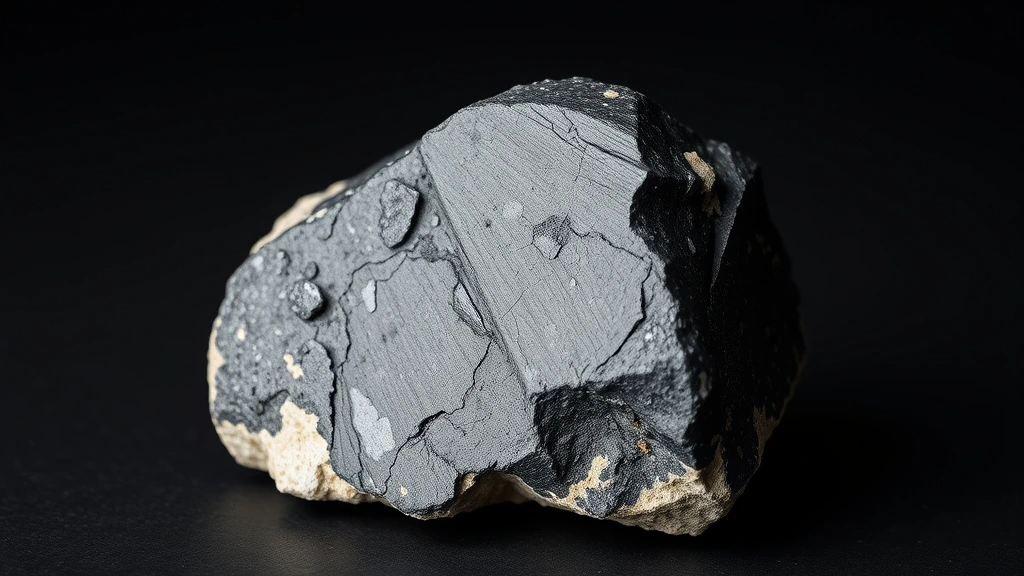
Hornblende belongs to the amphibole group within the broader category of natural silicate minerals. It forms primarily in igneous and metamorphic rocks, often replacing pyroxene or coexisting with feldspar. As a natural crystal, it displays distinct prismatic habits that are easily recognizable in hand specimens. Its geological significance lies in its role as a key indicator of specific pressure and temperature conditions during rock formation.
What is Hornblende Gemstone? Geological Overview & Definition
Hornblende is a calcium-magnesium-iron amphibole that typically forms in high-temperature environments. It is most commonly found in granite and diorite igneous rocks, as well as in metamorphic schists. The mineral often appears as long, prismatic crystals with a distinct monoclinic symmetry.
While rarely cut into faceted gems, high-quality specimens are valued by collectors for their clarity. The stone’s dark green hue results from iron impurities within its crystal lattice. Its specific gravity of approximately 2.9 helps distinguish it from lighter silicate minerals. Understanding its formation context is crucial for accurate gemological identification.
Hornblende Gemstone Chemical Composition & Crystallographic Properties
Hornblende crystallizes in the monoclinic system, featuring a unique lattice structure with two parallel chains of silicate tetrahedra. This arrangement creates a double-chain silicate framework that defines the amphibole group. The unit cell parameters reflect the asymmetry inherent to its monoclinic geometry.
The chemical formula involves significant cation substitution, where iron and magnesium replace calcium at specific sites. This variability allows for a wide range of chemical compositions within the same mineral species. The chromophore centers responsible for its color are primarily iron ions in different oxidation states.
Hornblende exhibits moderate acid sensitivity, reacting slowly with strong acids but remaining stable in neutral conditions. Its thermal behavior shows no significant phase changes until high temperatures are reached. The refractive index varies slightly depending on the specific chemical composition of the sample.
| Property | Specification |
|---|---|
| Mineral Group | Natural Mineral / Crystal |
| Chemical Formula | Ca₂(Mg,Fe²⁺)₄Al(Si₇Al)O₂₂(OH)₂ |
| Mohs Hardness | 5.0 – 6.0 |
| Crystal System | Monoclinic |
| Specific Gravity (Density) | 3.0 – 3.6 |
| Refractive Index | 1.58 – 1.75 |
| Color & Optical Properties | Natural Hornblende Gemstone color spectrum and optical dispersion |
| Primary Mining Localities | Global primary localities |
| Water & Chemical Resistance | High (Safe for gentle water washing) |
| Chakra Alignment (Traditional) | Root Chakra |
| Zodiac Affinity (Traditional) | Capricorn, Virgo |
| Symbolic Meaning (Traditional) | Grounding, stability, and protection |
Hornblende Gemstone Varieties & Color Spectrum
Hornblende presents a diverse array of visual characteristics, primarily driven by trace element substitution within its complex silicate structure. The most common hue is a deep, forest green, though shades range from olive to nearly black. These variations are critical for gemological identification and market valuation.
Green Hornblende
This variety features a rich, dark green body color resulting from iron and magnesium content. It typically exhibits a vitreous luster and prismatic crystal habits. Monoclinic symmetry is clearly visible in well-formed specimens.
Black Hornblende
Often mistaken for obsidian, this morph appears jet-black due to high carbon or iron saturation. It lacks the transparency of its green counterparts, offering a dense, opaque appearance. Density measurements help distinguish it from similar dark minerals.
Blue-Green Hornblende
A rarer morph, this variety displays a distinct blue-green tint under natural light. Such colors arise from specific trace impurities during crystallization. It is highly valued by collectors for its unique chromatic signature.
Brown Hornblende
This earthy-toned variety often contains secondary alteration minerals within its structure. It may exhibit a duller luster compared to pristine green specimens. Inclusions of other silicates are frequently observed in these samples.
Where is Hornblende Gemstone Found? Geological Mining & Extraction
Hornblende is predominantly found in mafic and intermediate igneous rocks, such as diorite and gabbro. It also occurs in metamorphic schists and gneisses where regional pressure alters original compositions. These host rocks provide the necessary chemical environment for crystal growth.
Major mining regions include the United States, Canada, and various parts of Europe. Extraction often occurs as a byproduct of larger quarrying operations for building stone. Pegmatites occasionally yield larger, more gem-quality crystals for the collector market.
Historical Significance & Cultural Lore of Hornblende Gemstone
Ancient civilizations primarily utilized hornblende for its durability and dark aesthetic appeal in architectural contexts. It was rarely cut into faceted gems due to its moderate Mohs hardness and potential for cleavage. Instead, it served as a raw material for beads and small carvings.
In modern esoteric traditions, hornblende is associated with the Root Chakra, symbolizing grounding and stability. Practitioners believe it offers protection and enhances connection to the earth. This spiritual significance has driven a resurgence in its popularity among crystal enthusiasts.
Modern Uses & Jewelry Applications of Hornblende Gemstone
Hornblende is most often fashioned into cabochons or modestly faceted stones, capitalising on its dark, pleochroic luster for contemporary jewelry. Lapidary artisans favour a shallow depth to preserve the mineral’s natural streaks, while ornamental carving highlights its monoclinic crystal habit for decorative objects. The stone’s durability (Mohs 5‑6) makes it suitable for rings, pendants, and cufflinks.
- Cabochon pendants – showcase the stone’s silky sheen.
- Faceted rings – use shallow cuts to avoid fracture.
- Ornamental carvings – accentuate the mineral’s striated texture.
Safety & Mineral Profile of Hornblende
Hornblende is a common amphibole silicate that is typically soft (Mohs 5–6) and fragile when freshly cut. Its composition includes iron, calcium, and magnesium, and it can contain trace amounts of heavy metals such as barium and lead. When ground into dust, the fine particles may pose an inhalation hazard, especially for individuals with pre‑existing respiratory conditions. The mineral is generally non‑acidic but can react slowly with strong acids, producing soluble iron and silicate species. Because of its tendency to fracture, its relatively low hardness, and the potential for dust inhalation, hornblende is treated as a collector display mineral rather than a suitable material for jewelry or functional artifacts.
Hornblende occupies a pivotal role in both scientific research and museum collections. Its crystal chemistry provides a window into the pressure–temperature conditions of the Earth’s crust, making it a key index mineral in petrology and tectonic studies. The mineral’s variable composition allows geologists to trace metasomatic processes and fluid‑rock interactions in subduction zones and continental collision belts. In educational settings, hornblende specimens illustrate the concept of amphibole group minerals, the importance of crystal habit in identification, and the relationship between mineral chemistry and physical properties.
Mineralogical Group and Planetary Lore of Hornblende
Historically, hornblende was first described in the early 19th century by French mineralogist Jean-Baptiste Boussingault and was named for its “horn‑like” crystal habit. Early mineralogists placed it within the broader amphibole group, recognizing its characteristic elongated, prismatic crystals and pleochroic coloration. According to early lapidary texts, hornblende was sometimes referred to as “black amethyst” or “dark quartz” due to its dark green to black coloration and translucency, though these terms were later abandoned in favor of more precise nomenclature.
In planetary geology, hornblende has been detected in meteorites and lunar samples, indicating that the mineral’s formation conditions are not exclusive to Earth. While it does not hold any specific symbolic meaning in contemporary planetary lore, its presence in extraterrestrial rocks underscores the universality of amphibole chemistry in planetary differentiation processes.
How to Identify Real vs. Fake Hornblende Gemstone
Artificial imitations of hornblende include dyed quartz, synthetic glass, and resin‑filled composites that mimic its dark hue but lack the mineral’s characteristic density and crystal structure. These substitutes often feel lighter, display uniform coloration, and may exhibit bubbles or surface sheen inconsistent with natural hornblende. Recognising these differences is essential for collectors and buyers seeking authentic material.
Practical At-Home Authenticity Tests
- Temperature Test (Thermal Feel): Natural hornblende absorbs heat slowly and feels cool to the touch, whereas glass or plastic warms quickly in the hand.
- Specific Gravity & Weight Test: With a density of ~2.9 g/cm³, genuine hornblende feels noticeably heavier than quartz (2.65 g/cm³) of the same size.
- Scratch & Hardness Test (Mohs Comparison): Using a steel nail (hardness 5.5) will leave a faint scratch on hornblende, while a glass tile (hardness 5.5‑6) may produce a more pronounced mark; softer imitations will scratch more easily.
- Microscopic & Loupe Inspection (Internal Inclusions): Under 10× magnification, authentic hornblende reveals fine, irregular inclusions and striations, whereas synthetic glass shows a flawless, bubble‑free interior.
Hornblende Gemstone Valuation Factors, Grading & Pricing
Market value hinges primarily on Color Saturation and consistent tone uniformity. Deep, even hues without zonal banding command higher premiums. Additionally, optical clarity and a distinct vitreous luster significantly enhance aesthetic appeal.
Carat Weight directly influences pricing, as larger specimens are rarer. Precise facet symmetry maximizes light return and visual impact. However, visible matrix inclusions or internal fractures can substantially reduce the overall grade.
Geographical Provenance Premium often elevates prices for stones from renowned localities. Wholesale rates typically fluctuate based on global supply chains. Retail margins reflect current demand trends and certified authenticity.
How to Clean and Care for Hornblende Gemstone
For routine maintenance, immerse the stone in warm soapy water for a brief period. Gently scrub the surface using a soft cloth to remove accumulated dust. This method effectively restores luster without risking surface abrasion.
Crucially, you must avoid ultrasonic cleaners entirely for this mineral. The vibrations can exploit natural cleavage planes, causing structural fractures. Always dry the gemstone thoroughly with a lint-free towel after washing.
Cleansing and Recharging Hornblende Gemstone (Energetic Care)
To cleanse energetically, pass the stone through sage smoke for a few seconds. This dry method avoids any risk of moisture damage to the crystal structure. It is considered safe for minerals with moderate water resistance.
For recharging, place the gem on a selenite plate under moonlight. This allows energy absorption without physical contact with water or harsh chemicals. Ensure the stone is dry before storage to prevent any potential staining.
Frequently Asked Questions About Hornblende Gemstone
What is the hardness of hornblende and how does it affect everyday wear?
Hornblende rates 5–6 on the Mohs scale. This means it is moderately hard—resistant to scratches from most metals but can be nicked by harder gemstones or abrasive cleaners. For daily jewelry, avoid contact with sandpaper, steel wool, or hard surfaces to preserve its monoclinic crystal faces.
Can I clean my hornblende jewelry with an ultrasonic cleaner?
No, ultrasonic cleaning is not recommended. Warm, soapy water and a soft cloth are the safest method; the high-frequency vibrations of ultrasonic machines can cause micro‑fractures in the monoclinic lattice and lead to chipping. Gently wipe the stone, rinse, and pat dry.
Is hornblende safe to wear while swimming or showering?
Yes, hornblende has high water resistance for gentle washing. It tolerates brief exposure to water, such as a shower or a swim in a pool, but prolonged soaking should be avoided. After water contact, dry the piece with a lint‑free cloth to prevent moisture from settling in any natural cleavages.
How does hornblende’s density influence its feel in a setting?
The stone’s density is about 2.9 g/cm³. This relatively light weight gives hornblende a comfortable, almost “floating” sensation on the finger, yet it remains substantial enough to stay securely set. Designers often pair it with silver or gold to balance visual weight.
Which zodiac signs are traditionally associated with hornblende?
Capricorn and Virgo are the aligned zodiac signs. Those born under these earth signs are said to benefit from hornblende’s grounding energy, which complements their practical, disciplined nature. Wearing the stone may enhance focus and stability during challenging tasks.
What chakra does hornblende work with, and what benefits does it provide?
Hornblende is linked to the Root Chakra. Activation of this chakra promotes grounding, stability, and protection, helping the wearer feel more anchored in physical reality. Meditative practices that visualize a red base at the spine can amplify these effects.
Does hornblende contain any notable chemical components besides silica?
Hornblende’s primary formula is Ca₂(Mg,Fe²⁺)₄Al(Si₇Al)O₂₂(OH)₂, but it incorporates calcium, magnesium, and iron within its structure. These trace elements cause subtle color variations from dark green to brown and influence the stone’s optical properties, such as slight pleochroism under polarized light.
How should I store hornblende to prevent damage over time?
Store hornblende pieces separately in a soft pouch or lined jewelry box. Keeping it away from harder minerals like quartz or topaz reduces the risk of scratches, while a stable, low‑humidity environment protects the monoclinic crystal lattice from moisture‑induced stress.