
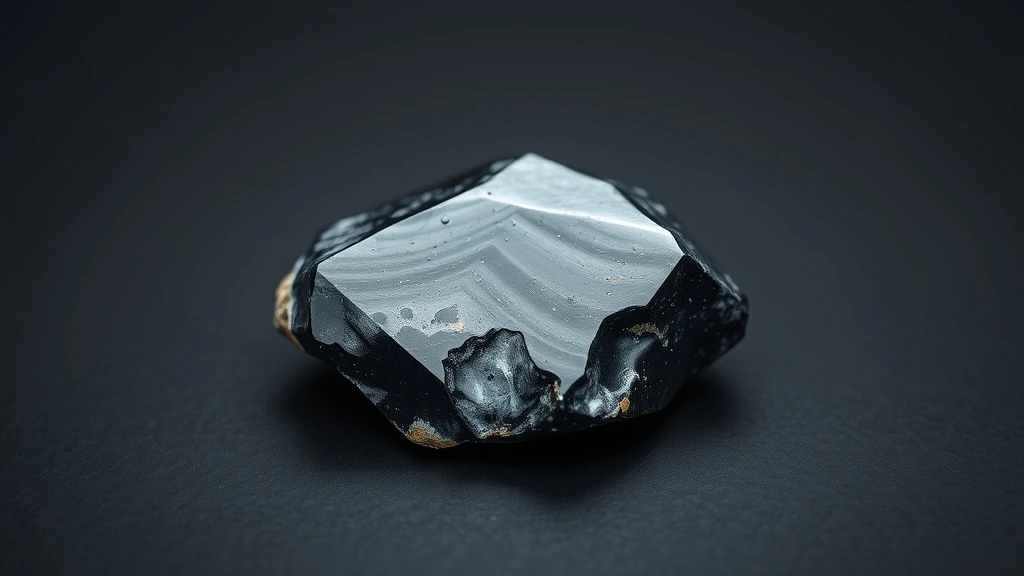
Obsidian forms when felsic lava cools so rapidly that crystals never have time to develop, yielding an amorphous, non‑crystalline solid. Classified as a mineraloid within the extrusive volcanic glass group, it lacks a true lattice yet retains a uniform glassy matrix that can host subtle color variations from trace elements. Among the many varieties shaped by these trace elements, Mahogany Obsidian stands out for its distinctive reddish-brown hue, which results from specific iron impurities trapped within the rapid-cooling volcanic glass.
What is Obsidian ? Geological Overview & Definition
Obsidian is a natural volcanic glass produced by the rapid quenching of high‑silica lava, typically in rhyolitic eruptions. Its glassy texture and conchoidal fracture distinguish it from crystalline igneous rocks, and it is harvested as a gemstone for its deep black luster and occasional iridescent inclusions. In comparative mineralogical collections, practitioners and geologists frequently study Diatomite alongside this crystal to appreciate their subtle energetic and structural differences.
In gemological terms, obsidian belongs to the mineraloid category because it lacks a repeating crystal lattice. This amorphous nature gives it a uniform refractive index (1.480‑1.510) and a density of 2.35‑2.60 g/cm³, properties that are consistent across most deposits worldwide. While the base mineraloid structure remains amorphous, specific inclusions of hematite or other metallic minerals can create the distinctive luster seen in Gold Sheen Obsidian, offering a striking visual contrast to the standard black variety.
Obsidian Chemical Composition & Crystallographic Properties
The material is an aggregate of silica‑rich glass, not a single mineral, and therefore has no fixed stoichiometric formula. Its bulk composition is dominated by SiO₂ (>70 %), with minor Fe, Mg, Al, and Ca oxides that substitute into the glass network as cationic modifiers.
Because obsidian is amorphous, it possesses no true crystal system; its structure is a random network of SiO₄ tetrahedra lacking long‑range order. This lack of periodicity makes it highly sensitive to acidic environments, where surface leaching can dull its luster.
Color in obsidian arises from chromophore centers such as iron oxides and nanometer‑scale inclusions that scatter light, producing shades from jet black to brown, green, or even rainbow‑sheen (snowflake obsidian). Thermal treatment can alter these centers, creating the prized “fire‑obsidian” with vivid reds and oranges.
When heated above its glass transition (~560 °C), obsidian softens and can be reshaped, yet rapid cooling will re‑solidify it into the same amorphous state, preserving its characteristic conchoidal fracture and glassy sheen.
| Property | Specification |
|---|---|
| Mineral Group | Mineraloid (Extrusive Volcanic Glass) |
| Chemical Formula | Volcanic glass (70%+ SiO₂ with Fe, Mg silicates) |
| Mohs Hardness | 5.0 – 5.5 |
| Crystal System | Amorphous (Non-crystalline volcanic glass) |
| Specific Gravity (Density) | 2.35 – 2.60 |
| Refractive Index | 1.480 – 1.510 |
| Color & Optical Properties | Natural Obsidian Gemstone color spectrum and optical dispersion |
| Primary Mining Localities | Mexico, USA (Oregon, Utah), Turkey (Kars, Agri), Armenia, Iceland |
| Water & Chemical Resistance | High (Natural volcanic glass; safe in water) |
| Chakra Alignment (Traditional) | Root Chakra (Muladhara) |
| Zodiac Affinity (Traditional) | Scorpio, Sagittarius, Capricorn |
| Symbolic Meaning (Traditional) | Aura shield, emotional truth mirroring, cord-cutting, and shadow grounding |
Obsidian Varieties & Color Spectrum
Black Obsidian
Formed from rapidly cooled silica‑rich lava, this classic variety is uniformly deep black with a glassy luster. Microscopic magnetite and iron‑oxide inclusions give it a subtle sheen that can appear metallic under light. It is the most abundant and widely traded, found in virtually every major obsidian belt.
Mahogany Obsidian
Mahogany displays a striking brown‑red matrix of iron‑rich inclusions that radiate from a dark base, resembling the grain of wood. The pattern forms as slow cooling allows iron oxides to segregate into dendritic veins. This variety is rarer than black obsidian and is prized for its dramatic contrast in jewelry.
Snowflake Obsidian
Snowflake obsidian contains crystalline cristobalite or spherulite inclusions that appear as white, snow‑like spots on a black background. These micro‑crystals develop when the lava cools just enough to permit limited nucleation before vitrification. The effect is highly sought after for ornamental carvings, though the stone is less abundant than the plain black form.
Rainbow Obsidian
Rainbow obsidian exhibits a vivid play of colors—green, gold, and red—caused by thin‑film interference within microscopic layers of iron‑rich minerals. The iridescence emerges when the glass surface is polished to a high sheen, revealing a kaleidoscopic sheen. This variety is relatively scarce and commands premium prices in high‑end markets.
Apache Tears (Obsidian Nodules)
Apache tears are smooth, rounded glass nodules that form when gas‑rich lava bubbles solidify into spherical beads. Their deep black color and tear‑shaped form have inspired mythic associations with mourning. Though technically a form of obsidian, they are collected more as curios rather than cut gemstones, making them a niche commodity.
Peruvian Green Obsidian
Found primarily in the Andes, this variety displays a translucent green hue from elevated concentrations of chromium and iron within the glass matrix. The subtle coloration is uniform, lacking the speckled patterns of other types, and is often used in high‑clarity cabochons. Its limited geographic source contributes to its exclusivity among collectors.
Where is Obsidian Found? Geological Mining & Extraction
Obsidian occurs in volcanic flow fronts, rhyolitic domes, and basaltic lava lakes where silica‑rich magma quenches rapidly against air or water. The glass forms in fissures and lava tubes, often filling vesicular cavities that later become the source of gem‑quality material. Modern extraction employs hand‑tooling and controlled blasting to avoid fracturing the fragile amorphous matrix.
The most prolific deposits lie in the United States (Oregon, Arizona, New Mexico), Mexico’s Michoacán region, Italy’s Lipari Islands, and the Andes of Peru and Chile. In each locale, miners target exposed flow benches and secondary alluvial concentrations where weathering has liberated smooth obsidian nodules, allowing artisanal and industrial operations to coexist.
Historical Significance & Cultural Lore of Obsidian
Ancient Mesoamerican peoples, notably the Aztecs and Maya, fashioned obsidian into ritual blades, mirrors, and ceremonial beads, valuing its sharpness and reflective surface for both warfare and divination. Archaeological sites reveal obsidian trade networks stretching from the Mexican highlands to the Pacific coast, underscoring its economic and symbolic importance.
In Anatolia and the Mediterranean, obsidian was exchanged as a prestige commodity, appearing in Neolithic burial goods and mythic narratives as a stone of protection and truth‑telling. Folklore across cultures attributes to it the power to shield the aura, cut psychic cords, and ground shadow aspects, a legacy that continues in modern metaphysical practice.
Modern Uses & Jewelry Applications of Obsidian
Obsidian’s sleek, glassy surface makes it a favorite for lapidary cutting, allowing artisans to showcase its natural sheen in both cabochon and faceted styles. Designers often set polished cabochons in silver or gold to create striking rings, pendants, and earrings, while faceted pieces catch light with a subtle sparkle. In addition, the stone is carved into ornamental objects such as figurines, bowls, and architectural accents, adding a touch of volcanic elegance to interiors.
- Cabochon pendants and rings for everyday wear
- Faceted stones in high‑contrast cocktail jewelry
- Hand‑carved beads, seals, and decorative plaques
Metaphysical Uses & Origins of Obsidian
Practitioners value obsidian for its grounding energy, using polished slabs or tumbled stones during meditation to anchor the mind and promote emotional truth‑telling. Its dense, reflective surface is believed to act as an aura shield, helping to cut energetic cords and facilitate shadow work, while architects and lapidary artists incorporate the material into spaces designed for deep introspection.
Which Chakra and Zodiac Signs Align with Obsidian ?
Obsidian is firmly linked to the Root Chakra (Muladhara), supporting stability, security, and a sense of belonging on the physical plane. When this chakra is balanced, users report increased confidence and a clearer connection to the Earth’s nurturing forces.
Astrologically, the stone resonates with Scorpio, Sagittarius, and Capricorn. Scorpio benefits from obsidian’s truth‑mirroring qualities, Sagittarius finds support for adventurous grounding, and Capricorn gains reinforcement for its disciplined, earth‑focused nature.
How to Identify Real vs. Fake Obsidian
Synthetic glass, dyed basalt, and resin‑filled imitations often masquerade as genuine obsidian, exploiting its dark allure and affordable price point. These substitutes may lack the stone’s characteristic conchoidal fracture, natural inclusions, and subtle variations in hue, making careful testing essential for collectors and buyers.
Practical At-Home Authenticity Tests
- Temperature Test (Thermal Feel): Real obsidian feels cool to the touch and retains that chill longer than glass or plastic, which quickly warm to skin temperature.
- Specific Gravity & Weight Test: Genuine obsidian has a density of 2.35‑2.60 g/cm³; it feels noticeably heavier than synthetic glass of the same size.
- Scratch & Hardness Test (Mohs Comparison): Using a steel file (hardness ~5.5), obsidian will resist scratching, whereas glass or resin will show visible marks.
- Microscopic & Loupe Inspection (Internal Inclusions): Under 10×–30× magnification, natural obsidian displays microscopic bubbles, flow lines, or tiny mineral specks, while fakes appear uniformly smooth and glassy.
Obsidian Valuation Factors, Grading & Pricing
The primary driver of value is Color Saturation, where deep, uniform black tones command the highest premiums. Collectors prize specimens with exceptional optical clarity, as any visible cloudiness or internal fractures significantly reduce market appeal. A consistent, glassy luster further enhances desirability by reflecting light sharply across the polished surface.
Specimen Mass & Size influences price exponentially, with larger, flawless specimens becoming increasingly rare and valuable. carving craftsmanship and block integrity is critical for cut stones, ensuring optimal light return and visual balance. The presence of matrix inclusions or flow lines can either add unique character or detract from purity, depending on buyer preference.
Geographical Provenance Premium often elevates the value of obsidian from renowned volcanic regions like Mexico or Iceland. Wholesale prices remain modest, but retail margins widen for certified, high-quality pieces. Current market trends favor ethically sourced stones with documented origins, supporting stable long-term investment potential.
How to Clean and Care for Obsidian
Due to its amorphous structure, obsidian lacks the crystalline resilience of quartz and remains susceptible to mechanical stress. You should clean the stone gently using warm water and a soft, lint-free cloth to remove surface dust. This method effectively maintains the glassy luster without introducing abrasive chemicals that could degrade the surface finish.
It is strictly necessary to avoid ultrasonic cleaners, as the high-frequency vibrations can cause the brittle volcanic glass to chip. Never subject obsidian to steam cleaning or harsh chemical solvents, which may compromise its structural integrity. Regular, gentle manual cleaning ensures the stone retains its sharp edges and polished appearance over time.
Cleansing and Recharging Obsidian (Energetic Care)
For energetic maintenance, use smoke smudging with sage or palo santo to clear residual negative energy. This dry method respects the stone’s physical limitations while aligning with traditional metaphysical practices. Ensure the smoke circulates freely around the gemstone for several minutes to complete the cleansing process.
Place the obsidian on a selenite plate or under moonlight for recharging purposes. These methods allow the stone to absorb positive ambient energy without exposure to water or heat. This approach preserves the mineral’s structural stability while enhancing its perceived metaphysical potency for continued use.
Frequently Asked Questions About Obsidian
Is obsidian safe to wear in water or rain?
Yes, obsidian is highly water‑resistant. Because it is natural volcanic glass, it does not absorb moisture and can be worn while swimming, showering, or in rain. Its amorphous structure and dense matrix (2.35‑2.60 g/cm³) prevent water penetration, making it ideal for everyday jewelry.
Can I clean obsidian with an ultrasonic cleaner?
No, avoid ultrasonic cleaning for obsidian. Warm water and a soft cloth are safe, but the high‑frequency vibrations of ultrasonic machines can cause this brittle glass to chip or fracture. Gentle hand cleaning preserves the stone’s smooth surface and prevents micro‑damage.
What is the hardness of obsidian on the Mohs scale?
Obsidian rates 5.0‑5.5 on the Mohs hardness scale. This makes it comparable to window glass, so it scratches easily against harder gemstones like quartz or sapphire. Use care when pairing it with abrasive materials and store it separately to avoid scratches.
Which zodiac signs are most aligned with obsidian?
Scorpio, Sagittarius, and Capricorn are the primary zodiac matches. These signs appreciate obsidian’s grounding and protective qualities, resonating with its ability to mirror emotional truth. The stone’s dark, reflective surface is said to amplify the introspective nature of these fire and earth signs.
Which chakra does obsidian primarily activate?
Obsidian is linked to the Root Chakra (Muladhara). This chakra governs stability, security, and physical grounding, which aligns with obsidian’s reputation for “shadow grounding” and aura shielding. Wearing the stone can help anchor energy and promote a sense of safety.
How does obsidian’s refractive index affect its appearance?
Its refractive index ranges from 1.480 to 1.510. This relatively low index gives obsidian a glassy, non‑sparkling luster, unlike crystalline gems that display high brilliance. The stone’s volcanic glass composition creates a smooth, mirror‑like surface that reflects light softly.
Is obsidian suitable for daily wear despite its brittleness?
Yes, with proper care obsidian can be worn daily. Although it is more fragile than many gemstones, its hardness of 5‑5.5 and density make it durable enough for rings or pendants if protected from hard impacts. Store it separately and avoid sudden knocks.
Does obsidian have any notable healing or esoteric properties?
Obsidian is reputed for aura shielding, emotional truth mirroring, and cord‑cutting. Practitioners believe it helps ground shadow aspects and cleanse psychic fields, especially when aligned with the Root Chakra. Its dark surface is thought to reflect hidden emotions, encouraging honest self‑reflection.