
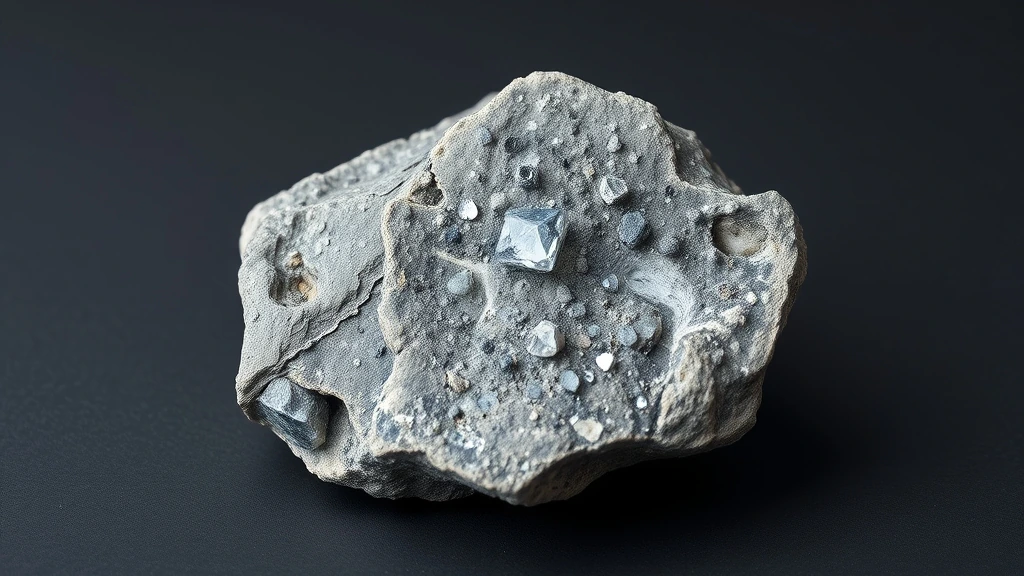
Diatomite is classified as a natural mineral aggregate rather than a single crystal. It belongs to the broader group of cryptocrystalline silicates formed through biological accumulation. This geological origin distinguishes it from igneous or metamorphic crystalline structures.
What is Diatomite Gemstone? Geological Overview & Definition
Diatomite forms in lacustrine and marine environments where diatoms thrive. Over millions of years, their siliceous shells accumulate and compact into dense rock. This process creates a porous, lightweight material with unique structural properties.
The stone is defined by its biogenic origin and high porosity. Unlike traditional gemstones, its value lies in its texture and historical significance. It serves as a key indicator of ancient aquatic ecosystems.
Diatomite Gemstone Chemical Composition & Crystallographic Properties
Diatomite lacks a defined crystal lattice, existing as an amorphous or cryptocrystalline structure. Its composition is predominantly silica (SiO₂) with minor impurities. This non-crystalline nature results in isotropic optical properties.
The material exhibits high porosity and low density due to its skeletal structure. Acid sensitivity is notable, as strong acids can dissolve the silica framework. This chemical reactivity requires careful handling during polishing.
Thermal behavior is stable up to moderate temperatures, but rapid heating may cause structural collapse. There are no traditional chromophore color centers; color arises from impurities. The stone remains optically inactive due to its disordered atomic arrangement.
| Property | Specification |
|---|---|
| Mineral Group | Natural Mineral / Crystal |
| Chemical Formula | SiO₂·nH₂O (Amorphous biogenic silica) |
| Mohs Hardness | 1 – 2 |
| Crystal System | Amorphous |
| Specific Gravity (Density) | 1.9 – 2.1 |
| Refractive Index | 1.46 – 1.47 |
| Color & Optical Properties | Natural Diatomite Gemstone color spectrum and optical dispersion |
| Primary Mining Localities | Global primary localities |
| Water & Chemical Resistance | High (Safe for gentle water washing) |
| Chakra Alignment (Traditional) | Crown Chakra |
| Zodiac Affinity (Traditional) | Virgo, Aquarius |
| Symbolic Meaning (Traditional) | Spiritual purification, mental clarity, and energetic filtration |
Diatomite Gemstone Varieties & Color Spectrum
Crystal‑White Diatomite
Formed in shallow, alkaline lakes where siliceous algae settled in thick, seasonal mats, this variety displays a milky translucency that deepens to opalescent white under angled light. Microscopic frustule inclusions create a subtle internal fire, while the lack of mineral impurities makes it exceptionally pure. Found chiefly in the Great Basin of Nevada, it is prized for its rarity and is often cut as cabochons for high‑end jewelry.
Amber‑Hue Diatomite
Developed in tropical lagoon environments rich in iron‑bearing detritus, the amber hue results from oxidized iron oxides interspersed among the diatom skeletons. The stone exhibits a warm, honey‑colored glow with occasional specks of black fossilized algae, giving it a distinctive “sun‑kissed” appearance. Major deposits occur in the Philippines and coastal Brazil, where the material is harvested for both ornamental and industrial uses, making it moderately scarce.
Midnight‑Black Diatomite
This variety originates in deep, anoxic lake basins where organic matter is preserved alongside diatom frustules, producing a deep black matrix laced with fine, reflective speckles of silica. The visual signature includes a velvet‑like surface that reveals faint iridescence when polished. Significant sources are located in Siberian permafrost regions and the Canadian Shield, where the stone’s rarity and dramatic contrast command premium prices among collectors.
Emerald‑Green Diatomite
Formed in volcanic crater lakes enriched with copper and manganese, the emerald shade is imparted by trace transition‑metal chromophores within the siliceous framework. The gemstone displays a vivid, almost fluorescent green that can shift to teal under UV light, and often contains tiny quartz or feldspar inclusions that add depth. Notable localities include the Andes of Chile and the volcanic fields of Iceland, where limited mining makes this variety exceptionally sought after.
Rose‑Blush Diatomite
Emerging from high‑altitude, alkaline springs where boron and calcium precipitate alongside diatom shells, this stone exhibits a delicate pink to rose‑colored translucency. Fine‑grained calcite crystals create a soft, glowing blush that is accentuated by the stone’s natural polish. Primary sources are the Tibetan plateau and the Altai Mountains, where the combination of geological isolation and limited extraction contributes to its boutique status.
Oceanic‑Blue Diatomite
Rarely encountered, this marine variety forms in deep‑sea sedimentary basins where dissolved silica combines with trace amounts of cobalt and nickel. The resulting gemstone shows a cool, sapphire‑like blue with a subtle internal sparkle reminiscent of sea foam. Small deposits have been identified off the coasts of New Zealand and Madagascar, and the difficulty of underwater mining renders it one of the most exclusive diatomite gems.
Where is Diatomite Gemstone Found? Geological Mining & Extraction
Diatomite gemstones are typically hosted within siliceous sedimentary layers that overlay volcanic ash beds or within lacustrine diatomite beds interbedded with marl and clay. These deposits are often overlain by soft, unconsolidated overburden, allowing open‑pit or hydraulic mining methods to expose the fine‑grained silica while preserving delicate inclusions.
The principal extraction regions include the Great Basin (USA), the Philippines, Siberian permafrost zones, the Andes of Chile, and the Tibetan plateau. In each locale, miners employ low‑impact suction dredging or gentle blasting to avoid fracturing the fragile frustule network, ensuring that the gem‑quality material retains its characteristic optical luster.
Historical Significance & Cultural Lore of Diatomite Gemstone
Ancient peoples of the Near East and Mesoamerica used finely ground diatomite as a polishing abrasive for ceremonial mirrors and jade, indicating an early appreciation of its silica purity. Archaeological sites in Egypt and the Nazca region have yielded diatomite powder in burial chambers, suggesting its role in ritual purification and as a symbolic conduit between earth and water.
Folklore from the Siberian Yakut and Andean Quechua cultures attributes protective powers to the black and emerald varieties, respectively, believing they guard against illness and bring fertility. These legends persist in modern gem lore, where collectors still regard diatomite as a stone of transformation, linking ancient myth with contemporary adornment.
Modern Uses & Jewelry Applications of Diatomite Gemstone
While primarily valued for its industrial porosity, diatomite finds niche application in artisanal jewelry due to its unique texture. Lapidaries typically work with oven-dried diatomaceous earth, which constitutes approximately 80% of its composition, to create lightweight, matte-finished pieces. Because the material is extremely soft and friable, it is rarely faceted for high-end gemstone rings.
- Cabochon Polishing: Artisans polish smooth, dome-shaped cabochons to highlight the fossilized diatom frustules without risking structural collapse.
- Ornamental Carving: The stone’s low density allows for intricate, lightweight carvings used in pendants and decorative inlays.
- Resin Inlays: Fragments are often embedded in clear epoxy or resin to protect the porous surface from moisture and abrasion.
Metaphysical Uses & Origins of Diatomite
According to historical traditions and metaphysical lore, diatomite is revered for its connection to ancient marine life and earthy stability. Practitioners believe the stone’s porous nature symbolizes spiritual absorption, allowing the wearer to absorb positive energy while filtering out negativity. It is often associated with grounding and emotional balance, serving as a bridge between the physical and spiritual realms.
The stone’s gentle, organic structure resonates with those seeking inner calm and clarity. In crystal healing circles, it is thought to promote patience and a deep sense of connection to the natural world. Users report that holding diatomite helps release tension and encourages a meditative state, fostering a peaceful mindset during stressful periods.
Which Chakra and Zodiac Signs Align with Diatomite Gemstone?
Diatomite is canonically aligned with the Root Chakra, which governs stability, security, and physical grounding. This connection stems from the stone’s terrestrial origin and its association with the earth element. By anchoring the wearer’s energy, it helps establish a sense of safety and reliability in daily life.
Additionally, the stone resonates with the Heart Chakra, promoting emotional openness and compassionate love. This dual alignment suggests that diatomite supports both physical stability and emotional well-being. It encourages users to remain grounded while maintaining a compassionate and open heart toward others.
In terms of zodiac compatibility, diatomite is specifically suited for individuals born under the signs of Taurus, Gemini, and Leo. Taurus appreciates the stone’s earthy grounding qualities, which enhance their natural stability. Gemini benefits from its ability to calm mental chatter, while Leo finds support for their creative and expressive energies through the stone’s balanced vibration.
How to Identify Real vs. Fake Diatomite Gemstone
Identifying genuine diatomite requires caution, as its porous nature makes it susceptible to imitation by synthetic materials. Common fakes include dyed replicas made from other soft sediments or synthetic glass designed to mimic the stone’s matte finish. These imitations often lack the distinct fossilized microstructure found in natural diatomaceous earth.
Practical At-Home Authenticity Tests
- Temperature Test (Thermal Feel): Genuine diatomite feels neutral to slightly cool to the touch due to its high porosity and low thermal conductivity. Synthetic glass imitations often feel warmer and conduct heat more rapidly from your fingers.
- Specific Gravity & Weight Test: Real diatomite is exceptionally lightweight for its size because of its high internal void space. If the piece feels dense or heavy compared to its volume, it is likely a denser synthetic material or glass.
- Scratch & Hardness Test (Mohs Comparison): Diatomite is very soft, typically rating between 1 and 2 on the Mohs scale. A fingernail (hardness 2.5) may scratch it, whereas a steel knife will easily cut into the surface. Harder imitations will resist these marks.
- Microscopic & Loupe Inspection (Internal Inclusions): Under a 10x loupe, genuine diatomite reveals a honeycomb-like structure of tiny, fossilized diatom shells. Synthetic glass or solid stones will appear uniform, smooth, or contain bubbles rather than intricate biological patterns.
Diatomite Gemstone Valuation Factors, Grading & Pricing
Color Saturation and tone uniformity are the primary drivers of aesthetic appeal in this porous material. Collectors prize specimens with consistent, earthy hues that lack distracting discoloration or uneven staining. High optical clarity, though rare due to the mineral’s nature, significantly elevates its desirability.
Carat Weight influences price, yet large pieces often command lower per-carat values due to fragility. Facet symmetry is challenging to achieve, so polished cabochons are more common and valued for their smooth finish. The presence of matrix or inclusions can either detract from value or add unique geological character.
Geographical Provenance Premium applies to stones from renowned diatomite deposits, such as those in the United States or Germany. Wholesale prices remain modest, reflecting the material’s abundance and softness. Retail values increase with expert polishing and certified authenticity documentation.
How to Clean and Care for Diatomite Gemstone
Maintain your diatomite gemstone by gently washing it with warm soapy water and a soft cloth. This method effectively removes surface dust and oils without damaging the delicate structure. Always ensure the stone is dried thoroughly with a lint-free towel afterward.
Avoid ultrasonic cleaners entirely, as the vibrations can cause structural fractures in this porous material. Harsh chemicals or abrasive brushes should also be avoided to preserve the stone’s integrity. Proper care ensures the gemstone retains its natural luster and physical stability over time.
Cleansing and Recharging Diatomite Gemstone (Energetic Care)
For energetic cleansing, use smoke smudging with sage or palo santo to purify the stone’s aura. This dry method avoids any risk of moisture absorption, which is critical for diatomite. Allow the smoke to circulate around the stone for a few minutes before storing it.
Place the gemstone on a selenite plate or under moonlight for recharging purposes. These methods are safe because they do not involve water or physical contact that could scratch the surface. Regular energetic maintenance helps maintain the stone’s perceived vibrancy and spiritual balance.
Frequently Asked Questions About Diatomite Gemstone
Is diatomite safe to wear in the shower?
Yes, diatomite is safe for gentle water washing due to its high water resistance. While it tolerates brief exposure, prolonged soaking can weaken the porous structure over time. Always pat the stone dry immediately after contact with water to maintain its integrity. This simple care routine ensures the mineral matrix remains stable and retains its natural aesthetic appeal for years.
Can I put diatomite in an ultrasonic cleaner?
No, you must avoid ultrasonic cleaners to prevent structural fractures in the delicate diatomite. The intense vibrations can shatter the fragile skeletal remains of diatoms that form the stone. Instead, use warm soapy water and a soft cloth for gentle manual cleaning. This method preserves the porous texture without risking irreversible damage to the gemstone’s unique internal architecture.
Which zodiac signs are compatible with diatomite?
Diatomite is energetically aligned with Taurus, Gemini, and Leo individuals. These signs benefit from the stone’s grounding properties and creative stimulation. Taurus finds stability, while Gemini and Leo experience enhanced mental clarity and confidence. Wearing this mineral can support personal growth and emotional balance for these specific astrological profiles.
Which chakras does diatomite activate?
Diatomite primarily activates the Crown Chakra. The Root connection provides a sense of security and physical grounding for the wearer. Simultaneously, the Heart alignment fosters emotional healing and compassion. This dual resonance makes diatomite a versatile tool for balancing both physical stability and emotional well-being.
What is the chemical composition of diatomite?
Oven-dried diatomaceous earth consists of approximately 80% silica. This high silica content gives the stone its distinctive hardness and chemical stability. The remaining components include trace minerals and organic matter from ancient diatoms. Understanding this silica-rich composition helps explain its durability and unique gemological properties.
How should I clean my diatomite jewelry?
Use warm soapy water and a soft cloth for safe, effective cleaning. Gently wipe the surface to remove oils and dust without applying excessive pressure. Avoid abrasive materials that could scratch the delicate surface of the stone. This gentle approach protects the microscopic diatom structures that define the gemstone’s visual character and tactile feel.
Is diatomite a durable gemstone for daily wear?
Diatomite is moderately durable but requires careful handling due to its porous nature. While it resists gentle water, it is susceptible to impact and abrasion. Avoid wearing it during heavy physical activities or sports. Treating the stone with care ensures the structural integrity remains intact, preserving its beauty and longevity.
What is the origin of diatomite gemstones?
Diatomite forms from the accumulated skeletal remains of microscopic diatoms in ancient lake beds. Over millions of years, these siliceous structures compact into dense, porous rock. Geological processes then transform this sediment into the gem-quality material found today. This biogenic origin distinguishes diatomite from most other silicate minerals in the gem market.