
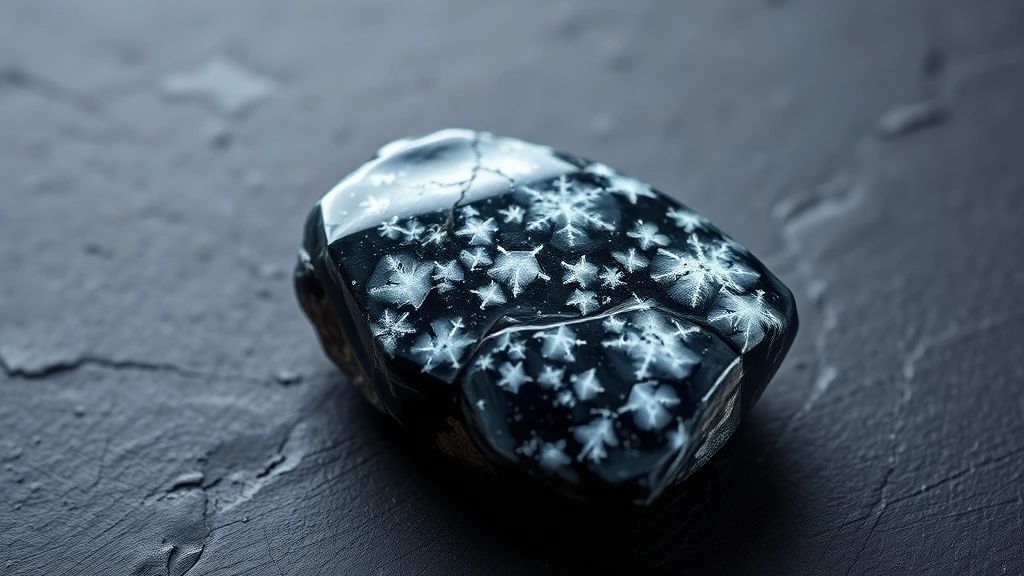
Snowflake obsidian belongs to the mineraloid category, specifically classified as an extrusive volcanic glass. Unlike true minerals, it lacks a long-range ordered atomic structure due to its rapid solidification. This geological process prevents the formation of a crystalline lattice, resulting in an amorphous solid. Consequently, it shares physical properties with obsidian but distinguishes itself through unique internal crystallization patterns.
What is Snowflake Obsidian Gemstone? Geological Overview & Definition
Snowflake obsidian forms when felsic lava cools rapidly, trapping dissolved gases and volatiles. This quick solidification creates a glassy texture that remains unstable over geological time. The “snowflakes” are actually microscopic crystals of crystobalite or other silica polymorphs. These inclusions nucleate within the glass as it slowly devitrifies, creating the iconic white patterns.
The stone is not a single mineral but a polymineralic aggregate of glass and secondary crystals. Geologically, it represents a transitional state between glass and crystalline rock. Its formation is strictly tied to subaerial volcanic eruptions where lava flows spread thinly. This environment allows for the specific thermal gradients necessary to produce the snowflake inclusions.
Snowflake Obsidian Gemstone Chemical Composition & Crystallographic Properties
As an amorphous material, snowflake obsidian lacks a defined crystal system or lattice structure. Its atomic arrangement is disordered, resembling a liquid frozen in time. This non-crystalline nature means it does not exhibit cleavage or distinct crystal faces. Instead, it fractures conchoidally, producing smooth, curved surfaces characteristic of glass.
The primary composition is silica (SiO₂), often exceeding 70 percent by weight. Trace elements like iron and magnesium substitute into the silica network, influencing color and density. These cation substitutions slightly alter the bond angles and lengths within the glass matrix. The absence of a periodic lattice prevents standard crystallographic analysis.
The white inclusions act as chromophore centers, scattering light to create the snowflake effect. These are typically crystobalite, a high-temperature silica polymorph, which precipitates from the glass. This devitrification process is driven by slow cooling or reheating events. The thermal behavior of the glass is sensitive to rapid temperature changes, which can cause stress fractures.
Acid sensitivity is low for the glass matrix, but the crystalline inclusions may react differently. The refractive index ranges from 1.480 to 1.510, typical for silicate glasses. Density varies between 2.35 and 2.60 g/cm³, depending on the volume of inclusions. This variability reflects the heterogeneous nature of the volcanic glass structure.
| Property | Specification |
|---|---|
| Mineral Group | Mineraloid (Extrusive Volcanic Glass) |
| Chemical Formula | Volcanic glass (70%+ SiO₂ with Fe, Mg silicates) |
| Mohs Hardness | 5.0 – 5.5 |
| Crystal System | Amorphous (Non-crystalline volcanic glass) |
| Specific Gravity (Density) | 2.35 – 2.60 |
| Refractive Index | 1.480 – 1.510 |
| Color & Optical Properties | Natural Snowflake Obsidian Gemstone color spectrum and optical dispersion |
| Primary Mining Localities | Mexico, USA (Oregon, Utah), Turkey (Kars, Agri), Armenia, Iceland |
| Water & Chemical Resistance | High (Natural volcanic glass; safe in water) |
| Chakra Alignment (Traditional) | Root Chakra (Muladhara) |
| Zodiac Affinity (Traditional) | Scorpio, Sagittarius, Capricorn |
| Symbolic Meaning (Traditional) | Aura shield, emotional truth mirroring, cord-cutting, and shadow grounding |
Snowflake Obsidian Gemstone Varieties & Color Spectrum
Snowflake obsidian is a distinct volcanic glass formed when lava cools rapidly, trapping gas bubbles and crystalline inclusions. The primary visual characteristic is the white or gray “snowflake” pattern against a dark background. These patterns result from the slow cooling of the outer layers of the lava flow.
Classic White Snowflake Obsidian
This variety features distinct, well-defined white quartz crystals suspended within the black glass matrix. The high contrast creates a striking visual effect reminiscent of snowflakes on dark ice. It is the most commercially recognized and sought-after form in the gem trade.
Grayish or Smoky Snowflake Obsidian
In this morph, the inclusions appear as hazy, grayish clouds rather than sharp white flakes. This effect is caused by microscopic vesicles and fine-grained mineral aggregates within the glass. It offers a softer, more ethereal aesthetic compared to the classic white variety.
Brown or Amber-Tinted Snowflake Obsidian
Some specimens exhibit a warm brown or amber hue due to iron oxide impurities in the volcanic source. The snowflake patterns remain visible but take on a sepia tone against the darker base. This coloration is less common and often found in specific regional deposits.
Multi-Color or Rainbow Snowflake Obsidian
Rare specimens display iridescent flashes of blue, purple, or green alongside the white inclusions. This phenomenon is known as iridescence, caused by light interference from thin layers of gas bubbles. Such pieces are highly prized for their unique optical properties.
Micro-Snowflake or Speckled Obsidian
This variety contains extremely fine, dust-like inclusions that create a speckled rather than distinct flake pattern. The amorphous structure of the glass allows for these minute variations in cooling rates. It is often used in smaller jewelry settings where subtle texture is desired.
Where is Snowflake Obsidian Gemstone Found? Geological Mining & Extraction
Snowflake obsidian forms in specific volcanic environments where lava flows cool at varying rates. The primary host rock is typically andesitic basalt, which provides the necessary chemical composition for glass formation. These deposits are often found in areas with historical volcanic activity.
The most famous mining region is the Cappadocia area in Turkey, particularly around the town of Göreme. Other significant sources include the United States, specifically in Oregon and California, as well as parts of Mexico and Japan. Extraction involves careful cutting to preserve the integrity of the delicate snowflake patterns.
Historical Significance & Cultural Lore of Snowflake Obsidian Gemstone
Ancient civilizations, including the Aztecs and Mayans, valued obsidian for its sharp edges and reflective properties. They used it to create ritualistic tools and ceremonial blades, believing it held spiritual power. Archaeological findings reveal obsidian artifacts in Mesoamerican temples and burial sites.
In modern metaphysical traditions, snowflake obsidian is associated with the Root Chakra and emotional grounding. It is believed to act as an aura shield, helping to cut negative cords and mirror emotional truths. This cultural lore continues to influence its popularity in contemporary wellness practices.
Modern Uses & Jewelry Applications of Snowflake Obsidian Gemstone
Lapidaries primarily cut this amorphous volcanic glass into smooth cabochons to showcase its unique internal patterns without risking fracture. Due to its relatively low Mohs hardness of 5.0 to 5.5, faceting is rare and requires extreme caution to avoid chipping. The distinct “snowflake” inclusions make it a popular choice for pendants, earrings, and ornamental carvings.
- Cabochon Polishing: The most common cut, allowing the full visibility of the white quartz or cristobalite inclusions against the black glass matrix.
- Carved Figurines: Skilled artisans carve detailed statues and beads, leveraging the stone’s uniform density and lack of cleavage planes.
- Inlay Work: Small, polished pieces are frequently set into silver or gold jewelry to create striking contrast with metallic settings.
Metaphysical Uses & Origins of Snowflake Obsidian
According to historical traditions and metaphysical lore, this stone serves as a powerful tool for emotional truth mirroring and deep introspection. Practitioners believe it acts as an aura shield, helping users identify and release negative emotional attachments. Its visual duality represents the balance between shadow and light within the human psyche.
The white inclusions are often interpreted as symbols of clarity emerging from darkness, encouraging cord-cutting from toxic relationships. It is traditionally used to ground the user’s energy, facilitating shadow grounding and psychological resilience. This stone is revered for its ability to reveal hidden truths and promote honest self-reflection.
Which Chakra and Zodiac Signs Align with Snowflake Obsidian Gemstone?
In esoteric practice, Snowflake Obsidian is strictly aligned with the Root Chakra (Muladhara). This connection stems from the stone’s volcanic origin and its capacity to anchor the user to the earth. It helps stabilize the base of the energy field, promoting a sense of security and physical presence.
Astrologically, this gemstone resonates most strongly with Scorpio, Sagittarius, and Capricorn. These earth and water signs benefit from its grounding properties and ability to navigate deep emotional waters. The stone supports their natural tendencies toward intensity, ambition, and transformative growth.
How to Identify Real vs. Fake Snowflake Obsidian Gemstone
Artificial imitations often use synthetic glass or dyed obsidian to mimic the natural snowflake patterns. These fakes may lack the subtle variations in density and thermal conductivity found in genuine volcanic glass. Understanding the material’s physical properties is essential for distinguishing authentic specimens from laboratory-created alternatives.
Practical At-Home Authenticity Tests
- Temperature Test (Thermal Feel): Genuine obsidian feels noticeably cool to the touch initially due to its low thermal conductivity. Synthetic glass may warm up faster when held in the hand, revealing its different material composition.
- Specific Gravity & Weight Test: Real snowflake obsidian has a density of 2.35 – 2.60 g/cm³, making it feel heavier than similarly sized glass imitations. A genuine stone will feel substantial and dense in the palm, unlike lighter plastic or low-density glass fakes.
- Scratch & Hardness Test (Mohs Comparison): With a Mohs hardness of 5.0 – 5.5, genuine obsidian can scratch glass but will be scratched by a steel knife. If the stone scratches easily with a coin, it is likely a softer imitation or resin-based fake.
- Microscopic & Loupe Inspection (Internal Inclusions): Use a 10x loupe to examine the “snowflakes.” Genuine inclusions are natural mineral formations (quartz/cristobalite) with sharp, organic edges. Fakes often show trapped air bubbles, swirl marks, or uniform, artificial-looking patterns indicative of manufacturing.
Snowflake Obsidian Gemstone Valuation Factors, Grading & Pricing
Market valuation primarily hinges on Color Saturation and the distinct contrast between the black glass and white quartz inclusions. A premium specimen displays deep, jet-black tones with sharp, well-defined snowflake patterns that are evenly distributed. High optical clarity and a mirror-like luster further enhance the stone’s visual appeal and desirability among collectors.
The Carat Weight of the piece significantly influences its final price, as larger, unbroken specimens are increasingly rare in the global market. Facet symmetry is critical for polished gems, ensuring light reflects uniformly across the surface to maximize brilliance. Additionally, the presence of unwanted matrix inclusions or internal fractures can substantially reduce the overall aesthetic value.
Geographical Provenance Premium plays a vital role, with stones from renowned volcanic regions commanding higher prices due to their historical significance. Current wholesale trends indicate steady demand for high-quality cabochons, while retail prices often reflect a significant markup for certified pieces. Buyers should expect price variations based on the specific origin and the rarity of the snowflake formation.
How to Clean and Care for Snowflake Obsidian Gemstone
Snowflake obsidian is a natural volcanic glass that is safe to handle in water, making it relatively easy to maintain. You should gently rinse the stone under warm water to remove surface dust and oils without causing thermal shock. Use a soft, lint-free cloth to dry the piece thoroughly after washing to prevent water spots.
It is crucial to avoid ultrasonic cleaners because the brittle nature of volcanic glass makes it susceptible to chipping under high-frequency vibrations. Never place this gemstone in steam cleaners or expose it to extreme temperature changes, as these conditions can induce internal stress. Proper handling ensures the longevity of the delicate snowflake inclusions within the glass matrix.
Cleansing and Recharging Snowflake Obsidian Gemstone (Energetic Care)
For energetic maintenance, practitioners often use smoke smudging with sage or palo santo to clear negative energy from the stone. This dry method is ideal because it avoids any risk of moisture damage to the non-crystalline structure. Allow the smoke to pass over the gemstone for a few minutes to complete the cleansing process.
Alternatively, placing the obsidian on a selenite plate or under moonlight is a popular recharging technique. These methods leverage natural energy sources without requiring physical contact with water or abrasive materials. This approach respects the mineral’s amorphous structure while aligning with traditional metaphysical care practices.
Frequently Asked Questions About Snowflake Obsidian Gemstone
Is snowflake obsidian safe to wear in the shower?
Yes, it is highly water-resistant and safe for shower exposure. As a natural volcanic glass, it does not dissolve or degrade when wet. However, avoid harsh soaps that may leave residue in the stone’s surface.
Can I clean snowflake obsidian in an ultrasonic cleaner?
No, you should avoid ultrasonic cleaners to prevent chipping. While safe in warm water, the intense vibrations can fracture this brittle material. Instead, use a soft cloth and mild soap for gentle, effective maintenance.
What is the chemical composition of snowflake obsidian?
It consists primarily of silica (SiO₂) with iron and magnesium silicates. This volcanic glass lacks a crystalline structure, giving it its unique amorphous nature. The white inclusions are typically quartz or mica crystals formed during cooling.
Which zodiac signs are aligned with snowflake obsidian?
Scorpio, Sagittarius, and Capricorn are the primary aligned signs. These earth and water signs resonate with the stone’s grounding energy. Wearing it may enhance introspection and emotional stability for these individuals.
Which chakra does snowflake obsidian activate?
It specifically activates the Root Chakra (Muladhara). This connection supports feelings of security and physical stability. It helps anchor energy to the earth, promoting a sense of safety and presence.
What is the Mohs hardness of snowflake obsidian?
It ranges from 5.0 to 5.5 on the Mohs scale. This makes it moderately hard but still susceptible to scratches from harder minerals. Store it separately from diamonds or sapphires to maintain its polished surface.
Why does snowflake obsidian have white inclusions?
These are micro-crystals of quartz or mica trapped during rapid cooling. The sudden temperature drop prevents a uniform glass formation. This creates the distinctive “snowflake” pattern that defines this variety of obsidian.
Is snowflake obsidian a true crystal?
No, it is amorphous and non-crystalline. Unlike quartz or feldspar, it lacks a repeating atomic lattice structure. This volcanic glass forms from rapidly cooled lava, resulting in a disordered molecular arrangement.