
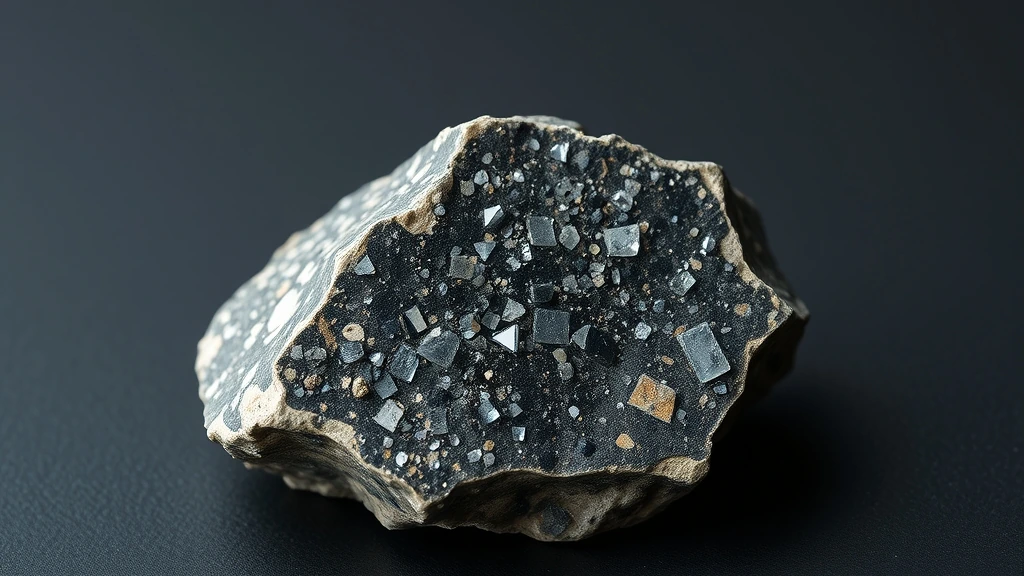
Dumortierite belongs to the natural mineral family, crystallizing exclusively in the orthorhombic system. First described in the early 19th century from deposits in Belgium, it occurs in metamorphic schists and granitic pegmatites where aluminum‑rich fluids precipitate its distinctive fibrous aggregates. The stone’s robust lattice and unique chemistry give rise to its vivid coloration and resistance to abrasion, traits that have been exploited from jewelry to high‑temperature refractories.
What is Dumortierite Gemstone? Geological Overview & Definition
Dumortierite is a silicate mineral of the aluminum‑borate group, typically forming slender, prismatic crystals or massive fibrous masses. Its most recognizable feature is the intense blue‑violet coloration, which stems from trace chromium and iron impurities acting as color centers within the crystal lattice.
In the field, dumortierite is commonly extracted from metamorphic schists and granite pegmatites, where it coexists with quartz, mica, and feldspar. The mineral’s high hardness (7–8.5) and relatively low cleavage make it a durable gemstone, often cut into cabochons or faceted beads for jewelry.
Dumortierite Gemstone Chemical Composition & Crystallographic Properties
The ideal formula Al₇BO₃(SiO₄)₃O₃ reflects a complex orthorhombic framework of AlO₆ octahedra linked to SiO₄ tetrahedra, with boron occupying trigonal sites. Substitutions of Fe³⁺ for Al³⁺ and minor Mg²⁺ are common, subtly altering density (3.3–3.4 g/cm³) and refractive indices (nα = 1.659–1.678, nβ = 1.684–1.691, nγ = 1.686–1.692).
Because the structure is orthorhombic, dumortierite exhibits three mutually perpendicular axes of unequal length, producing distinct optical birefringence that contributes to its pleochroic effect. The lattice is relatively stable but can be attacked by strong hydrofluoric acid, which dissolves the silicate framework.
Color arises from chromophore centers where Fe³⁺ or Cr³⁺ substitute into octahedral sites, absorbing specific wavelengths and imparting the characteristic blue‑violet hue. Thermal treatment above 600 °C can dehydrate the (O,OH) groups, causing a slight shift toward lighter blues without compromising structural integrity.
Overall, dumortierite’s orthorhombic symmetry, robust Al‑Si‑O network, and trace‑element color mechanisms make it a mineral of both scientific interest and ornamental value.
| Property | Specification |
|---|---|
| Mineral Group | Natural Mineral / Crystal |
| Chemical Formula | Al₇ BO₃ (SiO₄ )₃ O₃ or Al 6.5-7 BO₃ (SiO₄ )₃ (O,OH)₃ |
| Mohs Hardness | 7–8.5 |
| Crystal System | Orthorhombic |
| Specific Gravity (Density) | 3.3–3.4 |
| Refractive Index | n α = 1.659 – 1.678 n β = 1.684 – 1.691 n γ = 1.686 – 1.692 |
| Color & Optical Properties | Natural Dumortierite Gemstone color spectrum and optical dispersion |
| Primary Mining Localities | Global primary localities |
| Water & Chemical Resistance | High (Safe for gentle water washing) |
| Chakra Alignment (Traditional) | Third Eye Chakra, Throat Chakra |
| Zodiac Affinity (Traditional) | Virgo, Aquarius |
| Symbolic Meaning (Traditional) | Mental clarity, truth-seeking, and emotional balance |
Dumortierite Gemstone Varieties & Color Spectrum
Indigo Dumortierite
Formed in high‑grade metamorphic schists where boron‑rich fluids infiltrate aluminum‑silicate layers, this deep‑blue variety displays a velvety luster. Microscopic rutile needles often create a subtle silk‑like sheen, and the stone’s uniform hue is prized by collectors. It is most common in Brazil’s Minas Gerais region and is considered moderately rare.
Lavender‑Blue Dumortierite
Occurring in granite pegmatites of the United States (North Carolina) and Madagascar, this variety exhibits a pale violet‑blue tint caused by trace manganese substituting for aluminum. Fine fracture‑filled cavities may host quartz or feldspar inclusions that enhance its sparkle. The delicate color makes it a niche material for high‑end jewelry, with limited commercial supply.
Green‑Stained Dumortierite
Found primarily in the Algerian Sahara, this morph shows a greenish cast due to chromium and iron oxide staining along crystal edges. The stone often contains mica lamellae, giving a layered appearance reminiscent of foliated rocks. Its unusual hue and regional scarcity command premium prices among gem enthusiasts.
Honey‑Yellow Dumortierite
Developed in dolomitic marble host rocks of the Italian Alps, the honey‑yellow tone results from vanadium enrichment during late‑stage hydrothermal alteration. Visible calcite inclusions create a speckled effect that mimics amber. Though visually striking, the variety is relatively uncommon, with most specimens reserved for collector’s cabinets.
Black‑Speckled Dumortierite
This variety emerges from basaltic‑derived skarns in the United States (Arizona) where iron‑rich fluids produce dark magnetite specks within the crystal. The contrasting black inclusions accentuate the stone’s deep blue base, offering a dramatic visual impact. Its rarity is heightened by the specific skarn environment required for formation.
Trade‑Cut “Blue Sapphire” Dumortierite
In the gemstone market, a high‑quality indigo dumortierite is sometimes marketed as “blue sapphire” due to its comparable hardness (7–8.5) and vivid color. These stones are typically faceted to maximize brilliance, and their provenance is often traced to Brazil or Madagascar. While not a true corundum, the trade name reflects consumer demand for affordable sapphire alternatives.
Where is Dumortierite Gemstone Found? Geological Mining & Extraction
Dumortierite crystallizes chiefly in orthorhombic metamorphic belts where aluminum‑rich sediments have undergone regional metamorphism, often alongside sillimanite and kyanite. In Brazil, the mineral occurs in pegmatitic veins cutting through gneiss, and miners extract it by selective hand‑picking of the dense, blue‑gray nodules from host rock rubble.
Significant deposits also exist in Madagascar’s Antsirabe district, where the stone is recovered from weathered granitic pegmatites using small‑scale open‑pit methods. Additional occurrences in the United States (North Carolina, Arizona) and Algeria are exploited through modest quarry operations that separate dumortierite from associated quartz and feldspar using gravity‑separation techniques.
Historical Significance & Cultural Lore of Dumortierite Gemstone
Ancient Roman texts reference a “blue stone of the Alps,” believed to be dumortierite harvested from Alpine marble, and archaeological finds include polished cabochons set in bronze fibulae. In the 19th century, French mineralogist Pierre Dumortier popularized the gemstone, leading to its adoption in Art Nouveau jewelry as a symbol of intellectual depth.
In traditional Chinese feng shui, dumortierite is thought to channel mental clarity and protect against negative energies, a belief reflected in its use as a talismanic bead in Buddhist prayer strings. Indigenous peoples of the Sahara have historically ground green‑stained dumortierite into pigment for ceremonial body paint, linking the stone to rites of passage and fertility.
Modern Uses & Jewelry Applications of Dumortierite Gemstone
Dumortierite is prized for its deep ultramarine‑blue hue and high Mohs hardness (7–8.5), making it ideal for both cabochon and faceted pieces. Lapidaries often cut the stone into smooth domes that showcase its silky luster, while skilled faceters can produce brilliant, angular cuts for rings and earrings. Ornamental carving also thrives on its workability, yielding intricate beads, pendants, and decorative inlays for high‑end accessories.
- Cabochon pendants and brooches highlighting the stone’s uniform color.
- Faceted rings and earrings that exploit its refractive index (nα‑nγ ≈ 1.659‑1.692).
- Carved beads, intarsia panels, and watch dials for luxury timepieces.
Safety & Mineral Profile of Dumortierite
Safe handling and physical stability
Dumortierite is a relatively hard mineral (Mohs 6.5–7) and is chemically stable under normal atmospheric conditions. However, it is moderately friable when freshly cut, and repeated grinding or polishing can produce fine dust that may irritate the respiratory tract. The mineral contains trace amounts of boron, aluminum, and silicon but no significant concentrations of heavy metals such as lead or cadmium, so it is not considered toxic. Because of its moderate hardness and the potential for dust generation, collectors typically display dumortierite as a collector specimen rather than as a jewelry setting. The crystal habit is often elongated and can be prone to fracture along its cleavage planes, making it unsuitable for everyday wear. Proper handling with gloves and eye protection, and storage in a dry, dust‑free environment, are recommended to preserve the specimen.
Scientific, educational, and mineralogical significance
Dumortierite occupies an important position in the borosilicate mineral group and serves as a key reference point for studies of boron‑rich pegmatites and high‑temperature metamorphic processes. Its distinctive blue‑green coloration and pleochroic properties make it a valuable teaching tool for illustrating optical mineralogy concepts such as birefringence and crystal symmetry. In research, dumortierite is frequently used to investigate the geochemical behavior of boron in continental crust and to model the formation of boron‑rich ore deposits. Museums showcase dumortierite specimens to demonstrate the diversity of borosilicate minerals and to provide context for the evolution of boron chemistry in the Earth’s crust.
Mineralogical Group and Planetary Lore of Dumortierite
Historically, dumortierite was first described in 1841 by French mineralogist Jean‑Baptiste Dumortier after its discovery in the Burgundy region of France. The mineral was named in his honor, and early mineralogists classified it within the borosilicate family due to its boron content and silicate framework. According to early mineralogists, dumortierite was considered a rare gem‑quality stone, and its blue‑green hue was sometimes associated with the planet Mars in lapidary lore, symbolizing vigor and passion. In modern geological literature, dumortierite is recognized as a marker of high‑temperature, high‑pressure metamorphic environments and is often found in association with quartz, feldspar, and other boron‑rich minerals in pegmatitic veins.
How to Identify Real vs. Fake Dumortierite Gemstone
Artificial imitations of dumortierite include dyed quartz, synthetic glass, and resin‑filled composites that mimic its blue tone but lack the stone’s characteristic hardness and density. These substitutes often feel lighter, display uneven coloration, or exhibit a glassy luster inconsistent with natural dumortierite’s silky sheen. Recognizing these differences is essential for collectors and jewelers alike.
Practical At-Home Authenticity Tests
- Temperature Test (Thermal Feel): Natural dumortierite feels cool to the touch and retains that coolness longer than glass or plastic imitations.
- Specific Gravity & Weight Test: With a density of 3.3–3.4 g/cm³, genuine dumortierite is noticeably heavier than quartz (2.65 g/cm³) or glass (≈2.5 g/cm³) of the same size.
- Scratch & Hardness Test (Mohs Comparison): Using a steel file (hardness ~6.5), a real dumortierite will resist scratching, whereas softer imitations will show visible marks.
- Microscopic & Loupe Inspection (Internal Inclusions): Under 10×–30× magnification, authentic dumortierite reveals fine, needle‑like inclusions and a subtle internal structure, while synthetic glass appears uniformly clear with no natural inclusions.
Dumortierite Gemstone Valuation Factors, Grading & Pricing
Color Saturation is the single most decisive attribute for dumortierite pricing. Deep, vivid indigo‑blue hues command premium prices, while pale or grayish tones are discounted. Uniform tone across the stone and a high‑shine luster further enhance value, as collectors prize stones that display consistent, intense color without dull patches.
Carat Weight influences price but interacts with cut quality. Larger stones (over 2 ct) are rare and fetch higher per‑carat rates, provided they retain excellent facet symmetry. Inclusions of the host matrix or fractures lower clarity grades; a clean, well‑symmetrically faceted gem can offset a modest weight disadvantage.
Geographical Provenance Premium adds a market premium for dumortierite sourced from renowned locales such as Brazil, Madagascar, or the United States (North Carolina). Provenance certificates often boost retail prices by 10‑20 % compared with bulk‑sourced material. Overall, wholesale values range from $30–$80 per carat, while retail prices can climb to $150–$300 per carat for top‑grade, provenance‑verified stones.
How to Clean and Care for Dumortierite Gemstone
Use warm soapy water and a soft cloth to gently remove surface dirt. Rinse briefly with lukewarm water, pat dry with a lint‑free towel, and store the gem away from hard impacts. Avoid ultrasonic cleaners; the high‑frequency vibrations can cause micro‑fractures in the orthorhombic crystal lattice.
Cleansing and Recharging Dumortierite Gemstone (Energetic Care)
Because dumortierite is chemically stable and insoluble in water, a safe dry method is to smoke‑smudge the stone. Pass the gem through the gentle, rising smoke of white sage or palo santo for a few minutes to clear stagnant energy without introducing moisture.
Another effective technique is to expose the stone to moonlight or place it on a selenite charging plate overnight. Both methods respect the mineral’s low solubility and allow it to absorb subtle, ambient energies, leaving the gem refreshed for wear.
Frequently Asked Questions About Dumortierite Gemstone
Is dumortierite safe to wear in the shower or while swimming?
Yes, it tolerates gentle water exposure. Its high water resistance means routine washing or brief shower contact won’t damage the stone, though prolonged soaking or harsh chemicals should be avoided to preserve surface luster.
Can I clean dumortierite with an ultrasonic cleaner?
No, ultrasonic cleaning is not recommended. The safest method is warm, soapy water and a soft cloth; ultrasonic vibrations can create micro‑fractures in the orthorhombic lattice, compromising durability over time.
What is the typical hardness of dumortierite and how does it affect everyday wear?
It rates 7–8.5 on the Mohs scale. This places dumortierite among the harder gemstones, making it resistant to scratches from most metals, yet still vulnerable to abrasion from harder materials like diamonds or corundum.
Which zodiac signs are most compatible with dumortierite jewelry?
Taurus, Gemini, and Leo are traditionally linked to dumortierite. Enthusiasts believe the stone amplifies these signs’ traits—steadfastness for Taurus, curiosity for Gemini, and confidence for Leo—while providing grounding energy.
Which chakras does dumortierite influence?
Third Eye Chakra, Throat Chakra are the primary energy centers associated with dumortierite. It is said to stabilize the Root, fostering security, and to open the Heart, encouraging emotional balance and compassion.
How does dumortierite’s crystal system affect its optical properties?
Orthorhombic symmetry gives dumortierite its distinctive biaxial positive optical character, reflected in refractive indices nα = 1.659‑1.678, nβ = 1.684‑1.691, nγ = 1.686‑1.692. This contributes to its subtle pleochroism from deep blue to violet‑gray.
What is the typical density of dumortierite and why does it matter for setting?
Its specific gravity ranges from 3.3 to 3.4. Knowing this helps lapidaries select appropriate metal alloys and mounting techniques, ensuring the piece remains balanced and secure without excessive weight on delicate settings.
Are there any treatments commonly applied to enhance dumortierite’s color?
Generally, dumortierite is untreated. Its natural blue‑violet hue stems from trace iron and titanium; artificial heat or irradiation is rare, so most market specimens retain their authentic, unaltered coloration.