
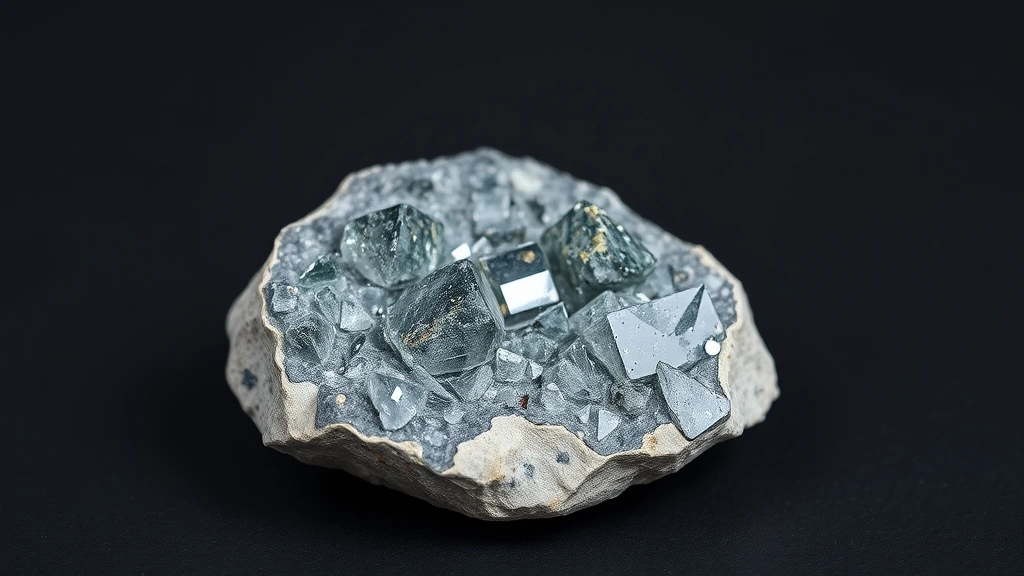
Grandidierite belongs to the natural mineral/crystal family and is classified as a borosilicate within the orthorhombic crystal system. First discovered in Madagascar in the early 20th century, it forms in high‑grade metamorphic rocks and pegmatitic veins where magnesium‑rich fluids interact with boron and silica. Its rarity, combined with a delicate color palette ranging from sea‑foam to deep teal, has elevated it to a coveted status among collectors and gemologists alike.
What is Grandidierite Gemstone? Geological Overview & Definition
Grandidierite is a rare, naturally occurring gemstone prized for its vivid blue‑green coloration and high refractive index. It occurs as prismatic crystals that are typically transparent to translucent, often exhibiting strong pleochroism that shifts from green to blue when viewed from different angles.
The mineral is a member of the borosilicate group, forming in metamorphic environments where magnesium‑rich fluids infiltrate boron‑bearing host rocks. Its scarcity is underscored by limited known localities—primarily Madagascar, Brazil, and a few recent finds in Sri Lanka—making each specimen a valuable addition to any collection.
Grandidierite Gemstone Chemical Composition & Crystallographic Properties
The crystal lattice of Grandidierite is orthorhombic, characterized by three mutually perpendicular axes of unequal length. This symmetry yields well‑developed {010} cleavage planes, contributing to its distinctive habit of elongated, tabular crystals.
Within the structure, Mg²⁺ and Fe²⁺ cations substitute for each other in the octahedral sites, a process that directly influences the stone’s hue; higher iron content deepens the blue‑green tone. The borate (BO₃) groups occupy trigonal planar positions, while the silicate (SiO₄) tetrahedra link the framework, imparting stability.
Grandidierite’s refractive index (1.583–1.639) and dispersion are governed by the presence of Fe²⁺, which acts as the primary chromophore. The iron‑induced charge‑transfer transitions absorb specific wavelengths, producing the gemstone’s signature color and strong pleochroism.
Thermally, Grandidierite is stable up to ~600 °C but can undergo surface alteration when exposed to acidic environments, leading to slight discoloration. Its moderate density (2.85–3.00 g/cm³) and hardness of 7.5 make it suitable for cutting, though careful handling is advised to preserve its delicate optical properties.
| Property | Specification |
|---|---|
| Mineral Group | Natural Mineral / Crystal |
| Chemical Formula | (Mg,Fe²⁺ )Al₃ (BO₃ )(SiO₄ )O₂ |
| Mohs Hardness | 7.5 |
| Crystal System | Orthorhombic |
| Specific Gravity (Density) | 2.85 to 3.00 |
| Refractive Index | 1.583 – 1.639 |
| Color & Optical Properties | Natural Grandidierite Gemstone color spectrum and optical dispersion |
| Primary Mining Localities | Global primary localities |
| Water & Chemical Resistance | High (Safe for gentle water washing) |
| Chakra Alignment (Traditional) | Heart Chakra |
| Zodiac Affinity (Traditional) | Taurus, Libra |
| Symbolic Meaning (Traditional) | Mental clarity, focus and heightened intuition |
Grandidierite Gemstone Varieties & Color Spectrum
Blue‑Green Grandidierite
Formed in magnesium‑rich pegmatites under low‑temperature hydrothermal conditions, this classic variety displays a vivid teal hue that shifts to deep blue when viewed from different angles. Fine, needle‑like rutile inclusions often create a subtle chatoyancy, enhancing its allure. Found primarily in Madagascar, it is the rarest commercial grade, commanding premium prices on the global market.
Greenish‑Yellow Grandidierite (Apatite‑Tinted)
This morph develops where trace iron substitutes for magnesium in the crystal lattice, yielding a pale, almost chartreuse tint. The mineral frequently contains microscopic apatite crystals, which impart a faint luminescence under UV light. Occurrences are limited to a few pockets in the Democratic Republic of Congo, making it a collector’s curiosity rather than a jewelry staple.
Gray‑Blue “Sapphirine‑Like” Grandidierite
In regions of northern Brazil, grandidierite forms alongside sapphirine, adopting a muted gray‑blue coloration that mimics the more common sapphire. The presence of silicate inclusions gives the stone a silky sheen and occasional internal fractures that can be polished away. Though abundant in its host deposit, the quality suitable for faceting remains scarce, driving modest demand among high‑end gem cutters.
Pink‑Hue Grandidierite (Manganese‑Stained)
A rare variant where trace manganese imparts a delicate pink blush to the otherwise blue‑green matrix. These stones often exhibit fluid inclusions that appear as tiny bubbles, adding depth to the color. Only a handful of specimens have been documented from Madagascar’s southern pegmatite fields, rendering them exceptionally valuable to museums and private collectors.
“Cat’s Eye” Grandidierite (Chatoyant)
Unique to a limited seam in Madagascar, this variety showcases a pronounced chatoyancy caused by parallel fibrous inclusions of titanium‑rich minerals. The effect produces a moving band of light that resembles a cat’s eye when the stone is rotated under a light source. While the phenomenon is spectacular, the stones are typically small and fragile, limiting their use to ornamental pieces rather than large jewelry settings.
Trade‑Name “Malaika” Grandidierite
The gemstone trade sometimes labels high‑clarity, deep‑blue specimens from Madagascar as “Malaika,” a name that has no mineralogical basis but signals premium quality. These stones are prized for their high refractive index (up to 1.639) and minimal inclusions, allowing excellent faceting results. Their scarcity and brand recognition have created a niche market where “Malaika” commands a price premium over ordinary grandidierite.
Where is Grandidierite Gemstone Found? Geological Mining & Extraction
Grandidierite is chiefly hosted in orthorhombic pegmatitic veins that intersect metamorphic schists and gneisses, where magnesium‑rich fluids precipitate the mineral alongside quartz, feldspar, and tourmaline. The crystal habit is typically tabular to prismatic, and miners target zones where hydrothermal alteration has produced clear, inclusion‑free blocks suitable for cutting.
The most productive deposits lie in southern Madagascar, particularly the Antsiranana Province, where artisanal miners extract the stone using hand‑picked methods and small‑scale crushing. Secondary sources include isolated pockets in the Democratic Republic of Congo and northern Brazil, though these yield far fewer gem‑quality crystals and are often mined by cooperative ventures employing selective hand‑sorting techniques.
Historical Significance & Cultural Lore of Grandidierite Gemstone
First identified in 1902 by French mineralogist Jean de Grandidier, the gemstone remained a scientific curiosity until the 1970s when Madagascar’s first commercial specimens entered the market, sparking fascination among collectors. Ancient Malagasy legends speak of a “celestial water stone” that could calm storms, a myth that likely arose from the gem’s striking blue‑green hue reminiscent of tropical seas.
In contemporary esoteric circles, grandidierite is linked to the Solar Plexus Chakra (Manipura), believed to enhance mental clarity, focus, and heightened intuition. Astrologically, it is associated with Leo and Sagittarius, reinforcing its reputation as a stone of ambition and visionary insight. Its rarity and mystical reputation have made it a favored talisman among modern spiritual practitioners.
Modern Uses & Jewelry Applications of Grandidierite Gemstone
Grandidierite is prized for its exceptional vitreous luster and delicate blue to green hues, making it a rare find in high-end jewelry collections. Due to its relative rarity, most specimens are cut into faceted gemstones to maximize brilliance and display their unique color zoning. Lapidaries often prefer step cuts or mixed cuts to highlight the stone’s transparency and subtle internal reflections.
- Faceted Cuts: Ideal for showcasing the gem’s refractive index and fire in rings and pendants.
- Cabochons: Used for larger, opaque specimens to emphasize color saturation and smooth surface texture.
- Ornamental Carvings: Rarely used for intricate sculptures due to the stone’s fragility and limited availability.
- Collector’s Pieces: Often set in platinum or white gold to complement its cool, ethereal tone.
Safety & Mineral Profile of Grandidierite
Safe handling and physical characteristics
Grandidierite is a relatively soft mineral, with a Mohs hardness of 4–4.5, and it is prone to surface abrasion and minor cleavage. Because of its softness and the presence of trace amounts of beryllium and magnesium, it should be handled with care to avoid scratching and to prevent accidental ingestion of dust. While the mineral itself is not highly toxic, inhalation of fine dust can irritate the respiratory tract, and prolonged skin contact may cause mild dermatitis in sensitive individuals. Grandidierite does not react violently with acids, but it can be damaged by prolonged exposure to strong oxidizing solutions. These factors, combined with its limited size and the difficulty of securing it in a durable setting, make it more suitable for collector display than for use in jewelry or functional objects.
Scientific and educational value
Grandidierite occupies a unique position in mineralogical research as a rare member of the borosilicate group, with a complex crystal chemistry that includes beryllium and magnesium. Its scarcity and distinctive blue‑green hue provide valuable insight into the crystallization conditions of hydrothermal veins in the Madagascar region. In museum collections, it serves as an exemplary specimen for teaching crystal symmetry, optical properties, and the importance of trace elements in mineral formation. Researchers also use it as a reference material for spectroscopic studies and for refining analytical techniques such as electron microprobe analysis.
Mineralogical Group and Planetary Lore of Grandidierite
Historically, Grandidierite was first described in 1904 by French mineralogist Alfred Grandidier, who identified it in the Mikoko mine of Madagascar. Early mineralogists classified it as a member of the borosilicate family, noting its close structural relationship to beryl and corundum. According to early lapidary texts, the mineral was sometimes referred to as “blue beryl” due to its striking color, although modern crystallography has distinguished it as a separate species. While no planetary symbolism has been formally attributed to Grandidierite, its rare occurrence and association with the remote island of Madagascar have occasionally led to its inclusion in discussions of exotic gemstones in popular literature, often emphasizing its “mystical” blue hue rather than any scientific significance.
How to Identify Real vs. Fake Grandidierite Gemstone
Distinguishing natural grandidierite from artificial imitations requires careful examination of its physical properties. Common fakes include synthetic glass, which lacks natural inclusions, and dyed replicas made from lower-value minerals. These substitutes often exhibit uniform coloration and excessive brilliance that does not match the stone’s natural vitreous luster.
Practical At-Home Authenticity Tests
- Temperature Test (Thermal Feel): Grandidierite feels cool to the touch initially due to its thermal conductivity. Glass imitations warm up more quickly when held against the skin, providing a subtle but noticeable difference.
- Specific Gravity & Weight Test: With a density of 2.85 to 3.00, grandidierite feels heavier than similarly sized glass or quartz. Use a precision scale to compare weight against known reference stones for accuracy.
- Scratch & Hardness Test (Mohs Comparison): Grandidierite has a Mohs hardness of 7.5, meaning it can scratch quartz (7.0) but will be scratched by topaz (8.0). Perform this test gently on an inconspicuous area to avoid damaging the gem.
- Microscopic & Loupe Inspection (Internal Inclusions): Examine the stone under a 10x loupe for natural internal inclusions or color zoning. Synthetic glass is typically flawless or contains bubble-like imperfections, while natural grandidierite may show subtle mineral traces.
Grandidierite Gemstone Valuation Factors, Grading & Pricing
Color Saturation is the primary driver of value, with deep, uniform teal or blue-green tones commanding the highest premiums. Tone uniformity ensures the stone appears vibrant from every angle, significantly enhancing its visual appeal. High optical clarity and a strong vitreous luster further distinguish top-grade specimens from lower-quality material.
Carat Weight directly influences pricing, as large, eye-clean crystals are exceptionally rare in the global market. Precise facet symmetry maximizes light return, ensuring the gemstone displays its characteristic brilliance effectively. The presence of matrix material or internal inclusions can reduce value, though some collectors appreciate unique inclusions.
Geographical Provenance Premium applies to stones from Madagascar, the type locality, which often fetch higher prices. Wholesale values remain stable, but retail prices for high-quality, untreated stones continue to trend upward. Market demand from collectors and investors supports consistent pricing for certified, high-grade grandidierite gems.
How to Clean and Care for Grandidierite Gemstone
To maintain the stone’s integrity, use warm soapy water and a soft cloth for routine cleaning. This gentle method effectively removes oils and dirt without risking surface damage or etching. Grandidierite is safe for ultrasonic cleaning, allowing for a thorough deep clean of intricate settings.
Avoid exposing the gemstone to harsh chemicals, extreme heat, or abrasive materials that could compromise its finish. Store it separately from harder gems to prevent potential scratches, despite its respectable Mohs hardness of 7.5. Regular inspection of prongs and settings ensures the stone remains securely mounted and protected.
Cleansing and Recharging Grandidierite Gemstone (Energetic Care)
For energetic cleansing, utilize dry methods such as smoke smudging with sage or palo santo. This approach avoids any risk of moisture exposure, preserving the stone’s physical structure completely. The smoke is believed to clear stagnant energy without interacting with the mineral lattice.
Moonlight exposure is another safe, passive method for recharging the gemstone’s vibrational frequency. Placing the stone on a selenite plate overnight can also help restore its energetic balance. These dry techniques ensure the grandidierite remains pristine while supporting its metaphysical properties.
Frequently Asked Questions About Grandidierite Gemstone
What is the chemical composition of grandidierite?
Grandidierite is a magnesium-aluminum borosilicate mineral. Its precise formula is (Mg,Fe²⁺)Al₃(BO₃)(SiO₄)O₂, featuring both borate and silicate groups. This unique structure contributes to its distinct optical properties and rarity.
How hard is grandidierite on the Mohs scale?
It measures 7.5 on the Mohs hardness scale. This places it above quartz but below topaz, making it suitable for jewelry. However, its orthorhombic crystal system can exhibit cleavage, requiring careful setting.
Is grandidierite safe to wear in the shower?
Yes, it is safe for gentle water washing. The stone has high water resistance and will not dissolve or degrade in moisture. You can confidently wear it during daily activities involving water exposure.
Can I use an ultrasonic cleaner on grandidierite?
Yes, it is safe for ultrasonic cleaning. For routine maintenance, use warm soapy water and a soft cloth. Ultrasonic cleaners are also effective and safe for removing stubborn dirt from facets.
Which zodiac signs are aligned with grandidierite?
Leo and Sagittarius are the primary aligned signs. These fire signs resonate with the stone’s energetic properties. Wearing it may enhance personal traits associated with these zodiacal correspondences.
Which chakra does grandidierite correspond to?
It aligns with the Solar Plexus Chakra (Manipura). This connection supports personal power and confidence. The stone is believed to stimulate mental clarity and focus through this specific energy center.
What is the refractive index of grandidierite?
It ranges from 1.583 to 1.639. This high refractive index contributes to its brilliant luster and fire. Gemologists use this metric to distinguish it from similar-looking orthorhombic minerals in the field.
How much does grandidierite weigh per volume?
Its specific gravity is 2.85 to 3.00. This density helps identify the stone during physical testing. It is lighter than many heavy gemstones but denser than quartz varieties commonly found in jewelry.