
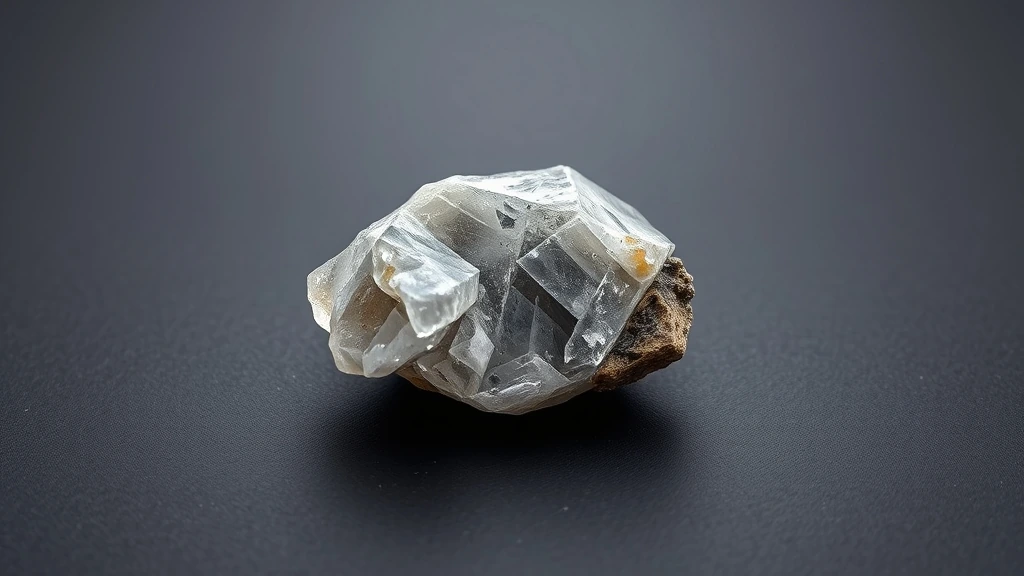
Euclase belongs to the broader category of natural silicate minerals, specifically classified as a Natural Mineral / Crystal within the geological record. It forms through hydrothermal processes in pegmatitic environments, often associated with other rare beryllium-bearing species. Its occurrence is geographically restricted, contributing to its status as a collector’s gemstone. Understanding its parent group helps contextualize its formation conditions and rarity.
What is Euclase Gemstone? Geological Overview & Definition
Euclase is defined as a monoclinic beryllium aluminum silicate hydroxide, typically found in well-formed crystals. It is a rare secondary mineral, often occurring in cavities within granite pegmatites. Its discovery history is tied to specific localities in Brazil and Madagascar.
The stone’s name derives from the Greek word for “clear,” reflecting its often transparent to translucent appearance. Gem-quality specimens are scarce, usually exhibiting pale yellow, green, or colorless tones. Its geological setting indicates high-temperature, low-pressure crystallization environments.
Euclase Gemstone Chemical Composition & Crystallographic Properties
Euclase crystallizes in the Monoclinic system, characterized by a unique lattice structure with unequal axes. This symmetry dictates its cleavage patterns and optical behavior. The unit cell parameters are distinct from orthorhombic or triclinic systems.
The chemical formula BeAlSiO₄(OH) highlights its hydroxide nature, which influences its acid sensitivity. Beryllium and aluminum cations occupy specific sites within the silicate framework. Cation substitution is minimal, preserving the mineral’s stable stoichiometry.
Optical properties include a refractive index range of 1.652 to 1.671. Chromophore centers, often involving trace iron or manganese, produce its subtle coloration. Thermal behavior remains stable under normal jewelry conditions.
| Property | Specification |
|---|---|
| Mineral Group | Natural Mineral / Crystal |
| Chemical Formula | BeAlSiO₄ (OH) |
| Mohs Hardness | 7.5 |
| Crystal System | Monoclinic |
| Specific Gravity (Density) | 2.99 – 3.1 |
| Refractive Index | n α = 1.652 n β = 1.655 n γ = 1.671 |
| Color & Optical Properties | Natural Euclase Gemstone color spectrum and optical dispersion |
| Primary Mining Localities | Global primary localities |
| Water & Chemical Resistance | High (Safe for gentle water washing) |
| Chakra Alignment (Traditional) | Heart Chakra |
| Zodiac Affinity (Traditional) | Virgo, Libra |
| Symbolic Meaning (Traditional) | Emotional balance, clarity of thought, and spiritual connection |
Euclase Gemstone Varieties & Color Spectrum
Euclase presents a fascinating array of natural color morphs, ranging from pale yellow to deep green. These variations are primarily driven by trace element substitutions within the crystal lattice. Understanding these distinct types is crucial for accurate gemological identification and valuation.
Pale Yellow Euclase
This variety exhibits a soft, lemon-yellow hue, often associated with high transparency. The color typically results from minor iron impurities substituting for aluminum in the BeAlSiO₄(OH) structure. Such stones are prized for their delicate, honey-like appearance in faceted cuts.
Green Euclase
Rare green specimens display a distinct olive or emerald-like tint, attributed to chromium or vanadium traces. This coloration is significantly rarer than the yellow morphs, making high-quality green euclase highly sought after. The monoclinic crystal system allows for unique light reflection patterns in these stones.
Colorless Euclase
Transparent, colorless euclase is valued for its exceptional clarity and brilliance. It lacks significant chromophores, resulting in a pure, glassy appearance similar to topaz. This variety is often used in high-end jewelry where neutral tones are preferred.
Orange Euclase
Occasionally, euclase appears in warm orange shades, though this is less common than yellow. The hue may stem from complex oxidation states of iron within the mineral matrix. Collectors appreciate this rarity, as it adds vibrancy to the gemstone’s palette.
Blue-Green Euclase
Extremely rare blue-green euclase has been documented in specific pegmatite deposits. The precise cause of this unique coloration remains a subject of ongoing mineralogical research. Such specimens are museum-grade curiosities due to their extreme scarcity.
Where is Euclase Gemstone Found? Geological Mining & Extraction
Euclase is predominantly found in granitic pegmatites, where it forms in the late stages of magma crystallization. These coarse-grained igneous rocks provide the necessary chemical environment for beryllium-rich minerals to develop. The mineral often occurs alongside spodumene, lepidolite, and other rare elements.
Primary mining regions include Brazil, particularly the Minas Gerais state, which yields significant gem-quality material. Other notable sources include Russia, Canada, and the United States, though commercial production remains limited. Extraction requires careful hand-picking to preserve the integrity of the delicate crystals.
Historical Significance & Cultural Lore of Euclase Gemstone
Euclase was first described in the early 19th century, named after the Greek mathematician Euclid. Its discovery marked a significant milestone in the understanding of beryllium-bearing minerals. Early gemologists noted its high hardness and distinctive optical properties.
While not widely used in ancient jewelry, euclase has gained modern cultural significance for its association with emotional balance. Contemporary metaphysical traditions link it to the Heart Chakra, promoting clarity and spiritual connection. This renewed interest has elevated its status in the contemporary gem market.
Modern Uses & Jewelry Applications of Euclide
Euclase is prized for its high brilliance and striking blue‑violet hue, making it a favorite in fine lapidary work. Skilled cutters often shape it into deep‑cut cabochons to showcase its silky luster, while faceted cuts such as brilliant or pear‑shapes reveal its strong dispersion. In addition to rings and pendants, artisans carve ornamental beads, intaglios, and small sculpture pieces, capitalizing on the stone’s relative hardness (7.5 Mohs) and workable monoclinic crystal habit.
- Cabochon pendants and earrings for maximum color display
- Faceted rings, brooches, and cufflinks highlighting sparkle
- Ornamental carvings: miniature figurines, prayer beads, and decorative inlays
Safety & Mineral Profile of Euclase
Safe handling and physical stability
Euclase is a relatively soft mineral, with a Mohs hardness of 6.5–7.5, making it susceptible to scratching and abrasion during handling. It is also moderately fragile in the presence of sudden temperature changes, which can cause microfractures. The crystal structure contains a significant amount of silicate and fluorine; when ground into dust, the fine particles can become airborne and pose an inhalation risk, particularly for individuals with respiratory sensitivities. While Euclase is not known to contain heavy metals such as lead or arsenic, its fluorine content can react with strong acids, producing corrosive fumes. Because of its softness, tendency to cleave, and the potential for dust inhalation, Euclase is generally treated as a collector display mineral rather than a suitable material for jewelry. Jewelry applications would require extensive surface treatment or encapsulation to prevent wear and protect wearers from dust exposure.
Scientific, educational, and mineralogical significance
Euclase is prized by mineralogists for its well‑defined crystal habits and its ability to form large, transparent crystals that exhibit a wide range of colors, from colorless to deep blue or green. These optical properties make it an excellent specimen for teaching crystallography, optical mineralogy, and the effects of trace element substitution on color. In research, Euclase serves as a model system for studying silicate–fluorine chemistry and the conditions of formation in hydrothermal veins. Its occurrence in pegmatites and quartz veins provides insights into the late stages of magmatic differentiation and the mobilization of fluorine during crystal growth. Consequently, Euclase is frequently included in museum collections to illustrate crystal habit, color variation, and the geological processes that produce rare silicate minerals.
Mineralogical Group and Planetary Lore of Euclase
Euclase belongs to the fluorite group of silicate minerals, specifically the fluorite‑type structure that accommodates both silicon and fluorine within its lattice. Historically, the mineral was first described in 1834 by the French mineralogist Pierre-Jean-Baptiste de la Roche and named after the ancient Greek mathematician Euclid, reflecting its regular, symmetrical crystal forms. According to early mineralogists, Euclase was considered a member of the fluorite family due to its similar chemical composition, though later crystallographic studies placed it in a distinct subgroup of silicate–fluorine minerals. In lapidary texts, Euclase has occasionally been associated with the planet Venus because of its lustrous, translucent appearance, but modern scholarship regards such planetary symbolism as symbolic rather than empirical. The mineral’s rarity and distinctive coloration continue to capture the imagination of collectors and scholars alike, underscoring its enduring place in both historical and contemporary mineralogical literature.
How to Identify Real vs. Fake Euclase Gemstone
Artificial imitations of Euclase include colored glass, synthetic quartz, and dyed natural stones that mimic its characteristic hue. These substitutes often lack the stone’s distinctive refractive indices and density, and may feel noticeably lighter or display surface bubbles. Recognizing these differences is essential for collectors and buyers seeking authentic material.
Practical At-Home Authenticity Tests
- Temperature Test (Thermal Feel): Real Euclase feels cool to the touch and retains that coolness longer than glass or plastic, due to its higher thermal conductivity.
- Specific Gravity & Weight Test: With a density of 2.99–3.1 g/cm³, Euclase is heavier than most glass imitations; a simple water‑displacement test can reveal the correct specific gravity.
- Scratch & Hardness Test (Mohs Comparison): Using a steel file (≈6 Mohs) will not scratch genuine Euclase (7.5 Mohs), whereas glass or quartz will show visible marks.
- Microscopic & Loupe Inspection (Internal Inclusions): Under 10×–30× magnification, authentic Euclase often exhibits fine, parallel growth striations and occasional tiny fluid inclusions, while synthetic glass appears uniformly clear with no internal features.
Euclase Gemstone Valuation Factors, Grading & Pricing
The primary determinant of value is Color Saturation, which should exhibit a vivid, uniform tone without brownish or grayish overtones. High-grade specimens display exceptional optical clarity and a bright, glassy luster that enhances visual appeal. Gemologists prioritize stones where the color distribution remains consistent across the entire crystal structure.
Carat Weight significantly influences pricing, as larger, inclusion-free crystals are exceedingly rare in the global market. Precision in facet symmetry is critical for maximizing light return and overall brilliance in cut stones. The presence of matrix or internal inclusions typically reduces value, as they compromise transparency and structural integrity.
Geographical Provenance Premium often elevates prices for stones from historic or exclusive mining regions. Current wholesale and retail trends indicate steady demand for high-quality, untreated Euclase specimens. Buyers should expect premium pricing for certified stones with documented origins and exceptional optical properties.
How to Clean and Care for Euclase Gemstone
For routine maintenance, immerse the gemstone in warm soapy water and gently agitate to remove surface oils. Use a soft, lint-free cloth to carefully dry the stone, ensuring no residue remains on the facets. This method effectively preserves the surface luster without risking mechanical damage to the crystal.
Given its Monoclinic crystal system and moderate hardness, Euclase is safe for ultrasonic cleaning devices. Professional jewelers recommend this method for deep-seated dirt removal, provided the stone is free of fractures. Always inspect the gemstone for internal stress before placing it in an ultrasonic bath.
Cleansing and Recharging Euclase Gemstone (Energetic Care)
To energetically cleanse Euclase, use smoke smudging with sage or palo santo to clear stagnant energy. Alternatively, place the stone on a selenite plate overnight to restore its vibrational balance. These dry methods avoid water exposure, ensuring the mineral’s structural stability remains intact.
For recharging, expose the gemstone to moonlight during a full moon cycle to amplify its spiritual properties. This gentle approach aligns with the stone’s association with emotional clarity and heart chakra energy. Avoid direct sunlight, as prolonged exposure may cause fading or thermal stress.
Frequently Asked Questions About Euclase Gemstone
Is euclase safe to wear in the shower or during swimming?
Yes, euclase has high water resistance and can endure gentle water washing. Its monoclinic crystal structure and modest cleavage mean brief exposure to water won’t damage the stone, but prolonged soaking or harsh chemicals should be avoided to preserve its refractive index and surface luster.
Can I clean euclase with an ultrasonic cleaner?
Euclase is safe for ultrasonic cleaning when paired with warm soapy water and a soft cloth. The ultrasonic waves gently dislodge debris without stressing the Mohs hardness 7.5 lattice, while the mild detergent prevents oil buildup that could dull its high dispersion.
What is the best home‑care routine for maintaining euclase’s brilliance?
Use warm, mildly soapy water, a soft brush or cloth, and rinse with distilled water. This routine removes oils and dust without scratching the monoclinic crystals, and regular polishing with a lint‑free cloth sustains the stone’s nγ = 1.671 brilliance.
How does euclase’s hardness compare to other popular gemstones?
With a Mohs hardness of 7.5, euclase is harder than quartz (7) but softer than sapphire (9). This makes it suitable for many jewelry settings, though protective settings are advisable to guard against impacts that could exploit its perfect cleavage planes.
Which zodiac signs are traditionally associated with euclase?
Euclase is linked to the zodiac signs Virgo and Libra. Astrologically, the stone is believed to enhance the analytical precision of Virgo and the diplomatic balance of Libra, resonating with its emotional‑balancing metaphysical properties.
Which chakra does euclase primarily activate?
Euclase aligns with the Heart Chakra. When placed over this energy center, it is said to promote emotional balance, open pathways for love, and support the heart’s physical and energetic health, echoing the stone’s soothing blue‑green hues.
Does euclase exhibit any notable optical phenomena?
Yes, euclase displays strong pleochroism and a high refractive index (nα = 1.652, nβ = 1.655, nγ = 1.671). These optical traits give the gem its vivid blue‑green color shift and brilliant sparkle, making it a prized choice for collectors seeking colorful dispersion.
Is euclase suitable for everyday jewelry such as rings or bracelets?
Euclase can be used in everyday pieces, provided it is set securely and cared for properly. Its 7.5 hardness offers reasonable durability, but designers often opt for protective bezel or prong settings to shield the stone’s cleavage from daily wear and impact.