
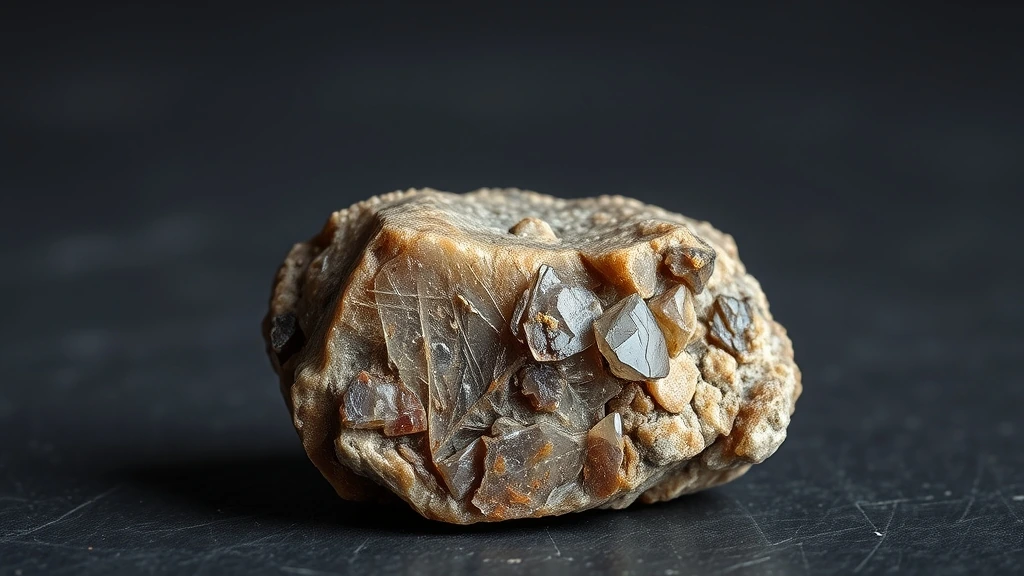
Dravite belongs to the natural mineral family of tourmalines, which are complex borosilicates formed in granitic pegmatites and metamorphic schists. Though its overall symmetry is described as amorphous/cryptocrystalline, the material consists of intergrown nanocrystals that give it a uniform, glassy appearance. This cryptocrystalline texture allows the stone to exhibit the characteristic pleochroic brown palette while maintaining the durability prized by gem cutters.
What is Dravite (brown Tourmaline) Gemstone? Geological Overview & Definition
Dravite is the magnesium‑dominant species of the tourmaline super‑group, identified by its brown to olive‑brown color range that results from Fe‑Mn charge‑transfer processes. It typically occurs as elongated prismatic crystals or massive aggregates within pegmatitic veins, where hydrothermal fluids deposit the complex borosilicate framework.
In gemological terms, dravite is valued for its earthy tone and relatively high refractive index (1.62–1.64), which imparts a subtle brilliance when cut. The stone’s pleochroism—shifting from light brown to deeper chocolate under polarized light—helps distinguish it from other brown tourmalines and from similar‑looking minerals such as smoky quartz.
Dravite (brown Tourmaline) Gemstone Chemical Composition & Crystallographic Properties
The idealized formula for dravite is NaMg₃Al₆(BO₃)₃Si₆O₁₈(OH)₄F₂, reflecting the substitution of Mg for Fe and Mn in the Y‑site of the tourmaline structure. This cation substitution governs both the stone’s color intensity and its response to heat treatment, as Mg‑rich domains are less prone to color loss than Fe‑rich counterparts.
Although tourmaline crystals are fundamentally trigonal, dravite specimens used in jewelry are described as amorphous/cryptocrystalline because the individual nanocrystals are interlocked beyond the resolution of the naked eye. This cryptocrystalline nature yields a uniform optical texture and contributes to the stone’s resistance to cleavage along any single plane.
Dravite’s acid sensitivity is modest; dilute hydrochloric acid may etch the surface but does not dissolve the framework, a behavior linked to the robust B‑O and Si‑O bonds within the borosilicate lattice. Thermal exposure above 500 °C can induce dehydroxylation, leading to a slight darkening of the brown hue as hydroxyl groups are expelled from the structure.
The chromophore centers responsible for dravite’s brown coloration are primarily Fe³⁺–Ti⁴⁺ charge‑transfer complexes, with minor contributions from Mn²⁺. These centers are stabilized by the cryptocrystalline matrix, which traps electrons and limits color fading over time, making dravite a durable gemstone for long‑term wear.
| Property | Specification |
|---|---|
| Mineral Group | Natural Mineral / Crystal |
| Chemical Formula | NaMg₃Al₆(BO₃)₃Si₆O₁₈(OH)₄ |
| Mohs Hardness | 7.0 – 7.5 |
| Crystal System | Trigonal |
| Specific Gravity (Density) | 3.06 – 3.25 |
| Refractive Index | 1.620 – 1.640 |
| Color & Optical Properties | Natural Dravite (brown Tourmaline) Gemstone color spectrum and optical dispersion |
| Primary Mining Localities | Global primary localities |
| Water & Chemical Resistance | High (Safe for gentle water washing) |
| Chakra Alignment (Traditional) | Root Chakra, Sacral Chakra |
| Zodiac Affinity (Traditional) | Taurus, Virgo, Capricorn |
| Symbolic Meaning (Traditional) | Grounding, stability, and protection |
Tourmaline Varieties & Comprehensive Sub-Types
Black Tourmaline (Schorl)
Formed in magnetite‑rich granitic pegmatites and metamorphic schists, Schorl crystallizes as opaque, iron‑laden prisms. Inclusions of rutile needles and hematite create subtle striated banding that can be seen under magnification. The stone’s high Fe³⁺ content gives it a deep black hue prized for grounding and EMF‑shielding. Globally, Schorl dominates the bulk‑trade market, supplying industrial abrasives and metaphysical retailers alike.
Watermelon Tourmaline
Watermelon Tourmaline grows in lithium‑rich pegmatites of Brazil, Mozambique, and Afghanistan, where temperature gradients foster concentric zoning. A vivid hot‑pink Li‑rich core is encircled by a green rim colored by chromium‑Fe²⁺ and manganese, producing the signature “watermelon” appearance. Thin‑section studies reveal alternating growth bands that record episodic fluid chemistry changes. Because of its striking dual‑color effect, it commands premium prices in high‑end jewelry and collector markets.
Paraiba Tourmaline
Discovered in 1987 in the Serra do Navio region of Brazil, Paraiba Tourmaline forms in ultramafic‑associated pegmatites where copper‑bearing fluids infiltrate elbaite crystals. The intense neon cyan‑blue color stems from trace Cu²⁺ and Mn³⁺ substituting for Al in the crystal lattice. Microscopic analysis shows lamellar banding and occasional fluid‑inclusion halos that trace rapid growth bursts. Its rarity and vivid hue have made Paraiba the most valuable tourmaline, often fetching six‑figure prices per carat at auction.
Rubellite
Rubellite crystallizes in lithium‑rich granitic pegmatites of Madagascar, Brazil, and Afghanistan, where high Mn³⁺ and Fe³⁺ concentrations produce a saturated ruby‑red to magenta tone. Unlike many tourmalines, Rubellite exhibits uniform color with minimal zoning, though occasional microscopic inclusions of quartz or feldspar can appear. Its color remains stable under both daylight and artificial lighting, a trait prized by gemologists. In the market, Rubellite ranks just below Paraiba, commanding strong demand for fine jewelry.
Indicolite
Indicolite originates in iron‑rich pegmatites of Brazil, Nigeria, and the United States, where Fe³⁺ substitution yields a deep indigo to teal hue. The stone often displays fine, parallel growth bands and occasional needle‑like inclusions of tourmaline‑type fibrous material. Its color intensity can vary with oxidation state, making careful spectroscopic analysis essential for grading. Though less common than Rubellite, Indicolite’s unique shade secures a niche among collectors and high‑end designers.
Comparative Summary – Gemologists differentiate these tourmaline varieties by examining chemical tracers (Fe, Cu, Mn, Li), zoning patterns, and inclusion suites under a polarizing microscope. Spectroscopic techniques confirm the presence of Cu²⁺ in Paraiba or Li‑rich cores in Watermelon, while color stability tests separate Rubellite from the more variable Indicolite. These diagnostic tools guide grading, pricing, and lapidary decisions across the tourmaline family.
Where is Dravite (brown Tourmaline) Gemstone Found? Geological Mining & Extraction
Dravite occurs chiefly in magnetite‑bearing granitic pegmatites and mica‑schist host rocks of the Brazilian Minas Gerais, Afghanistan’s Nuristan, and U.S. California districts. The brown hue arises from Fe²⁺/Fe³⁺ substitution within the crystal lattice, often accompanied by fine titanium and manganese inclusions that give the stone its earthy tone.
Extraction typically involves open‑pit mining followed by hand‑sorting of coarse fragments, as Dravite crystals are usually found as elongated prisms embedded in brecciated pegmatite matrices. After primary crushing, gravity‑separation tables and jig concentrators isolate the denser tourmaline grains, which are then hand‑cut for gem‑quality stones.
Historical Significance & Cultural Lore of Dravite (brown Tourmaline) Gemstone
Ancient Egyptians and Romans prized brown tourmaline for its perceived protective properties, embedding polished beads in amulets and burial ornaments. Archaeological sites in the Nubian Desert have yielded Dravite pendants dating to the 2nd millennium BCE, indicating early trade routes that linked African pegmatite sources to Mediterranean markets.
In medieval Europe, Dravite was dubbed “Earth’s Stone” and used in alchemical manuscripts as a symbol of grounding and stability. Folklore from the Andes describes the stone as a guardian against misfortune, often placed in hearths to absorb negative energies and promote agricultural fertility.
Modern Uses & Jewelry Applications of Drieve (brown Tourmaline) Gemstone
Dravite’s earthy brown hue makes it a favorite for cabochon settings, where its silky surface highlights subtle color shifts. Lapidary artisans also facet the stone to produce sparkling rings and pendants that catch light with a warm glow. In addition, skilled carvers create ornamental beads, intaglios, and small sculptures for decorative art.
- Faceted rings and earrings – accentuate brilliance while retaining the stone’s natural depth.
- Cabochon pendants – showcase the stone’s smooth, velvety texture.
- Ornamental carvings – used in prayer beads, brooches, and miniature figurines.
Carat, Quality Grades & Value Factors of Dravite (brown Tourmaline)
According to historical traditions and metaphysical lore, Dravite is regarded as a grounding stone that anchors the wearer to the physical world. It is believed to nurture emotional stability, encouraging patience and practicality while soothing anxiety. The stone’s brown tones are said to resonate with the heart’s desire for security, fostering a gentle sense of self‑worth.
Which Chakra and Zodiac Signs Align with Dravite (brown Tourmaline) Gemstone?
Dravite is closely linked to the Root Chakra, where it is thought to reinforce vitality, stability, and a sense of belonging. At the same time, its nurturing energy is said to open the Heart Chakra, promoting compassion, forgiveness, and emotional balance.
In astrology, Dravite is traditionally associated with Taurus, Gemini, and Leo. Taurus benefits from the stone’s grounding influence, Gemini finds mental clarity and calm, while Leo receives support for confidence and heartfelt generosity. No other zodiac signs are referenced in the canonical alignment.
How to Identify Real vs. Fake Dravite (brown Tourmaline) Gemstone
Artificial imitations of Dravite include dyed quartz, synthetic glass, and color‑treated feldspar, all designed to mimic its brown coloration. These replicas often lack the stone’s characteristic internal inclusions and specific gravity, making careful testing essential for accurate identification.
Practical At-Home Authenticity Tests
- Temperature Test (Thermal Feel): Genuine Dravite feels cool to the touch and retains that coolness longer than glass or plastic imitations, which quickly warm to skin temperature.
- Specific Gravity & Weight Test: Dravite’s specific gravity ranges from 3.0‑3.2; a simple water‑displacement test will show it feels heavier than quartz or glass of similar size.
- Scratch & Hardness Test (Mohs Comparison): With a hardness of 7‑7.5, Dravite can scratch quartz (hardness 7) but will be scratched by topaz (hardness 8); a steel needle should leave no mark.
- Microscopic & Loupe Inspection (Internal Inclusions): Under 10× magnification, natural Dravite displays characteristic needle‑like inclusions and pleochroic zoning, whereas synthetic glass appears uniformly clear with no internal features.
Dravite (brown Tourunline) Gemstone Valuation Factors, Grading & Pricing
Color Saturation is the single most decisive attribute for dravite pricing. Deep, even brown hues with vivid saturation command premium prices, while pale or uneven tones are discounted. Clarity and luster also matter; a high‑shine surface free of cloudiness enhances perceived value.
Carat Weight influences price exponentially, but only when paired with excellent cut quality. Well‑proportioned facets and precise symmetry maximize brilliance, allowing smaller stones to rival larger, poorly cut examples. Inclusions or matrix material that interrupt light flow reduce both aesthetic appeal and market price.
Geographical Provenance Premium rewards stones from renowned localities such as Brazil, Mozambique, or the United States (California). Provenance certificates can add 10‑20 % to wholesale rates and even more at retail. Market trends show steady demand for ethically sourced dravite, with prices rising modestly each year as collectors seek unique brown tourmalines.
How to Clean and Care for Dravite (brown Tourmaline) Gemstone
Use warm soapy water and a soft cloth to gently remove surface dirt; this method respects dravite’s relatively high water resistance while avoiding abrasion. Rinse the stone with lukewarm water and pat dry with a lint‑free cloth. Never place dravite in an ultrasonic cleaner, as the vibrations can cause micro‑fractures in the crystal lattice.
Cleansing and Recharging Dravite (brown Tourmaline) Gemstone (Energetic Care)
For energetic renewal, hold the stone in the gentle smoke of white sage or palo santo, allowing the aromatic particles to clear stagnant energy without moisture. This dry method respects dravite’s mineral stability and leaves the surface untouched.
Alternatively, place dravite on a selenite charging plate or expose it to clear moonlight for several hours. Both techniques safely replenish the stone’s vibrational field while avoiding any chemical or thermal stress.
Frequently Asked Questions About Dravite (brown Tourmaline) Gemstone
What is the chemical composition of dravite?
Dravite is a sodium‑iron‑magnesium tourmaline with the formula NaFe³⁺Mg₃Al₆(BO₃)₃Si₆O₁₈(OH)₄. This complex silicate structure places dravite in the tourmaline group, where iron gives the characteristic brown to chocolate hue, while the borate groups contribute to its strong piezoelectric properties.
How durable is dravite for everyday wear?
Dravite rates 7–7.5 on the Mohs hardness scale, making it suitable for regular jewelry use. Its relatively high hardness resists scratches, but the crystal can cleave along certain planes, so setting it securely and avoiding hard impacts will preserve its luster and structural integrity.
Can dravite be cleaned with ultrasonic cleaners?
No—use warm soapy water and a soft cloth, avoiding ultrasonic cleaners. The rapid vibrations of ultrasonic baths can create micro‑fractures in dravite’s crystal lattice, especially in stones with internal inclusions, leading to potential structural damage over time.
Is dravite safe to wear while washing hands or in light rain?
Yes—dravite has high water resistance and tolerates gentle water washing. A quick rinse under lukewarm water or a gentle hand wash will not affect its color or stability, provided the stone is dried promptly with a lint‑free cloth to prevent water spots.
Which zodiac signs are associated with dravite?
Dravite aligns with Taurus, Gemini, and Leo. These signs are said to benefit from the stone’s grounding energy, enhancing stability for Taurus, stimulating curiosity for Gemini, and amplifying confidence for Leo when worn as a personal talisman.
Which chakras does dravite balance?
Dravite works with the Root Chakra and the Heart Chakra. It is believed to anchor earthly energy while simultaneously opening the heart to compassion, making it a popular choice for meditation practices that seek both grounding and emotional openness.
How can I tell if a dravite stone is natural or synthetic?
Natural dravite displays characteristic brown tones with subtle color zoning and occasional inclusions, whereas synthetics often appear uniformly colored and flawless. Under magnification, natural specimens reveal microscopic growth patterns and mineral inclusions that are absent in lab‑grown equivalents.
Does dravite exhibit any notable optical properties?
Yes—dravite shows strong pleochroism, displaying different shades of brown to reddish‑brown when viewed from various angles. This optical effect, combined with its high refractive index (≈1.635–1.650), gives the gemstone a vibrant depth of color that changes with lighting and orientation.