
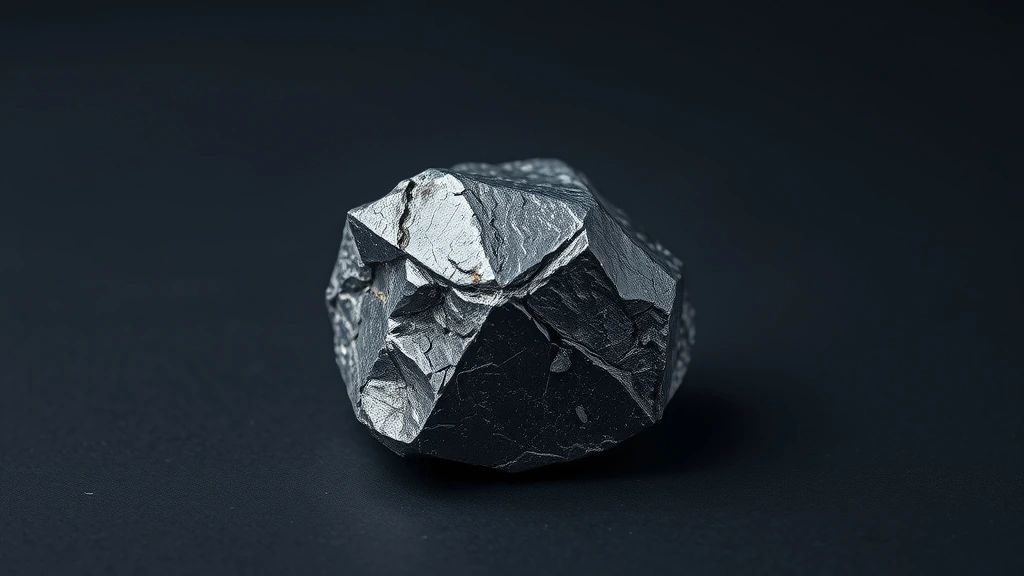
Meteorite gemstone belongs to the Natural Mineral / Crystal parent group, classified as a composite rock rather than a single mineral species. It forms when meteoritic fragments survive atmospheric entry and are later weathered, revealing a matrix of isometric iron‑nickel alloys intergrown with monoclinic and orthorhombic silicate inclusions. This unique assemblage gives the stone its distinctive heft (density 3.5‑8.0 g/cm³) and variable optical properties, making it a prized collector’s item and metaphysical talisman.
What is Meteorite Gemstone? Geological Overview & Definition
Meteorite gemstone is an extraterrestrial aggregate composed of metallic Fe‑Ni phases (taenite, kamacite) and silicate minerals such as olivine and pyroxene that have crystallized under space conditions. The material is recovered from meteorite falls or finds and is cut or polished to showcase its characteristic Widmanstätten patterns and regmaglypt textures.
In gemological terms, the stone is treated as a composite gemstone because it lacks a single, uniform crystal lattice; instead, it exhibits interlocking domains of isometric, monoclinic, and orthorhombic crystal systems. This structural diversity accounts for its broad range of refractive indices (1.45‑2.40) and its susceptibility to acid attack on the silicate portions while the metal phases remain resistant.
Meteorite Gemstone Chemical Composition & Crystallographic Properties
The aggregate’s chemical composition is dominated by iron (Fe) and nickel (Ni) in the metallic matrix, with trace chromium, cobalt, and phosphorus, while the silicate inclusions contribute Si, Mg, Al, and Ca. Because the stone is an aggregate, no single stoichiometric formula can be assigned; instead, it is described as a mixture of Fe‑Ni alloys and silicate minerals.
Its crystal system is explicitly Composite (Isometric, Monoclinic, Orthorhombic), reflecting the coexistence of cubic Fe‑Ni phases (isometric) and lower‑symmetry silicates (monoclinic and orthorhombic). The lattice parameters of the metallic domains are uniform, whereas the silicate grains display variable unit‑cell dimensions due to cation substitution (e.g., Mg ↔ Fe in olivine).
Acid sensitivity is uneven: dilute hydrochloric acid readily dissolves the silicate inclusions, creating micro‑etch patterns, while the metallic phases resist corrosion unless exposed to strong oxidizing agents. This dual behavior is a key diagnostic feature in laboratory testing.
Color in meteorite gemstone arises from chromophore color centers formed by trapped electrons in the Fe‑Ni lattice and by Fe²⁺/Fe³⁺ charge transfers in the silicates. Thermal cycling can cause the Widmanstätten pattern to fade or intensify, as heating promotes diffusion of nickel and alters the oxidation state of iron, thereby modifying both hue and luster.
| Property | Specification |
|---|---|
| Mineral Group | Natural Mineral / Crystal |
| Chemical Formula | Fe-Ni Alloys (Kamacite, Taenite) & Silicates |
| Mohs Hardness | 3.0 – 6.5 |
| Crystal System | Composite (Isometric, Monoclinic, Orthorhombic) |
| Specific Gravity (Density) | 3.5 – 8.0 |
| Refractive Index | 1.45 – 2.40 |
| Color & Optical Properties | Natural Meteorite Gemstone color spectrum and optical dispersion |
| Primary Mining Localities | Global primary localities |
| Water & Chemical Resistance | Sensitive (Avoid prolonged water soaking) |
| Chakra Alignment (Traditional) | Crown Chakra, Third Eye Chakra |
| Zodiac Affinity (Traditional) | Sagittarius, Aquarius |
| Symbolic Meaning (Traditional) | Cosmic connection, spiritual awakening, and protection from negative energies |
Meteorite Gemstone Varieties & Color Spectrum
Meteorites are classified by their dominant mineral composition, primarily iron, nickel, and stony silicates. The iron-nickel alloy known as kamacite and taenite forms the metallic core of most specimens. These distinct phases create unique visual patterns upon etching with acid.
Iron-Nickel Meteorites
These specimens are composed almost entirely of kamacite and taenite, forming the classic metallic appearance. The Widmanstätten pattern emerges only after polishing and acid etching reveals the interlocking crystal lattice. This intricate geometric design is unique to each stone, serving as a fingerprint of its cosmic origin.
Stony-Iron Meteorites
Pallasites represent a rare hybrid class containing olivine crystals embedded in an iron-nickel matrix. The olivine gems appear as translucent green or yellow spheres within the metal. This striking contrast makes pallasites highly sought after for jewelry and display pieces.
Chondrites
These stony meteorites contain small, round grains called chondrules that formed in the early solar system. Their composition varies widely, including carbonaceous and ordinary types with distinct mineral assemblages. The carbonaceous chondrites often preserve organic compounds and water-bearing minerals, offering clues to planetary formation.
Iron Meteorites with Troilite
Some iron meteorites contain significant amounts of troilite, a nickel sulfide mineral that appears as dark inclusions. This variety is less common than pure iron-nickel types but adds textural complexity. The presence of troilite can affect the stone’s density and magnetic properties.
Pallasite Varieties
Specific pallasites, such as the Moldovian or Kunashak types, are prized for their large, clear olivine crystals. These stones exhibit a high degree of transparency and vibrant green hues. Their rarity stems from the specific impact conditions required to form such large crystal fields.
Where is Meteorite Gemstone Found? Geological Mining & Extraction
Meteorites are not mined from terrestrial deposits but recovered from surface exposures or desert plains. Major find sites include the Atacama Desert in Chile and the Sahara Desert in North Africa. These arid regions preserve meteorites well due to low humidity and minimal soil erosion.
Extraction involves careful excavation and cleaning to remove desert varnish or regolith. Scientific teams often document the fall location to verify the specimen’s authenticity and origin. Unlike traditional gemstones, meteorites are collected rather than extracted from underground veins.
Historical Significance & Cultural Lore of Meteorite Gemstone
Ancient civilizations revered meteorites as divine gifts, often incorporating them into religious artifacts. The Nebra Sky Disk from Germany features meteoric iron inlays, symbolizing celestial power. In Egypt, meteoric iron was used to craft royal jewelry, distinguishing it from common terrestrial metals.
Cultural lore consistently associates these stones with cosmic energy and spiritual protection. Many traditions view them as bridges between the earthly and celestial realms. This enduring mystique continues to drive their value in both scientific and esoteric markets.
Modern Uses & Jewelry Applications of Meteorite Gemstone
Meteorite gemstone is prized for its dramatic metallic sheen and interlocking crystal pattern, which lapidaries exploit through both cabochon and faceted cuts. A polished cabochon showcases the characteristic Widmanstätten lines, while precision faceting can turn the material into a sparkling centerpiece for rings or pendants. Artisans also carve ornamental plaques and inlays, allowing the extraterrestrial texture to accent architectural interiors and high‑end décor.
- Cabochon pendants highlighting the iron‑nickel matrix
- Faceted rings that catch light across the composite crystal system
- Inlaid watch faces and architectural panels for a cosmic aesthetic
Metaphysical Uses & Origins of Meteorite Gemstone
In meditation, meteorite’s cosmic origin is believed to bridge earthly consciousness with the universe, fostering spiritual awakening and protection from negative energies. Practitioners place the stone on the Third Eye Chakra to amplify intuition, while positioning it at the Crown Chakra aligns the wearer with higher wisdom and a sense of grounding despite its celestial source.
Which Chakra and Zodiac Signs Align with Meteorite Gemstone?
The Crown Chakra (Sahasrara) resonates with meteorite’s lofty, otherworldly vibration, encouraging enlightenment and a feeling of oneness with the cosmos. Simultaneously, the Third Eye Chakra (Ajna) benefits from the stone’s ability to sharpen perception, making it a favored tool for visionary work and inner clarity.
Astrologically, meteorite is linked to Sagittarius and Aquarius, both signs that seek truth beyond the mundane. Sagittarius draws on the stone’s adventurous spirit for exploration and philosophical growth, while Aquarius taps its innovative energy for progressive thinking and humanitarian ideals.
How to Identify Real vs. Fake Meteorite Gemstone
Artificial imitations of meteorite often use synthetic glass, metal powders, or dyed basalt to mimic the distinctive Widmanstätten pattern, but they lack the genuine iron‑nickel composition and density range of authentic specimens. These replicas may feel lighter, display uniform coloration, or lack the subtle magnetic response of true meteorite material.
Practical At-Home Authenticity Tests
- Temperature Test (Thermal Feel): Authentic meteorite conducts heat quickly, feeling noticeably colder to the touch than glass or resin imitations.
- Specific Gravity & Weight Test: Weigh the stone and compare its density (3.5–8.0 g/cm³) to known values; fakes typically fall below 3.0 g/cm³.
- Scratch & Hardness Test (Mohs Comparison): Use a steel file (hardness ~5.5); genuine meteorite (hardness 3.0–6.5) will show a light scratch, whereas glass will chip or shatter.
- Microscopic & Loupe Inspection (Internal Inclusions): Examine under 10× magnification for the characteristic interlocking Widmanstätten lines and metallic flecks; fakes often show bubbles or uniform texture lacking these features.
Meteorite Gemstone Valuation Factors, Grading & Pricing
Color Saturation is the foremost driver of market value. Gemstones that display deep, vivid hues—ranging from metallic blues to fiery reds—receive premium scores, especially when the tone remains uniform across the stone. Optical clarity and a high‑shine luster further amplify desirability, as collectors prize stones that sparkle without cloudiness.
Carat Weight directly influences price, but only when paired with precise facet symmetry. Larger stones command higher fees, yet uneven or poorly aligned facets can diminish brilliance and reduce the final appraisal. The presence of a natural matrix or inclusions may be welcomed for authenticity, but excessive fractures or foreign material lower the grade.
A Geographical Provenance Premium often adds a significant surcharge, particularly for meteorites sourced from renowned falls such as the Sikhote‑Alin or the Hoba. Wholesale markets track trends that see retail prices rise 15‑30 % above baseline when provenance is documented and verified. Buyers also watch global demand cycles, which can shift sharply with new scientific discoveries or high‑profile exhibitions.
How to Clean and Care for Meteorite Gemstone
Use warm, soapy water and a soft cloth to gently remove surface dust; this method respects the stone’s delicate structure. After cleaning, pat the gemstone dry with a lint‑free towel, ensuring no moisture remains in crevices. Avoid ultrasonic cleaners entirely, as the vibrations can cause micro‑fractures in the composite crystal lattice.
Cleansing and Recharging Meteorite Gemstone (Energetic Care)
For energetic renewal, place the stone in a bowl of smoke smudging using sage or palo santo; the gentle vapor clears residual negative energies without introducing moisture. Limit exposure to five minutes, then allow the gem to air‑dry naturally before handling.
Alternatively, recharge the meteorite under moonlight or on a selenite plate for several hours. Both methods are safe because the mineral is insoluble and will not degrade, while the ambient energy is believed to restore its cosmic connection.
Frequently Asked Questions About Meteorite Gemstone
Is meteorite gemstone safe to wear in the rain or while swimming?
No – it is water‑sensitive and should not be soaked for long periods. Prolonged exposure to moisture can cause the metallic matrix to oxidize and the delicate crystal inclusions to weaken. Wipe the stone dry with a soft cloth immediately after any accidental splash.
How should I clean my meteorite jewelry without damaging it?
Clean with warm, mildly soapy water and a soft lint‑free cloth. This gentle method removes surface grime while preserving the fragile metallic‑oxide rim. Ultrasonic cleaners generate micro‑vibrations that can fracture the composite crystal lattice, so they must be avoided.
Can meteorite gemstone be set in everyday rings or bracelets?
Yes, but choose protective settings that shield the stone’s surface. Because the material ranges from 3.0 to 6.5 on the Mohs hardness scale, it can scratch or chip under impact. Prong or bezel mounts that keep the stone recessed reduce the risk of accidental damage.
What zodiac signs are traditionally linked to meteorite gemstone?
Sagittarius and Aquarius are the aligned zodiac signs. In astrological lore, these signs appreciate the stone’s cosmic connection, encouraging exploration and innovative thinking. Wearing the gem is said to amplify the native traits of optimism and humanitarian vision.
Which chakras does meteorite gemstone resonate with?
Crown Chakra and Third Eye Chakra. The stone’s high refractive index (up to 2.40) is believed to stimulate spiritual insight and higher‑dimensional awareness, supporting meditation and intuitive development associated with these energy centers.
Does the density of meteorite gemstone affect its value?
Yes – its density varies widely from 3.5 to 8.0 g/cm³, influencing rarity and price. Higher‑density specimens often contain more metallic iron‑nickel phases, which are prized by collectors for their authentic extraterrestrial character and striking metallic sheen.
How does the crystal system of meteorite gemstone differ from typical gemstones?
It is a composite system that can exhibit isometric, monoclinic, or orthorhombic habits. This structural diversity results from the amalgamation of silicate minerals, iron‑nickel alloys, and shock‑formed glass, giving each piece a unique internal geometry not found in single‑crystal gems.
Are there any special considerations for storing meteorite gemstone?
Store in a low‑humidity, temperature‑stable environment, preferably in a soft pouch. Fluctuating humidity can accelerate oxidation of the metallic inclusions, while sudden temperature changes may induce micro‑fractures in the glass‑like matrix. A dedicated jewelry box with silica gel packets helps maintain optimal condition.