
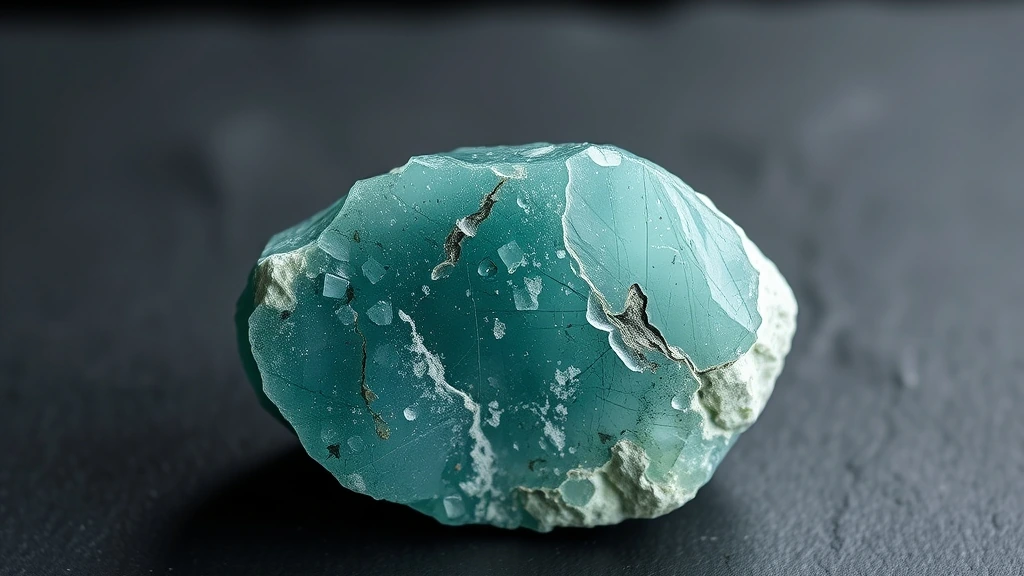
Ajoite belongs to the Natural Mineral / Crystal group, representing a rare secondary mineral formed in oxidized copper deposits. Its geological origin is tied to the weathering of primary copper sulfides in arid environments. As a hydrated silicate, it crystallizes within the Triclinic system, distinguishing it from more common gem minerals. This classification underscores its unique structural complexity and rarity in the global mineralogical record.
What is Ajoite Gemstone? Geological Overview & Definition
Ajoite is defined as a rare, secondary copper-aluminum silicate mineral discovered in Arizona. It forms exclusively in the oxidized zones of copper-bearing rock, specifically within the Ajo Mine region. The mineral’s presence indicates specific geochemical conditions involving high copper and aluminum concentrations.
Due to its extremely low hardness, Ajoite is rarely found in large, intact crystals. It typically occurs as delicate, needle-like aggregates or crusts on host rock. This physical fragility makes it challenging to extract as a traditional gemstone. Consequently, it is primarily valued by mineral collectors for its aesthetic appeal.
Ajoite Gemstone Chemical Composition & Crystallographic Properties
Ajoite crystallizes in the Triclinic system, characterized by unequal axes and oblique angles. Its lattice structure is complex, featuring a framework of silicon-oxygen tetrahedra and aluminum-oxygen octahedra. This triclinic symmetry results in a lack of high-order rotational symmetry within the crystal. The structure accommodates water molecules, contributing to its hydrated nature.
The chemical formula (Na,K)Cu₇AlSi₉O₂₄(OH)₆·3H₂O highlights significant cation substitution. Sodium and potassium ions occupy similar sites, while copper provides the primary coloration. This cationic variability allows for slight compositional shifts without altering the fundamental structure. The presence of hydroxyl groups and water is critical for stability.
Color in Ajoite arises from Cu²⁺ chromophores within the crystal lattice. These copper ions absorb specific wavelengths of light, reflecting deep blue to green hues. The intensity of color depends on the concentration and arrangement of these ions. Thermal behavior is limited by the mineral’s dehydration sensitivity at moderate temperatures.
Ajoite is highly sensitive to acidic environments, which can dissolve its structure. Prolonged exposure to heat may cause the loss of structural water, leading to decomposition. This acid sensitivity necessitates careful handling and storage conditions. Its low density of 2.96 g/cm³ reflects its hydrated, open lattice structure.
| Property | Specification |
|---|---|
| Mineral Group | Natural Mineral / Crystal |
| Chemical Formula | (Na,K)Cu 7 AlSi 9 O 24 (OH) 6 ·3H 2 O |
| Mohs Hardness | frac |
| Crystal System | Triclinic |
| Specific Gravity (Density) | 2.96 |
| Refractive Index | n α = 1.550, n β = 1.583, n γ = 1.641 |
| Color & Optical Properties | Natural Ajoite Gemstone color spectrum and optical dispersion |
| Primary Mining Localities | Global primary localities |
| Water & Chemical Resistance | High (Safe for gentle water washing) |
| Chakra Alignment (Traditional) | Root Chakra and Heart Chakra |
| Zodiac Affinity (Traditional) | Taurus, Gemini, Leo |
| Symbolic Meaning (Traditional) | Balance, focus, clarity and positivity |
Ajoite Gemstone Varieties & Color Spectrum
Ajoite presents a limited but distinct palette, primarily dominated by shades of green and blue-green. These hues arise from the copper content within its complex silicate structure. The color intensity varies based on the specific crystallographic orientation and impurity levels.
Classic Ajo Green
This variety exhibits a deep, forest-like green tone typical of the type locality. It often displays a vitreous luster that enhances its visual depth. Copper substitution within the lattice is the primary driver for this specific chromatic signature.
Pale Sky Blue
Rare specimens occasionally manifest a lighter, sky-blue hue due to subtle variations in hydration. This morph is significantly rarer than the standard green variety. The triclinic crystal system influences how light refracts through these delicate structures.
Opaque Matrix Aggregates
Many deposits yield massive, non-crystalline forms that lack gem clarity. These aggregates are valued for their texture rather than transparency. They often contain secondary mineral inclusions that complicate gemological assessment.
High-Clarity Crystals
Exceptional specimens feature well-formed, transparent crystals suitable for faceting. These are extremely rare due to the mineral’s generally soft Mohs hardness and fragility. Such clarity allows for the observation of internal refractive index variations.
Where is Ajoite Gemstone Found? Geological Mining & Extraction
Ajoite is primarily associated with copper-bearing skarns and oxidized zones in arid regions. The type locality is the Ajo Mountain district in Arizona, USA. These deposits form through hydrothermal alteration of host rocks.
Extraction is limited due to the mineral’s low density and structural instability. Mining operations focus on preserving large, intact crystals for mineralogical study. Commercial gem extraction remains negligible compared to major gemstones.
Historical Significance & Cultural Lore of Ajoite Gemstone
Ajoite was first described in the early 20th century, limiting its presence in ancient archaeological records. It has no documented use in pre-Columbian or classical civilizations. Its discovery is a relatively modern scientific achievement.
The mineral serves as a key reference point in crystallographic studies of copper silicates. Its lore is tied to mineral collecting rather than mythological significance. It remains a niche curiosity among serious collectors.
Modern Uses & Jewelry Applications of Ajoite Gemstone
Due to its extremely low Mohs hardness and fragile nature, ajoite is primarily valued for ornamental carving rather than durable faceted jewelry. Lapidaries typically craft it into cabochons or small decorative pendants to minimize the risk of chipping during wear. Its vibrant blue color makes it a striking accent stone in estate-style designs.
- Ornamental Carvings: Ideal for small figurines, cameos, and decorative inlays where structural stress is low.
- Cabochon Cuts: Smooth, domed surfaces that protect the crystal structure while showcasing its unique luster.
- Collectible Specimens: Highly prized by mineral collectors for its rarity and distinct triclinic crystal system.
- Limited Faceting: Rarely faceted due to cleavage planes; if cut, it requires extreme caution and protective settings.
Metaphysical Properties & Traditional Meaning of Ajoite Gemstone
According to historical traditions and metaphysical lore, ajoite is believed to foster emotional resilience and spiritual grounding during periods of transition. Practitioners suggest that its energy helps stabilize the wearer’s mood, promoting a sense of calm and clarity. This stone is often associated with healing properties that encourage self-acceptance and inner peace.
The deep blue hue symbolizes the throat and heart, facilitating open communication and emotional expression. Many believe that holding this mineral aids in releasing negative patterns and inviting positive energy. Its presence is thought to enhance intuitive awareness, helping individuals connect with their deeper truths.
Which Chakra and Zodiac Signs Align with Ajoite Gemstone?
In metaphysical practice, ajoite is specifically aligned with the Root Chakra and the Heart Chakra. The Root Chakra connection provides a sense of security and stability, anchoring the wearer to the earth. Simultaneously, the Heart Chakra alignment promotes compassion, love, and emotional balance within the individual.
This mineral resonates strongly with the zodiac signs of Taurus, Gemini, and Leo. For Taurus, it enhances their natural desire for stability and comfort. Gemini finds mental clarity and balanced communication through its energy. Leo benefits from its support in expressing confidence and creative passion authentically.
How to Identify Real vs. Fake Ajoite Gemstone
Because genuine ajoite is rare and fragile, the market is flooded with artificial imitations and synthetic glass designed to mimic its color. Dyed replicas of other minerals are also common, making visual identification alone insufficient for verification. Understanding the physical properties of the real stone is essential for distinguishing it from these fakes.
Practical At-Home Authenticity Tests
- Temperature Test (Thermal Feel): Genuine minerals typically feel cooler to the touch than glass or plastic imitations. Hold the stone between your lips or against your cheek for a few seconds to assess its thermal conductivity.
- Specific Gravity & Weight Test: Ajoite has a density of 2.96 g/cm³, which is lighter than many heavy glass substitutes. Compare its weight against a similarly sized piece of known glass to detect discrepancies.
- Scratch & Hardness Test (Mohs Comparison): With a fractional Mohs hardness, ajoite is extremely soft and will scratch easily with a fingernail or copper coin. Harder fakes like glass will not scratch under this gentle pressure.
- Microscopic & Loupe Inspection (Internal Inclusions): Use a 10x loupe to look for natural internal inclusions or crystal growth patterns. Synthetic glass often contains tiny bubbles or swirls, while dyed stones may show color concentration in fractures.
Ajoite Gemstone Valuation Factors, Grading & Pricing
The primary driver of value is Color Saturation, where deep, uniform tones command the highest premiums. Collectors prioritize stones exhibiting consistent hue without zoning or fading. Optical clarity and a distinct vitreous luster further enhance the gem’s visual appeal.
Carat Weight significantly impacts pricing, as larger specimens of this rare mineral are exceptionally uncommon. Facet symmetry is critical for maximizing light return in cut stones. The presence of matrix or inclusions can either detract from value or add geological interest.
Geographical Provenance Premium plays a vital role, with stones from type localities fetching higher prices. Wholesale values remain modest due to low global supply and limited commercial demand. Retail prices reflect the scarcity and unique aesthetic qualities of each individual piece.
How to Clean and Care for Ajoite Gemstone
Due to its Triclinic crystal system and moderate hardness, Ajoite requires gentle handling to prevent damage. Always use warm soapy water and a soft cloth for routine cleaning. This method effectively removes surface oils and dust without stressing the internal structure.
You must strictly avoid ultrasonic cleaners to prevent structural fractures in the delicate lattice. The mineral’s specific gravity of 2.96 indicates it is not overly dense, making it susceptible to shock. Regular, careful maintenance ensures the stone retains its integrity and luster over time.
Cleansing and Recharging Ajoite Gemstone (Energetic Care)
For energetic cleansing, use safe dry methods that respect the mineral’s 3H₂O water content. Smoke smudging with sage or palo santo is an excellent non-invasive option. This technique purifies the stone without exposing it to liquid or heat stress.
Moonlight charging is another gentle approach, placing the gem on a windowsill overnight. Alternatively, resting the stone on a selenite plate allows for passive energy transfer. These dry methods ensure the crystal structure remains stable and undisturbed.
Frequently Asked Questions About Ajoite Gemstone
Is ajoite safe to wear in the shower?
Yes, ajoite is safe for gentle water washing. Its high water resistance allows it to withstand brief exposure to moisture without significant degradation. However, prolonged soaking should be avoided to maintain the stone’s integrity. Always dry it thoroughly with a soft cloth after any water contact to prevent potential surface spotting or mineral residue buildup.
Can I clean ajoite in an ultrasonic cleaner?
No, you must avoid ultrasonic cleaners for ajoite. The intense vibrations can cause structural fractures due to the mineral’s relatively low hardness and brittle nature. Instead, use warm soapy water and a soft cloth for safe maintenance. This gentle approach preserves the delicate triclinic crystal structure and prevents irreversible damage to the gemstone’s surface.
What is the Mohs hardness of ajoite?
Ajoite registers a fractional hardness on the Mohs scale. This indicates it is a soft mineral, making it susceptible to scratching by common dust particles and everyday objects. Consequently, it requires careful handling and storage to maintain its aesthetic appeal. Owners should store it separately from harder gemstones to prevent abrasion and surface wear.
Which zodiac signs are aligned with ajoite?
Ajoite is traditionally aligned with Taurus, Gemini, and Leo. These earth, air, and fire signs are believed to resonate with the stone’s unique energetic properties. Metaphysical practitioners often recommend it for balancing emotional stability and enhancing personal confidence. Wearing this gemstone may support these signs in achieving greater harmony and focus in their daily lives.
Which chakras does ajoite activate?
Ajoite primarily activates the Root Chakra and Heart Chakra. This dual alignment helps ground the wearer while simultaneously opening emotional centers for deeper connection. It fosters a balance between physical stability and emotional well-being. By engaging these specific energy centers, ajoite supports holistic healing and spiritual alignment for the user.
What is the chemical formula of ajoite?
The formula is (Na,K)Cu7AlSi9O24(OH)6·3H2O. This complex composition includes sodium, potassium, copper, aluminum, and silicon within a hydrated structure. The presence of water molecules in the lattice contributes to its specific physical properties. Understanding this hydrated silicate composition is crucial for proper gemological identification and care.
How should I store my ajoite gemstone?
Store ajoite in a soft pouch or lined jewelry box. Its low hardness makes it vulnerable to scratches from harder materials like quartz or topaz. Separate storage ensures the surface remains pristine and free from abrasive contact. This simple precaution extends the lifespan of the gemstone and preserves its natural luster for years to come.
What is the refractive index of ajoite?
Ajoite exhibits a refractive index range of 1.550 to 1.641. This moderate dispersion contributes to its subtle luster and visual appeal in gemological settings. The birefringence observed in its triclinic system adds depth to its appearance. These optical properties help distinguish ajoite from other similar-looking copper-bearing minerals during professional appraisal.