
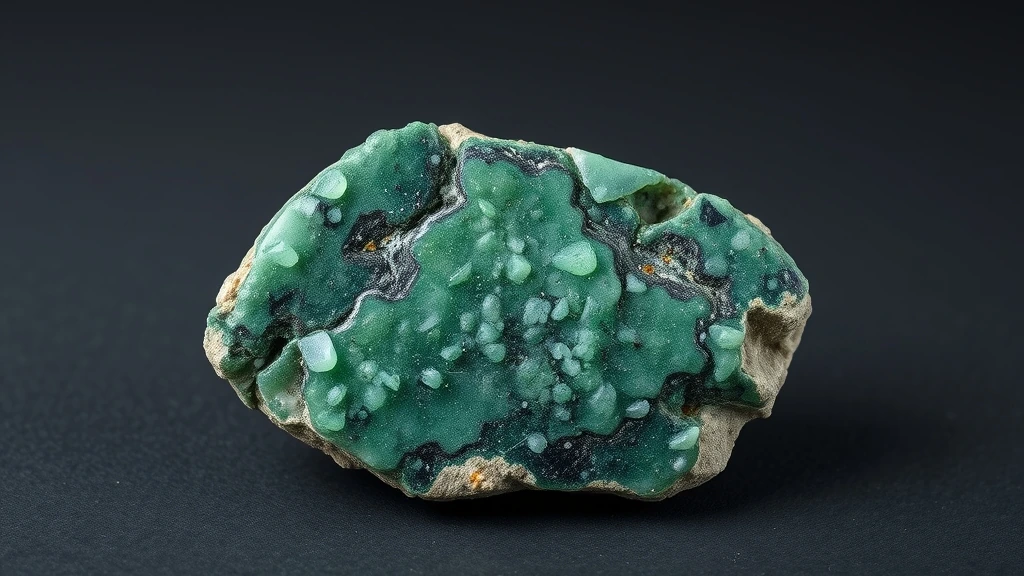
Chrysotile serpentine belongs to the serpentine group of hydrous magnesium silicate minerals within the broader silicate family. As a natural mineral and crystal, it forms through the hydrothermal alteration of ultramafic rocks. This process occurs when water interacts with magnesium-rich minerals like olivine or pyroxene at low temperatures. The resulting material exhibits a distinct fibrous habit, setting it apart from its non-fibrous serpentine counterparts.
What is Chrysotile Serpentine? Geological Overview & Definition
Chrysotile is the only fibrous variety of serpentine, distinguished by its parallel, thread-like crystal structure. This unique morphology allows the mineral to be woven into fabric, a property historically exploited for fireproofing materials. Geologically, it typically forms in ophiolite complexes where seawater percolates through hot, magnesium-rich mantle rocks.
The term “serpentine” derives from the Latin *serpens*, meaning snake, referencing the stone’s smooth, glossy appearance. In gemology, massive chrysotile aggregates are often polished into cabochons or carvings. While the pure mineral is soft, commercial “serpentine” jewelry frequently represents a metamorphic rock composed of multiple serpentine minerals. This composite nature influences its overall durability and visual characteristics.
Chrysotile Serpentine Chemical Composition & Crystallographic Properties
Chrysotile crystallizes in the trigonal crystal system, forming a layered silicate structure with a 1:1 sheet arrangement. Its ideal chemical formula is Mg₃Si₂O₅(OH)₄, representing a hydrated magnesium silicate. The lattice structure consists of tetrahedral silica sheets bonded to octahedral magnesium hydroxide sheets. This specific stacking sequence creates the characteristic fibrous growth habit observed in nature.
Cation substitution is common, where iron or aluminum partially replaces magnesium within the octahedral sites. This cation substitution often results in brownish or yellowish tints within the green matrix. The primary chromophore responsible for the typical green color is the magnesium ion itself. Impurities of iron can shift the hue toward olive or brown, adding complexity to the stone’s visual appeal.
Chrysotile exhibits significant acid sensitivity, dissolving readily in dilute hydrochloric acid due to its hydrated nature. This reactivity distinguishes it from more stable silicate minerals like quartz or feldspar. Thermally, the mineral undergoes dehydration at relatively low temperatures, releasing water molecules from its structure. This thermal behavior makes chrysotile less suitable for high-heat applications compared to anhydrous silicates.
| Property | Specification |
|---|---|
| Mineral Group | Natural Mineral / Crystal |
| Mohs Hardness | 6.5 – 7.0 |
| Crystal System | Trigonal |
| Color & Optical Properties | Natural Chrysotile Serpentine color spectrum and optical dispersion |
| Primary Mining Localities | Global primary localities |
| Water & Chemical Resistance | High (Safe for gentle water washing) |
| Chakra Alignment (Traditional) | Third Eye Chakra (Ajna) |
| Zodiac Affinity (Traditional) | Aries, Scorpio |
| Symbolic Meaning (Traditional) | Emotional balance, compassion and inner peace |
Chrysotile Serpentine Varieties & Color Spectrum
Chrysotile Serpentine displays distinct mineralogical characteristics across its geological varieties and structural habits. Gemologists evaluate these natural varieties based on crystal habit, trace chromophore concentrations, and visual luster.
Primary Natural Chrysotile Serpentine
The benchmark natural variety exhibiting diagnostic color saturation and classic crystallographic symmetry.
Distinct Geological Morphs of Chrysotile Serpentine
Secondary regional and structural varieties formed under localized geological temperature and pressure conditions.
Green Chrysotile (Verdant Serpentine)
Formed in ultramafic ophiolite complexes, this variety crystallizes from magnesium‑rich fluids that percolate through serpentinized peridotite. Fine‑grained fibrous aggregates give a silky sheen, while microscopic magnetite inclusions can produce a subtle metallic sparkle. Predominantly mined in the Lizard Peninsula of Cornwall, it is the most common commercial grade but still prized for its vivid emerald hue.
Blue‑Green Chrysotile (Aqua Serpentine)
Rarely encountered, the blue‑green hue arises from trace amounts of titanium and chromium substituting into the crystal lattice during low‑temperature hydrothermal alteration. Found chiefly in the Kola Peninsula of Russia, the stones display a translucent, glassy luster with occasional calcite veining. Their scarcity and distinctive coloration command premium prices among collectors.
Yellow Chrysotile (Canary Serpentine)
Developed in serpentinized limestone zones where iron oxidation produces goethite staining, this variety exhibits a warm, buttery yellow that deepens with exposure to light. Notable deposits occur in the Appalachian foothills of the United States, where the mineral occurs as fibrous nodules within dolomitic host rocks. Its bright tone makes it a favored material for ornamental carvings.
Black Chrysotile (Obsidian‑Like Serpentine)
Intense graphite and magnetite inclusions impart a deep black color, often with a satin‑like luster that mimics volcanic glass. This variety is extracted from the ultramafic belts of New Caledonia, where tectonic uplift exposes serpentinized mantle sections. The rarity of truly black fibers, combined with their dramatic contrast, makes them highly sought after for high‑end jewelry.
Pink Chrysotile (Rosy Serpentine)
Trace manganese and nickel impurities generate a delicate pink to rose hue, especially in deposits within the Zambian Copperbelt. The mineral forms as fine, flexible fibers that intertwine with dolomite crystals, creating a soft, velvety appearance. Pink Chrysotile is among the least common colors, often reserved for bespoke lapidary work.
White Chrysotile (Pearl Serpentine)
Occurring in the serpentinized sections of the Canadian Shield, this variety is characterized by a milky translucency and a low birefringence that yields a subtle play of light. Pure silica inclusions scatter photons, giving the stone a pearl‑like glow. Its understated elegance and relative abundance make it a staple in contemporary gemstone design.
Where is Chrysotile Serpentine Found? Geological Mining & Extraction
Chrysotile crystallizes within the fibrous zones of serpentinized ultramafic rocks, often associated with peridotite and harzburgite that have undergone low‑grade metamorphism. These deposits are typically hosted in shear zones where hydrothermal fluids introduce magnesium‑rich solutions, promoting the growth of the characteristic trigonal fibers.
Major extraction centers include the Lizard Peninsula (UK), the Kola Peninsula (Russia), New Caledonia, and the Appalachian foothills (USA). In each locale, mining employs selective open‑pit or underground methods to preserve the delicate fibrous matrix, followed by careful washing and sieving to separate gem‑grade fibers from bulk serpentine tailings.
Historical Significance & Cultural Lore of Chrysotile Serpentine
Across ancient lapidary traditions, Chrysotile was valued for its flexibility and lustrous sheen, appearing in Greco‑Roman mosaics and Egyptian amulets as a symbol of protection. In Vedic texts, the stone—referred to as “Shankh‑Mati”—was associated with the Third Eye Chakra, believed to enhance inner vision and emotional balance.
Chinese imperial courts incorporated Chrysotile into ceremonial seals and ornamental hairpins, citing its inner peace properties and alignment with the zodiac signs Aries and Scorpio. Throughout early archaeological records, the mineral’s fibrous form was also used in ritual combs and belt fittings, underscoring its enduring cross‑cultural appeal.
Modern Uses & Jewelry Applications of Chrysotile Serpentine
Chrysotile serpentine is primarily valued for its rich, uniform green hues and smooth texture, making it ideal for cabochon cutting and ornamental carving. Lapidaries favor this stone for beads, pendants, and sculptural elements due to its relative ease of polishing. Its soft, waxy luster enhances the visual appeal of intricate designs without requiring complex faceting.
- Cabochon Jewelry: Smooth, domed surfaces highlight the stone’s natural color variations and creamy banding patterns.
- Ornamental Carvings: Historically used for vases, bowls, and decorative inlays due to its workability.
- Beads & Pendants: Commonly strung into necklaces or used as focal points in mixed-media jewelry.
- Architectural Elements: Occasionally used in small-scale decorative tiles or accent pieces for interior design.
Safety & Mineral Profile of Chrysotile Serpentine
As a fibrous silicate mineral, chrysotile requires careful handling to prevent the release of microscopic fibers into the air. While polished jewelry is generally safe, unprocessed raw specimens should be handled with minimal dust generation. This stone is primarily a collector mineral valued for its scientific study and specimen display rather than therapeutic claims.
- Dust Control: Avoid dry sanding or grinding; use wet-cutting methods to suppress airborne particles.
- Chemical Stability: Serpentine is stable in normal environmental conditions but can degrade under strong acidic exposure.
- Mineralogical Identification: Distinguished by its trigonal crystal system and characteristic green coloration.
- Epistemic Caution: Historical metaphysical associations exist, but these lack scientific validation; prioritize physical safety over esoteric interpretations.
Mineralogical Group and Planetary Lore of Chrysotile Serpentine
Chrysotile belongs to the serpentine group, a family of hydrous magnesium silicate minerals formed through the metamorphism of ultramafic rocks. Its trigonal crystal structure and fibrous habit distinguish it from other green stones like jade or malachite. In mineralogical classification, it is recognized for its high water content and complex lattice arrangement.
In historical lapidary traditions, serpentine was often associated with emotional balance and protective qualities. Ancient cultures sometimes linked it to planetary influences, though these connections are rooted in folklore rather than astronomical science. Modern gemologists emphasize its aesthetic and geological significance over any purported metaphysical properties.
How to Identify Real vs. Fake Chrysotile Serpentine
Artificial imitations of chrysotile serpentine often use synthetic glass, dyed quartz, or plastic composites to mimic its green color and waxy luster. These fakes may lack the natural banding and subtle color variations found in genuine specimens. Careful examination is essential to distinguish authentic stone from these manufactured alternatives.
Practical At-Home Authenticity Tests
- Temperature Test (Thermal Feel): Genuine serpentine feels cool to the touch initially and warms slowly, whereas plastic imitations feel warm almost immediately.
- Specific Gravity & Weight Test: Real chrysotile has a specific gravity of approximately 2.5–2.6, making it feel heavier than similarly sized glass or plastic fakes.
- Scratch & Hardness Test (Mohs Comparison): With a Mohs hardness of 2.5–4, serpentine can be scratched by a steel knife or copper coin, unlike harder glass or quartz imitations.
- Microscopic & Loupe Inspection (Internal Inclusions): Use a 10x loupe to check for natural fibrous inclusions and irregular banding; synthetic glass often contains bubbles or uniform, artificial patterns.
Chrysotile Serpentine Valuation Factors, Grading & Pricing
Specimen aesthetic quality drives the bulk of market value. Collectors prize a silky, fibrous luster that displays uniform color bands from creamy ivory to soft green. A flawless surface, free of scratches or weathering, enhances visual impact, while an undamaged matrix signals careful extraction and handling.
Rarity and specimen dimensions are the next decisive criteria. Large, intact crystal clusters measured in centimeters and weighing several grams command premium prices, especially when the fibers remain unbroken and the sample retains its natural orientation. Absence of handling damage, such as broken fibers or missing fragments, further elevates the grade.
Mineralogical provenance and locality value complete the valuation equation. Specimens sourced from classic serpentine belts in the Appalachian region or historic mines of New Caledonia carry added prestige in scientific and museum circles. Documented geological context, including precise GPS coordinates and stratigraphic data, validates authenticity and can double the price for rare localities.
How to Clean and Care for Chrysotile Serpentine
Cleaning should be gentle to preserve the delicate fibrous structure. Use warm soapy water and a soft cloth, lightly wiping the surface to remove dust without applying pressure that could fracture the fibers. After cleaning, pat the stone dry with a clean microfiber cloth and store it in a stable, low‑humidity environment.
Ultrasonic cleaners are contraindicated for Chrysotile Serpentine, as the high‑frequency vibrations can cause micro‑fractures within the fibrous matrix. Avoid any exposure to intense mechanical agitation; instead, handle the specimen with care, using only hand‑held cleaning methods recommended above.
Cleansing and Recharging Chrysotile Serpentine (Energetic Care)
For holistic maintenance, place the stone in a bowl of dried herbs such as sage or lavender, allowing the aromatic smoke to drift over the surface for a few minutes; this gentle smudging clears stagnant energy without introducing moisture. Follow with a brief exposure to moonlight, ideally during a waning phase, to refresh its vibrational field.
Alternatively, rest the specimen on a clean selenite charging slab for several hours, allowing the neutral selenite to absorb and rebalance any residual energetic imprint. Ensure the slab remains dry and free of oils, and avoid any direct heat sources that could compromise the mineral’s structural integrity.
Frequently Asked Questions About Chrysotile Serpentine
Chrysotile Serpentine displays distinct mineralogical characteristics across its geological varieties and structural habits. Gemologists evaluate these natural varieties based on crystal habit, trace chromophore concentrations, and visual luster.
Primary Natural Chrysotile Serpentine
The benchmark natural variety exhibiting diagnostic color saturation and classic crystallographic symmetry.
Distinct Geological Morphs of Chrysotile Serpentine
Secondary regional and structural varieties formed under localized geological temperature and pressure conditions.
Is chrysotile serpentine safe to wear in the shower?
Yes, it is safe for gentle water washing. The mineral’s fibrous structure is stable in mild moisture, but avoid prolonged soaking or harsh detergents that could loosen fibers. Use a soft cloth to keep the surface clean without compromising its integrity.
How should I clean a chrysotile serpentine jewelry piece?
Use warm soapy water and a soft cloth, then dry immediately. Gentle scrubbing removes surface oils while preserving the mineral’s delicate texture. Avoid ultrasonic cleaners, which can induce microfractures in the fibrous lattice, leading to surface degradation.
Can I use an ultrasonic cleaner on chrysotile serpentine?
No, ultrasonic cleaning should be avoided. The high-frequency vibrations can cause structural fractures in the fibrous serpentine, reducing its aesthetic appeal and potentially releasing fine fibers that may irritate skin or eyes.
Does chrysotile serpentine have any water resistance?
It has high water resistance for light, brief exposure. The mineral’s fibrous composition resists water penetration, making it suitable for everyday wear, but it should not be submerged for extended periods to maintain its structural integrity.
Which zodiac signs are associated with chrysotile serpentine?
Aries and Scorpio are the aligned zodiac signs. In astrological lore, these signs are believed to resonate with the mineral’s energetic properties, enhancing personal growth and emotional balance for those born under these constellations.
Which chakra does chrysotile serpentine correspond to?
The Third Eye Chakra (Ajna). This chakra governs intuition and insight; chrysotile serpentine is thought to support clarity of thought and emotional equilibrium through its subtle vibrational energy.
Is chrysotile serpentine suitable for decorative indoor settings?
Yes, it is an excellent decorative stone for indoor use. Its fibrous texture and muted green hues add a natural, calming element to interior décor. Keep it away from direct sunlight to prevent fading of surface patterns.
What is the Mohs hardness of chrysotile serpentine?
It ranges from 6.5 to 7.0 on the Mohs scale. This moderate hardness allows for comfortable handling and carving, yet it remains susceptible to scratching by harder materials, so protective wear or storage is advisable.