
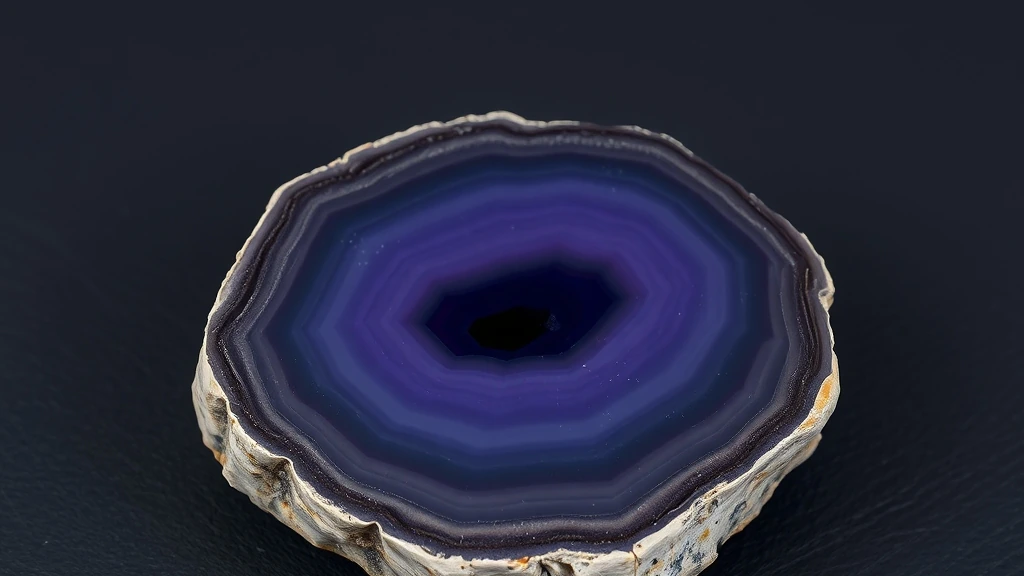
Grape Agate is a type of chalcedony, a subset of the silicate mineral group, which includes cryptocrystalline quartz. This geological classification is significant, as it influences the stone’s physical and optical properties. The parent mineral group of silicates is one of the largest and most diverse groups of minerals, with a wide range of properties and occurrences.
What is Grape Agate? Geological Overview & Definition
Grape Agate is a microcrystalline mineral, composed of tiny crystals that are not visible to the naked eye. Its geological classification is closely tied to its formation processes, which involve the precipitation of silica-rich solutions. The resulting mineral is a type of cryptocrystalline aggregate, with a unique set of physical and optical properties.
The definition of Grape Agate is closely linked to its trigonal crystal system, which is characterized by a specific arrangement of atoms within the crystal lattice. This crystal system is responsible for the stone’s fibrous texture and its aggregate mineralogical composition. The unique combination of these properties makes Grape Agate a distinctive and valuable mineral.
Grape Agate Chemical Composition & Crystallographic Properties
Grape Agate’s chemical composition is based on SiO₂ (Silicon Dioxide), with a trigonal crystal system that is characteristic of microcrystalline and cryptocrystalline minerals. The stone’s lattice structure is composed of silicon and oxygen atoms, which are arranged in a specific pattern to form a three-dimensional framework.
The cation substitution process plays a significant role in Grape Agate’s chemical composition, as it allows for the substitution of other elements into the crystal lattice. This process can affect the stone’s acid sensitivity and its thermal behavior, making it more or less resistant to certain environmental conditions. The chromophore color centers in Grape Agate are responsible for its unique color spectrum, which can range from purple to green.
Grape Agate’s thermal behavior is influenced by its cryptocrystalline structure, which can affect its thermal conductivity and thermal expansion. The stone’s lattice structure is also responsible for its optical properties, including its refractive index and birefringence. These properties make Grape Agate a unique and valuable mineral, with a range of applications in jewelry and collectors’ markets.
The aggregate mineralogical composition of Grape Agate is a key factor in its physical and optical properties, as it influences the stone’s density and hardness. The trigonal crystal system and microcrystalline structure of Grape Agate make it a distinctive and valuable mineral, with a unique set of properties that set it apart from other types of agate.
| Property | Specification |
|---|---|
| Mineral Group | Silicates (Chalcedony / Cryptocrystalline Quartz) |
| Chemical Formula | SiO₂ (Silicon Dioxide) |
| Mohs Hardness | 6.5 – 7.0 |
| Crystal System | Trigonal (Microcrystalline / Cryptocrystalline fibrous aggregates) |
| Specific Gravity (Density) | 2.60 – 2.65 |
| Refractive Index | 1.544 – 1.553 |
| Color & Optical Properties | Natural Grape Agate color spectrum and optical dispersion |
| Primary Mining Localities | Brazil, Uruguay, Turkey, India, Madagascar |
| Water & Chemical Resistance | High (Safe for gentle warm water and mild soap; avoid harsh acids and chlorine) |
| Chakra Alignment (Traditional) | Root Chakra and Sacral Chakra |
| Zodiac Affinity (Traditional) | Gemini, Virgo, Taurus |
| Symbolic Meaning (Traditional) | Grounding, emotional balance, physical endurance, and protection |
Grape Agate Varieties & Color Spectrum
Grape Agate is a unique gemstone that exhibits a range of colors, including purple, pink, and white. The various colors are due to the presence of different impurities and inclusions. Grape Agate is found in several natural varieties, each with its own distinct characteristics. These varieties include Lilac Agate, Pink Agate, Purple Agate, White Agate, Grey Agate, and Banded Agate.
Lilac Agate
Lilac Agate is a rare and beautiful variety of Grape Agate, characterized by its pastel purple color. It is formed through the oxidation of iron-rich solutions, which creates a range of purple and pink hues. Lilac Agate is often found with dendritic inclusions, which add to its unique visual signature. This variety is highly prized by collectors for its rarity and delicate color.
Pink Agate
Pink Agate is a vibrant and attractive variety of Grape Agate, exhibiting a range of pink to rose colors. It is formed through the precipitation of silica-rich solutions, which creates a range of pink and white bands. Pink Agate is often found with circular inclusions, which add to its visual appeal. This variety is highly sought after for its bright color and microcrystalline structure.
Purple Agate
Purple Agate is a stunning variety of Grape Agate, characterized by its deep purple color. It is formed through the metamorphism of iron-rich rocks, which creates a range of purple and blue hues. Purple Agate is often found with fibrous inclusions, which add to its unique visual signature. This variety is highly prized by collectors for its intense color and cryptocrystalline structure.
White Agate
White Agate is a common variety of Grape Agate, exhibiting a range of white to cream colors. It is formed through the precipitation of silica-rich solutions, which creates a range of white and grey bands. White Agate is often found with linear inclusions, which add to its visual appeal. This variety is highly sought after for its bright color and trigonal crystal system.
Where is Grape Agate Found? Geological Mining & Extraction
Grape Agate is found in a range of geological settings, including pegmatites and hydrothermal veins. The primary extraction regions for Grape Agate include Brazil, Mexico, and India, where it is often found in alluvial deposits and volcanic rocks. The mining of Grape Agate typically involves open-pit or underground methods, depending on the location and geology of the deposit.
Grape Agate is often found in association with other minerals, such as quartz and amethyst, which can add to its aesthetic and collectible value. The extraction of Grape Agate requires careful planning and execution, as the gemstone can be fragile and prone to damage. As a result, Grape Agate is often cut and polished to bring out its unique color and pattern.
Historical Significance & Cultural Lore of Grape Agate
Across ancient lapidary traditions, Grape Agate has been prized for its unique color and pattern. In historical metaphysical lore, Grape Agate is believed to possess grounding and protective properties, making it a popular choice for jewelry and ornaments. Throughout early archaeological records, Grape Agate has been found in association with ancient civilizations, such as the Egyptians and Greeks, who valued it for its beauty and spiritual significance.
In ancient Chinese culture, Grape Agate was believed to promote emotional balance and physical endurance, making it a popular choice for healing and meditation. Similarly, in Vedic tradition, Grape Agate was associated with the Root Chakra and Sacral Chakra, and was believed to promote stability and creativity. As a result, Grape Agate has become a highly sought-after gemstone, prized for its unique properties and cultural significance.
Modern Uses & Jewelry Applications of Grape Agate
Grape Agate is a versatile gemstone used in various lapidary applications, including cabochon cutting and faceted jewelry. Its unique purple color makes it a popular choice for ornamental carvings and decorative objects. Some common uses of Grape Agate include:
- Pendants and rings featuring cabochon-cut stones
- Faceted earrings and brooches showcasing the gemstone’s brilliance
- Ornamental carvings, such as spheres and figurines, highlighting the stone’s natural beauty
Metaphysical Properties & Traditional Meaning of Grape Agate
According to historical traditions and metaphysical lore, Grape Agate is believed to possess grounding and protective properties, promoting emotional balance and physical endurance. Across ancient lapidary traditions, this gemstone is thought to embody emotional resonance and spiritual attributes, such as protection and stability. In universal traditions, Grape Agate is associated with healing and growth, fostering a sense of calm and well-being.
Which Chakra and Zodiac Signs Align with Grape Agate?
Grape Agate is aligned with the Root Chakra and Sacral Chakra, which are believed to govern emotional balance, stability, and creativity. This alignment is thought to promote grounding and centering, allowing individuals to connect with their inner selves.
The canonical zodiac signs associated with Grape Agate are Gemini, Virgo, and Taurus. These signs are believed to resonate with the gemstone’s energies, promoting balance, harmony, and practicality in individuals born under these signs.
Metaphysical Properties & Traditional Meaning of Grape Agate (continued)
In historical metaphysical lore, Grape Agate is believed to possess symbolic meanings, such as abundance and prosperity. Across general lapidary lore, this gemstone is thought to embody positive energies, fostering a sense of joy and well-being.
How to Identify Real vs. Fake Grape Agate
Grape Agate can be imitated using artificial materials, such as synthetic glass or dyed replicas. These imitations can be difficult to distinguish from genuine Grape Agate, requiring careful examination and testing.
Practical At-Home Authenticity Tests
To verify the authenticity of Grape Agate, several practical tests can be performed:
- Temperature Test (Thermal Feel): Genuine Grape Agate tends to feel cool to the touch, while synthetic materials may feel warmer or more neutral.
- Specific Gravity & Weight Test: Measure the density of the gemstone by weighing it in air and then in water. Genuine Grape Agate has a density range of 2.60-2.65 g/cm³.
- Scratch & Hardness Test (Mohs Comparison): Use a Mohs hardness scale to test the gemstone’s scratch resistance. Genuine Grape Agate has a Mohs hardness of 6.5-7.0.
- Microscopic & Loupe Inspection (Internal Inclusions): Examine the gemstone under a loupe or microscope to look for internal inclusions, such as fibrous or cryptocrystalline structures, which are characteristic of genuine Grape Agate.
Grape Agate Valuation Factors, Grading & Pricing
The value of Grape Agate is significantly influenced by its Color Saturation, with more vibrant and evenly colored specimens commanding higher prices. Visual vibrancy and natural energetic luster also play a crucial role in determining the stone’s value. The overall appearance of the Grape Agate is a key factor in its market valuation.
The size and weight of the Grape Agate, measured in Crystal Size & Weight (Grams), are also important considerations in its valuation. The quality of the polish, whether raw or tumbled, and the presence of natural matrix inclusions can affect the stone’s value. The condition and quality of the Grape Agate are essential factors in determining its price.
In addition to physical characteristics, Ethical Sourcing & Locality Premium can impact the value of Grape Agate in holistic and collector markets. The stone’s origin and the methods used to extract it can influence its price, with specimens from reputable sources commanding a premium. The demand for Grape Agate from specific localities can also drive up its value.
How to Clean and Care for Grape Agate
To clean Grape Agate, warm soapy water is ideal, as it is gentle on the stone and effective at removing dirt and grime. Avoid using ultrasonic cleaners, especially if the specimen is dyed, heavily fractured, or treated, as this can damage the stone. Instead, use a soft cloth and mild soap to clean the Grape Agate, and rinse it thoroughly with warm water.
Cleansing and Recharging Grape Agate (Energetic Care)
To cleanse and recharge Grape Agate, gentle dry methods are recommended, such as herbal smudging or exposure to gentle moonlight. These methods can help to restore the stone’s natural energy and promote its metaphysical properties. Resting the Grape Agate on a selenite charging slab is also a safe and effective way to cleanse and recharge the stone.
Grape Agate can be safely cleansed and recharged using these dry methods, which avoid the use of heat or water that can damage the stone. By using gentle moonlight or herbal smudging, the stone’s natural energy can be restored, and its Root Chakra and Sacral Chakra properties can be enhanced. This approach to energetic care can help to maintain the stone’s vitality and promote its holistic benefits.
Frequently Asked Questions About Grape Agate
Grape Agate displays distinct mineralogical characteristics across its geological varieties and structural habits. Gemologists evaluate these natural varieties based on crystal habit, trace chromophore concentrations, and visual luster.
Primary Natural Grape Agate
The benchmark natural variety exhibiting diagnostic color saturation and classic crystallographic symmetry.
Distinct Geological Morphs of Grape Agate
Secondary regional and structural varieties formed under localized geological temperature and pressure conditions.
What is the chemical composition of Grape Agate?
Grape Agate is composed of SiO₂ (Silicon Dioxide). This mineral composition contributes to its hardness and durability. Grape Agate is a type of cryptocrystalline agate, making it a popular choice for jewelry.
Is Grape Agate safe to wear in the shower?
Grape Agate has high water resistance. It can withstand gentle warm water and mild soap, but harsh acids and chlorine should be avoided to prevent damage. This makes it suitable for everyday wear, including in the shower.
How do I clean my Grape Agate jewelry?
Warm soapy water is ideal for cleaning Grape Agate. Avoid using ultrasonic cleaners, especially if the specimen is dyed, heavily fractured, or treated. Instead, use a soft cloth and mild soap to clean the stone.
Can I use an ultrasonic cleaner for my Grape Agate?
Avoid using ultrasonic cleaners for dyed, fractured, or treated Grape Agate. For solid, untreated Grape Agate, warm soapy water is a safer and more effective cleaning method. This helps preserve the stone’s natural beauty and hardness.
Which zodiac signs are associated with Grape Agate?
Grape Agate is associated with Gemini, Virgo, and Taurus. These zodiac signs are believed to benefit from the stone’s grounding and emotional balance properties. Grape Agate is said to bring stability and protection to individuals born under these signs.
Which chakras are aligned with Grape Agate?
Grape Agate is aligned with the Root Chakra and Sacral Chakra. These energy centers are believed to be connected to the stone’s grounding and emotional balance properties. Grape Agate is said to promote feelings of safety and stability.
Is Grape Agate a durable?
Grape Agate has a Mohs hardness of 6.5-7.0. This makes it a relatively durable gemstone, suitable for everyday wear. However, it can still be damaged by harsh chemicals or excessive force, so proper care is necessary to maintain its hardness and beauty.
Can Grape Agate be used for metaphysical purposes?
Grape Agate is believed to promote emotional balance and protection. It is said to have a grounding effect, helping to stabilize the wearer’s emotions and promote feelings of safety. Grape Agate is often used in meditation and energy work to connect with the Root Chakra and Sacral Chakra.