
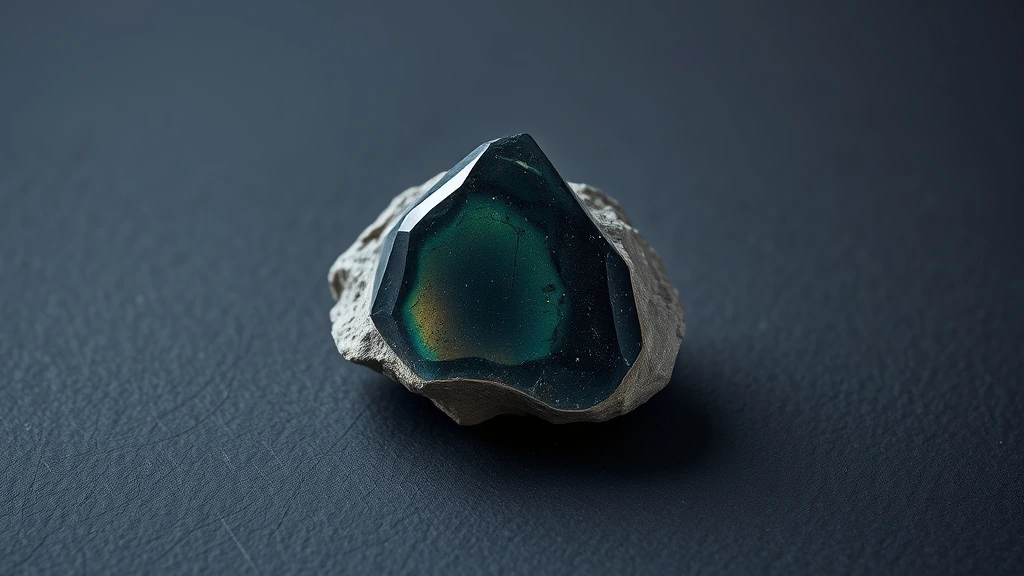
Iridium belongs to the Natural Mineral / Crystal group, specifically classified as a native element. It is rarely found in gem-quality crystalline form, typically occurring as small, euhedral crystals within platinum-group metal ores. This geological rarity makes it a subject of intense scientific interest rather than commercial jewelry production. Its formation is linked to high-pressure mantle environments, ensuring its structural integrity remains consistent with its cubic symmetry.
What is Iridium Gemstone? Geological Overview & Definition
Iridium is a native element mineral, meaning it occurs in nature as a single pure element. It is chemically inert and highly resistant to corrosion, which contributes to its stability in geological settings. This chemical inertness allows it to survive extreme environmental conditions without decomposing or reacting with surrounding silicate minerals.
As a gemstone candidate, iridium is valued for its extreme density and metallic brilliance. It is often associated with other platinum-group elements, forming solid solutions that alter its physical properties slightly. Understanding its geological context is crucial for distinguishing genuine specimens from synthetic or composite materials in the market.
Iridium Gemstone Chemical Composition & Crystallographic Properties
Iridium crystallizes in the cubic system, specifically adopting a face-centered cubic (FCC) lattice structure. This arrangement allows for maximum atomic packing efficiency, contributing to its high density of 21.06 to 22.56 g/cm³. The symmetry of this lattice is fundamental to its physical and optical behaviors.
Due to its metallic bonding, iridium lacks a traditional refractive index because it is opaque to visible light. Instead, it exhibits strong reflectivity, which is a key diagnostic feature for gemological identification. The absence of transparency means standard gemological optical tests are not applicable to this material.
The element shows minimal cation substitution in its pure crystalline form, though it can form alloys with other platinum-group metals. These substitutions can slightly modify the lattice parameters but do not change the fundamental cubic symmetry. This purity is essential for maintaining its characteristic physical properties.
Iridium is highly resistant to acids, demonstrating significant acid sensitivity only to aqua regia. Its thermal behavior is stable, with a very high melting point that ensures structural integrity under extreme heat. This thermal stability makes it suitable for high-temperature industrial applications and scientific research.
| Property | Specification |
|---|---|
| Mineral Group | Natural Mineral / Crystal |
| Chemical Formula | Ir |
| Mohs Hardness | 6.0 – 6.5 |
| Crystal System | Cubic |
| Specific Gravity (Density) | 21.06 – 22.56 |
| Refractive Index | n/a (opaque) |
| Color & Optical Properties | Natural Iridium Gemstone color spectrum and optical dispersion |
| Primary Mining Localities | Global primary localities |
| Water & Chemical Resistance | High (Safe for gentle water washing) |
| Chakra Alignment (Traditional) | Crown Chakra, Third Eye Chakra |
| Zodiac Affinity (Traditional) | Virgo, Capricorn |
| Symbolic Meaning (Traditional) | Spiritual clarity, protection against negative energy, and alignment with cosmic truth |
Iridium Gemstone Varieties & Color Spectrum
Iridium is a rare, high-density platinum-group element that typically appears as a lustrous, silvery-white metal. Its visual appeal stems from its metallic luster and dense, opaque nature rather than traditional gemstone transparency. In the gem trade, it is often confused with platinum or rhodium due to similar physical properties.
Native Iridium
This primary form occurs as small, irregular grains or flakes within alluvial deposits. The cubic crystal system is rarely visible to the naked eye without magnification. These specimens exhibit a brilliant, mirror-like surface when polished.
Iridosmine
Iridosmine is an intermetallic compound of iridium and osmium, often found in platinum-group mineral assemblages. It displays a slightly darker, grayish tint compared to pure iridium. This variety is prized for its exceptional density and resistance to chemical weathering.
Iridinite
Iridinite refers to microscopic particles of iridium found in sedimentary rocks, particularly at the Cretaceous-Paleogene boundary. These particles are crucial for geological dating but are too small for traditional gem cutting. Their significance lies in their role as geochemical markers for mass extinction events.
Iridium-Platinum Alloy
This trade variety consists of natural alloys where iridium is bonded with platinum. The presence of platinum softens the pure iridium’s brittleness, making it more workable. Jewelers value this alloy for its enhanced durability and bright white appearance.
Iridium-Tungsten Inclusions
Some specimens contain microscopic inclusions of tungsten or other heavy metals. These inclusions can create subtle variations in color and texture under magnification. Such specimens are extremely rare and highly sought after by mineral collectors.
Where is Iridium Gemstone Found? Geological Mining & Extraction
Iridium is primarily extracted from platinum-group element deposits located in specific geological regions. Major sources include the Bushveld Complex in South Africa and the Norilsk-Talnakh district in Russia. These deposits are associated with mafic and ultramafic igneous rocks.
Extraction involves complex metallurgical processes to separate iridium from other platinum-group metals. The ore is typically processed through smelting and chemical refining techniques. This labor-intensive process ensures the high purity required for gemological and industrial applications.
Historical Significance & Cultural Lore of Iridium Gemstone
Iridium was discovered in 1803 by Smithson Tennant, who isolated it from platinum ore. Its name derives from the Greek word “iris,” meaning rainbow, due to its colorful chemical compounds. Early scientists recognized its high density and unique spectral properties.
In modern esoteric traditions, iridium is associated with spiritual clarity and protection against negative energy. It is believed to align the wearer with cosmic truth and higher consciousness. This mineral is often linked to the Crown and Third Eye chakras.
Modern Uses & Jewelry Applications of Iridium Gemstone
Due to its extreme rarity and high melting point, iridium is rarely cut into traditional faceted gems for mass-market jewelry. Instead, lapidaries primarily polish it into smooth cabochons to highlight its unique metallic luster rather than brilliance. These stones are often set in platinum or white gold to complement their silvery-white appearance.
- Ornamental Carving: Skilled artisans carve iridium into intricate pendants or ring centers, utilizing its durability for detailed relief work.
- Industrial Luxury: High-end watchmakers use iridium for bezels and accents, leveraging its resistance to corrosion and tarnishing.
- Collector’s Pieces: Because it is opaque, collectors value iridium for its novelty and scientific prestige rather than optical performance.
Safety & Mineral Profile of Iridium
Safe handling of iridium specimens requires minimal protective measures. The metal is chemically inert under ambient conditions, exhibiting negligible reactivity to air, moisture, or common acids; however, fine dust generated during cutting or polishing can pose an inhalation hazard due to its heavy‑metal content. While iridium itself is not highly toxic, chronic exposure to airborne particles may lead to respiratory irritation. Because of its extreme density (22.56 g cm⁻³) and high melting point (2446 °C), iridium is mechanically robust and does not readily deform or corrode, making it suitable for display but impractical for jewelry, where wearability and cost outweigh aesthetic value.
In museum collections, iridium serves as a key reference for cosmic elemental abundance studies and the geochemical cycling of platinum group elements. Its rarity in the Earth’s crust (≈0.001 ppm) contrasts with its relative abundance in meteorites, providing insight into planetary differentiation and core formation processes. Researchers employ iridium layers in ice cores to date the Cretaceous–Paleogene boundary, underscoring its importance in paleoclimatology and impact event reconstruction.
Mineralogical Group and Planetary Lore of Iridium
Historically, iridium was first isolated by William Hyde Wollaston in 1803 from a platinum ore, and its name derives from the Greek *eiridōn*, meaning “rainbow,” reflecting the iridescent sheen observed in early specimens. According to early mineralogists, iridium belongs to the platinum group metals (PGMs) and is often found in association with platinum, palladium, and rhodium in ultramafic and mafic igneous rocks. In planetary science, iridium is considered a marker of extraterrestrial material; its elevated concentrations in the Earth’s surface layers have been linked to meteorite impacts, most notably the Chicxulub event. Thus, iridium occupies a unique niche at the intersection of mineralogy, geology, and planetary science, symbolizing both the deep interior processes of the Earth and the broader cosmic environment.
How to Identify Real vs. Fake Iridium Gemstone
Because genuine iridium is exceptionally rare and expensive, the market is flooded with artificial imitations designed to mimic its appearance. Common fakes include synthetic glass infused with metallic oxides, as well as dyed replicas of other opaque stones. These substitutes often lack the authentic density and specific luster of natural iridium, making careful verification essential for buyers.
Practical At-Home Authenticity Tests
- Temperature Test (Thermal Feel): Place the stone on your tongue or cheek; genuine iridium will feel noticeably cooler to the touch due to its high thermal conductivity compared to glass or plastic imitations.
- Specific Gravity & Weight Test: Weigh the stone on a precise digital scale; iridium is one of the densest elements, so it will feel significantly heavier than a stone of equal size made from glass or other metals.
- Scratch & Hardness Test (Mohs Comparison): Attempt to scratch the stone with a steel knife (Mohs 5.5); while iridium is hard, it is softer than diamond, so check for consistent resistance without chipping, which would indicate a brittle glass fake.
- Microscopic & Loupe Inspection (Internal Inclusions): Examine the stone under a 10x loupe for air bubbles or swirls, which are common in synthetic glass; natural iridium typically shows a uniform, metallic grain structure without such voids.
Iridium Gemstone Valuation Factors, Grading & Pricing
Market valuation primarily hinges on Color Saturation and overall tone uniformity. Since iridium is opaque, its value derives from a deep, metallic sheen rather than transparency. A consistent, dark grey-black hue without patchy discoloration commands a higher premium.
The Carat Weight of the specimen significantly influences its final market price. Facet symmetry is critical, as irregular cuts diminish the stone’s reflective potential. Additionally, the presence of matrix material or visible inclusions can reduce desirability among collectors.
Geographical Provenance Premium often dictates the ultimate retail value of iridium pieces. Stones from renowned mines with documented histories fetch higher wholesale and retail prices. Current trends show steady demand for rare, high-density metallic specimens in the luxury market.
How to Clean and Care for Iridium Gemstone
To maintain the integrity of your iridium, use warm soapy water and a soft cloth for gentle cleaning. This method effectively removes surface dust without risking damage to the stone’s structure. Always ensure the water is lukewarm to avoid any thermal shock to the metal.
You must strictly avoid ultrasonic cleaners when handling iridium gemstones. The high-frequency vibrations can cause structural fractures due to the stone’s specific hardness and density. Manual, gentle wiping is the only safe approach for preserving its luster.
Cleansing and Recharging Iridium Gemstone (Energetic Care)
For energetic cleansing, utilize safe dry methods that respect the mineral’s physical stability. Smoke smudging with sage or palo santo is an effective way to clear negative energy without moisture. This technique aligns with the stone’s association with spiritual clarity and protection.
Place the iridium on a selenite plate under moonlight for recharging. This passive method allows the stone to absorb cosmic energy without physical stress. It supports alignment with the Crown and Third Eye chakras safely.
Frequently Asked Questions About Iridium Gemstone
Is iridium safe to wear in the shower?
Yes, iridium is highly resistant to water and safe for gentle washing. The metal’s dense structure prevents corrosion or dissolution during routine exposure to moisture. You can confidently wear it while showering without damaging its surface integrity.
How should I clean my iridium gemstone?
Use warm soapy water and a soft cloth for gentle maintenance. Avoid ultrasonic cleaners, as high-frequency vibrations can cause structural fractures in the metal. This simple method preserves the stone’s luster and prevents accidental damage.
What is the chemical composition of iridium?
Iridium is a pure chemical element with the atomic symbol Ir. It belongs to the platinum group metals and features a cubic crystal system. Its atomic structure contributes to its exceptional density and resistance to chemical alteration.
How hard is iridium on the Mohs scale?
Iridium rates between 6.0 and 6.5 on the Mohs hardness scale. This moderate hardness makes it durable enough for jewelry but susceptible to scratching by harder materials. Handle it carefully to maintain its polished appearance over time.
What is the density of iridium?
Iridium has an extreme density ranging from 21.06 to 22.56 g/cm³. This makes it one of the heaviest naturally occurring elements on Earth. Its high specific gravity provides a substantial, weighty feel in jewelry settings.
Which zodiac signs are aligned with iridium?
Iridium is traditionally aligned with Virgo and Capricorn. These earth signs resonate with the metal’s stability and grounded energy. Wearing iridium may enhance personal traits associated with diligence and practical wisdom.
Which chakras does iridium correspond to?
Iridium aligns with the Crown Chakra and Third Eye Chakra. These energy centers are associated with spiritual clarity and intuitive insight. The metal is believed to facilitate a deeper connection with cosmic truth.
Is iridium opaque or transparent?
Iridium is completely opaque and does not transmit light. Consequently, it has no measurable refractive index. Its metallic luster and dark coloration define its visual appeal rather than optical brilliance.