
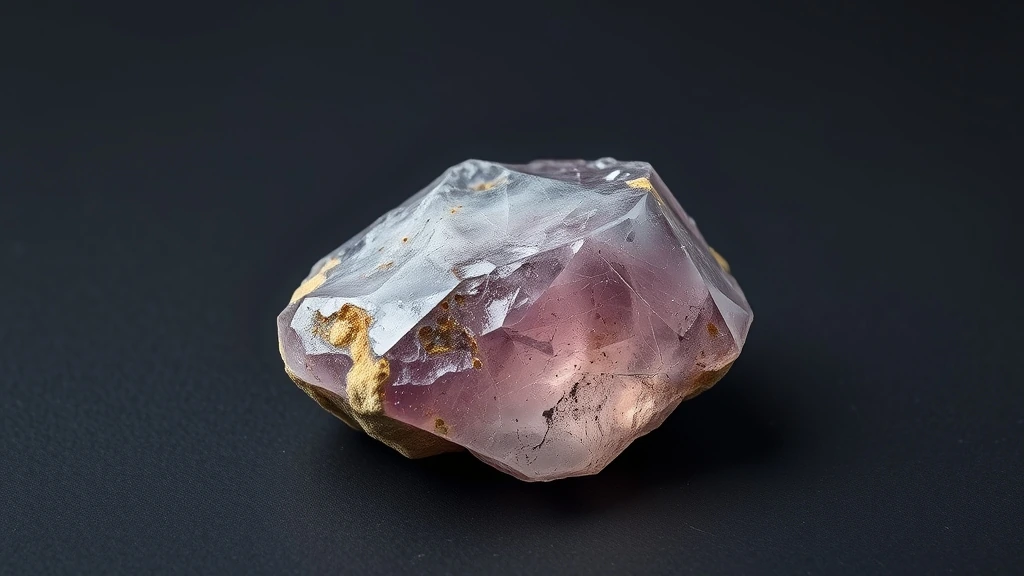
Topaz belongs to the nesosilicate subclass within the broader silicate mineral family. Its fundamental structure consists of isolated tetrahedra linked by aluminum cations and halide anions. This specific aluminum fluorosilicate composition allows for significant chemical variability. Such structural flexibility enables the incorporation of diverse trace elements during crystal growth. Consequently, the mineral exhibits a wide range of natural coloration before any external treatment occurs.
What is Mystic Topaz? Geological Overview & Definition
Mystic Topaz is not a distinct mineral species but a treated variety of natural topaz. The “mystic” effect arises from a thin layer of titanium dioxide applied to the surface. This coating creates a thin-film interference pattern, producing vibrant, shifting colors. The underlying stone remains chemically identical to standard colorless or pale topaz.
Geologically, topaz forms in granitic pegmatites and rhyolitic volcanic rocks. It typically crystallizes in orthorhombic prisms within hydrothermal veins. Major global deposits include Brazil, Madagascar, and the United States. These stones are prized for their clarity and brilliance. The treatment process is superficial, leaving the internal crystal lattice completely unaffected.
Mystic Topaz Chemical Composition & Crystallographic Properties
The mineral crystallizes in the orthorhombic system, specifically forming prismatic crystals. Its unit cell features distinct axes with unequal lengths and right angles. This structure results in no characteristic cleavage patterns. The lattice structure provides high stability against mechanical stress. Consequently, the stone resists chipping and abrasion effectively.
The chemical formula Al₂SiO₄(F,OH)₂ highlights the role of cation substitution. Fluorine and hydroxyl ions occupy specific anionic sites within the lattice. Trace elements like iron or chromium can substitute for aluminum. These impurities act as chromophore color centers, determining the stone’s natural hue. The substitution mechanism is critical for understanding its optical properties.
Topaz exhibits moderate acid sensitivity, particularly to strong hydrofluoric acid. However, it remains stable against most common laboratory reagents. Thermal behavior is stable up to high temperatures without structural degradation. The refractive index ranges from 1.606 to 1.638, contributing to its high luster. This optical density enhances the visual impact of the surface treatment.
| Property | Specification |
|---|---|
| Mineral Group | Silicates (Nesosilicates / Aluminum Fluorosilicate) |
| Chemical Formula | Al₂SiO₄(F,OH)₂ (Aluminum Fluorosilicate) |
| Mohs Hardness | 8.0 |
| Crystal System | Orthorhombic (Prismatic crystals) |
| Specific Gravity (Density) | 3.49 – 3.57 |
| Refractive Index | 1.606 – 1.638 |
| Color & Optical Properties | Natural Mystic Topaz color spectrum and optical dispersion |
| Primary Mining Localities | Brazil (Minas Gerais), Pakistan, Russia (Ural), Nigeria, Mexico |
| Water & Chemical Resistance | High (Safe in lukewarm water; avoid thermal shock and harsh chemicals) |
| Chakra Alignment (Traditional) | Throat Chakra and Solar Plexus Chakra |
| Zodiac Affinity (Traditional) | Sagittarius, Scorpio, Leo |
| Symbolic Meaning (Traditional) | Clarity, truth, self-realization, manifestation, and good fortune |
Mystic Topaz Varieties & Color Spectrum
Mystic Topaz displays distinct mineralogical characteristics across its geological varieties and structural habits. Gemologists evaluate these natural varieties based on crystal habit, trace chromophore concentrations, and visual luster.
Primary Natural Mystic Topaz
The benchmark natural variety exhibiting diagnostic color saturation and classic crystallographic symmetry.
Distinct Geological Morphs of Mystic Topaz
Secondary regional and structural varieties formed under localized geological temperature and pressure conditions.
Blue‑White Topaz
Blue‑white topaz forms in orthorhombic pegmatites where trace fluorine and iron create a subtle blue‑white hue. The crystals often display fine, needle‑like inclusions of quartz or feldspar, giving a delicate lattice effect. This variety is prized for its translucent clarity and is relatively common in the Brazilian and South African deposits, yet its most vivid specimens are rare and command premium prices.
Yellow‑Orange Topaz
Yellow‑orange topaz results from iron‑rich oxidation during late‑stage pegmatite crystallization. Its warm, amber tone is accentuated by minute iron oxide inclusions that produce a subtle coppery sheen. Though widely available in India and Myanmar, the most saturated yellow‑orange specimens are scarce, often sought after for high‑end jewelry.
Pink Topaz
Pink topaz derives from manganese and iron impurities incorporated during crystal growth. The resulting rose‑tinted stones exhibit a gentle blush that intensifies with exposure to light. This color is uncommon in nature; the finest pink topaz is typically sourced from Brazil, where the mineral’s orthorhombic structure allows for a uniform hue.
Green‑Blue Topaz
Green‑blue topaz is a rare, naturally occurring color variant formed by trace amounts of copper and iron. Its distinctive turquoise tone is often accompanied by subtle banding that reflects the crystal’s growth layers. The rarity of this color makes it highly sought after, with the best examples found in Brazil and South Africa.
Fire Topaz
Fire topaz is a heat‑treated version of natural topaz that exhibits a bright, orange‑red glow. The treatment enhances the stone’s color saturation by creating micro‑fractures that scatter light. While not a natural variety, fire topaz is popular in contemporary jewelry due to its vivid appearance and relatively low cost.
Imperial Topaz
Imperial topaz combines a golden background with a subtle blue overlay, produced by a unique distribution of iron and fluorine. The resulting gold‑blue hue is highly prized for its luxurious appearance. This rare variety is predominantly sourced from Brazil and is considered one of the most valuable topaz colors in the market.
Where is Mystic Topaz Found? Geological Mining & Extraction
Mystic topaz crystallizes in orthorhombic pegmatite veins that form within granitic intrusions. The mineral typically occurs alongside quartz, feldspar, and apatite, with fluorine-rich fluids promoting its growth. Major production centers include Brazil’s Minas Gerais, South Africa’s Gauteng, and India’s Rajasthan, where open‑pit and underground mining techniques extract the gemstone.
Extraction involves crushing the host rock, followed by gravity separation and flotation to isolate the heavy topaz crystals. The recovered stones are then sorted by color, clarity, and size before being polished for the global market. Sustainable mining practices are increasingly adopted to minimize environmental impact and ensure traceability of the gemstone’s origin.
Historical Significance & Cultural Lore of Mystic Topaz
Across ancient lapidary traditions, topaz was revered for its association with the Sun and the Throne of Heaven. In Greco‑Roman lore, the stone was believed to grant clarity of thought and protection against poison. Egyptian artisans incorporated topaz into amulets and jewelry, attributing to it the power to ward off evil spirits and enhance royal authority.
In Vedic and Chinese traditions, topaz was linked to the throat chakra and the solar plexus, symbolizing truth and self‑realization. Archaeological finds, such as a 2,000‑year‑old topaz pendant from the Indus Valley, demonstrate its early use as a status symbol and protective talisman. These cultural narratives underscore the gemstone’s enduring mystique and its role in spiritual practices worldwide.
Modern Uses & Jewelry Applications of Mystic Topaz
Lapidaries primarily cut Mystic Topaz into faceted gems to maximize its high refractive index and brilliance. The stone’s exceptional hardness allows for intricate designs that retain sharp edges over time.
- Cabochon Cutting: Smooth, polished domes are used for ornamental pieces, highlighting the stone’s unique iridescent surface rather than internal fire.
- Faceted Jewelry: Commonly set in rings, pendants, and earrings, where the orthorhombic crystal structure enables precise facet alignment for optimal light return.
- Ornamental Carving: Larger rough pieces are carved into beads or decorative objects, showcasing the mineral’s distinctive color zoning and luster.
Carat, Quality Grades & Value Factors of Mystic Topaz
Commercial valuation of Mystic Topaz relies heavily on the 4Cs framework, with color saturation and clarity serving as primary determinants of price. High-grade specimens exhibit vivid, even coloration without visible internal fractures or cloudiness. The refractive index of 1.606 to 1.638 ensures strong brilliance, making cut quality essential for maximizing visual impact.
Durability is a significant advantage, as the Mohs hardness of 8.0 makes the stone resistant to daily wear and scratching. This robustness allows for secure settings in active jewelry pieces without rapid degradation. Lapidary grading standards prioritize stones that maintain structural integrity while displaying the characteristic iridescent play-of-color associated with treated topaz varieties.
Zodiac and Astrological Lore of Mystic Topaz
In contemporary metaphysical practices, Mystic Topaz is strongly aligned with Sagittarius, Scorpio, and Leo. These zodiac signs are believed to benefit from the stone’s energy, which promotes clarity and self-realization. The gemstone is often recommended for individuals seeking to enhance their confidence and creative expression.
Historically, topaz has been associated with protection and good fortune across various cultures. While modern chakra theory links this variety to the Throat Chakra and Solar Plexus Chakra, ancient traditions viewed it as a talisman for truth and spiritual awakening. This dual heritage bridges historical lapidary lore with contemporary astrological applications.
How to Identify Real vs. Fake Mystic Topaz
Artificial imitations of Mystic Topaz often involve dyed replicas or synthetic glass designed to mimic the stone’s iridescent surface. These fakes may lack the natural inclusions and specific gravity of genuine mineral specimens. Identifying these differences requires careful examination of physical properties and internal characteristics.
Practical At-Home Authenticity Tests
- Temperature Test (Thermal Feel): Genuine topaz feels cool to the touch initially due to its thermal conductivity, whereas plastic imitations warm up quickly under hand warmth.
- Specific Gravity & Weight Test: Real Mystic Topaz has a density of 3.49 – 3.57, making it noticeably heavier than glass or plastic substitutes of the same size.
- Scratch & Hardness Test (Mohs Comparison): With a Mohs hardness of 8.0, genuine topaz will scratch glass but will not be scratched by steel knives or copper coins.
- Microscopic & Loupe Inspection (Internal Inclusions): Use a 10x loupe to check for natural inclusions or color zoning; synthetic glass often contains bubble-like imperfections or appears perfectly uniform.
Mystic Topaz Valuation Factors, Grading & Pricing
Color saturation drives the highest premiums for Mystic Topaz, with vivid, evenly distributed hues commanding top prices. Hue uniformity across the stone enhances perceived brilliance, while flawless optical clarity and a high‑luster surface reflect light without internal cloudiness. Gemologists grade these attributes using spectrophotometric analysis and visual comparison to industry standards.
Carat weight remains a pivotal market determinant, yet it interacts with facet symmetry to influence overall value. Well‑cut stones that exhibit precise angles and balanced proportions receive superior scores under the 4Cs lapidary grading system. Even a large stone can be de‑valued if its symmetry is poor, because irregular facets scatter light and diminish sparkle.
Geographical provenance adds a distinct premium, especially when Mystic Topaz originates from historically renowned locales such as Brazil or Pakistan. Certified origin reports from accredited gemological laboratories substantiate authenticity and often trigger price spikes in the secondary market. Trends show that provenance‑linked stones consistently outperform generic equivalents in auction results and retail listings.
How to Clean and Care for Mystic Topaz
Mystic Topaz possesses perfect basal cleavage, making it vulnerable to fracture under vibration; therefore, ultrasonic and steam cleaning must be strictly avoided. The safest routine involves immersing the gem in lukewarm water mixed with a mild, pH‑neutral soap, then gently wiping with a soft, lint‑free cloth. Rinse briefly in clean lukewarm water and pat dry, ensuring no sudden temperature changes that could induce thermal shock.
Cleansing and Recharging Mystic Topaz (Energetic Care)
For holistic maintenance, place the stone on a clean selenite charging slab and allow ambient moonlight to bathe it for several hours, a method praised across ancient lapidary traditions for restoring vibrational clarity. Alternatively, a brief herbal smudging session using sage or frankincense can gently purify the gem’s energy without exposing it to heat or moisture.
Both practices respect the mineral’s structural integrity while aligning with the Throat Chakra and Solar Plexus Chakra associations, promoting clarity, truth, and self‑realization in the wearer. Regular energetic care, combined with proper physical cleaning, ensures Mystic Topaz retains its brilliance and metaphysical potency over time.
Frequently Asked Questions About Mystic Topaz
Mystic Topaz displays distinct mineralogical characteristics across its geological varieties and structural habits. Gemologists evaluate these natural varieties based on crystal habit, trace chromophore concentrations, and visual luster.
Primary Natural Mystic Topaz
The benchmark natural variety exhibiting diagnostic color saturation and classic crystallographic symmetry.
Distinct Geological Morphs of Mystic Topaz
Secondary regional and structural varieties formed under localized geological temperature and pressure conditions.
Is Mystic Topaz safe to wear in the shower?
Yes, it can be worn in lukewarm water, but avoid sudden temperature changes and harsh detergents. Mystic Topaz’s orthorhombic crystal lattice resists water penetration, yet thermal shock can cause micro‑fractures, and aggressive chemicals may degrade its surface luster over time.
How should I clean Mystic Topaz without damaging it?
Clean with warm, mildly soapy water and a soft, lint‑free cloth; never use ultrasonic or steam cleaners. The gemstone exhibits perfect basal cleavage, making it vulnerable to vibration‑induced splits. Gentle hand washing removes residues while preserving the stone’s high refractive index and brilliance.
Can Mystic Topaz be exposed to rain or humidity?
Yes, brief exposure to rain is fine, provided the stone is dried promptly and not subjected to rapid temperature shifts. Its density of 3.49–3.57 g/cm³ and stable Al₂SiO₄(F,OH)₂ composition confer water resistance, but prolonged moisture combined with heat can encourage surface clouding.
Which zodiac signs are most aligned with Mystic Topaz?
Sagittarius, Scorpio, and Leo are the primary astrological correspondences. Across ancient lapidary traditions, these signs were linked to clarity and truth, qualities amplified by the stone’s high Mohs hardness of 8, symbolizing resilience and purposeful manifestation.
Which chakras does Mystic Topaz activate?
It is associated with the Throat Chakra and Solar Plexus Chakra. In historical metaphysical lore, the stone’s bright, golden hue supports vocal expression and personal power, enhancing self‑realization and confidence when placed on these energy centers.
Does Mystic Topaz fade or change color over time?
No, its color stability is excellent under normal wear conditions. The fluorine and hydroxyl substitution in its crystal chemistry locks in the golden to amber tones, resisting UV‑induced fading that can affect many lesser‑grade topaz varieties.
Is Mystic Topaz suitable for everyday jewelry?
Absolutely, its hardness of 8 on the Mohs scale makes it durable for daily wear. While it tolerates routine contact, avoid hard impacts that could exploit its basal cleavage, and store it separately from softer gems to prevent scratching.
What is the best way to store Mystic Topaz when not in use?
Place it in a padded compartment or a soft‑lined jewelry box, away from harder stones. The orthorhombic prismatic crystals benefit from minimal pressure, and a microfiber pouch helps maintain the stone’s high refractive index and sparkle between wearings.