
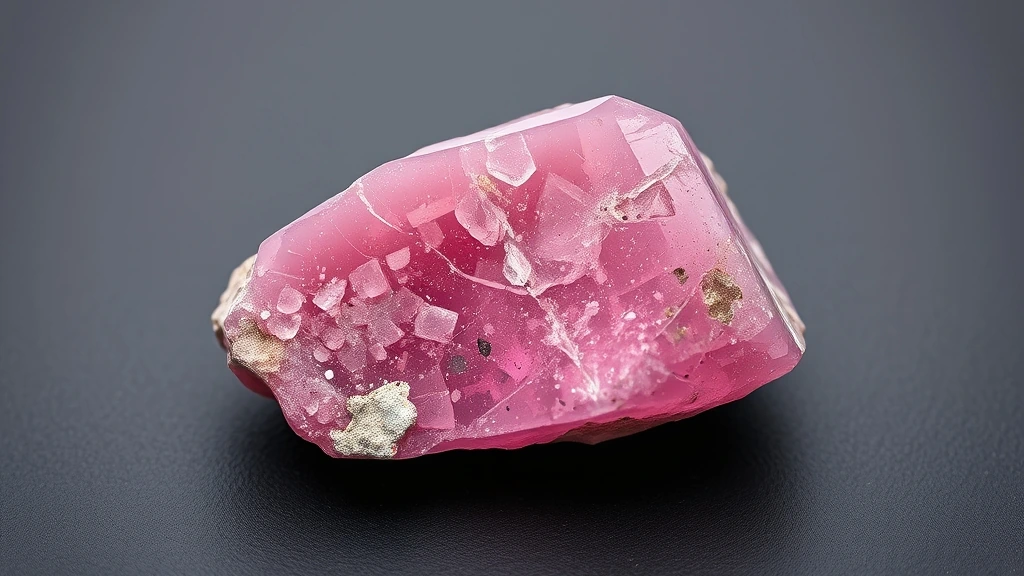
Pink topaz belongs to the silicate family, specifically the nesosilicate subgroup of aluminum fluorosilicates. Its prismatic crystals crystallize in the orthorhombic system, a hallmark of many high‑quality topaz specimens. The gemstone’s distinctive pink coloration arises from trace elements and structural defects rather than the primary lattice composition. Historically, pink topaz has been prized in cultures from ancient Egypt to Renaissance Europe for its beauty and purported metaphysical properties.
What is Pink Topaz? Geological Overview & Definition
Pink topaz is a silicate mineral that forms in igneous and metamorphic environments where fluorine is abundant. It typically crystallizes as prismatic orthorhombic crystals, often displaying a translucent to opaque appearance. The gemstone’s color spectrum ranges from pale blush to deep rose, depending on the concentration of chromophoric defects. Pink topaz is commonly found in Brazil, Madagascar, and the United States, where it is mined from pegmatite veins and volcanic ash deposits.
Pink Topaz Chemical Composition & Crystallographic Properties
The chemical formula Al₂SiO₄(F,OH)₂ reflects a framework of silicon–oxygen tetrahedra linked by aluminum cations, with fluorine and hydroxyl groups occupying interstitial sites. In the orthorhombic lattice, the unit cell dimensions (a ≈ 5.8 Å, b ≈ 10.3 Å, c ≈ 10.7 Å) accommodate slight cation substitutions, notably Fe²⁺ and Mg²⁺, which influence the gemstone’s hue. The crystal structure is sensitive to acidic environments; prolonged exposure to dilute acids can leach fluorine, altering the color and reducing brilliance. Thermal treatment above 600 °C can anneal color centers, often brightening the pink tone, while rapid cooling may lock in chromophore defects that produce deeper hues.
| Property | Specification |
|---|---|
| Mineral Group | Silicates (Nesosilicates / Aluminum Fluorosilicate) |
| Chemical Formula | Al₂SiO₄(F,OH)₂ (Aluminum Fluorosilicate) |
| Mohs Hardness | 8.0 |
| Crystal System | Orthorhombic (Prismatic crystals) |
| Specific Gravity (Density) | 3.49 – 3.57 |
| Refractive Index | 1.606 – 1.638 |
| Color & Optical Properties | Natural Pink Topaz color spectrum and optical dispersion |
| Primary Mining Localities | Brazil (Minas Gerais), Pakistan, Russia (Ural), Nigeria, Mexico |
| Water & Chemical Resistance | High (Safe in lukewarm water; avoid thermal shock and harsh chemicals) |
| Chakra Alignment (Traditional) | Throat Chakra and Solar Plexus Chakra |
| Zodiac Affinity (Traditional) | Sagittarius, Scorpio, Leo |
| Symbolic Meaning (Traditional) | Clarity, truth, self-realization, manifestation, and good fortune |
Pink Topaz Varieties & Color Spectrum
Pink topaz exhibits a diverse range of hues, from delicate peachy pinks to intense raspberry tones. The color intensity significantly impacts market value and desirability among collectors. Refractive index variations can also influence the perceived saturation of the stone. While natural pink topaz derives its value from inherent chromophores and refractive properties, collectors often compare its subtle, organic hues to the vibrant, iridescent finish of Mystic Topaz, which achieves its distinctive coloration through a thin metallic coating rather than internal trace elements.
Imperial Pink Topaz
Imperial pink topaz is the most prestigious variety, originating primarily from the Ouro Preto region in Brazil. It features a vivid, saturated pink hue often accompanied by subtle orange or peach undertones. This variety is prized for its exceptional clarity and lack of visible inclusions.
The geological formation involves high-temperature hydrothermal processes within pegmatite veins. These conditions allow for the precise incorporation of trace elements that stabilize the pink coloration. Imperial pink topaz is exceptionally rare, making it a cornerstone of high-end jewelry collections.
Peach Pink Topaz
Peach pink topaz displays a softer, warmer tone that blends pink with distinct orange hues. This variety is often found in deposits alongside other pastel-colored topaz specimens. Its gentle coloration makes it popular for delicate, feminine jewelry designs.
The color center responsible for this hue is typically induced by natural irradiation or trace impurities. These stones often exhibit a silky luster and moderate transparency. Peach pink topaz is more abundant than imperial varieties but still commands a premium price.
Rose Pink Topaz
Rose pink topaz presents a pale, blushing pink shade reminiscent of fresh rose petals. This variety is frequently associated with the Minas Gerais state in Brazil. It is valued for its romantic aesthetic and suitability for engagement rings.
The stone usually contains minimal inclusions, allowing light to pass through with ease. Crystal structure integrity is high, contributing to its durability and brilliance. Rose pink topaz is a versatile gemstone that complements both white and yellow gold settings.
Salmon Pink Topaz
Salmon pink topaz features a distinct coral-like hue with strong orange-pink overtones. This variety is less common than peach or rose types and is highly sought after. Its unique coloration sets it apart in the broader topaz market.
Formation occurs in specific granite intrusions where chemical conditions favor this particular shade. The stone often displays a vibrant, fiery appearance under direct light. Salmon pink topaz is considered a collector’s item due to its limited availability.
Blush Pink Topaz
Blush pink topaz is characterized by an extremely pale, almost white-pink coloration. This variety is often used in large, statement pieces due to its subtle elegance. It offers a sophisticated alternative to more saturated pink gemstones.
The optical properties of blush pink topaz are defined by its high clarity and soft glow. It is frequently cut into large oval or cushion shapes to maximize surface area. This variety appeals to buyers seeking understated luxury and timeless appeal.
Where is Pink Topaz Found? Geological Mining & Extraction
Pink topaz is predominantly mined from pegmatite deposits, which are coarse-grained igneous rocks formed during the final stages of magma crystallization. These geological formations provide the necessary space and chemical environment for large, high-quality crystals to develop. The primary source of natural pink topaz is the state of Minas Gerais in Brazil.
Extraction methods involve careful hand-picking to preserve the integrity of the large crystals. The host rock is typically granite or syenite, surrounding the topaz-bearing pegmatite veins. Mining operations in these regions are strictly regulated to ensure sustainable practices and ethical sourcing.
Historical Significance & Cultural Lore of Pink Topaz
Ancient Greco-Roman civilizations revered topaz as a stone of protection and divine favor. They believed it could reveal the future and protect travelers from harm. Pink topaz, specifically, was associated with Aphrodite, the goddess of love and beauty.
In Vedic traditions, topaz was considered a sacred gemstone linked to spiritual enlightenment and clarity. It was often used in rituals to enhance meditation and inner peace. The stone’s association with the throat chakra reflects its historical use in promoting truthful communication and self-expression.
Archaeological findings indicate that topaz was traded extensively along ancient Silk Road routes. Its presence in Egyptian tombs suggests it was valued for its protective qualities in the afterlife. This enduring legacy highlights the gemstone’s universal appeal across diverse cultures.
Modern Uses & Jewelry Applications of Pink Topaz
Pink topaz is most often fashioned into brilliant‑cut or step‑cut gemstones, maximizing its sparkle while preserving color depth. Cabochons are popular for Art‑Deco pendants, where the smooth dome showcases the stone’s translucence. Artisans also carve ornamental beads and small figurines, exploiting the mineral’s orthorhombic cleavage for fine detail.
- Faceted rings and earrings emphasize brilliance and durability.
- Cabochon pendants highlight the stone’s soft pink hue.
- Carved cameos and intaglios use the stone’s workability for intricate designs.
Carat, Quality Grades & Value Factors of Pink Topaz
The market evaluates pink topaz through the 4Cs—Color, Clarity, Cut, and Carat weight. Color is paramount; vivid, evenly distributed pinks command premium prices, while pale or uneven tones reduce value. Clarity is generally high, as the mineral exhibits few inclusions, yet any cloudiness can lower grades.
Cut quality influences both brilliance and durability; a well‑executed facet pattern reduces stress points that might cause chipping. Carat weight affects price exponentially, but larger stones must retain color saturation to remain desirable. Durability stems from a Mohs hardness of 8, allowing everyday wear in rings and bracelets, while lapidary grading follows GIA and AGS standards for consistency.
Zodiac and Astrological Lore of Pink Topaz
Across ancient lapidary traditions, pink topaz has been linked to the Sagittarius, Scorpio, and Leo zodiac signs, believed to amplify confidence and truth‑seeking. In medieval European lore, the stone was thought to protect travelers and enhance verbal expression, aligning with its modern association with the Throat Chakra.
In Vedic and early Mesoamerican records, pink topaz (or similar fluorite‑rich quartz) symbolized self‑realization and good fortune, often set in amulets for warriors and scholars. These cross‑cultural narratives reinforce the gemstone’s reputation for fostering clarity of thought and manifesting personal aspirations.
How to Identify Real vs. Fake Pink Topaz
Artificial imitations of pink topaz include synthetic glass, cubic zirconia, and dyed quartz that mimic its hue but lack the mineral’s characteristic refractive index and specific gravity. Synthetic pink topaz produced in labs shares chemical composition but often displays a flawless internal structure, distinguishing it from natural stones.
Practical At-Home Authenticity Tests
- Temperature Test (Thermal Feel): Natural pink topaz feels cool to the touch and retains that coolness longer than glass or plastic imitations, which quickly warm to skin temperature.
- Specific Gravity & Weight Test: Weigh the stone on a precise scale; natural pink topaz (density 3.49‑3.57 g/cm³) feels heavier than glass equivalents of the same size.
- Scratch & Hardness Test (Mohs Comparison): Gently scratch the surface with a steel file (hardness 5.5). Pink topaz will resist scratching, whereas glass or quartz may show micro‑scratches.
- Microscopic & Loupe Inspection (Internal Inclusions): Examine under 10×–30× magnification; natural stones often reveal minute inclusions or growth lines, while synthetic glass appears uniformly clear.
Pink Topaz Valuation Factors, Grading & Pricing
Color Saturation drives the market premium for pink topaz, with vivid, evenly distributed pink hues prized above pastel tones. Uniform hue across the stone enhances perceived rarity, while high optical clarity and a bright, glassy luster increase desirability among collectors. Gemologists assess these attributes under standardized lighting to assign a quality tier.
Carat Weight remains a pivotal determinant, yet the stone’s facet symmetry and adherence to the 4Cs (cut, color, clarity, carat) are equally critical. Larger stones command exponential price jumps only when the cut maximizes brilliance and minimizes inclusions. Precise measurements and grading reports from accredited labs solidify market confidence.
Geographical Provenance Premium adds a nuanced layer, with pink topaz sourced from historic mines in Brazil, Nigeria, and Madagascar often fetching higher prices. Certified origin statements reassure buyers of ethical extraction and traceable supply chains. Market trends show a steady rise in demand for ethically sourced, high‑grade pink topaz, reinforcing its investment appeal.
How to Clean and Care for Pink Topaz
Pink topaz should be cleaned with lukewarm water and a mild, pH‑neutral soap, using a soft, lint‑free cloth to gently remove surface grime. Because the mineral possesses perfect basal cleavage, ultrasonic and steam cleaning are strictly prohibited to avoid fracture. Rinse briefly in clean water, pat dry, and store away from sudden temperature changes.
Cleansing and Recharging Pink Topaz (Energetic Care)
For holistic maintenance, place the stone in the soft glow of moonlight for a few hours, allowing subtle energetic renewal without exposing it to intense heat. Alternatively, gently smudge the topaz with dried sage or lavender, ensuring the herb is not damp, to clear lingering vibrations while preserving crystal integrity.
Resting the gem on a clean selenite slab offers a non‑thermal charging method, as selenite’s high vibrational field can harmonize the pink topaz’s energy. Keep the slab in a stable environment, and rotate the stone periodically to maintain an even flow of revitalized energy.
Frequently Asked Questions About Pink Topaz
Pink Topaz displays distinct mineralogical characteristics across its geological varieties and structural habits. Gemologists evaluate these natural varieties based on crystal habit, trace chromophore concentrations, and visual luster.
Primary Natural Pink Topaz
The benchmark natural variety exhibiting diagnostic color saturation and classic crystallographic symmetry.
Distinct Geological Morphs of Pink Topaz
Secondary regional and structural varieties formed under localized geological temperature and pressure conditions.
Is pink topaz safe to wear in the shower?
Yes, pink topaz is safe in lukewarm water but should be avoided in hot showers or steam. While it is water‑resistant, thermal shock can cause micro‑fractures. Keep it away from harsh chemicals and sudden temperature changes to preserve its clarity and color.
Can I clean pink topaz with an ultrasonic cleaner?
No, ultrasonic cleaning should be strictly avoided for pink topaz. The mineral’s perfect basal cleavage makes it vulnerable to vibration damage. Instead, clean gently with warm soapy water and a soft cloth to maintain surface integrity.
What is the best way to clean a pink topaz necklace?
Use a mild soap solution and a soft, lint‑free cloth for routine cleaning. Warm soapy water removes surface oils without stressing the crystal. After cleaning, dry with a microfiber cloth to prevent water spots and preserve its brilliance.
Which zodiac signs are associated with pink topaz?
Pink topaz is linked to Sagittarius, Scorpio, and Leo. These signs are believed to resonate with the stone’s energetic qualities of clarity, truth, and self‑realization, enhancing personal growth and confidence.
Which chakras does pink topaz influence?
Pink topaz aligns with the Throat Chakra and the Solar Plexus Chakra. These energy centers are thought to benefit from the stone’s supportive vibrations, promoting honest communication and personal empowerment.
Does pink topaz have any special care instructions for jewelry?
Avoid exposing pink topaz to harsh chemicals or extreme heat. Its orthorhombic structure can develop micro‑cracks under stress. Store it separately from softer gemstones to prevent abrasion and maintain its vivid hue.
Can pink topaz be used in a humid environment?
Yes, pink topaz tolerates humidity well, provided it is not subjected to sudden temperature changes. Its stable crystal lattice resists moisture absorption, making it suitable for everyday wear in various climates.
Is pink topaz suitable for children’s jewelry?
Yes, pink topaz is a durable choice for children’s pieces due to its hardness of 8 on the Mohs scale. Its resilience to scratching and moderate resistance to water make it an excellent option for active lifestyles, though gentle handling is still advised.