
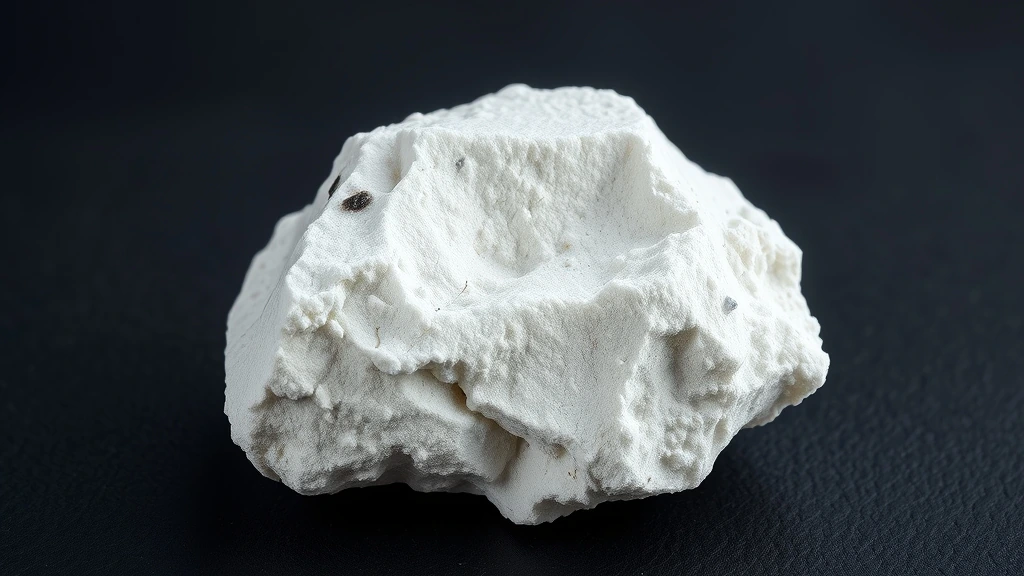
Native sulfur belongs to the broader category of natural minerals and crystalline solids found in geological formations. As an elemental substance, it lacks the complex cation-anion lattice structures typical of silicates or oxides. Instead, it forms distinct molecular crystals where sulfur atoms bond into stable ring structures. This classification places it among the rare native elements that occur in significant gemological quantities. Its geological presence is often linked to volcanic activity and evaporite basins, where it precipitates from hot springs or oil deposits.
What is Native Sulfur? Geological Overview & Definition
Native sulfur forms primarily in volcanic regions and salt domes, where it deposits from hot, sulfur-rich waters. These environments allow the element to crystallize in distinct, recognizable shapes rather than amorphous masses. The mineral is chemically pure, consisting entirely of sulfur atoms without metallic impurities.
Geologically, it is classified as a native element mineral, distinguishing it from compounds containing multiple elements. Its formation is closely tied to hydrothermal processes and the oxidation of hydrogen sulfide gases. This unique origin contributes to its specific physical properties and geological associations.
Native Sulfur Chemical Composition & Crystallographic Properties
The mineral crystallizes in the orthorhombic system, featuring a lattice composed of discrete S₈ molecules. These crown-shaped molecules pack together in a specific arrangement that defines its crystal habit. The structure allows for distinct cleavage planes and characteristic crystal faces.
Unlike ionic minerals, native sulfur lacks cation substitution sites because it consists of a single element. Its color arises from electronic transitions within the sulfur molecule rather than impurity chromophores. The bright yellow appearance is intrinsic to the elemental composition.
Thermal behavior is a defining characteristic, as sulfur melts at a relatively low temperature of 115°C. Upon heating, the molecular structure changes, altering its viscosity and physical state significantly. This property is crucial for industrial processing and geological identification.
| Property | Specification |
|---|---|
| Mineral Group | Natural Mineral / Crystal |
| Chemical Formula | S₈ |
| Mohs Hardness | 1.5 – 2.5 |
| Crystal System | Orthorhombic |
| Specific Gravity (Density) | 1.92 – 2.07 |
| Refractive Index | 2.040 – 2.080 |
| Color & Optical Properties | Natural Native Sulfur color spectrum and optical dispersion |
| Primary Mining Localities | Global primary localities |
| Water & Chemical Resistance | Sensitive (Avoid prolonged water soaking) |
| Chakra Alignment (Traditional) | Root Chakra, Sacral Chakra |
| Zodiac Affinity (Traditional) | Taurus, Leo |
| Symbolic Meaning (Traditional) | Grounding, purification, and protection against negative energies |
Native Sulfur Varieties & Color Spectrum
Native sulfur exhibits a diverse range of physical appearances depending on its geological origin and crystallization conditions. The most common form is the rhombic crystal system, which produces sharp, geometric shapes. These crystals often appear in bright yellow hues, though impurities can alter the tone significantly.
Sicilian Yellow Sulfur
This variety is renowned for its intense, lemon-yellow coloration and well-formed orthorhombic crystals. It typically forms in volcanic environments where sulfur-rich gases cool rapidly near the surface. The purity of Sicilian specimens makes them highly prized for both industrial and gemological purposes.
Volcanic Black Sulfur
Known as “black sulfur,” this morph appears dark brown to jet black due to high carbon content. It forms in sublimation zones where sulfur deposits trap organic matter during cooling. This variety is rarer and often found in volcanic regions like Iceland and Japan.
Honeycomb Sulfur
Characterized by a porous, cellular structure, this variety resembles natural honeycomb in texture. It develops when sulfur precipitates from hot springs or fumaroles in layered deposits. The intricate porosity creates unique light refraction patterns that appeal to collectors.
Crystalline Sulfur
These specimens feature large, transparent to translucent crystals with distinct cleavage planes. They often exhibit a glassy luster and can reach impressive sizes in ideal geological settings. High-quality crystalline sulfur is sought after for its clarity and structural perfection.
Impure Earthy Sulfur
This form appears as a dull, granular mass with a muted yellow or orange tint. It contains significant amounts of clay, sand, and other mineral inclusions. While less valuable aesthetically, it remains crucial for industrial extraction processes.
Where is Native Sulfur Found? Geological Mining & Extraction
Native sulfur primarily occurs in volcanic regions and sedimentary basins where hydrothermal activity is prevalent. Major deposits are located in Italy, Japan, Indonesia, and the United States. These areas provide the necessary heat and chemical conditions for sulfur to precipitate from aqueous solutions.
Extraction methods vary from open-pit mining to the Frasch process, which uses superheated water to melt underground sulfur. The Frasch process allows for the recovery of high-purity sulfur from deep deposits. Modern mining focuses on minimizing environmental impact while maximizing yield from these rich geological formations.
Historical Significance & Cultural Lore of Native Sulfur
Ancient civilizations revered sulfur for its distinctive odor and perceived magical properties. In Greek mythology, it was associated with the underworld and used in purification rituals. Archaeological evidence shows sulfur was employed in early medicine and alchemy across Mesopotamia and Egypt.
Medieval alchemists considered sulfur one of the three fundamental elements of matter. They believed it represented the combustible principle in all substances. This enduring legacy has cemented sulfur’s place in both scientific history and esoteric traditions.
Modern Uses & Jewelry Applications of Native Sulfur
Native sulfur’s bright yellow hue makes it a favorite for novelty pieces, though its low Mohs hardness (1.5‑2.5) limits durability. Lapidary artisans typically cut it into shallow cabochons or simple facets to reduce fracture risk, while ornamental carving showcases its translucence in small figurines. Designers often pair sulfur with harder metals or protective settings to extend wear life.
- Cabochon pendants set in silver or gold for a striking contrast.
- Minimalist faceted earrings that highlight the stone’s high refractive index (2.040‑2.080).
- Hand‑carved amulets and small decorative beads for talismanic jewelry.
Metaphysical Properties & Traditional Meaning of Native Sulfur
According to historical traditions and metaphysical lore, native sulfur is regarded as a purifying agent that clears stagnant energy and grounds the wearer. It is said to stimulate creativity and confidence, resonating with the emotional core of joy and vitality. Practitioners also attribute protective qualities, believing the stone shields against negative influences while fostering inner stability.
Which Chakra and Zodiac Signs Align with Native Sulfur?
Native sulfur vibrates in harmony with the Root Chakra, anchoring personal power and fostering a sense of safety. Its energetic frequency also supports the Sacral Chakra, encouraging sensual expression and creative flow. Together, these centers promote balanced grounding and passionate inspiration.
In astrology, the stone is expressly linked to Taurus and Leo. Taurus benefits from sulfur’s stabilizing influence, reinforcing perseverance and material security, while Leo draws on its fiery energy to amplify confidence, leadership, and expressive brilliance. No other zodiac signs are traditionally associated with this mineral.
How to Identify Real vs. Fake Native Sulfur
Artificial imitations of sulfur include colored glass, polymer resins, and dyed quartz that mimic its vivid yellow. Synthetic sulfur crystals can be produced under controlled laboratory conditions, but they often lack the natural brittleness and characteristic odor of genuine mineral. Dyed replicas may appear flawless, yet they fail to exhibit the subtle internal striations and low density of authentic sulfur.
Practical At-Home Authenticity Tests
- Temperature Test (Thermal Feel): Genuine sulfur feels cool to the touch initially, then warms quickly as it conducts heat poorly; glass retains a more constant temperature.
- Specific Gravity & Weight Test: With a density of 1.92‑2.07 g/cm³, native sulfur feels noticeably lighter than most gemstones of similar size; a simple water displacement test can confirm this range.
- Scratch & Hardness Test (Mohs Comparison): Using a copper coin (hardness ~3), native sulfur will be easily scratched, whereas glass or quartz will resist damage.
- Microscopic & Loupe Inspection (Internal Inclusions): Under 10× magnification, natural sulfur shows fine, uneven fractures and occasional sulfuric crystal twinning, while synthetic glass appears uniformly smooth and free of such features.
Native Sulfur Valuation Factors, Grading & Pricing
The market first assesses color saturation, looking for the deep, buttery yellow that is uniform across the specimen. Vibrancy is enhanced by a natural, oily luster that reflects light without artificial enhancement. Collectors prize stones that retain this innate glow, as it signals minimal exposure to sunlight or chemical bleaching.
Next, crystal size & weight (grams) dominate pricing, with larger orthorhombic crystals commanding higher fees. Raw, unpolished pieces are valued for their natural texture, while tumbled specimens gain a modest premium for a smooth, protective finish. Inclusions of native matrix or occasional gypsum veins are noted but generally reduce the price unless they add unique aesthetic interest.
Finally, ethical sourcing & locality premium drives demand among holistic practitioners and serious collectors. Sulfur mined from regions with transparent labor practices and minimal environmental impact commands a noticeable surcharge. Proven provenance from historic volcanic deposits, especially those linked to traditional medicinal use, further elevates market value.
How to Clean and Care for Native Sulfur
Gently wipe the surface of native sulfur with a lightly dampened soft cloth, then immediately dry it with a separate dry microfiber towel to prevent moisture buildup. This brief, controlled contact removes dust without allowing water to infiltrate the crystal lattice. Avoid any prolonged soaking, immersion, or exposure to humid environments, as sulfur is moisture‑sensitive and can fracture under stress.
Ultrasonic cleaning devices must not be used; the high‑frequency vibrations can create micro‑fractures that compromise the orthorhombic structure. Store specimens in a dry, temperature‑stable cabinet, away from direct sunlight and sources of heat, to preserve both their physical integrity and their characteristic luster.
Cleansing and Recharging Native Sulfur (Energetic Care)
For energetic renewal, place the sulfur stone on a clean selenite charging slab and allow it to rest for several hours, preferably during a clear night sky. The gentle flow of selenite’s neutral energy helps to clear any accumulated negative vibrations without introducing heat or moisture.
Alternatively, a brief session of herbal smudging with sage or cedar can be performed, holding the stone at a safe distance to avoid ash contact. Follow this with exposure to soft moonlight for a short period, which re‑energizes the stone while respecting its delicate crystal lattice.
Frequently Asked Questions About Native Sulfur
Is native sulfur safe to wear in the shower?
No, it should not be exposed to prolonged water. Native sulfur is water‑sensitive; extended soaking can cause surface clouding or dissolution. A brief wipe with a damp cloth followed by immediate drying is acceptable, but long‑term contact with water, steam, or rain is best avoided to preserve its orthorhombic crystal integrity.
How should I clean a native sulfur?
Use a lightly damp microfiber cloth and dry it right away. Ultrasonic cleaners are contraindicated because the rapid vibrations can fracture the fragile S₈ lattice. Gently dust the stone with a soft brush before wiping; avoid any abrasive or liquid‑based cleaning agents that could compromise its low Mohs hardness.
Can native sulfur be used in jewelry for everyday wear?
It is suitable only for occasional, low‑impact use. With a Mohs hardness of 1.5‑2.5, sulfur scratches easily and can fracture under mechanical stress. Its bright yellow hue makes it attractive for pendants or earrings, but owners should store it separately and avoid heavy‑impact activities that might damage the orthorhombic crystals.
What zodiac signs are associated with native sulfur?
Taurus and Leo are the aligned zodiac signs. In astrological tradition, these signs are believed to resonate with sulfur’s grounding energy, enhancing stability and confidence. The connection is rooted in the stone’s bright yellow coloration, symbolizing vitality and the sun’s creative force.
Which chakras does native sulfur influence?
Root Chakra and Sacral Chakra are the primary correspondences. These energy centers relate to grounding, purification, and emotional balance, mirroring sulfur’s reputed ability to cleanse negative influences. Practitioners often place the stone on the lower abdomen to amplify its protective vibrations.
Does native sulfur have any special care requirements for storage?
Store it in a cool, dry environment away from direct sunlight. Sulfur can sublimate over time if exposed to heat, leading to a loss of material and a dulling of its high refractive index (2.040‑2.080). A sealed, padded pouch prevents accidental contact with moisture and mechanical shock.
Why does native sulfur have such a high refractive index?
Its molecular arrangement creates strong light dispersion. The S₈ ring structure in an orthorhombic lattice yields a refractive index between 2.040 and 2.080, giving the stone its characteristic brilliant yellow glow. This optical property is a key identifier in gemological testing alongside its low density (1.92‑2.07 g/cm³).
Is native sulfur suitable for use in metaphysical practices?
Yes, it is commonly employed for grounding and purification rituals. Practitioners value its ability to absorb negative energies and promote spiritual protection, especially when placed on the Root or Sacral Chakras. Its bright hue is also linked to the sun’s life‑giving force, reinforcing intentions of vitality and clarity.