
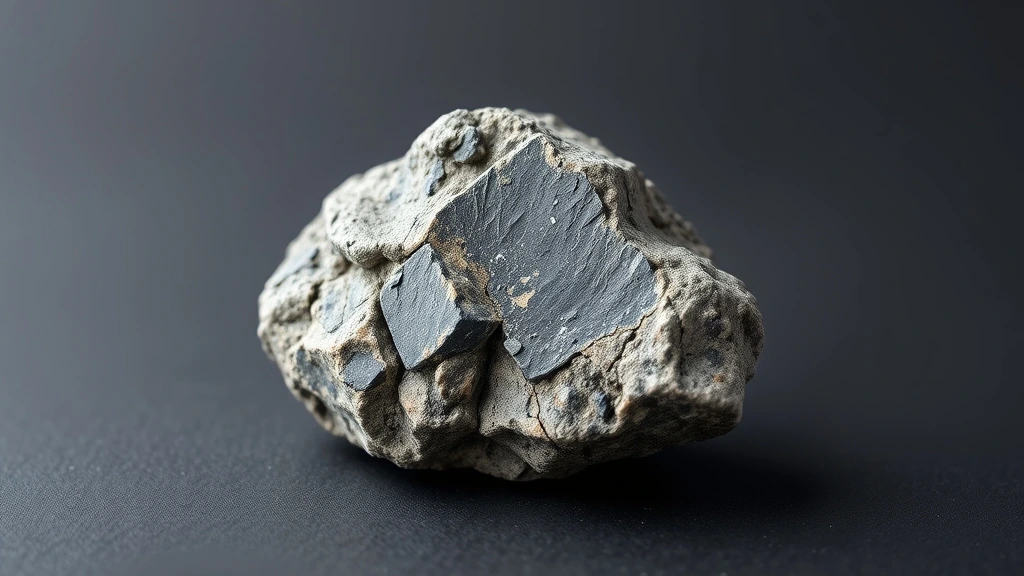
Phyllite belongs to the Natural Mineral / Crystal parent group, specifically classified as a low-grade metamorphic rock. It forms through the regional metamorphism of shale or pelitic sediments under moderate pressure and temperature. This transformation aligns the platy minerals, creating a distinct foliated texture. Consequently, it serves as a significant geological indicator of tectonic activity in ancient crustal formations.
What is Phyllite? Geological Overview & Definition
Phyllite represents an intermediate stage in metamorphic progression, situated between slate and schist in the metamorphic grade sequence. Its defining characteristic is a foliated texture where microscopic mica and chlorite flakes align parallel to one another. This alignment results from directed pressure during tectonic compression, forcing minerals into a planar arrangement.
The rock exhibits a characteristic silky or satiny luster due to the reflection of light off these aligned mineral surfaces. Unlike coarser schists, phyllite does not display visible crystals to the naked eye. Instead, it maintains a smooth, wavy surface that can be easily split along its foliation planes.
Phyllite Chemical Composition & Crystallographic Properties
As a polymineralic aggregate, phyllite lacks a single stoichiometric chemical formula. Its primary constituents are chlorite and muscovite, both belonging to the Trigonal crystal system. The lattice structure of these silicates features layered sheets of tetrahedra and octahedra. This arrangement allows for easy cleavage parallel to the basal plane.
Cation substitution within the octahedral sites, such as magnesium replacing aluminum, influences the rock’s overall stability. The chromophore centers within the iron-bearing chlorite contribute to its greenish-gray coloration. Acid sensitivity is generally low, as silicate minerals resist dilute hydrochloric acid reactions.
Thermal behavior indicates that phyllite remains stable up to moderate temperatures before significant mineralogical changes occur. Prolonged heating can alter the layered silicate structures, potentially leading to dehydration reactions. These processes release water molecules trapped within the interlayer spaces of the clay minerals.
| Property | Specification |
|---|---|
| Mineral Group | Natural Mineral / Crystal |
| Chemical Formula | Composite rock: Predominantly Mica (Muscovite/Chlorite), Quartz, and Feldspar |
| Mohs Hardness | 6.5 – 7.0 |
| Crystal System | Trigonal |
| Specific Gravity (Density) | 2.65 – 2.75 |
| Refractive Index | 1.54 – 1.66 |
| Color & Optical Properties | Natural Phyllite color spectrum and optical dispersion |
| Primary Mining Localities | Global primary localities |
| Water & Chemical Resistance | High (Safe for gentle water washing) |
| Chakra Alignment (Traditional) | Crown Chakra (Sahasrara) |
| Zodiac Affinity (Traditional) | Capricorn, Taurus |
| Symbolic Meaning (Traditional) | Clear communication, truth and serenity |
Phyllite Varieties & Color Spectrum
Phyllite is a fine-grained metamorphic rock composed primarily of chlorite and muscovite mica, distinguished by its silky sheen. Unlike single-mineral gemstones, it appears as a foliated aggregate with distinct planar cleavage. Its visual appeal stems from the alignment of platy minerals under pressure.
Green Phyllite
This common variety exhibits a deep forest green hue derived from high chlorite content. It often displays subtle silvery reflections known as phyllitic luster when polished. Found extensively in the Appalachian Mountains, it is valued for its uniform coloration.
Black Phyllite
Characterized by high concentrations of graphite or carbonaceous material, this morph appears jet-black. The surface often shows a metallic sub-silky sheen rather than a vitreous one. It is frequently used in decorative architectural applications due to its density.
Grey Phyllite
This neutral-toned variant features a mix of muscovite and chlorite in equal proportions. It typically presents a matte to semi-gloss finish with visible foliation lines. Its understated appearance makes it popular for minimalist jewelry settings.
Banded Phyllite
Distinctive alternating layers of light and dark minerals create a striped visual pattern. These bands result from varying metamorphic intensity during regional tectonic compression. Collectors prize specimens with sharp, high-contrast lenticular formations.
Where is Phyllite Found? Geological Mining & Extraction
Phyllite forms through the regional metamorphism of shale or mudstone under moderate temperature and pressure. It is rarely found in primary pegmatite deposits but is abundant in ancient sedimentary basins. The rock typically occurs in large, continuous foliated sheets within the crust.
Major extraction sites include the Appalachian region of the United States and the Caledonian orogeny zones in Europe. In Asia, significant deposits exist in China and Japan, where it is quarried for both industrial and decorative use. Mining operations focus on extracting large, intact slabs to preserve the planar structure.
Historical Significance & Cultural Lore of Phyllite
Ancient Greco-Roman artisans utilized phyllite for creating durable mosaic tiles and decorative floor panels. Its fine-grained foliated texture allowed for precise cutting and polishing in public buildings. Archaeological evidence from Rome confirms its use in high-status architectural projects.
In Vedic traditions, similar metamorphic stones were associated with spiritual clarity and mental focus. The silvery luster was interpreted as a reflection of higher consciousness. This cultural resonance continues to influence modern metaphysical practices today.
Modern Uses & Jewelry Applications of Phyllite
Phyllite’s subtle sheen and fine foliation make it a favored material for lapidary artisans seeking a balance between durability and elegance. Skilled cutters transform the stone into smooth cabochons that accentuate its natural luster, while faceted cuts reveal delicate internal reflections. In addition, phyllite is carved into ornamental panels and architectural accents, prized for its ability to diffuse light softly.
- Cabochon and faceted jewelry pieces
- Decorative carvings for interior design
- Ornamental panels in architectural settings
Metaphysical Properties & Traditional Meaning of Phyllite
According to historical traditions and metaphysical lore, phyllite is believed to foster clear communication and promote truthful expression. Across ancient Mediterranean and Vedic lapidary traditions, the stone is associated with calmness, encouraging emotional balance and serenity in the wearer. Its subtle vibrational energy is thought to support spiritual clarity, aligning the wearer with higher consciousness and inner wisdom.
Which Chakra and Zodiac Signs Align with Phyllite?
Phyllite is traditionally linked to the Crown Chakra (Sahasrara), the center of spiritual insight and divine connection. This alignment is believed to enhance the wearer’s ability to access higher realms of thought and intuition.
The stone’s astrological resonance is specifically with Capricorn and Taurus. Those born under these signs are thought to benefit from phyllite’s grounding qualities, which reinforce determination and steadfastness in pursuit of long‑term goals.
How to Identify Real vs. Fake Phyllite
Artificial imitations of phyllite often appear as dyed glass or low‑grade synthetic stones that lack the characteristic foliation and subtle sheen. Genuine phyllite displays a natural, layered texture and a warm, earthy tone that cannot be replicated by simple glass treatments.
Practical At-Home Authenticity Tests
- Temperature Test (Thermal Feel): Hold the stone in your palm; real phyllite feels cool to the touch due to its moderate thermal conductivity, whereas glass feels warmer.
- Specific Gravity & Weight Test: Compare the stone’s weight to a known sample of similar size; genuine phyllite is denser than glass but lighter than many true minerals.
- Scratch & Hardness Test (Mohs Comparison): Use a standard Mohs hardness kit; phyllite should scratch quartz (hardness 7) but be scratched by a steel file (hardness 5.5).
- Microscopic & Loupe Inspection (Internal Inclusions): Under a loupe, real phyllite shows fine, parallel layers and occasional mica inclusions, whereas synthetic replicas exhibit uniform, glassy textures.
Phyllite Valuation Factors, Grading & Pricing
The first key factor in determining a phyllite specimen’s market value is color saturation. A deep, uniform slate hue with subtle green or brown undertones signals a well‑formed metamorphic texture, while lighter, mottled surfaces often indicate weathering or mineral alteration. Collectors prize the natural energetic luster that reflects light across the foliation planes, as it enhances the stone’s visual vibrancy and perceived metaphysical potency.
The second determinant is crystal size and weight (grams). Larger, heavier flakes exhibit a more pronounced foliation and greater structural integrity, making them desirable for both display and energetic work. Raw, unpolished specimens retain the original matrix inclusions, which can add character and authenticity; however, tumbled or lightly polished pieces are often preferred for jewelry or altar use because they provide a smoother surface while preserving the natural grain.
The third factor is ethical sourcing and locality premium. Phyllite sourced from responsibly managed quarries in regions such as the Appalachian Basin, the Scottish Highlands, or the Iberian Peninsula commands a premium in holistic and collector markets. Provenance documentation, fair‑trade certifications, and transparent supply chains assure buyers of the stone’s integrity and support sustainable mining practices, thereby increasing its overall value.
How to Clean and Care for Phyllite
Cleaning a phyllite specimen should be performed with warm soapy water and a soft cloth. Gently wipe the surface to remove dust and surface oils, ensuring the cloth is damp but not saturated. After cleaning, allow the stone to air dry completely before storage. Avoid ultrasonic cleaners, as the vibration can induce microfractures in the delicate foliation layers, compromising structural stability.
Cleansing and Recharging Phyllite (Energetic Care)
To recharge phyllite, place the stone in a quiet space under gentle moonlight for several hours; the natural lunar energy can restore its vibrational balance without exposing it to heat. Alternatively, resting the phyllite on a selenite charging slab allows the conductive surface to transfer subtle energetic frequencies, enhancing the stone’s clarity and communicative properties. Herbal smudging with sage or palo santo can cleanse residual energies, but the smudge should be kept at a safe distance to prevent thermal damage.
Phyllite should never be subjected to domestic heating, ovens, heat guns, boiling, or direct intense sunlight, as these conditions can alter its crystal lattice and diminish its metaphysical attributes.
Frequently Asked Questions About Phyllite
Phyllite displays distinct mineralogical characteristics across its geological varieties and structural habits. Gemologists evaluate these natural varieties based on crystal habit, trace chromophore concentrations, and visual luster.
Primary Natural Phyllite
The benchmark natural variety exhibiting diagnostic color saturation and classic crystallographic symmetry.
Distinct Geological Morphs of Phyllite
Secondary regional and structural varieties formed under localized geological temperature and pressure conditions.
Is phyllite safe to wear in the shower or while swimming?
Yes, phyllite tolerates gentle water exposure. Its fine‑grained, foliated structure resists moisture, allowing safe cleaning with lukewarm water. However, prolonged submersion or harsh detergents can weaken surface luster, so brief rinses followed by a soft‑dry cloth are recommended to maintain brilliance.
How should I clean a phyllite at home?
Clean phyllite with warm soapy water and a soft cloth. Gently soak the piece for a few seconds, then wipe with a lint‑free microfiber pad to remove residues. Avoid abrasive pads; the mineral’s trigonal crystal system can develop micro‑fractures under excessive mechanical stress.
Can I use an ultrasonic cleaner on phyllite jewelry?
No, ultrasonic cleaning is not advised for phyllite. The high‑frequency vibrations can cause internal cleavage planes to separate, leading to fractures. Instead, stick to manual washing methods to preserve the stone’s Mohs hardness of 6.5‑7 and its delicate sheen.
What zodiac signs are traditionally associated with phyllite?
Phyllite aligns with Capricorn and Taurus. In astrological gem lore, these earth signs appreciate the stone’s grounding energy, which complements their practical nature. The association is rooted in centuries‑old lapidary traditions that link mineral vibrations to planetary influences.
Which chakra does phyllite activate in energy work?
Phyllite is linked to the Crown Chakra (Sahasrara). This high‑frequency center governs spiritual insight and universal connection. When placed on the crown, the stone is believed to enhance clear communication and promote a serene state of mind, echoing its tranquil visual texture.
Does phyllite have any notable metaphysical properties?
Phyllite is reputed to foster truth, serenity, and clear communication. Practitioners claim its subtle shimmer helps quiet mental chatter, allowing honest expression. The stone’s layered appearance symbolizes depth of understanding, reinforcing its role in meditation and mindful dialogue.
Is phyllite suitable for everyday wear in rings or bracelets?
Yes, phyllite’s hardness makes it appropriate for regular jewelry. With a Mohs rating near 7, it resists scratches from typical wear, though care should be taken to avoid hard impacts. Pairing it with protective settings further safeguards its foliated texture.
How does phyllite differ from similar metamorphic stones like slate or schist?
Phyllite occupies an intermediate metamorphic grade between slate and schist. Its surface exhibits a silky sheen and fine‑grained foliation, unlike the dullness of slate or the coarse crystals of schist. This distinct trigonal symmetry gives phyllite its unique visual appeal and gem‑grade potential.