
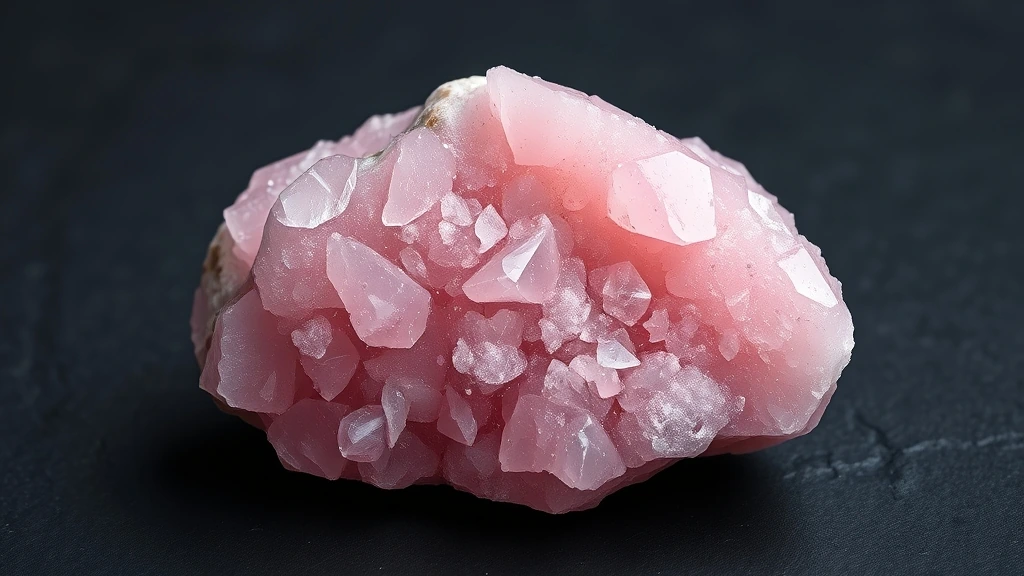
Pink lithium quartz belongs to the vast silicate mineral family, specifically classified as a tectosilicate. It forms within the quartz group, sharing the fundamental silicon-oxygen tetrahedral framework with common rock crystal. This geological lineage ensures exceptional chemical stability and durability. The stone typically crystallizes in granitic pegmatites, where lithium-rich fluids facilitate its unique formation.
What is Pink Lithium Quartz? Geological Overview & Definition
Pink lithium quartz is a rare variety of alpha-quartz distinguished by its soft rosy tint. Unlike amethyst, which derives color from iron, this stone features lithium substitution within the silica structure. It occurs primarily in high-grade pegmatite deposits worldwide. The stone exhibits a glassy luster and conchoidal fracture.
The term “lithium quartz” refers to the presence of Li⁺ ions replacing Al³⁺ or Si⁴⁺ sites. This substitution creates a slight charge imbalance, often compensated by other trace elements. The resulting pink coloration is subtle and uniform. Geologists classify it as a secondary coloration mechanism within the quartz group.
Pink Lithium Quartz Chemical Composition & Crystallographic Properties
The mineral crystallizes in the trigonal system, specifically exhibiting rhombohedral or trapezohedral habits. Its lattice consists of corner-sharing silicon-oxygen tetrahedra forming a rigid three-dimensional network. The refractive index ranges from 1.544 to 1.553, indicating moderate optical dispersion. This structure grants the stone a specific gravity of approximately 2.65.
Lithium acts as a cation substituent, entering the lattice in small concentrations. This ionic substitution does not alter the primary SiO₂ stoichiometry but influences optical properties. The pink hue likely stems from color centers or trace impurities interacting with the lattice. These defects absorb specific wavelengths of visible light.
The stone demonstrates high resistance to acids, maintaining structural integrity in most chemical environments. Thermal behavior is stable up to high temperatures, though extreme heat may alter color centers. The Mohs hardness of 7.0 makes it suitable for jewelry applications. Proper care is required to prevent surface abrasion from harder materials.
| Property | Specification |
|---|---|
| Mineral Group | Silicates (Tectosilicates / Quartz Group) |
| Chemical Formula | SiO₂ (Silicon Dioxide) |
| Mohs Hardness | 7.0 |
| Crystal System | Trigonal (Rhombohedral / Trapezohedral) |
| Specific Gravity (Density) | 2.65 |
| Refractive Index | 1.544 – 1.553 |
| Color & Optical Properties | Natural Pink Lithium Quartz color spectrum and optical dispersion |
| Primary Mining Localities | Brazil, Madagascar, USA (Arkansas), Swiss Alps |
| Water & Chemical Resistance | High (Fully resistant to water and moisture) |
| Chakra Alignment (Traditional) | All Chakras (Universal Harmonizer) |
| Zodiac Affinity (Traditional) | All Zodiac Signs (Especially Leo and Aries) |
| Symbolic Meaning (Traditional) | Master energy amplifier, clarity, purification, and focus |
Pink Lithium Quartz Varieties & Color Spectrum
Pink Lithium Quartz displays distinct mineralogical characteristics across its geological varieties and structural habits. Gemologists evaluate these natural varieties based on crystal habit, trace chromophore concentrations, and visual luster.
Primary Natural Pink Lithium Quartz
The benchmark natural variety exhibiting diagnostic color saturation and classic crystallographic symmetry.
Distinct Geological Morphs of Pink Lithium Quartz
Secondary regional and structural varieties formed under localized geological temperature and pressure conditions.
Amazonite‑Pink (Lithium‑Rich Amethyst)
Formed in lithium‑enriched pegmatites, this variety displays a delicate rose hue that deepens to violet‑pink under UV light. Lithium substitution for aluminum in the quartz lattice creates the characteristic fluorescence, while microscopic rutile needles produce a subtle asterism. Found primarily in Brazil’s Minas Gerais, it is moderately rare and prized for its vibrant saturation.
Rose Quartz (Lithium‑Infused)
Classic pink quartz from Madagascar and South Africa contains trace lithium that intensifies its soft blush beyond the typical milky appearance. The stone forms in hydrothermal veins where silica precipitates around lithium‑bearing fluids, often embedding microscopic hematite inclusions that add a faint pink sheen. Its abundance makes it commercially accessible, yet high‑grade lithium‑rich specimens command premium prices.
Pink Lepidolite (Lithium‑Bearing Lepidolite Quartz)
A hybrid of lepidolite mica and quartz, pink lepidolite exhibits a lavender‑pink tone due to lithium‑rich mica intergrowths. The crystal habit is typically massive, with flaky mica layers imparting a pearlescent luster. Major deposits occur in the United States (North Carolina) and Canada, where the mineral is extracted from granitic pegmatites and prized for both gem and industrial lithium sources.
Pink Beryl (Lepidocrocite‑Tinted)
Although beryl is chemically distinct, lithium‑rich fluids can color beryl pink, creating a rare rose‑tinged beryl often marketed alongside quartz. These crystals grow in lithium‑bearing granitic pegmatites of Brazil’s Bahia region, displaying a hexagonal habit and high clarity. Their scarcity and dual classification as both beryl and lithium quartz make them coveted by collectors.
Pink Tourmaline (Lithium‑Enhanced)
Lithium can substitute for aluminum in tourmaline, yielding a soft pink that mimics quartz. These crystals develop in metamorphic schist zones of Afghanistan and Mozambique, where lithium‑rich fluids infiltrate boron‑rich host rocks. The mineral’s pleochroic nature and distinct trigonal symmetry differentiate it from true quartz, yet its market overlap adds to the pink lithium quartz family’s diversity.
Where is Pink Lithium Quartz Found? Geological Mining & Extraction
Lithium‑rich pink quartz crystallizes chiefly within lithium‑bearing pegmatites, where slow cooling of silica‑saturated fluids allows trace lithium to incorporate into the quartz lattice. These pegmatites are commonly associated with granitic intrusions, hosting accessory minerals such as spodumene, lepidolite, and amblygonite that signal lithium enrichment.
Major extraction zones include Brazil’s Minas Gerais and Bahia states, Madagascar’s Ilakaka region, and the United States’ North Carolina pegmatite fields. In each locale, open‑pit or underground mining techniques recover quartz nodules, which are then sorted, washed, and graded to isolate the pink, lithium‑enhanced specimens for gem markets worldwide.
Historical Significance & Cultural Lore of Pink Lithium Quartz
Across ancient lapidary traditions, pink quartz was treasured for its soft, nurturing hue, symbolizing love and emotional balance. In ancient Egypt, artisans set rose‑tinged quartz into amulets buried with royalty, believing the stone amplified the heart’s protective energies. Greek poets praised the “blush of the dawn” quartz for its ability to inspire poetic clarity, while Roman healers used powdered pink quartz in poultices to soothe skin ailments.
In Vedic texts, pink lithium quartz appears as “Mani‑Mani,” a crystal that channels purification and focus during meditation, aligning all chakras. Chinese imperial courts prized the stone for its subtle luminescence, incorporating it into ceremonial jewelry to signify imperial favor. Throughout these cultures, the gemstone’s reputed ability to amplify master energies cemented its status as a universal harmonizer, a belief that persists in contemporary metaphysical practice.
Modern Uses & Jewelry Applications of Pink Lithium Quartz
Lapidaries value this variety for its delicate hue and exceptional Mohs hardness of 7.0, making it durable enough for daily wear. The stone is primarily cut into faceted gemstones to maximize brilliance or polished into smooth cabochons to showcase its subtle internal color zoning. Its clarity allows for intricate setting designs in rings, pendants, and earrings that highlight the natural pink tones.
- Faceted Cuts: Standard brilliant and mixed cuts enhance the refractive index range of 1.544–1.553, creating lively sparkle.
- Cabochon Polishing: Smooth, domed surfaces are ideal for bezel settings, emphasizing the stone’s soft, pastel aesthetic without risking chipping.
- Ornamental Carving: Larger, inclusion-free specimens are sometimes carved into beads or small figurines for decorative collections.
- Jewelry Settings: Precious metals like white gold or platinum are preferred to complement the stone’s cool, pastel undertones.
Metaphysical Properties & Traditional Meaning of Pink Lithium Quartz
According to historical traditions and metaphysical lore, this stone is revered as a master energy amplifier that promotes clarity and purification. Ancient Mediterranean and Vedic texts often associated clear quartz varieties with divine light and mental focus. Practitioners believe the subtle pink tint enhances emotional resonance, fostering a sense of calm and balanced intention.
In spiritual practice, the stone is viewed as a tool for purification and focus, helping to clear stagnant energy from the aura. It is frequently used in meditation to anchor the mind and enhance intuitive perception. The combination of quartz’s energetic properties with the lithium trace element is thought to stabilize emotional fluctuations.
Which Chakra and Zodiac Signs Align with Pink Lithium Quartz?
This gemstone is recognized as a Universal Harmonizer, aligning with All Chakras to support overall energetic balance. It does not target a single energy center but instead facilitates smooth flow between the root and crown. This broad compatibility makes it a versatile tool for holistic practitioners seeking systemic alignment.
Astrologically, it resonates with All Zodiac Signs, offering general protective and clarifying benefits. However, it is particularly potent for Leo and Aries, whose fiery natures may benefit from the stone’s cooling and stabilizing influence. This alignment helps temper impulsive energy with focused intention and clarity.
How to Identify Real vs. Fake Pink Lithium Quartz
Market imitations often include synthetic glass, dyed quartz, or plastic replicas designed to mimic the stone’s delicate pink color. Synthetic glass lacks the natural crystal structure and internal imperfections found in genuine specimens. Dyed replicas may show color concentration along cracks, a telltale sign of artificial enhancement.
Practical At-Home Authenticity Tests
- Temperature Test (Thermal Feel): Genuine quartz feels cool to the touch initially and warms slowly, whereas plastic or glass may feel warmer or heat up faster due to lower thermal conductivity.
- Specific Gravity & Weight Test: Real quartz has a density of 2.65, making it feel heavier than similarly sized glass or plastic imitations when held in the hand.
- Scratch & Hardness Test (Mohs Comparison): With a Mohs hardness of 7.0, the stone can scratch glass (hardness 5.5) but will not be scratched by a steel knife (hardness 5.5).
- Microscopic & Loupe Inspection (Internal Inclusions): Use a 10x loupe to look for natural internal inclusions like feather-like fractures or mineral traces; synthetic glass is often perfectly clear or contains tiny air bubbles.
Pink Lithium Quartz Valuation Factors, Grading & Pricing
Market valuation primarily hinges on Color Saturation, where deeper, uniform pink hues command significantly higher premiums than pale or washed-out specimens. The natural energetic luster of the stone must remain unclouded, as any surface imperfections diminish its visual appeal. Collectors seek vibrant, consistent tones that reflect the inherent purity of the silicon dioxide lattice.
Pricing is further determined by Crystal Size & Weight (Grams), with larger, well-formed specimens fetching substantial sums in the collector market. Raw crystals are valued for their natural geometry, while tumbled stones are graded strictly on polish quality and dimensional accuracy. The presence of natural matrix inclusions can either enhance or detract from value, depending on the aesthetic preference of the buyer.
Finally, Ethical Sourcing & Locality Premium plays a critical role in holistic and collector markets, where provenance documentation adds significant value. Buyers increasingly prioritize mines that adhere to sustainable extraction practices and fair labor standards. A verified origin certificate can elevate the price, ensuring the stone’s journey from earth to hand is transparent and responsible.
How to Clean and Care for Pink Lithium Quartz
Pink lithium quartz possesses a Mohs hardness of 7.0, making it highly durable and resistant to everyday wear and tear. The stone is fully water-resistant, allowing for easy maintenance with warm water and mild soap to remove oils and dust. This gentle cleaning method preserves the stone’s natural luster without risking chemical damage or surface etching.
For deeper cleaning, the mineral is suitable for ultrasonic cleaning, provided the specimen is not heavily fractured or internally stressed. The high-frequency vibrations effectively dislodge trapped debris from crevices and inclusions without abrasive scrubbing. Always inspect the stone for cracks before using an ultrasonic cleaner to prevent potential structural failure.
Cleansing and Recharging Pink Lithium Quartz (Energetic Care)
Holistic practitioners often recommend herbal smudging with sage or palo santo to clear stagnant energy from the stone. This dry method involves gently passing the stone through the aromatic smoke, which is believed to purify its vibrational field. The process is non-invasive and preserves the physical integrity of the quartz crystal lattice.
Alternatively, placing the stone on a selenite charging slab overnight under moonlight is a popular recharging technique. This method leverages the natural energetic properties of selenite to restore the quartz’s clarity and focus. Avoid exposing the stone to direct intense sunlight or heat sources, as thermal stress can compromise its structural stability.
Frequently Asked Questions About Pink Lithium Quartz
Pink Lithium Quartz displays distinct mineralogical characteristics across its geological varieties and structural habits. Gemologists evaluate these natural varieties based on crystal habit, trace chromophore concentrations, and visual luster.
Primary Natural Pink Lithium Quartz
The benchmark natural variety exhibiting diagnostic color saturation and classic crystallographic symmetry.
Distinct Geological Morphs of Pink Lithium Quartz
Secondary regional and structural varieties formed under localized geological temperature and pressure conditions.
Is pink lithium quartz safe to wear in the shower?
Yes, it is fully water‑resistant. The crystal’s silicon dioxide lattice does not absorb moisture, so daily exposure to water, steam, or rain will not degrade its color or structural integrity. Regular wear in humid environments is therefore perfectly acceptable for most users.
How should I clean pink lithium quartz at home?
Clean it with warm water and a mild soap solution. Gently soak the stone for a few minutes, then use a soft brush to remove any residue before rinsing. This method preserves the refractive index and prevents surface scratches while maintaining the stone’s natural luster.
Can I use an ultrasonic cleaner on pink lithium quartz?
Yes, ultrasonic cleaning is safe unless the stone is heavily fractured. The high‑frequency vibrations remove microscopic particles without affecting the trigonal crystal system. If the gemstone shows cracks, limit cleaning to hand washing to avoid propagation of existing fractures.
Does pink lithium quartz enhance any specific zodiac sign?
It aligns with all zodiac signs, especially Leo and Aries. Across ancient lapidary traditions, the stone’s energy‑amplifying properties are believed to support the bold, dynamic qualities associated with these fire signs while still benefiting every astrological profile.
Which chakras does pink lithium quartz balance?
It is a universal harmonizer for all chakras. The pink hue, enriched by lithium ions, is thought to stimulate emotional clarity, allowing seamless flow of energy through the root, heart, throat, and crown centers, making it a versatile tool for holistic practices.
Will pink lithium quartz fade when exposed to sunlight?
No, its color is stable under normal light exposure. The trace lithium within the quartz lattice does not photobleach, so prolonged indoor or outdoor lighting will not cause noticeable fading, preserving the gemstone’s soft pink brilliance over time.
Is pink lithium quartz suitable for everyday jewelry?
Absolutely, its Mohs hardness of 7 makes it durable for daily wear. While not as hard as sapphire, the stone resists scratches from most common materials, and its high density (2.65 g/cm³) provides a comfortable weight that feels substantial yet wearable.
Can pink lithium quartz be used in meditation or crystal grids?
Yes, it is prized for clarity, purification, and focus. Practitioners often place the stone in energy grids to amplify intentions, relying on its master energy‑amplifier reputation to enhance mental concentration and emotional balance during meditation sessions.