
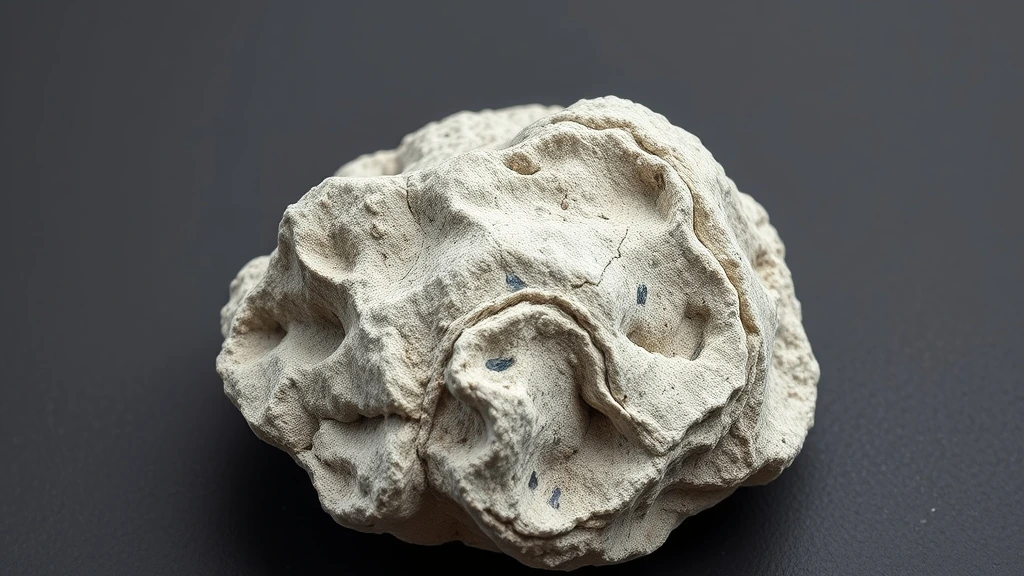
Pumice forms when gas‑rich magma erupts explosively, cooling so rapidly that bubbles become trapped in a frothy, glassy matrix. This creates a highly porous, low‑density aggregate that belongs to the Natural Mineral / Crystal parent group despite lacking a single, well‑defined crystal lattice. Its aphanitic texture means individual mineral grains are too fine to see, while the overall structure is amorphous, giving pumice its characteristic buoyancy and abrasive qualities.
What is Pumice? Geological Overview & Definition
Pumice is an extrusive igneous rock produced by the rapid depressurization of volatile‑laden magma, resulting in a vesicular, frothy texture. The abundant gas bubbles are frozen in place as the lava cools, creating a stone that can even float on water due to its extreme porosity.
In mineralogical terms, pumice is an aggregate of fine‑grained silicates and volcanic glass rather than a single mineral species. Its composition reflects the chemistry of the parent magma, typically rich in silica and alkaline earths, which governs its physical properties and suitability for industrial and ornamental uses.
Pumice Chemical Composition & Crystallographic Properties
The rock’s crystal system is Aphanitic (Fine‑grained) / Amorphous (Glassy), meaning it lacks a long‑range ordered lattice and is composed of microscopic mineral grains embedded in a glassy matrix. This amorphous nature precludes a definitive unit cell, yet the constituent silicates adopt triclinic or monoclinic sub‑structures at the grain scale.
Pumice’s mineral assemblage includes plagioclase feldspar, pyroxene, and amphibole, each capable of cation substitution (e.g., Na↔Ca in plagioclase) that subtly alters local refractive indices and density. The volcanic glass phase incorporates dissolved oxides, providing the bulk of the stone’s low density (0.25–2.00 g cm⁻³) and its characteristic refractive index (1.45–1.65).
Acid sensitivity is modest; weak acids can etch the glassy component, revealing the underlying silicate grains. This reaction is exploited in laboratory settings to assess the proportion of glass versus crystalline phases. The chromophore color centers arise from trace iron and titanium oxides, imparting the typical pale gray to cream hues.
Thermally, pumice exhibits high heat resistance due to its silica‑rich composition, yet it softens and can partially vitrify when heated above 800 °C. This behavior underpins its use as a lightweight aggregate in concrete and as an abrasive in polishing applications, where controlled thermal expansion is essential.
| Property | Specification |
|---|---|
| Mineral Group | Natural Mineral / Crystal |
| Chemical Formula | Volcanic rock composed primarily of silicate minerals (plagioclase feldspar, pyroxene, amphibole) and volcanic glass |
| Mohs Hardness | 5.0 – 6.0 |
| Crystal System | Aphanitic (Fine-grained) / Amorphous (Glassy) |
| Specific Gravity (Density) | 0.25 – 2.00 |
| Refractive Index | 1.45 – 1.65 |
| Color & Optical Properties | Natural Pumice color spectrum and optical dispersion |
| Primary Mining Localities | Global primary localities |
| Water & Chemical Resistance | Sensitive (Avoid prolonged water soaking) |
| Chakra Alignment (Traditional) | Root Chakra |
| Zodiac Affinity (Traditional) | Taurus, Virgo |
| Symbolic Meaning (Traditional) | Grounding, purification, and release of negative energy |
Pumice Varieties & Color Spectrum
White Pumice
Formed from highly vesicular silicate lava that cools rapidly, white pumice is abundant in Icelandic basaltic fields. Its frothy texture is filled with microscopic gas bubbles, giving a uniform milky opacity. Though common, high‑purity white grades are prized for jewelry because they transmit light with a soft glow.
Grey‑Brown Pumice
Typical of the Italian Apennines, this variety incorporates plagioclase feldspar and pyroxene fragments that darken the glassy matrix. Visible specks of iron‑rich minerals create a mottled appearance, and the density ranges toward the upper end of pumice’s spectrum. Rarity increases when the material exhibits a consistent, deep brown tone without surface weathering.
Pink‑Hue Pumice
Rarely encountered, pink pumice originates from volcanic islands in the Pacific where trace amounts of oxidized manganese tint the glass. The subtle blush is accentuated by fine amphibole inclusions that sparkle under angled light. Because the coloration is uneven and often fades, only a few high‑quality specimens enter the gem market.
Black Pumice
Emerging from silica‑rich, mafic eruptions in the Philippines, black pumice contains abundant magnetite and basaltic glass that absorb most light. Its surface is glossy yet porous, and the material’s density can approach 2 g/cm³, making it one of the heaviest pumice types. The combination of darkness and buoyancy renders it highly collectible among mineral enthusiasts.
Green‑Tinted Pumice
Found in the volcanic terrains of New Zealand, this variety gains its hue from minute chlorite and olivine crystals interlocked within the glass. The green shade is often patchy, creating a marbled effect that appeals to designers seeking natural stone accents. Its limited geographic occurrence and the need for careful cleaning to preserve color contribute to its market scarcity.
Red‑Veined Pumice
Unique to the Andes of Chile, red‑veined pumone exhibits thin hematite streaks that traverse a light‑colored matrix. These veins form as iron‑rich fluids percolate through cooling lava, leaving linear deposits that contrast sharply with the surrounding pumice. The striking pattern and the difficulty of extracting intact blocks make this variety exceptionally rare.
Where is Pumice Found? Geological Mining & Extraction
Pumice occurs in aphanitic volcanic deposits where rapid degassing creates a frothy, glassy rock. It is commonly associated with basaltic and rhyolitic flows, often interbedded with tuff and ash layers that act as natural traps for the lightweight fragments. Modern extraction targets open‑pit quarries that expose these porous horizons, allowing bulk removal with minimal processing.
Major production centers include Italy’s Campania region, the United States’ Pacific Northwest, and the volcanic islands of Indonesia. In each locale, miners employ hydraulic excavators to separate pumice from surrounding pyroclastic material, then wash and grade the stone by density and color before export.
Historical Significance & Cultural Lore of Pumice
Ancient Romans used white pumice as an abrasive for polishing marble statues and cleaning teeth, a practice documented by Pliny the Elder. In pre‑Columbian Mesoamerica, pumice fragments were embedded in ceremonial masks, symbolizing the earth’s breath and the release of negative energies.
In ancient Mediterranean folk practices, porous volcanic rocks including pumice were linked to the Root Chakra, believed to carry purifying volcanic energies that absorb negativity from living spaces. Across Europe, miners carried polished pumice talismans to ward off accidents, a superstition that persists in modern metaphysical circles.
Modern Uses & Jewelry Applications of Pumice
Pumice’s lightweight, porous texture makes it a favored material for lapidary cutting, allowing artisans to shape intricate cabochons and faceted stones without excessive weight. Its natural frosted surface is prized in contemporary jewelry, where designers exploit the stone’s muted refractive index to create subtle sparkle. In ornamental carving, pumice is sculpted into decorative beads, pendants, and architectural accents that retain a tactile, earthy feel.
- Cabochon and faceted settings for rings, earrings, and pendants
- Carved beads and miniature figurines for boho‑style accessories
- Architectural inserts such as wall panels and light fixtures
Metaphysical Uses & Origins of Pumice
In meditation, practitioners hold pumice to anchor their awareness, invoking its grounding energy to dissolve mental clutter and release negative vibrations. The stone’s volcanic origin symbolizes transformation, making it a tool for purification rituals that cleanse personal space and aura. Artists and lapidary craftsmen also embed pumice in installations, believing its porous matrix absorbs and neutralizes lingering stress fields.
Which Chakra and Zodiac Signs Align with Pumice?
Pumice resonates most strongly with the Root Chakra, the energy center governing stability, survival, and physical connection to the earth. When placed on the base of the spine during meditation, it is said to reinforce grounding and foster a sense of security.
Astrologically, pumice is linked to Taurus and Virgo, both earth signs that value practicality, reliability, and material well‑being. Wearers born under these signs often find that pumice amplifies their innate perseverance and supports balanced decision‑making.
How to Identify Real vs. Fake Pumice
Artificial imitations of pumice include dense synthetic glass, polymer foams, and dyed mineral composites that mimic its frosted appearance but lack true porosity. These substitutes often feel heavier, exhibit uniform coloration, and fail the natural specific gravity range of genuine pumice.
Practical At-Home Authenticity Tests
- Temperature Test (Thermal Feel): Hold the stone against skin; authentic pumice feels cool and quickly adapts to body temperature due to its low density, whereas glass or plastic retains a warmer feel.
- Specific Gravity & Weight Test: Compare the stone’s weight to a known reference; real pumice typically floats in water or feels exceptionally light (0.25–2.00 g/cm³), while fakes sink noticeably.
- Scratch & Hardness Test (Mohs Comparison): Gently scratch the surface with a steel nail (hardness ~5.5). Genuine pumice (Mohs 5–6) will show a faint mark, whereas softer polymers will dent, and harder glass will resist.
- Microscopic & Loupe Inspection (Internal Inclusions): Examine under 10× magnification; natural pumice reveals irregular bubbles and glassy veins, while synthetic replicas appear uniformly smooth or contain repetitive patterns.
Pumice Valuation Factors, Grading & Pricing
Market value heavily depends on Color Variations, ranging from pale white to deep charcoal hues. Distinctive natural textures and aesthetic banding patterns significantly enhance visual appeal for collectors. Uniform porosity and smooth surface finishes command higher premiums in the ornamental trade.
Pricing is primarily driven by Specimen Mass & Size, measured in grams or kilograms rather than carats. Skilled carving craftsmanship and structural block integrity determine the final retail price of finished pieces. Light diffusion through the porous matrix adds a unique aesthetic quality valued by interior designers.
Geographical Origin & Authenticity play a crucial role in establishing provenance and market confidence. Verified sourcing from renowned volcanic regions supports premium pricing in the global wellness sector. Wholesale trends indicate steady demand for authentic, unaltered specimens in spa and therapeutic applications.
How to Clean and Care for Pumice
Due to its porous structure, pumice requires gentle handling to prevent moisture absorption and structural damage. Wipe the surface briefly with a damp cloth to remove loose dust or debris. Immediately dry the specimen thoroughly with a soft, absorbent towel to maintain integrity.
Avoid ultrasonic cleaners entirely, as high-frequency vibrations can cause severe structural fractures in the delicate rock matrix. Never submerge the stone in water for prolonged periods, as this weakens the internal bonds. Store the specimen in a dry environment to preserve its physical stability and appearance.
Cleansing and Recharging Pumice (Energetic Care)
Traditional holistic practices suggest using herbal smudging with sage or palo santo to clear energetic residues. Gently pass the smoke over the stone without direct contact to avoid soot accumulation. This dry method respects the material’s physical limitations while addressing metaphysical beliefs.
Alternatively, place the pumice on a selenite charging slab under gentle moonlight for several hours. This passive approach allows for energetic renewal without exposing the rock to harmful heat or moisture. Ensure the environment remains cool and dry to protect the mineral structure during the process.
Frequently Asked Questions About Pumice
Is pumice safe to wear in the shower?
Pumice is water-sensitive and should not be worn in the shower. Prolonged soaking allows water to penetrate the porous volcanic structure, potentially causing internal stress or weakening the stone. It is best to remove pumice jewelry before exposure to standing water or high humidity environments to maintain its integrity.
How should I clean my pumice jewelry?
Wipe the stone briefly with a damp cloth and dry it immediately. Avoid using ultrasonic cleaners or submerging the piece, as these methods can cause structural fractures within the fragile matrix. A soft, dry microfiber cloth is ideal for routine maintenance to remove surface dust without introducing excess moisture.
What is the Mohs hardness of pumice?
Pumice typically registers between 5.0 and 6.0 on the Mohs scale. This moderate hardness is derived from its composition of plagioclase feldspar and volcanic glass. While durable enough for casual wear, it remains susceptible to scratching by harder minerals like quartz or topaz, requiring careful storage.
Can pumice be used in ultrasonic cleaners?
No, you must avoid ultrasonic cleaners for pumice. The high-frequency vibrations can exploit the natural vesicular texture of the rock, leading to catastrophic structural failure. Instead, limit cleaning to a quick wipe with a damp cloth followed by immediate drying to preserve the stone’s physical stability.
Which zodiac signs are aligned with pumice?
Pumice is traditionally associated with Taurus and Virgo. These earth signs resonate with the stone’s grounding properties and connection to the terrestrial plane. Wearing pumice may help individuals born under these signs enhance their stability, practicality, and ability to release negative energy effectively.
What chakra does pumice correspond to?
Pumice is aligned exclusively with the Root Chakra. This association supports grounding, purification, and the release of negative energy from the lower body. It is not linked to higher chakras, making it a specialized tool for establishing a firm connection to the earth.
Why is pumice so lightweight?
Its low density, ranging from 0.25 to 2.00 g/cm³, results from trapped gas bubbles. These vesicles form when magma cools rapidly during volcanic eruptions, creating an amorphous glassy structure with extensive porosity. This unique formation process allows pumice to float on water, distinguishing it from denser igneous rocks.
Is pumice a true?
Pumice is technically a volcanic rock rather than a crystalline gemstone. It lacks the ordered crystal system found in traditional gems, existing instead as an aphanitic or amorphous material. Despite this, it is valued in lapidary work for its unique texture, color variations, and metaphysical properties in jewelry design.