
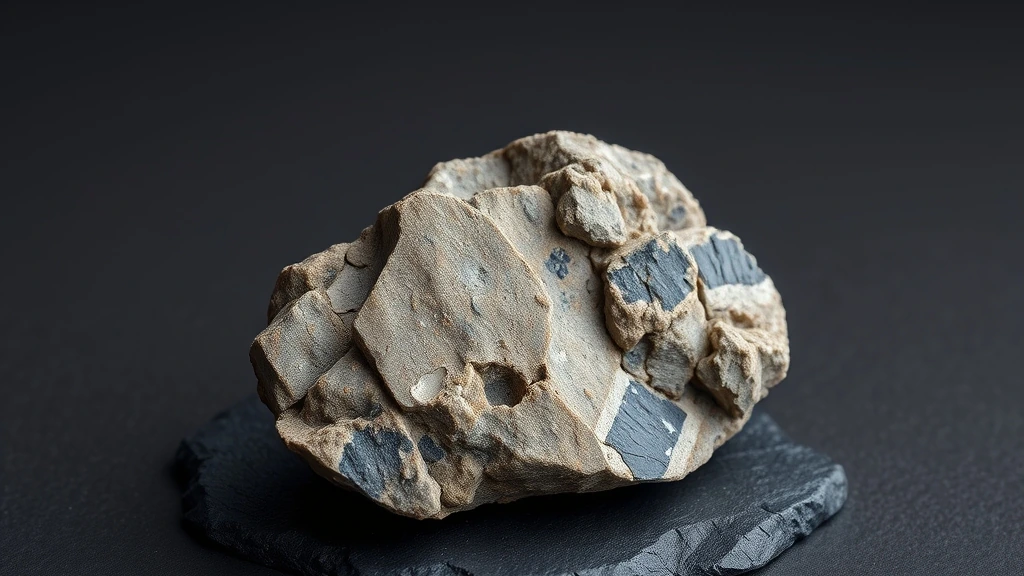
Purpurite belongs to the natural mineral classification, specifically within the phosphate group of inorganic solids. It forms as a secondary mineral in manganese-rich hydrothermal veins and oxidized ore deposits. Its crystalline structure defines it as a distinct orthorhombic species rather than an amorphous aggregate. This geological origin contributes to its unique optical properties and color intensity. While purpurite’s orthorhombic crystalline structure sets it apart from amorphous aggregates, its phosphate classification shares a broader inorganic lineage with other distinctive secondary minerals like Ulexite Tv Rock.
What is Purpurite? Geological Overview & Definition
Purpurite typically occurs as small, well-formed crystals or granular masses in manganese deposits. It often associates with other minerals like pyrolusite and psilomelane in oxidized environments. The mineral’s formation is linked to low-temperature hydrothermal processes. These conditions favor the precipitation of manganese phosphate compounds.
The stone’s name derives from the Greek word for purple, reflecting its characteristic color. It is rarely found in large gem-quality specimens due to its brittle nature. Most crystals are small, limiting their use in high-value jewelry. However, collectors prize its vibrant hue and orthorhombic symmetry. Collectors who appreciate Purpurite’s vivid violet often also seek the striking yellow‑orange crystals of Iodargyrite for their similarly rare, delicate specimens.
Purpurite Chemical Composition & Crystallographic Properties
Purpurite crystallizes in the orthorhombic system, featuring a lattice structure defined by three unequal axes at right angles. The unit cell contains manganese ions coordinated by phosphate tetrahedra. This arrangement results in a density ranging from 3.2 to 3.4 g/cm³. The structure is stable under ambient conditions but sensitive to chemical alteration. In comparative mineralogical collections, practitioners and geologists frequently study Indonesian Blue Amber alongside this crystal to appreciate their subtle energetic and structural differences.
The primary chromophore is the Mn³⁺ ion, which imparts the intense purple coloration. This color arises from d-d electronic transitions within the manganese cation. No significant cation substitution occurs in pure specimens, maintaining stoichiometric integrity. The refractive index values are 1.850, 1.860, and 1.920, indicating strong birefringence.
Purpurite exhibits moderate acid sensitivity, reacting slowly with strong acids to release phosphoric acid. Thermal behavior is stable up to moderate temperatures before structural degradation begins. Heating can cause color fading due to oxidation state changes in manganese. Careful handling is required to preserve its optical properties and structural integrity.
| Property | Specification |
|---|---|
| Mineral Group | Natural Mineral / Crystal |
| Chemical Formula | Mn³⁺ PO₄ |
| Mohs Hardness | 4–5 |
| Crystal System | Orthorhombic |
| Specific Gravity (Density) | 3.2 – 3.4 |
| Refractive Index | nα = 1.850(2) nβ = 1.860(2) nγ = 1.920(2) |
| Color & Optical Properties | Natural Purpurite color spectrum and optical dispersion |
| Primary Mining Localities | Global primary localities |
| Water & Chemical Resistance | High (Safe for gentle water washing) |
| Chakra Alignment (Traditional) | Crown Chakra |
| Zodiac Affinity (Traditional) | Virgo, Scorpio |
| Symbolic Meaning (Traditional) | Spiritual awakening, mental clarity, and transformation |
Purpurite Varieties & Color Spectrum
Purpurite exhibits a distinct range of purplish-red to violet hues, primarily driven by the oxidation state of manganese within its crystal lattice. The most common morph is the deep raspberry-red variety, which forms in oxidizing environments where Mn³⁺ ions dominate the phosphosphate structure. This intense coloration is often accompanied by a vitreous to sub-vitreous luster, making it visually striking even in rough specimens.
Deep Raspberry Red
This primary variety features a saturated, wine-like red that deepens in larger, well-formed crystals. It typically occurs as prismatic crystals or massive aggregates found in manganese-rich oxidized zones. The orthorhombic crystal system allows for distinct cleavage planes that catch light, enhancing the gem’s internal fire.
Violet-Purple Morph
Less common than the red form, this variety displays a cooler, violet-tinged purple hue. It often forms in slightly different geochemical micro-environments where trace impurities alter the absorption spectrum. These specimens are prized for their unique chromatic deviation from the standard red purpurite.
Manganese-Rich Massive
This variety appears as dense, non-crystalline masses rather than discrete gem-quality crystals. It is frequently associated with other manganese oxides like pyrolusite or hausmannite in the host rock. While rarely cut into faceted gems, it serves as an important geological indicator of high-grade manganese deposits.
Translucent Crystaline
High-quality, transparent to translucent crystals represent the rarest and most valuable form of purpurite. These specimens exhibit excellent clarity with minimal internal inclusions or fractures. Their refractive index of approximately 1.850 to 1.920 provides significant brilliance when properly cut.
Where is Purpurite Found? Geological Mining & Extraction
Purpurite typically forms in the oxidized zones of manganese deposits, often associated with pegmatite intrusions or hydrothermal veins. It is frequently found alongside other manganese minerals such as psilomelane and rhodochrosite in sedimentary or metamorphic host rocks. The mineral’s formation is strictly tied to low-oxygen, acidic conditions that stabilize the trivalent manganese state.
Primary mining regions include the United States, particularly in California and Missouri, where historic manganese operations yielded notable specimens. Other significant sources include Germany, Russia, and Brazil, where purpurite occurs in diverse geological settings. Extraction is generally secondary to manganese ore mining, with gem-quality crystals being a rare byproduct of industrial operations.
Historical Significance & Cultural Lore of Purpurite
Historically, purpurite was often overlooked in favor of more durable or vibrant manganese minerals like rhodochrosite. Ancient civilizations primarily utilized manganese oxides for pigments and glass coloring, with purpurite contributing to the deep purple hues valued in early metallurgy. Its limited hardness and rarity prevented widespread use in jewelry during antiquity, confining its role to mineralogical collections.
In modern gemological contexts, purpurite has gained recognition for its esoteric associations with spiritual awakening and mental clarity. Collectors value it as a rare mineral specimen rather than a traditional gemstone, appreciating its unique crystallography and color. The mineral’s cultural lore remains niche, focused on its geological significance and aesthetic appeal within the manganese group.
Modern Uses & Jewelry Applications of Purpurite
Purpurite is primarily a collector mineral rather than a commercial gemstone, owing to its moderate Mohs hardness of 4–5. Its delicate crystal structure makes it unsuitable for heavy-duty jewelry settings that require high durability. Lapidaries typically cut this mineral into cabochons or simple ornamental pieces to preserve its distinctive purple hue.
- Cabochon Cutting: Smooth, polished surfaces highlight the stone’s vitreous luster without risking fracture along cleavage planes.
- Ornamental Carving: Small, intricate carvings are possible but require extreme care due to the mineral’s brittleness.
- Specimen Display: Most high-quality crystals are preserved as raw specimens for scientific study and aesthetic display.
Safety & Mineral Profile of Purpurite
Handling purpurite requires standard mineral safety precautions, as it is a manganese phosphate compound. While not highly toxic, manganese compounds can be harmful if ingested or inhaled as dust. Always wash hands thoroughly after handling raw specimens or powders. The mineral is chemically stable under normal conditions but should be protected from strong acids.
This stone is valued for its scientific significance and crystallographic beauty rather than therapeutic properties. Any historical associations with healing are purely cultural and lack empirical support. Prioritize safe handling and proper storage to maintain the specimen’s integrity and ensure user safety.
Mineralogical Group and Planetary Lore of Purpurite
Purpurite belongs to the orthorhombic crystal system and is a member of the phosphate mineral group. Its formation is typically linked to manganese-rich hydrothermal veins or weathering zones. The mineral’s deep purple coloration results from the presence of Mn³⁺ ions within the crystal lattice.
Traditional lore often associates purpurite with the Crown Chakra and zodiac signs like Virgo and Scorpio. These esoteric connections emphasize themes of spiritual awakening and mental clarity. However, these associations are symbolic and should not be confused with geological or scientific facts.
How to Identify Real vs. Fake Purpurite
Artificial imitations of purpurite are rare due to the mineral’s limited commercial appeal. When fakes do appear, they are usually dyed glass or synthetic materials designed to mimic the stone’s color. These replicas often lack the natural inclusions and crystal structure of genuine specimens.
Practical At-Home Authenticity Tests
- Temperature Test (Thermal Feel): Genuine purpurite feels cool to the touch initially but warms quickly in the hand. Glass imitations may retain heat differently or feel uniformly warm.
- Specific Gravity & Weight Test: Purpurite has a density of 3.2 – 3.4 g/cm³. It should feel noticeably heavier than a similarly sized piece of glass or plastic.
- Scratch & Hardness Test (Mohs Comparison): With a Mohs hardness of 4–5, purpurite can be scratched by a steel knife or a quartz point. It should not scratch glass easily.
- Microscopic & Loupe Inspection (Internal Inclusions): Examine the stone under a 10x loupe for natural inclusions or crystal faces. Glass imitations often contain bubbles or swirl marks.
Purpurite Valuation Factors, Grading & Pricing
Specimen aesthetic quality drives the bulk of market value. Collectors prize a vivid, uniform purplish‑violet hue that reflects the mineral’s Mn³⁺ content, and a surface free of scratches or weathering. When the crystal habit is well‑developed—showing clear orthorhombic prisms and minimal matrix intrusion—the piece commands premium prices in both private and institutional sales.
Rarity and specimen dimensions are the second pricing pillar. Large, intact clusters measuring several centimeters and weighing up to a few grams are scarce, especially when the crystals retain their original undisturbed matrix. Damage from handling, such as chips or fractures, sharply reduces value, as collectors seek specimens that can be displayed whole without restoration.
Mineralogical provenance and locality value complete the valuation equation. Purpurite from classic deposits—such as the historic sites in Brazil, Namibia, or the United States—carries a provenance premium, especially when accompanied by verifiable documentation. Museums and scientific collectors often pay a premium for material that can be linked to a well‑known geological formation, enhancing both historical significance and research utility.
How to Clean and Care for Purpurite
Gentle cleaning preserves Purpurite’s delicate orthorhombic structure. Use warm soapy water and a soft cloth to remove surface dust, taking care not to scrub aggressively. After cleaning, pat the stone dry with a clean microfiber towel and store it in a stable, low‑humidity environment to prevent any moisture‑related stress.
Cleansing and Recharging Purpurite (Energetic Care)
For holistic maintenance, place the specimen in a quiet space and allow it to rest under gentle moonlight for a few hours, which many practitioners believe helps to reset its energetic field without exposing it to heat. Alternatively, a brief session of herbal smudging—using sage or cedar—can be performed, ensuring the smoke passes lightly over the stone without saturating it with moisture.
Another safe method is to lay the Purpurite on a clean selenite charging slab, allowing the neutral selenite to absorb and disperse stagnant energies while the Purpurite remains untouched. Keep the slab and stone away from direct sunlight or artificial heat sources, as prolonged exposure can alter the crystal lattice and diminish both its visual and metaphysical qualities.
Frequently Asked Questions About Purpurite
Is purpurite safe to wear in the shower?
Yes, purpurite tolerates gentle water exposure. Its high water resistance allows brief contact with water, such as a shower or light rain, without damage. However, prolonged soaking should be avoided, and the stone should be dried with a soft cloth afterward to prevent surface streaks.
How should I clean my purpurite jewelry?
Clean with warm soapy water and a soft cloth, avoiding ultrasonic devices. Gently soak the piece for a few minutes, then wipe with a lint‑free microfiber cloth to lift residues. Ultrasonic vibrations can create micro‑fractures in the orthorhombic lattice, compromising durability.
Can purpurite be set in rings for daily wear?
Yes, but consider its Mohs hardness of 4–5. While the gemstone is attractive for everyday pieces, its relatively soft nature makes it susceptible to scratches from harder materials. Protect the setting with a bezel or protective rim and avoid contact with abrasive surfaces.
What is the primary crystal system of purpurite?
Purpurite crystallizes in the orthorhombic system. This structure yields elongated, prismatic crystals that often display a distinct birefringence observable under polarized light. The orthorhombic symmetry contributes to its characteristic pleochroic shades of deep violet to pink.
Which zodiac signs are associated with purpurite?
Purpurite aligns with Virgo and Scorpio. These signs are believed to benefit from the stone’s energetic properties, enhancing analytical precision for Virgo and transformative depth for Scorpio. The gem’s Mn³⁺ composition is thought to amplify these astrological influences.
Which chakra does purpurite activate?
Purpurite is linked to the Crown Chakra. Placement on the top of the head is said to promote spiritual awakening and mental clarity, facilitating a connection to higher consciousness. The stone’s vivid violet hue resonates with the energy center governing enlightenment.
Does purpurite have any notable refractive indices?
Its refractive indices range from nα = 1.850 to nγ = 1.920. These values produce a moderate brilliance and noticeable double refraction, especially when the stone is cut with polished facets. The optical dispersion contributes to its appealing play of color.
What is the typical specific gravity of purpurite?
Purpurite’s density falls between 3.2 and 3.4 g/cm³. This relatively high specific gravity reflects the presence of manganese in the crystal lattice. The weight can aid gemologists in distinguishing purpurite from lighter, visually similar minerals during identification.