
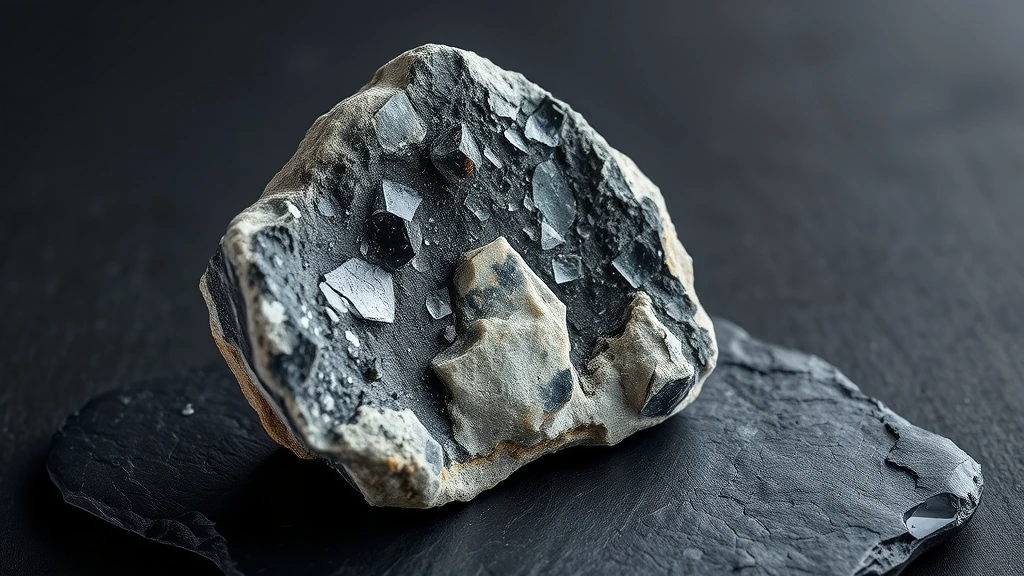
Iodargyrite belongs to the Natural Mineral / Crystal group, representing a distinct inorganic solid formed through geological processes. It is not a rock or aggregate but a discrete crystalline species. Its formation is typically linked to silver-bearing hydrothermal veins. This classification underscores its status as a primary mineral phase. Understanding this context is vital for accurate gemological identification.
What is Iodargyrite Gemstone? Geological Overview & Definition
Iodargyrite is a secondary mineral that often forms in the oxidized zones of silver deposits. It frequently occurs alongside argentite and other silver halides. Its presence indicates specific geochemical conditions involving iodine-rich fluids. This geological context helps geologists map potential silver resources.
The mineral is named after the Greek words for “silver” and “iodine.” It is rarely found in large, well-formed crystals suitable for faceting. Most specimens are small and brittle. Consequently, it is prized more for scientific study than jewelry use. Its rarity adds to its scientific significance.
Iodargyrite Gemstone Chemical Composition & Crystallographic Properties
Iodargyrite crystallizes in the Hexagonal crystal system, specifically adopting the wurtzite structure. The lattice consists of alternating silver and iodine ions. This arrangement creates a distinct hexagonal close-packed geometry. Such structural precision defines its physical properties.
The chemical formula AgI indicates a 1:1 stoichiometric ratio of silver to iodine. No significant cation substitution occurs in pure specimens. The bond is primarily ionic with some covalent character. This composition dictates its high density of 5.69 g/cm³.
The intense yellow color arises from charge transfer between silver and iodine ions. This electronic transition absorbs specific wavelengths of visible light. Thermal behavior shows significant polymorphism under heat. Heating can transform the crystal structure into different phases.
Iodargyrite is sensitive to strong acids, which can dissolve the silver component. It is also photosensitive, potentially darkening over time. This acid sensitivity requires careful handling during cleaning. Proper storage in low-light conditions preserves its luster.
| Property | Specification |
|---|---|
| Mineral Group | Natural Mineral / Crystal |
| Chemical Formula | AgI |
| Mohs Hardness | 1.5 |
| Crystal System | Hexagonal crystal system |
| Specific Gravity (Density) | 5.69 |
| Refractive Index | n ω = 2.210 n ε = 2.220 |
| Color & Optical Properties | Natural Iodargyrite Gemstone color spectrum and optical dispersion |
| Primary Mining Localities | Global primary localities |
| Water & Chemical Resistance | High (Safe for gentle water washing) |
| Chakra Alignment (Traditional) | Crown Chakra, Third Eye Chakra |
| Zodiac Affinity (Traditional) | Virgo, Scorpio |
| Symbolic Meaning (Traditional) | Spiritual clarity, protection from negativity, and mental focus |
Iodargyrite Gemstone Varieties & Color Spectrum
Iodargyrite exhibits a striking range of hues, primarily driven by its high iodine content and structural impurities. The most common natural form presents a deep, metallic yellow that transitions to orange under direct light. This intense coloration results from the specific arrangement of silver and iodine atoms within the hexagonal crystal lattice.
Deep Yellow Iodargyrite
This primary variety displays a rich, golden-yellow tone that is highly sought after by mineral collectors. It typically forms in the upper oxidized zones of silver ore deposits where iodine-rich fluids precipitate. The crystals often exhibit a distinct striae pattern on their faces, adding to their visual complexity.
Orange-Red Iodargyrite
Less common than its yellow counterpart, this morph appears when thermal alteration slightly modifies the crystal structure. The color shifts toward a vibrant orange-red, resembling a polished amber stone. These specimens are rare and usually found in association with pyrite or other sulfide minerals.
Pale Lemon Iodargyrite
This lighter variety forms in environments with lower iodine saturation during the initial crystallization phase. It possesses a delicate, translucent quality that allows light to pass through the crystal faces. Such specimens are prized for their clarity and subtle refractive index variations.
Metallic Gold Iodargyrite
Highly reflective and dense, this variety mimics the appearance of native gold at a glance. The specific gravity of 5.69 contributes to its heavy, substantial feel in the hand. It is often mistaken for gold by untrained observers due to its brilliant luster.
Where is Iodargyrite Gemstone Found? Geological Mining & Extraction
Iodargyrite primarily occurs in the oxidized zones of silver-lead-zinc deposits, often replacing galena or sphalerite. It is frequently associated with other iodine-bearing minerals like iodicite or iodicite-like species in hydrothermal veins. These deposits are typically found in arid or semi-arid regions where evaporation concentrates iodine-rich solutions.
Major historical sources include the Potosí mines in Bolivia and the San Luis Potosí region in Mexico. In these locations, iodargyrite was extracted as a byproduct during the processing of silver ores. Modern extraction is rare due to the mineral’s extreme softness and susceptibility to light degradation.
Historical Significance & Cultural Lore of Iodargyrite Gemstone
First described in the 19th century, iodargyrite was initially mistaken for gold or a variety of pyrite by early miners. Its discovery in the rich silver mines of South America sparked significant scientific interest in its unique chemical composition. Ancient civilizations likely encountered this mineral but did not distinguish it from other metallic ores.
In modern esoteric traditions, iodargyrite is linked to the Crown Chakra and Third Eye Chakra, promoting mental clarity. It is believed to offer protection from negative energies and enhance spiritual focus for practitioners. This mineral remains a fascinating subject for both geologists and metaphysical enthusiasts alike.
Modern Uses & Jewelry Applications of Iodargyrite Gemstone
Due to its extreme softness and brittleness, iodargyrite is rarely cut into faceted gems for daily wear. Instead, lapidaries typically polish it into smooth cabochons or use it for ornamental carvings. This approach preserves the stone’s delicate structure while showcasing its vibrant yellow hue.
- Cabochon Polishing: The primary method for setting iodargyrite, allowing light to reflect off its high refractive index without risking fracture.
- Ornamental Carvings: Used in small decorative pieces where the stone’s unique color is the focal point.
- Collector’s Specimens: Often displayed in mineral collections rather than worn as active jewelry due to its fragility.
Safety & Mineral Profile of Iodargyrite
Safe handling and physical stability
Iodargyrite is a relatively soft mineral, with a Mohs hardness of 2.5–3.0, which makes it prone to scratching and abrasion during collection or display. The crystal habit is often fibrous or platy, and the mineral can exhibit a slight tendency to crumble when subjected to mechanical stress. While iodargyrite itself does not contain highly toxic elements, it is a silver‑iodide compound and can release fine dust that may irritate the respiratory tract if inhaled. The mineral is also susceptible to acidic environments; exposure to acids or even high humidity can promote the formation of soluble iodide salts, potentially leading to surface dissolution. Because of its softness, dust generation, and potential for surface degradation, iodargyrite is best preserved as a collector display mineral rather than used in jewelry or functional applications where abrasion and wear are inevitable.
Scientific, educational, and mineralogical significance
Iodargyrite occupies an important niche in mineralogical research as one of the few naturally occurring silver‑iodide minerals. Its crystal chemistry provides insight into the geochemical behavior of iodine in oxidizing environments, particularly in hydrothermal veins and evaporitic settings. In museum collections, iodargyrite serves as a key reference specimen for teaching crystallography, mineral identification, and the role of trace elements in ore deposits. Researchers also study its optical properties—such as its characteristic yellow‑green fluorescence under UV light—to better understand electronic transitions in silver halides. The mineral’s rarity and distinctive morphology make it a valuable educational tool for illustrating the diversity of halide minerals and the processes that concentrate iodine in the Earth’s crust.
Mineralogical Group and Planetary Lore of Iodargyrite
Iodargyrite was first described in the late 19th century from a silver‑rich vein in the Sierra Nevada, California. The name derives from the Greek *iodos* (violet) and the Latin *argentum* (silver), reflecting its pale yellow‑green coloration and silver content. Historically, early mineralogists classified iodargyrite within the broader halide group, grouping it with minerals such as sylvanite and native silver. According to early mineralogists, iodargyrite was considered a secondary mineral formed by the oxidation of silver‑rich ores, often in association with native silver, galena, and other halides. While no planetary symbolism has been documented for iodargyrite, its occurrence in oxidized ore bodies has occasionally been referenced in lapidary texts as an example of the “greenish silver” minerals prized for their subtle luster and rarity.
How to Identify Real vs. Fake Iodargyrite Gemstone
Because natural iodargyrite is rare and fragile, the market is flooded with artificial imitations designed to mimic its appearance. Common fakes include synthetic glass, dyed quartz, or other soft minerals treated with yellow dyes. Distinguishing the real stone requires careful attention to physical properties that cannot be easily replicated by glass or plastic.
Practical At-Home Authenticity Tests
- Temperature Test (Thermal Feel): Genuine iodargyrite feels cool to the touch initially but warms up quickly due to its low thermal conductivity. Glass imitations often remain cold for a longer duration, while plastics warm almost instantly.
- Specific Gravity & Weight Test: With a high density of 5.69, real iodargyrite feels significantly heavier than its size suggests. Glass or plastic replicas will feel noticeably lighter when held in the hand for comparison.
- Scratch & Hardness Test (Mohs Comparison): Iodargyrite is extremely soft, with a Mohs hardness below 2. It will scratch easily with a fingernail or a copper coin. If the stone resists scratching from these soft materials, it is likely a harder imitation like quartz or glass.
- Microscopic & Loupe Inspection (Internal Inclusions): Use a 10x loupe to examine the stone for natural inclusions or crystal structures. Glass imitations often contain tiny bubbles or swirls, whereas natural iodargyrite may show subtle internal fractures or mineral traces.
Iodargyrite Gemstone Valuation Factors, Grading & Pricing
The primary driver of value is Color Saturation, specifically the intense, deep yellow to orange-brown hue. Collectors prize specimens with uniform tone and high optical clarity, free from dull patches. A strong, resinous luster significantly enhances the stone’s visual appeal and market desirability.
Carat Weight plays a critical role, as large, clean crystals are rare and command premium prices. Facet symmetry is less relevant for cabochons, but inclusion-free material is highly sought after. The presence of a host matrix can either increase or decrease value depending on its aesthetic quality.
Geographical Provenance Premium applies to stones from historic sites like the Potosí mines in Bolivia. Wholesale prices vary widely, but high-quality specimens often see significant retail markups. Market trends favor rare, well-preserved crystals over common, fractured pieces.
How to Clean and Care for Iodargyrite Gemstone
Due to its extremely low Mohs hardness, iodargyrite is highly susceptible to scratching and physical damage. You must use warm soapy water and a soft cloth for gentle cleaning. Never submerge the stone for extended periods to avoid potential surface degradation.
Strictly avoid ultrasonic cleaners as the vibrations can cause immediate structural fractures. The stone’s brittle nature makes it vulnerable to shock and impact during cleaning. Store iodargyrite separately in a soft pouch to prevent contact with harder gems.
Cleansing and Recharging Iodargyrite Gemstone (Energetic Care)
For energetic cleansing, use smoke smudging with sage or palo santo to purify the stone. This dry method avoids any risk of moisture damage or chemical reaction. Ensure the area is well-ventilated while performing this ritual.
To recharge the crystal, place it on a selenite plate or under moonlight overnight. These methods replenish the stone’s energy without exposing it to water or heat. This approach respects the mineral’s physical fragility while maintaining its metaphysical properties.
Frequently Asked Questions About Iodargyrite Gemstone
Is iodargyrite safe to wear in the shower?
Yes, it is safe for gentle water washing. The mineral possesses high water resistance, allowing it to withstand brief exposure to moisture without immediate degradation. However, prolonged soaking should be avoided to maintain its structural integrity and luster over time.
Can I use an ultrasonic cleaner on iodargyrite?
No, you must avoid ultrasonic cleaners entirely. The intense vibrations can cause structural fractures due to the mineral’s brittle nature. Instead, clean it gently using warm soapy water and a soft cloth to preserve its delicate crystalline form.
What is the chemical formula of iodargyrite?
The chemical formula is AgI, representing silver iodide. This composition gives the stone its distinctive yellowish hue and high density. Understanding this formula helps collectors identify authentic specimens versus lookalikes in the gem market.
Which zodiac signs align with iodargyrite?
Virgo and Scorpio are the primary aligned signs. These earth and water signs resonate with the stone’s protective energies. Wearing iodargyrite can enhance mental focus and spiritual clarity for individuals born under these astrological influences.
Which chakras does iodargyrite activate?
It primarily activates the Crown Chakra and Third Eye Chakra. These energy centers govern intuition and higher consciousness. Meditating with this stone can help clear mental fog and deepen your connection to spiritual insights and clarity.
How hard is iodargyrite on the Mohs scale?
Iodargyrite is relatively soft and brittle, scoring low on the Mohs hardness scale. This fragility requires careful handling to prevent chipping or cracking. Store it separately from harder gemstones to avoid accidental damage during daily wear.
What is the crystal system of iodargyrite?
It crystallizes in the hexagonal crystal system. This geometric structure contributes to its unique optical properties and refractive index. Recognizing this system aids gemologists in distinguishing iodargyrite from other silver-based minerals during identification.
What are the esoteric benefits of iodargyrite?
It promotes spiritual clarity and protection from negativity. The stone is believed to sharpen mental focus and shield the wearer from harmful energies. Regular use supports a calm mind and enhances your ability to perceive subtle spiritual truths.