
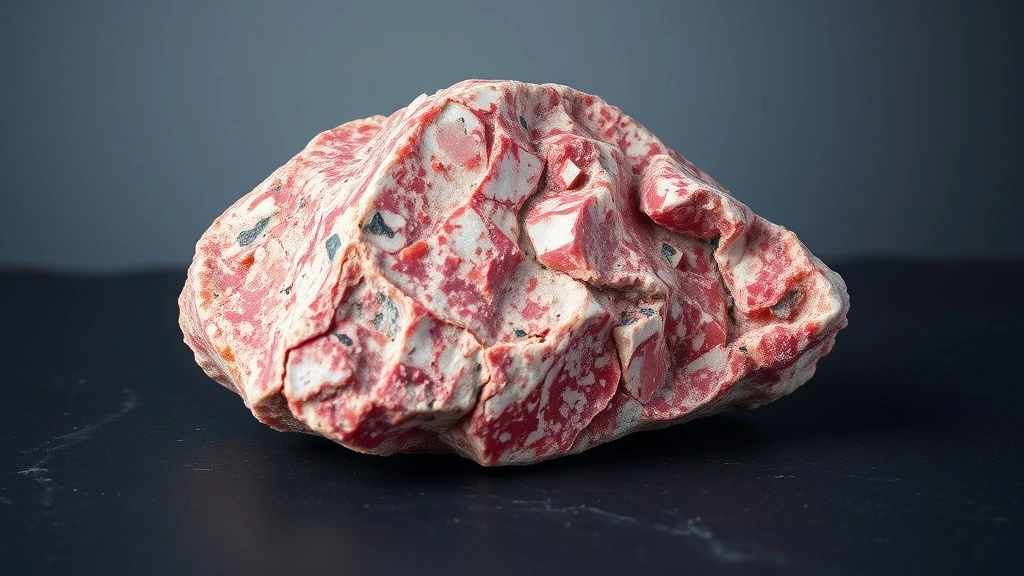
Rhodochrosite belongs to the Natural Mineral / Crystal group, specifically within the broader carbonate mineral family. It forms through hydrothermal processes where manganese-rich fluids interact with carbonate-bearing rock formations. This geological origin often results in the distinctive banding patterns observed in polished specimens. The mineral is frequently associated with other manganese-bearing minerals, creating complex ore deposits. Rhodochrosite’s vivid pink hues and banded patterns echo the subtle, translucent beauty of Scapolite, another carbonate gem that shares a similar hydrothermal genesis.
What is Rhodochrosite? Geological Overview & Definition
Rhodochrosite is defined by its unique trigonal crystal system and its role as a primary manganese ore. It typically occurs in massive, banded, or botryoidal forms rather than as large, well-formed crystals. The name derives from Greek words meaning “rose-colored,” reflecting its characteristic pink to red coloration. In comparative mineralogical collections, practitioners and geologists frequently study Sinhalite alongside this crystal to appreciate their subtle energetic and structural differences.
Geologically, it is significant for its association with sedimentary and metamorphic environments. The mineral often exhibits concentric banding, which records changes in fluid chemistry during its formation. These bands can range from pale pink to deep crimson, depending on impurity levels. Understanding these geological contexts helps gemologists identify authentic specimens. Gemologists often compare these distinct banding patterns to the delicate, translucent striations found in Mesolite to better understand how varying mineral compositions influence color zoning in sedimentary deposits.
Rhodochrosite Chemical Composition & Crystallographic Properties
The mineral crystallizes in the trigonal system, sharing a lattice structure with calcite and dolomite. Its unit cell is characterized by a hexagonal arrangement of ions, which dictates its cleavage properties. The chemical formula MnCO₃ indicates a stoichiometric balance between manganese cations and carbonate anions. This precise arrangement allows for predictable physical behavior under standard conditions.
Color in rhodochrosite arises from the Mn²⁺ chromophore, which absorbs specific wavelengths of visible light. Trace impurities can slightly modify the hue, but manganese remains the dominant color center. The mineral exhibits acid sensitivity, reacting with dilute hydrochloric acid to produce carbon dioxide gas. This reaction is a standard field test for carbonate identification.
Thermal behavior reveals that rhodochrosite is relatively stable at room temperature but decomposes upon heating. High temperatures cause the release of carbon dioxide and the formation of manganese oxides. This thermal decomposition is critical for industrial processing and gemstone treatment assessments. The refractive index values of 1.596–1.816 confirm its optical anisotropy.
| Property | Specification |
|---|---|
| Mineral Group | Natural Mineral / Crystal |
| Chemical Formula | MnCO₃ |
| Mohs Hardness | 3.5–4 |
| Crystal System | Trigonal |
| Specific Gravity (Density) | 3.7 |
| Refractive Index | n ω = 1.814–1.816 n ε = 1.596–1.598 |
| Color & Optical Properties | Natural Rhodochrosite color spectrum and optical dispersion |
| Primary Mining Localities | Global primary localities |
| Water & Chemical Resistance | High (Safe for gentle water washing) |
| Chakra Alignment (Traditional) | Heart Chakra |
| Zodiac Affinity (Traditional) | Taurus, Virgo |
| Symbolic Meaning (Traditional) | Emotional healing, self-worth, and love |
Rhodochrosite Varieties & Color Spectrum
Rhodochrosite exhibits a remarkable range of hues, from pale pink to deep crimson, driven by trace impurities. The most prized specimens display vivid, saturated tones that command premium prices in the gem market. Manganese carbonate purity directly influences the intensity of the red coloration observed in high-grade material.
Argentine Banded Rhodochrosite
This variety originates from the Andes region of Argentina, specifically the Ojuelos and Pachuca mines. It is characterized by distinct concentric bands of pink and white, formed by alternating deposition cycles. These banded patterns are highly sought after for cabochon cutting due to their visual depth and symmetry.
Deep Crimson Rhodochrosite
Rarely found in nature, this morph displays an intense, unbroken red coloration without significant banding. It forms in specific hydrothermal environments where manganese concentrations remain consistently high during crystallization. The deep crimson hue is exceptionally rare, making these specimens highly valuable to collectors.
Pale Pink Rhodochrosite
Commonly found in lower-grade deposits, this variety features a soft, pastel pink appearance. It often contains higher levels of calcium or iron impurities, which dilute the primary manganese color. While less valuable than vibrant reds, it is popular for bead crafting and large-scale jewelry pieces.
Banded White Rhodochrosite
This type is dominated by white bands with only faint traces of pink or red. It typically forms in the outer layers of rhodochrosite nodules where manganese availability was limited. The white banding provides a stark contrast that enhances the aesthetic appeal of carved objects.
Mottled Rhodochrosite
Characterized by irregular patches of color rather than linear bands, this variety results from chaotic mineral precipitation. It often includes inclusions of quartz or calcite that disrupt the crystal structure. The mottled appearance makes it challenging to cut into large, clear gemstones but suitable for ornamental use.
Where is Rhodochrosite Found? Geological Mining & Extraction
Rhodochrosite primarily forms in hydrothermal veins and sedimentary carbonate rocks, often associated with lead and zinc ores. Major deposits are located in Argentina, Peru, Mexico, and South Africa, where tectonic activity created ideal conditions for mineralization. The Andean region remains the global epicenter for high-quality gem-grade material extraction.
Mining operations typically involve open-pit methods to access large, banded nodules within the host rock. Extractors carefully separate the rhodochrosite from surrounding gangue minerals to preserve the integrity of the color bands. Sustainable practices are increasingly critical, as these deposits are finite and environmentally sensitive.
Historical Significance & Cultural Lore of Rhodochrosite
Ancient civilizations, including the Inca and Aztec cultures, valued rhodochrosite as a sacred stone associated with life and vitality. Archaeological findings reveal its use in ceremonial jewelry and burial goods, indicating its high social status. The Inca Empire particularly revered the stone for its connection to the earth and emotional well-being.
In modern times, rhodochrosite has gained popularity in alternative healing practices for its purported emotional balancing properties. It is often linked to the heart chakra, believed to promote self-worth and compassion. This cultural resonance continues to drive demand in the global gemstone market.
Modern Uses & Jewelry Applications of Rhodochrasite
Rhodochrosite is prized for its vivid pink‑to‑rose hue, making it a favorite in contemporary lapidary work. Artisans often cut the stone into cabochons to showcase its silky translucency, while skilled faceting can reveal subtle fire in higher‑grade material. In addition to wearable pieces, the mineral is carved into ornamental objects such as vases, figurines, and decorative inlays that highlight its banded patterns.
- Cabochon pendants and rings emphasize the stone’s smooth, glowing surface.
- Faceted earrings and brooches exploit light play for a sparkling effect.
- Ornamental carvings include small sculptures, box tops, and architectural accents.
Metaphysical Properties & Traditional Meaning of Rhodochrasite
According to historical traditions and metaphysical lore, rhodochrosite is regarded as a heart‑opening stone that nurtures self‑compassion and emotional balance. Practitioners believe its energy can dissolve feelings of guilt, promote self‑worth, and attract unconditional love. The stone’s pink resonance is also said to harmonize the soul’s inner child, encouraging forgiveness and joyful expression.
Which Chakra and Zodiac Signs Align with Rhodochrasite?
Rhodochrasite is firmly linked to the Heart Chakra, where it is thought to amplify love, empathy, and emotional healing. When placed on the chest, the stone is said to stimulate the flow of vital energy, supporting both personal and relational harmony.
In astrological tradition, rhodochrasite aligns exclusively with the Taurus and Virgo signs. These earth signs are associated with stability, practicality, and a deep appreciation for beauty, mirroring the stone’s grounding yet uplifting qualities.
How to Identify Real vs. Fake Rhodochrasite
Artificial imitations of rhodochrasite include dyed quartz, synthetic glass, and resin composites that mimic its rosy coloration. These substitutes often lack the mineral’s characteristic banding, specific gravity, and subtle internal inclusions. Recognizing genuine material requires a combination of visual inspection and simple physical tests.
Practical At-Home Authenticity Tests
- Temperature Test (Thermal Feel): Natural rhodochrasite feels cool to the touch and retains its temperature longer than glass or plastic replicas, which quickly warm to skin temperature.
- Specific Gravity & Weight Test: With a density of about 3.7 g/cm³, authentic rhodochrasite feels noticeably heavier than quartz or glass of comparable size; a simple water displacement test can confirm this.
- Scratch & Hardness Test (Mohs Comparison): The stone’s hardness of 3.5–4 means a steel nail will leave a faint mark, while a copper coin should not scratch it; harder minerals like quartz will resist such marks.
- Microscopic & Loupe Inspection (Internal Inclusions): Under 10× magnification, genuine rhodochrasite displays fine, irregular banding and occasional microscopic voids, whereas synthetic glass shows uniform clarity and no natural inclusions.
Rhodochrasite Valuation Factors, Grading & Pricing
The primary driver of market value is color saturation. Deep, vivid pink to rose hues with minimal zoning command premium prices, while pale or uneven tones are less sought after. Collectors also prize a natural, energetic luster that appears to glow from within, indicating minimal surface alteration. Provenance that confirms the stone’s untreated state further enhances its desirability.
Crystal size & weight (grams) are the next critical metric. Larger, intact specimens that weigh several grams fetch higher bids, especially when they retain their natural trigonal habit. Raw blocks are priced lower than tumbled, high‑polish pieces, which display a mirror‑like finish that accentuates the stone’s internal color. Inclusions of manganese matrix or calcite veins can either add character or reduce value, depending on their visibility and impact on overall aesthetics.
The final valuation lever hinges on ethical sourcing & locality premium. Stones mined responsibly in regions such as Argentina’s Catamarca province carry a reputation for ethical labor practices and environmental stewardship, attracting collectors who prioritize sustainability. Provenance from historically renowned mines can add a cultural premium, while specimens sourced without proper documentation may be discounted or excluded from reputable markets. Holistic practitioners also value ethically sourced pieces for their purported energetic integrity.
How to Clean and Care for Rhodochrasite
Cleaning Rhodochrasite is straightforward: gently wash the stone in warm, soapy water using a soft cloth to remove surface dust. Rinse briefly with clean water and pat dry with a lint‑free microfiber towel, ensuring no moisture remains in crevices. Avoid ultrasonic cleaners, as the vibration can cause micro‑fractures in the relatively soft mineral. Store the cleaned piece in a padded jewelry box or a low‑humidity display case to maintain its luster.
Cleansing and Recharging Rhodochrasite (Energetic Care)
For energetic maintenance, a brief herbal smudging with sage or lavender can clear stagnant vibrations without exposing the stone to moisture. Pass the Rhodochrasite through the smoke for a few seconds, then allow it to air‑dry naturally before handling.
Alternatively, place the specimen on a clean selenite charging slab under gentle moonlight for several hours. The cool, indirect light and the neutral energy of selenite help revitalize the stone’s emotional healing properties without risking thermal damage.
Frequently Asked Questions About Rhodochrosite
Is rhodochrosite safe to wear in the shower?
Yes, it is safe for gentle water exposure during brief showers. The stone possesses high water resistance, allowing it to withstand mild moisture without immediate degradation. However, prolonged submersion or hot water should be avoided to preserve the mineral’s structural integrity.
How should I clean my rhodochrosite jewelry?
Use warm soapy water and a soft cloth for routine maintenance. This gentle method effectively removes oils and dirt without stressing the crystal lattice. Avoid ultrasonic cleaners, as the vibrations can cause structural fractures in this relatively soft mineral.
What is the Mohs hardness of rhodochrosite?
Rhodochrosite rates between 3.5 and 4 on the Mohs hardness scale. This places it in the soft category, making it susceptible to scratching by common minerals like quartz or topaz. Careful storage is essential to maintain the stone’s polished surface.
Which zodiac signs are aligned with rhodochrosite?
Taurus and Virgo are the primary zodiac signs associated with this stone. These earth signs resonate with the mineral’s grounding properties and its capacity to foster stability. Wearing rhodochrosite may enhance the natural traits of these astrological profiles.
Which chakra does rhodochrosite activate?
The Heart Chakra is the primary energy center aligned with rhodochrosite. This connection supports emotional healing, self-worth, and the cultivation of love. Meditating with the stone can help balance this specific energy center.
What is the chemical composition of rhodochrosite?
The mineral consists of manganese carbonate, represented by the formula MnCO₃. This composition gives the stone its distinctive pink to red hues. The trigonal crystal system further defines its geometric structure and optical properties.
Can rhodochrosite be used in daily jewelry?
Yes, but it requires careful handling due to its moderate hardness. While suitable for rings and pendants, the stone is prone to chipping if subjected to impact. Choosing protective settings can significantly extend the lifespan of your jewelry.
Why does rhodochrosite have a high refractive index?
Its refractive index ranges from 1.596 to 1.816, contributing to its vibrant luster. This optical property allows the stone to reflect light beautifully, enhancing its visual appeal. The birefringence between ordinary and extraordinary rays adds depth to its appearance.