
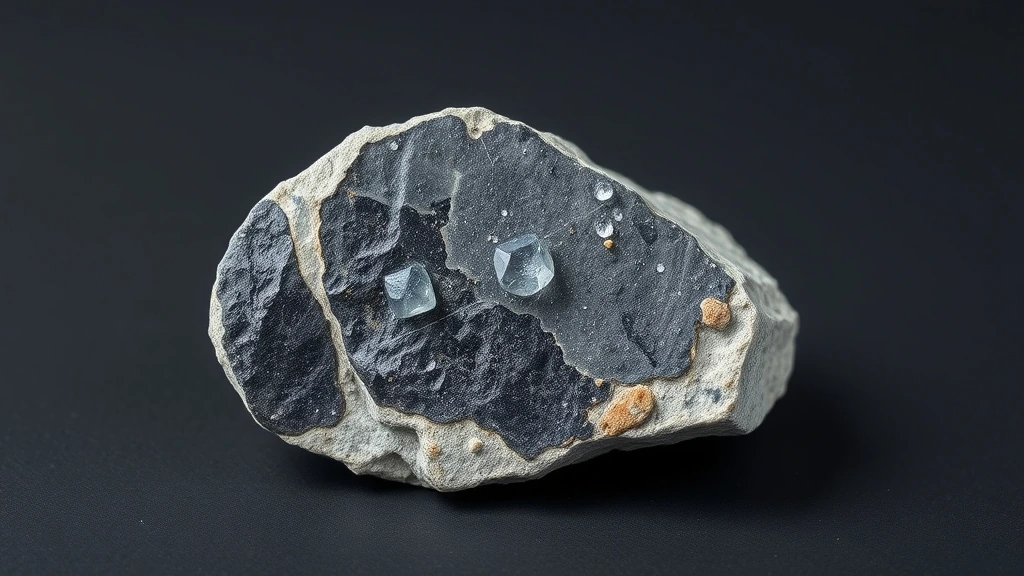
Scapolite belongs to the broader sodalite–scapolite group of tectosilicates, a natural mineral that crystallizes as discrete, well‑defined crystals rather than as an aggregate rock. It forms in metamorphic environments where sodium‑rich fluids interact with calc‑silicate assemblages, often alongside minerals such as feldspar and mica. As a member of the Natural Mineral / Crystal parent group, scapolite is studied for both its geological significance and its occasional use as a gemstone.
What is Scapolite? Geological Overview & Definition
Scapolite refers to a solid‑solution series encompassing marialite (sodium‑rich) and meionite (calcium‑rich) end‑members, both sharing a common tetragonal framework. The mineral typically occurs in skarn deposits, metamorphosed limestone, and alkaline igneous complexes where fluid‑rock interaction promotes its growth.
In gemstone form, scapolite is prized for its subtle translucency and occasional pleochroic zones that shift from colorless to soft pink or green under different lighting. Its rarity as a cut stone stems from its modest hardness and susceptibility to cleavage, yet collectors value its unique crystal habit and historical use in ornamental carvings.
Scapolite Chemical Composition & Crystallographic Properties
The idealized composition Ca₂Na₃(Al₅Si₇O₂₂)CO₃ reflects a tetragonal lattice built from interconnected AlO₄ and SiO₄ tetrahedra, with channels that host Na⁺, Ca²⁺, and CO₃²⁻ groups. This framework yields a unit cell elongated along the c‑axis, producing the characteristic prismatic crystals observed in hand specimens.
Cation substitution is extensive; Na⁺ can be partially replaced by K⁺ or Ca²⁺, while Al³⁺ may exchange with Fe³⁺, influencing both density (2.6–2.74 g cm⁻³) and refractive indices (nω = 1.555–1.594, nε = 1.526–1.565). These substitutions create localized color centers that generate the stone’s pastel palette, especially when trace Mn²⁺ or Fe²⁺ are present.
Scapolite is acid‑sensitive; exposure to dilute HCl can dissolve the carbonate component, leading to surface etching and loss of luster. This reaction underscores the need for careful cleaning protocols in gem handling and highlights its geological formation in low‑pH metamorphic fluids.
Thermally, scapolite exhibits dehydration and decarbonation near 600 °C, releasing CO₂ and altering its crystal chemistry. Heating can also induce color changes, as Fe‑related chromophores become more active, a property sometimes exploited in laboratory studies of phase transitions within the sodalite group.
| Property | Specification |
|---|---|
| Mineral Group | Natural Mineral / Crystal |
| Chemical Formula | Ca₂Na₃(Al₅Si₇O₂₂)CO₃ |
| Mohs Hardness | 5.5–6 |
| Crystal System | Tetragonal |
| Specific Gravity (Density) | 2.6–2.74 |
| Refractive Index | ”n” ω = 1.555–1.594 ”n” ε = 1.526–1.565 |
| Color & Optical Properties | Natural Scapolite color spectrum and optical dispersion |
| Primary Mining Localities | Global primary localities |
| Water & Chemical Resistance | High (Safe for gentle water washing) |
| Chakra Alignment (Traditional) | Crown Chakra, Third Eye Chakra |
| Zodiac Affinity (Traditional) | Aquarius, Pisces |
| Symbolic Meaning (Traditional) | Spiritual expansion, intuition, and mental clarity |
Scapolite Varieties & Color Spectrum
**Lazulite Scapolite**
Formed in high‑grade metamorphic schists where sodium‑rich fluids interact with calc‑silicate assemblages, Lazulite displays a striking deep blue to violet hue. Minute rutile needles and fluid‑inclusion bubbles create a subtle chatoyancy that enhances its gem quality. Found chiefly in the Alpine regions of Austria and Italy, it is among the rarer commercial colors, prized by collectors for its vivid saturation.
**Rose‑Tinted Scapolite**
Developing in granitic pegmatites of the Brazilian Minas Gerais province, this variety exhibits a delicate pink to rose coloration caused by trace manganese and iron impurities. Fine‑grained epidote and tourmaline inclusions often appear as microscopic specks, adding depth without compromising transparency. Its limited occurrence and consistent hue make it a sought‑after stone for high‑end jewelry.
**Yellow‑Ochre Scapolite**
Typical of the sedimentary limestone-hosted deposits of the United States’ New England region, the yellow‑ochre form derives its color from sulfur and lead trace elements. The crystals frequently contain calcite and pyrite inclusions that produce a warm, honey‑like glow under light. Though more abundant than blue or pink varieties, high‑clarity stones command premium prices.
**Green‑ish Scapolite (Verdigris)**
Emerging from the volcanic tuffs of the Czech Republic, Verdigris scapolite shows a pale green to olive tint linked to chromium substitution within the aluminosilicate framework. Commonly intergrown with biotite and feldspar, the mineral often displays a faint pleochroic effect when rotated. Its regional rarity and distinctive hue attract both gemologists and mineral collectors.
**Clear (Colorless) Scapolite**
Occurring in the pegmatitic veins of Madagascar, the colorless form is prized for its high refractive index and low birefringence, yielding excellent brilliance when faceted. Inclusions are typically microscopic quartz and mica flakes that are invisible to the naked eye, preserving clarity. While more plentiful, gem‑grade stones are limited, sustaining market demand.
**Mottled Scapolite (Banded)**
Discovered in the karstic deposits of Turkey’s Anatolian plateau, this variety exhibits banded patterns of gray, white, and occasional brown, produced by alternating layers of calcite and scapolite during diagenesis. The banding creates a unique visual signature prized in ornamental cabochons. Its occurrence is sporadic, rendering large, flawless pieces exceptionally scarce.
Where is Scapolite Found? Geological Mining & Extraction
Scapolite crystallizes primarily in sodium‑rich pegmatites and metamorphosed limestone, where it substitutes for feldspar in the crystal lattice. The mineral’s stability field favors temperatures of 500–700 °C and pressures of 3–5 kbar, conditions prevalent in regional metamorphic belts and granitic intrusions worldwide.
Commercial extraction concentrates in Brazil’s Minas Gerais, the United States’ New England pegmatites, Austria’s Alpine schists, and Madagascar’s pegmatitic veins. Mining methods range from small‑scale hand‑picking of surface outcrops to mechanized underground tunneling, followed by careful gravity separation and froth flotation to isolate scapolite from associated feldspar and mica.
Historical Significance & Cultural Lore of Scapolite
Ancient Romans valued scapolite for its resemblance to more precious stones, incorporating it into signet rings and amulets unearthed at sites near the Danube. In medieval Europe, the stone was believed to protect against poison and was set into clergy vestments as a symbol of spiritual purity.
In classical Eastern lapidary traditions, gem-carvers fashioned rare scapolite cabochons for contemplative talismans, attributing to the mineral the qualities of mental clarity and heightened intuition. The gemstone’s association with the Crown and Third Eye chakras persists in contemporary metaphysical practice, reinforcing its legacy as a bridge between material beauty and esoteric symbolism.
Modern Uses & Jewelry Applications of Scapolite
Scapolite’s moderate Mohs hardness (5.5–6) makes it suitable for both cabochon and faceted settings, though care is needed to avoid chipping during polishing. Artisans favor its subtle violet‑to‑yellow hues for statement rings, pendants, and earrings that catch light without overwhelming the wearer. In ornamental carving, the stone’s tetragonal crystals yield intricate cameos and decorative inlays prized by collectors.
- Cabochon cuts highlight the stone’s silky translucency and natural color zoning.
- Faceted cuts enhance brilliance, especially when paired with complementary metals.
- Ornamental carvings exploit the mineral’s workable density (2.6–2.74 g/cm³) for detailed motifs.
Metaphysical Properties & Traditional Meaning of Scapolite
According to historical traditions and metaphysical lore, scapolite is regarded as a conduit for spiritual expansion and heightened intuition. Practitioners claim it steadies emotional turbulence, fostering mental clarity and a calm, reflective mindset. Its gentle energy is said to support inner truth, encouraging honest communication and balanced decision‑making.
Which Chakra and Zodiac Signs Align with Scapolite?
Scapolite resonates most strongly with the Crown Chakra, promoting connection to higher consciousness and universal insight. It also activates the Third Eye Chakra, sharpening psychic perception and encouraging visionary thought. Together, these centers are believed to amplify the stone’s capacity for inner awakening.
Aligned with the Aquarius and Pisces zodiac signs, scapolite is thought to enhance the innovative, humanitarian qualities of Aquarius while soothing the empathetic, dreamy nature of Pisces. The stone’s energy is said to harmonize these signs’ aspirations toward collective evolution and compassionate understanding.
How to Identify Real vs. Fake Scapolite
Artificial imitations of scapolite often include dyed quartz, synthetic glass, or resin composites that mimic its color range but lack the mineral’s distinctive optical properties. These substitutes may feel heavier or exhibit a glassy sheen inconsistent with natural scapolite’s subtle luster. Careful observation of refractive behavior and surface texture can reveal such fakes.
Practical At-Home Authenticity Tests
- Temperature Test (Thermal Feel): Natural scapolite feels cool to the touch and retains temperature longer than glass or plastic imitations, which quickly warm to the skin.
- Specific Gravity & Weight Test: Weigh the stone; genuine scapolite (density 2.6–2.74 g/cm³) will feel noticeably heavier than glass (≈2.5 g/cm³) of similar size.
- Scratch & Hardness Test (Mohs Comparison): Gently scratch the surface with a steel file; scapolite’s hardness (5.5–6) will resist minor scratches, whereas softer glass will show visible marks.
- Microscopic & Loupe Inspection (Internal Inclusions): Examine under 10× magnification; natural scapolite often displays fine, irregular inclusions or growth lines, while synthetic glass appears uniformly clear and flawless.
Scapolite Valuation Factors, Grading & Pricing
Market value is primarily driven by Color Saturation, where deep, uniform green or translucent white specimens command premium prices. Visual vibrancy and a natural, glassy luster significantly enhance aesthetic appeal for collectors. Stones with high transparency and minimal internal clouding are considered top-grade material.
Crystal Size & Weight (Grams) directly correlates with rarity, as large, intact specimens are increasingly scarce. Raw crystals are valued for their natural geometry, while tumbled stones are graded by polish quality and surface smoothness. Natural matrix inclusions can add geological interest but may reduce value if they compromise structural integrity.
Ethical Sourcing & Locality Premium plays a crucial role in both holistic and collector markets. Provenance from renowned localities, such as Canada or the United States, often increases desirability. Buyers increasingly prioritize transparency in supply chains, rewarding vendors who document responsible mining practices.
How to Clean and Care for Scapolite
Scapolite possesses a Mohs hardness of 5.5–6, making it durable enough for gentle water exposure but sensitive to mechanical shock. To clean the stone, use warm soapy water and a soft cloth to remove surface dust and oils. This method effectively maintains the mineral’s luster without causing chemical damage or etching.
It is critical to avoid ultrasonic cleaners entirely, as high-frequency vibrations can induce structural fractures within the crystal lattice. After washing, rinse the specimen thoroughly with clean water and dry it immediately with a lint-free cloth. Store the stone in a padded pouch to prevent contact with harder minerals that could cause abrasion.
Cleansing and Recharging Scapolite (Energetic Care)
For energetic maintenance, practitioners often employ dry methods that respect the mineral’s physical stability. Herbal smudging with sage or palo santo is a popular technique to clear stagnant energy without introducing moisture. This ritual allows the stone to reset its vibrational frequency while remaining completely dry and safe.
Alternatively, placing scapolite on a selenite charging slab overnight under moonlight is a gentle recharging method. This approach avoids the thermal stress of direct sunlight, which can potentially alter the stone’s internal structure. Resting the crystal in a cool, dark environment ensures its energetic properties are restored without physical risk.
Frequently Asked Questions About Scapolite
Is scapolite safe to wear in the shower?
Yes, scapolite is generally safe for gentle water exposure. While it possesses high water resistance, prolonged submersion in hot water or exposure to harsh chemicals should be avoided. The mineral’s tetragonal crystal structure remains stable under normal shower conditions. However, always dry the stone thoroughly after washing to maintain its luster.
How should I clean my scapolite jewelry?
Use warm soapy water and a soft cloth for cleaning. Avoid ultrasonic cleaners entirely, as they can cause structural fractures in the stone. Gently scrub the surface to remove oils and dirt without applying excessive pressure. Rinse thoroughly with clean water and pat dry with a lint-free microfiber cloth.
What is the Mohs hardness of scapolite?
Scapolite rates between 5.5 and 6 on the Mohs scale. This moderate hardness makes it suitable for rings and pendants but requires care against scratches. It is softer than quartz and topaz, so store it separately from harder gemstones. Understanding this Mohs hardness helps prevent accidental damage during daily wear.
Which zodiac signs are compatible with scapolite?
Aquarius and Pisces are the primary aligned zodiac signs. These water and air signs resonate with the stone’s energetic properties. Individuals born under these signs may find mental clarity and intuition enhanced by wearing scapolite. The connection supports spiritual growth and emotional balance for these specific astrological profiles.
Which chakras does scapolite activate?
Scapolite primarily activates the Crown Chakra and Third Eye Chakra. These energy centers are associated with higher consciousness and intuition. The stone facilitates spiritual expansion by connecting the wearer to deeper mental states. It is not typically linked to lower chakras like the root or sacral.
What is the chemical composition of scapolite?
The formula is Ca₂Na₃(Al₅Si₇O₂₂)CO₃ for the calcic variety. This complex silicate structure defines its physical properties. The presence of calcium and sodium influences its refractive index and optical behavior. Understanding this chemical formula helps gemologists identify and classify different scapolite types accurately.
Can scapolite be used in ultrasonic cleaners?
No, you must avoid ultrasonic cleaners for scapolite. The vibrations can induce structural fractures within the crystal lattice. Instead, use a soft brush and mild soap solution. This gentle approach preserves the stone’s integrity and prevents internal damage that ultrasonic devices might cause.
What color variations exist in scapolite?
Scapolite appears in green, gray, yellow, and brown hues. The refractive index ranges from 1.526 to 1.594, affecting its brilliance. Green varieties are often called “green jade” or “jadeite” in trade, though they are distinct. Color depends on trace elements and the specific crystal system orientation.