
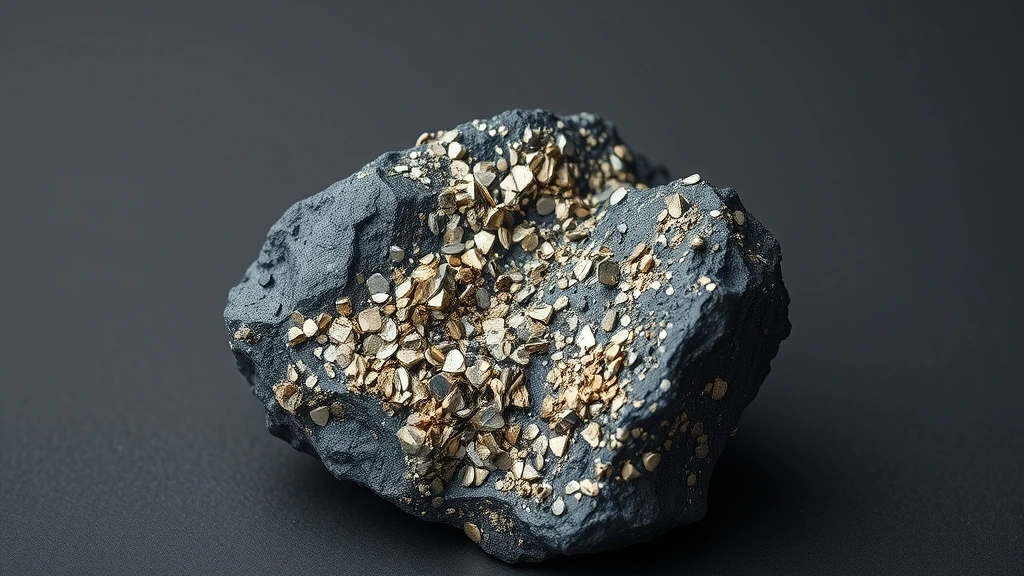
The material belongs to the Natural Mineral / Crystal group, classifying it as an aggregate of distinct mineral phases rather than a single chemical species. Shungite, a carbonaceous metamorphic rock, provides the host matrix, while pyrite crystals grow as discrete inclusions during low‑grade metamorphism. This combination yields a unique gemstone prized for both its visual contrast and reported metaphysical properties.
What is Pyrite On Shungite? Geological Overview & Definition
Pyrite‑on‑Shungite refers to the natural occurrence of pyrite crystals embedded in shungite, a siliceous, carbon‑rich rock found chiefly in the Karelia region of Russia. The shungite matrix is composed of amorphous carbon, quartz, and minor sulfides, creating a dark, matte background that accentuates the bright, metallic inclusions.
Across ancient lapidary traditions, the striking contrast between the black host and golden specks was interpreted as a symbol of duality, linking the earth’s depth with celestial fire. Modern collectors value the specimen for its rarity and the way the trigonal pyrite crystals reflect light, producing a distinctive sparkle.
Pyrite On Shungite Chemical Composition & Crystallographic Properties
The pyrite component crystallizes in the Trigonal system, forming pyramidal habits that intersect the shungite host at various angles. Its lattice consists of a three‑dimensional network of Fe²⁺ cations coordinated by S₂²⁻ disulfide anions, creating a robust framework that resists weathering.
Cation substitution is limited; trace amounts of Ni, Co, or Cu may replace iron, subtly shifting the metal’s chromophore color centers and imparting faint iridescence to the gold sheen. The aggregate is relatively acid‑sensitive; exposure to strong acids can oxidize the sulfide, producing sulfuric by‑products and dulling the metallic luster.
Thermally, the pyrite inclusions remain stable up to ~300 °C, beyond which they may decompose, releasing sulfur vapor and altering the surrounding shungite’s carbon structure. This behavior is crucial for gem cutters, who must avoid excessive heat during polishing to preserve the crystal integrity.
The shungite matrix itself is amorphous, lacking a defined crystal lattice, but its high carbon content contributes to the overall density and durability of the composite. Together, the trigonal pyrite and carbonaceous host create a gemstone that merges metallic brilliance with deep, earthy tones.
| Property | Specification |
|---|---|
| Mineral Group | Natural Mineral / Crystal |
| Mohs Hardness | 6.5 – 7.0 |
| Crystal System | Trigonal |
| Color & Optical Properties | Natural Pyrite On Shungite color spectrum and optical dispersion |
| Primary Mining Localities | Global primary localities |
| Water & Chemical Resistance | High (Safe for gentle water washing) |
| Chakra Alignment (Traditional) | Heart Chakra (Anahata) |
| Zodiac Affinity (Traditional) | Gemini, Virgo |
| Symbolic Meaning (Traditional) | Emotional balance, compassion and inner peace |
Pyrite On Shungite Varieties & Color Spectrum
Pyrite On Shungite displays distinct mineralogical characteristics across its geological varieties and structural habits. Gemologists evaluate these natural varieties based on crystal habit, trace chromophore concentrations, and visual luster.
Primary Natural Pyrite On Shungite
The benchmark natural variety exhibiting diagnostic color saturation and classic crystallographic symmetry.
Distinct Geological Morphs of Pyrite On Shungite
Secondary regional and structural varieties formed under localized geological temperature and pressure conditions.
Golden Vein Pyrite
This variety features bright golden pyrite veins cutting through the black matrix of shungite. The veins are typically straight or gently curved, with occasional pyritohedral crystal fragments. The contrast creates a striking visual signature that is prized by collectors. Its rarity is amplified by the limited exposure of pyrite in shungite deposits.
Brownish‑Red Pyrite
Brownish‑red pyrite appears as mottled patches within the shungite, often forming irregular blotches. The coloration results from iron oxidation and trace sulfur impurities. These patches give the stone a warm, earthy tone that contrasts with the typical black of shungite. The variety is moderately common in certain Russian localities.
Black‑Pitted Pyrite
Black‑pitted pyrite is characterized by tiny, almost invisible pits where pyrite has dissolved or weathered away. The pits create a subtle speckled effect, giving the stone a textured appearance. This form is frequently found in older, weathered shungite specimens. Its subtlety makes it a favorite for fine jewelry.
Green‑Shaded Pyrite
Green‑shaded pyrite displays faint green hues, usually due to copper or manganese inclusions within the pyrite. The green patches are often irregular and can be mistaken for verdigris. This variety is rare, especially in high‑grade shungite, and is highly sought after by lapidaries.
Blue‑Tinted Pyrite
Blue‑tinted pyrite shows a rare bluish tint, caused by trace amounts of lead or rare earth elements. The blue patches are usually small but striking against the black background. This color morph is extremely uncommon and is prized for its unique aesthetic.
White‑Flaked Pyrite
White‑flaked pyrite presents as delicate, flaky white layers within the shungite matrix. The flakes are formed by the oxidation of pyrite to white iron oxides. This subtle, almost translucent effect is a hallmark of high‑quality shungite. The variety is uncommon, often found only in select Russian mines.
Where is Pyrite On Shungite Found? Geological Mining & Extraction
Shungite, the host rock for pyrite, is a carbon‑rich, black metamorphic material predominantly found in the Karelia region of northwestern Russia. The mineral forms in pegmatitic and metamorphic environments, where high‑pressure conditions concentrate carbon and iron, allowing pyrite to crystallize within the shungite matrix. Extraction typically occurs through open‑pit and underground mining, with the most prolific deposits located in the Karelian Shield and adjacent areas.
In addition to Karelia, smaller shungite deposits containing pyrite occur in parts of Finland and the United States (notably in the Appalachian region). These sites are accessed via selective quarrying and surface mining, followed by meticulous sorting to isolate pyrite‑bearing specimens. The extraction process emphasizes minimal environmental impact, preserving the geological integrity of the surrounding landscape.
Historical Significance & Cultural Lore of Pyrite On Shungite
Across ancient lapidary traditions, pyrite has been revered for its metallic luster and resemblance to gold. In Greco‑Roman culture, pyrite was used in jewelry and as a decorative element in mosaics, symbolizing wealth and protection. Egyptian artisans incorporated pyrite into amulets, believing it to ward off evil spirits. Chinese alchemists also prized pyrite for its supposed ability to transmute base metals into gold, a theme echoed in Vedic metallurgical texts.
Archaeological findings reveal pyrite inclusions in shungite artifacts dating back to the Bronze Age, indicating early awareness of its aesthetic and symbolic value. In medieval European manuscripts, pyrite is mentioned as a component of protective talismans, while in Mesoamerican carvings, pyrite’s bright sheen was associated with solar deities. These diverse cultural references underscore pyrite’s enduring allure across civilizations.
Modern Uses & Jewelry Applications of Pyrite On Shungite
Pyrite inclusions within shungite are prized for their metallic luster and distinctive “fool’s gold” appearance. Lapidary artisans often cut the composite into cabochons or faceted stones, accentuating the pyrite’s reflective facets while preserving the black carbon matrix of shungite. The resulting pieces are popular in contemporary jewelry, where the contrast between the bright pyrite and the matte shungite offers a striking visual effect.
- Cabochon polishing highlights pyrite’s metallic sheen.
- Faceted cuts reveal internal pyrite crystals.
- Ornamental carving showcases the interplay of black shungite and golden pyrite.
Safety & Mineral Profile of Pyrite On Shungite
Pyrite on shungite is a collector mineral valued primarily for scientific study and specimen display rather than for crystal healing. Safe handling requires gloves and eye protection when cutting or polishing, as fine dust can irritate skin and lungs. Chemically, pyrite (FeS₂) is stable in dry conditions but can oxidize to iron oxides and sulfuric acid when exposed to moisture, so specimens should be stored in dry, sealed containers.
Mineralogical Group and Planetary Lore of Pyrite On Shungite
Pyrite belongs to the sulfide mineral group and crystallizes in the trigonal system, often forming cubic or octahedral crystals. Historically, pyrite has been associated with the planet Venus in alchemical traditions, symbolizing wealth, protection, and the transformative power of the sun’s light. In early archaeological records, pyrite was used as a decorative element in jewelry and ceremonial objects, reflecting its perceived connection to the divine and the material world.
How to Identify Real vs. Fake Pyrite On Shungite
Collectors must be vigilant against artificial imitations, such as synthetic glass or dyed shungite, which may mimic the appearance of pyrite inclusions. Genuine pyrite on shungite exhibits a distinct metallic luster, a specific gravity around 4.9–5.0, and a hardness of 6.5–7.0 on the Mohs scale.
Practical At-Home Authenticity Tests
- Temperature Test (Thermal Feel): Hold the stone in your hand; real pyrite feels noticeably cooler than the surrounding shungite due to its higher thermal conductivity.
- Specific Gravity & Weight Test: Weigh the stone against a known mass; pyrite’s density will make it noticeably heavier than pure shungite of the same volume.
- Scratch & Hardness Test (Mohs Comparison): Use a steel file or a quartz crystal; pyrite will scratch the file while shungite will not, confirming the 6.5–7.0 hardness range.
- Microscopic & Loupe Inspection (Internal Inclusions): Examine under a loupe; real pyrite shows characteristic cubic or octahedral crystal faces and internal twinning, whereas synthetic replicas lack these natural inclusions.
Pyrite On Shungite Valuation Factors, Grading & Pricing
Market value is primarily driven by Specimen Aesthetic Quality, where lustrous, metallic pyrite faces contrast sharply with the matte, carbonaceous shungite matrix. Collectors prize specimens exhibiting perfect cubic crystal habits and pristine, undamaged surfaces that highlight the natural geometric precision of the mineral. High-grade pieces display vibrant brassy tones without significant oxidation or dulling, ensuring maximum visual impact for display purposes.
Rarity & Specimen Dimensions significantly influence pricing, as larger, intact clusters command premium rates in the collector market. Measurements are strictly recorded in centimeters and grams, reflecting the physical mass and structural integrity of the raw mineral formation. The absence of handling damage, such as chipped edges or fractured crystal terminations, is essential for maintaining high resale value among serious mineralogists.
Mineralogical Provenance & Locality Value adds substantial depth to the specimen’s scientific and historical significance. Museums and private collections often pay higher premiums for samples originating from well-documented geological sites with unique formation conditions. Accurate locality data enhances the specimen’s archival value, distinguishing it from generic, unverified commercial stones in the global mineral trade.
How to Clean and Care for Pyrite On Shungite
To maintain the integrity of this composite specimen, use warm soapy water and a soft, lint-free cloth for gentle surface cleaning. The high water resistance of both pyrite and shungite allows for safe washing, effectively removing dust and oils without degrading the mineral structure. Always ensure the specimen is thoroughly dried with a clean towel to prevent any residual moisture from affecting the matrix.
It is critical to avoid ultrasonic cleaners, as the high-frequency vibrations can induce structural fractures in the delicate crystal lattice. Pyrite’s brittle nature makes it susceptible to internal stress, which can cause irreversible cracking during aggressive cleaning processes. Stick to manual, low-impact methods to preserve the long-term stability and aesthetic appeal of your collection piece.
Cleansing and Recharging Pyrite On Shungite (Energetic Care)
For holistic maintenance, practitioners often employ herbal smudging to clear perceived energetic stagnation from the specimen. Passing the stone through the smoke of sage or palo santo is a gentle, dry method that respects the mineral’s physical structure. This practice aligns with traditional lapidary lore, emphasizing intention and atmosphere rather than physical alteration or chemical exposure.
Alternatively, placing the specimen on a selenite charging slab allows for passive energetic renewal without direct environmental stress. This method avoids the risks associated with heat or intense light, which can destabilize crystal lattices over time. Gentle exposure to moonlight is also considered a safe, low-impact approach for maintaining the stone’s perceived vibrational balance.
Frequently Asked Questions About Pyrite On Shungite
Pyrite On Shungite displays distinct mineralogical characteristics across its geological varieties and structural habits. Gemologists evaluate these natural varieties based on crystal habit, trace chromophore concentrations, and visual luster.
Primary Natural Pyrite On Shungite
The benchmark natural variety exhibiting diagnostic color saturation and classic crystallographic symmetry.
Distinct Geological Morphs of Pyrite On Shungite
Secondary regional and structural varieties formed under localized geological temperature and pressure conditions.
Is pyrite on shungite safe to wear in the shower?
Yes, it tolerates gentle water exposure. The mineral’s trigonal crystal structure and hardness of 6.5‑7.0 make it resistant to mild moisture, so a quick rinse or shower won’t damage the piece. Prolonged soaking or harsh detergents should still be avoided to preserve surface luster.
How should I clean a pyrite‑shungite jewelry piece?
Clean with warm soapy water and a soft cloth, then pat dry. This method removes oils without stressing the brittle inclusions that can form in shungite. Avoid abrasive pads; a microfiber cloth gently lifts grime while maintaining the metallic luster of pyrite.
Can I use an ultrasonic cleaner on pyrite on shungite?
No, ultrasonic cleaning is not recommended. The rapid vibrations can cause micro‑fractures in the shungite matrix, leading to loss of the delicate pyrite inclusions. Hand cleaning with mild soap remains the safest approach for preserving structural integrity.
What zodiac signs are associated with pyrite on shungite?
Gemini and Virgo are the aligned signs. In astrological tradition, these air and earth signs appreciate the stone’s ability to balance intellect and practicality, echoing the emotional equilibrium that pyrite on shungite is believed to support.
Which chakra does pyrite on shungite activate?
It resonates with the Heart Chakra (Anahata). This center governs compassion and inner peace, and the stone’s reflective energy is thought to amplify emotional balance, helping the wearer open to love and forgiveness.
Does pyrite on shungite affect emotional well‑being?
It is reputed to promote emotional balance and inner calm. The combination of pyrite’s metallic brilliance and shungite’s grounding properties is said to soothe anxiety, encouraging a steady flow of compassionate energy through the Heart Chakra.
Is pyrite on shungite prone to scratching?
Its hardness of 6.5‑7.0 makes it relatively scratch‑resistant. While tougher than many gemstones, it can still be marred by harder materials such as diamonds or corundum. Store the piece separately and avoid contact with abrasive surfaces to maintain its metallic sheen.
Can I wear pyrite on shungite during intense physical activity?
Yes, it can endure moderate activity, but care is advised. The stone’s durability handles everyday movement, yet high‑impact sports may expose it to sudden shocks that could fracture the shungite matrix. Remove the jewelry for activities involving heavy impact to protect the pyrite inclusions.