
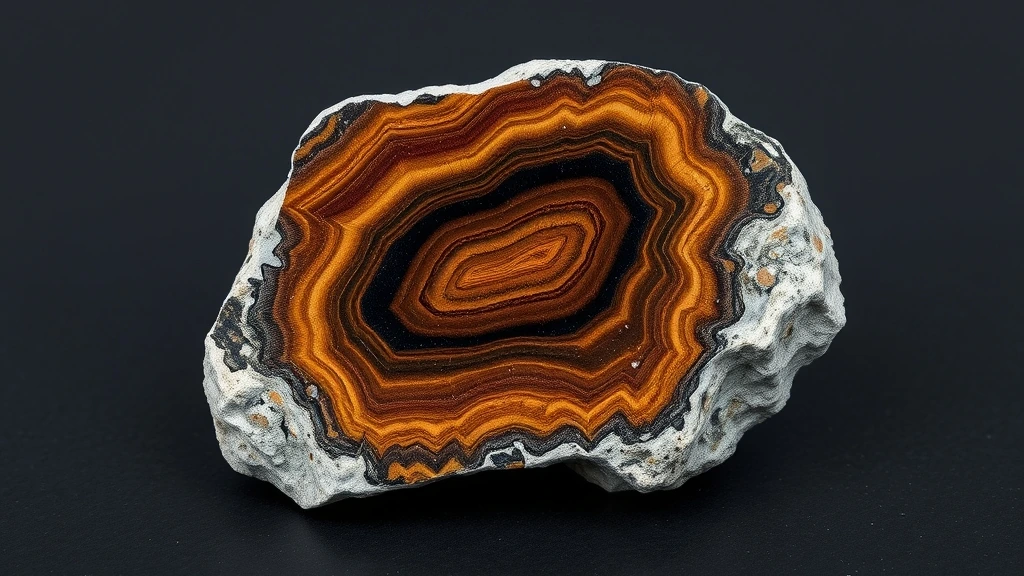
Tiger Eye Matrix belongs to the Natural Mineral / Crystal group, specifically within the quartz family. It forms through the replacement of crocidolite fibers by silica, creating a distinctive chatoyant effect. This geological process results in a banded, fibrous aggregate rather than a single crystal. The matrix structure provides stability and unique optical properties.
What is Tiger Eye Matrix? Geological Overview & Definition
Tiger Eye is a cryptocrystalline form of quartz, characterized by its fibrous texture and chatoyancy. The “matrix” designation refers to the surrounding host rock or additional quartz material encasing the primary stone. This geological context often enhances the stone’s durability and visual complexity.
The chatoyant effect arises from the alignment of crocidolite fibers, which are replaced by silica during diagenesis. This substitution preserves the fibrous structure while transforming the material into hard quartz. The resulting stone displays a silky luster and dynamic light reflection. Understanding this transformation is key to identifying authentic specimens.
Tiger Eye Matrix Chemical Composition & Crystallographic Properties
The fundamental crystal system of quartz is Trigonal, defining its lattice structure and symmetry. Although Tiger Eye appears as an aggregate, its constituent quartz grains adhere to this trigonal arrangement. The SiO₂ framework consists of silicon tetrahedra linked in a helical pattern. This structural rigidity contributes to the stone’s high hardness and chemical stability.
Cation substitution is minimal in pure quartz, but trace impurities can influence color. The primary chromophore for the golden hues is often attributed to iron oxides within the original crocidolite fibers. These iron-bearing minerals impart the characteristic brown and gold tones. Acid sensitivity is low, as quartz is highly resistant to most common acids.
Thermal behavior of Tiger Eye Matrix is generally stable under normal conditions. However, extreme heat can cause fracturing due to differential expansion in the fibrous structure. The Mohs hardness of 6.5 to 7.0 ensures resistance to scratching. Proper handling avoids thermal shock, preserving the integrity of the delicate fiber alignment.
| Property | Specification |
|---|---|
| Mineral Group | Natural Mineral / Crystal |
| Chemical Formula | SiO₂ |
| Mohs Hardness | 6.5 – 7.0 |
| Crystal System | Trigonal |
| Color & Optical Properties | Natural Tiger Eye Matrix color spectrum and optical dispersion |
| Primary Mining Localities | Global primary localities |
| Water & Chemical Resistance | High (Safe for gentle water washing) |
| Chakra Alignment (Traditional) | Heart Chakra (Anahata) |
| Zodiac Affinity (Traditional) | Sagittarius, Pisces |
| Symbolic Meaning (Traditional) | Spiritual awareness and universal harmony |
Tiger Eye Matrix Varieties & Color Spectrum
Tiger Eye Matrix displays distinct mineralogical characteristics across its geological varieties and structural habits. Gemologists evaluate these natural varieties based on crystal habit, trace chromophore concentrations, and visual luster.
Primary Natural Tiger Eye Matrix
The benchmark natural variety exhibiting diagnostic chatoyancy, fibrous structure, and characteristic golden-brown color saturation.
Distinct Geological Morphs of Tiger Eye Matrix
Secondary regional and structural varieties formed under localized geological temperature and pressure conditions.
Golden Tiger Eye
Formed in silicified quartz veins within granitic pegmatites, Golden Tiger Eye displays a lustrous, honey‑gold hue produced by parallel fibrous inclusions of crocidolite that have undergone oxidation. The characteristic chatoyant banding, known as the “cat’s eye” effect, is most vivid when the stone is cut en cabochon. This variety is abundant in South Africa’s Western Cape and is considered the commercial standard for the market.
Red Tiger Eye (Bengalite)
Red Tiger Eye, often called Bengalite, originates from the same trigonal quartz lattice but incorporates hematite and goethite micro‑inclusions that impart a deep ruby‑red to brownish‑orange tone. The pseudomorphosis of iron oxides after original amphibole fibers creates a striking, almost metallic sheen. Found primarily in the Nilgiri Hills of India, Bengalite is rarer than its golden counterpart and commands a premium among collectors.
Blue Tiger Eye (Apatite‑Tinted)
Blue Tiger Eye emerges when trace amounts of apatite and minute titanium oxides replace the typical iron‑rich inclusions, yielding a cool, slate‑blue to teal coloration. The chatoyancy remains, but the banding appears softer, often described as “silky” rather than sharply defined. This variety is mined in the arid basins of Namibia and is prized for its unusual hue, making it a niche choice for high‑end jewelry.
Green Tiger Eye (Verdigris)
The verdigris shade of Tiger Eye results from the substitution of chromium‑bearing minerals such as chromite within the fibrous inclusions, producing a vivid emerald‑green to olive tone. The mineral’s translucency is enhanced by fine‑grained quartz matrix, allowing light to penetrate and amplify the color. Green Tiger Eye is chiefly sourced from the Kalahari region of Botswana, where it is considered a semi‑precious gem of moderate rarity.
Multi‑Color Matrix (Mosaic Tiger Eye)
Mosaic Tiger Eye exhibits a kaleidoscopic pattern of gold, red, and brown bands interwoven within a single stone, reflecting a complex assemblage of iron, manganese, and copper oxides. This polymictic inclusion suite forms in zones of fluctuating redox conditions during slow cooling of pegmatitic bodies. Such stones are most commonly extracted from the Rio Grande do Sul province of Brazil, where they are celebrated for their artistic appeal and limited supply.
Where is Tiger Eye Matrix Found? Geological Mining & Extraction
Tiger Eye Matrix crystallizes in trigonal quartz hosted by silica‑rich pegmatites that intrude granitic batholiths, often alongside feldspar, mica, and beryl. The characteristic chatoyant fibers develop as amphibole or crocidolite veins are replaced by silica during hydrothermal alteration, preserving the fibrous texture that defines the stone’s optical performance.
Commercial extraction concentrates in three principal belts: the Western Cape of South Africa, the Nilgiri and Kolar districts of India, and the arid interiors of Namibia and Botswana. In Brazil’s Rio Grande do Sul, artisanal miners employ hand‑sorting techniques to isolate the mosaic varieties from alluvial deposits, while larger operations in South Africa use mechanized crushing and flotation to separate the denser quartz matrix from host rock.
Historical Significance & Cultural Lore of Tiger Eye Matrix
Across ancient lapidary traditions, Tiger Eye was prized for its perceived ability to balance mental clarity with emotional steadiness, a quality reflected in Greco‑Roman amulets inscribed with protective symbols. Egyptian tomb inventories from the New Kingdom list tiger‑eye cabochons set in gold, suggesting the stone was worn by elite officials to invoke the protective eye of Horus.
In Vedic texts, the stone is associated with the Heart Chakra (Anahata), believed to harmonize the inner self with universal forces, a belief that persisted into medieval Chinese Daoist alchemy where tiger‑eye talismans were placed on altars to attract prosperity. Throughout early archaeological records, the gemstone appears in trade caravans linking the Mediterranean to the Indian subcontinent, underscoring its enduring cross‑cultural appeal.
Modern Uses & Jewelry Applications of Tiger Eye Matrix
Tiger Eye Matrix is prized for its silky luster and distinctive chatoyancy, making it a favorite in contemporary lapidary. Artisans cut the stone into smooth cabochons or intricate facets, preserving the natural play of light while enhancing its visual appeal. The material is also carved into ornamental pieces such as pendants, brooches, and decorative panels, often set in gold or silver to accentuate its warm amber tones.
- Cabochon cuts highlight the stone’s natural sheen.
- Faceted designs emphasize the internal fiber alignment.
- Ornamental carving showcases the matrix’s unique texture.
- Set in metal enhances durability and visual contrast.
Metaphysical Properties & Traditional Meaning of Tiger Eye Matrix
According to historical traditions and metaphysical lore, Tiger Eye Matrix has long been associated with balance and grounding. Across ancient Mediterranean and Vedic lapidary lore, the stone is believed to harmonize the Heart Chakra (Anahata), fostering emotional stability and compassionate insight. Its golden hue is thought to reflect the sun’s energy, encouraging spiritual awareness and universal harmony. Practitioners claim that wearing or meditating with Tiger Eye Matrix can enhance courage, clarity, and a sense of inner peace.
Which Chakra and Zodiac Signs Align with Tiger Eye Matrix?
The Heart Chakra (Anahata) is the central energy center linked to love, compassion, and emotional equilibrium. Tiger Eye Matrix’s warm, golden glow is said to resonate with this chakra, promoting a balanced heart and a calm mind.
Sagittarius and Pisces are the canonical zodiac signs aligned with Tiger Eye Matrix. Individuals born under these signs are believed to benefit from the stone’s protective and uplifting qualities, enhancing intuition and fostering a deeper connection to the cosmos.
How to Identify Real vs. Fake Tiger Eye Matrix
Artificial imitations of Tiger Eye Matrix often appear as dyed glass or synthetic composites that lack the stone’s natural fiber structure. Genuine matrix displays a subtle, silky sheen and a characteristic chatoyancy that is difficult to replicate in synthetic materials.
Practical At-Home Authenticity Tests
- Temperature Test (Thermal Feel): Hold the stone in your hand; real Tiger Eye Matrix feels cool to the touch due to its silica composition, whereas synthetic glass warms quickly.
- Specific Gravity & Weight Test: A genuine sample will weigh slightly heavier than a glass imitation of the same size, reflecting its higher density.
- Scratch & Hardness Test (Mohs Comparison): Use a calibrated Mohs hardness kit; Tiger Eye Matrix should scratch glass (Mohs 6.5–7.0) but not be scratched by a steel nail (Mohs 5).
- Microscopic & Loupe Inspection (Internal Inclusions): Under magnification, real matrix shows fine, fibrous inclusions and a natural chatoyancy, whereas synthetic versions exhibit uniform coloration and lack of internal structure.
Tiger Eye Matrix Valuation Factors, Grading & Pricing
The first key factor is Color Saturation. A vivid, golden‑brown banding with a bright, almost metallic luster signals a high‑grade specimen. The visual vibrancy is directly linked to the natural energetic luster that many collectors seek, and it often commands a premium in the market.
The second factor focuses on Crystal Size & Weight (Grams). Larger, heavier pieces are valued more highly than smaller fragments, especially when the raw stone is presented in its natural matrix. A tumbled polish that preserves the matrix’s characteristic texture enhances appeal, while the presence of natural inclusions—such as fine fibrous strands—adds to the stone’s authenticity and desirability.
The third factor is Ethical Sourcing & Locality Premium. Provenance from reputable, traceable mines, particularly those with documented sustainable practices, attracts both holistic practitioners and serious collectors. Stones sourced from well‑known localities with a history of responsible mining often receive a premium, reflecting the growing demand for ethically produced gemstones.
How to Clean and Care for Tiger Eye Matrix
Cleaning Tiger Eye Matrix should be performed with warm soapy water and a soft cloth. Gently wipe the surface to remove dust and oils, ensuring the water temperature is not too hot to avoid stressing the crystal lattice. After cleaning, dry the stone thoroughly with a clean, dry microfiber cloth. Avoid ultrasonic cleaners, as the vibration can induce microfractures that compromise the structural integrity of the matrix.
Cleansing and Recharging Tiger Eye Matrix (Energetic Care)
To recharge the energetic properties of Tiger Eye Matrix, place the stone in a gentle, indirect light setting, such as under soft moonlight, for several hours. This method allows the crystal to absorb subtle celestial energies without exposure to direct heat or intense sunlight, which could damage its lattice structure.
Alternatively, resting the stone on a selenite charging slab or a clean, flat surface during a full moon can help realign its energetic field. Herbal smudging with sage or palo santo, performed at a safe distance, may also cleanse residual energies, provided the stone is never exposed to direct flame or heat.
Frequently Asked Questions About Tiger Eye Matrix
Tiger Eye Matrix displays distinct mineralogical characteristics across its geological varieties and structural habits. Gemologists evaluate these natural varieties based on crystal habit, trace chromophore concentrations, and visual luster.
Primary Natural Tiger Eye Matrix
The benchmark natural variety exhibiting diagnostic chatoyancy, fibrous structure, and characteristic golden-brown color saturation.
Distinct Geological Morphs of Tiger Eye Matrix
Secondary regional and structural varieties formed under localized geological temperature and pressure conditions.
Is Tiger Eye Matrix safe to wear in the shower?
Yes, Tiger Eye Matrix is water‑resistant and can be gently washed in the shower. The quartz matrix’s durability allows brief exposure to water, but prolonged soaking may dull its sheen. Use a mild soap and rinse with lukewarm water, then pat dry with a soft cloth to preserve its luster.
How should I clean my Tiger Eye Matrix to avoid damage?
Clean with warm soapy water and a soft cloth, avoiding ultrasonic cleaners. The matrix’s fibrous structure can fracture under ultrasonic vibration. Gently wipe with a damp microfiber cloth, then dry thoroughly; this maintains clarity without compromising structural integrity.
Can I use an ultrasonic cleaner on Tiger Eye Matrix?
No, ultrasonic cleaners should be avoided for Tiger Eye Matrix. The ultrasonic waves can induce micro‑fractures in the quartz matrix, leading to surface damage. Stick to manual cleaning with mild soap and a soft cloth for best results.
What is the ideal storage method for Tiger Eye Matrix?
Store in a dry, padded compartment away from direct sunlight. Tiger Eye is chemically stable and does not fade from normal light exposure; however, prolonged exposure to intense heat or direct flame can cause thermal shock or discoloration, and moisture should be removed promptly to prevent surface residue buildup. A velvet pouch or a soft-lined jewelry box protects its appearance.
Which zodiac signs are associated with Tiger Eye Matrix?
Tiger Eye Matrix aligns with Sagittarius and Pisces. These signs are believed to resonate with the stone’s protective and calming energies, enhancing intuition and emotional balance for their bearers.
Which chakra does Tiger Eye Matrix correspond to?
Tiger Eye Matrix corresponds exclusively to the Heart Chakra (Anahata). It is thought to promote compassion, emotional healing, and harmonious relationships, aligning the wearer’s heart energy with universal balance.
Does Tiger Eye Matrix have any special care instructions for travel?
Pack it in a cushioned case and avoid contact with rough surfaces. The matrix’s fibrous texture can scratch easily; keeping it separated from harder stones or metallic jewelry prevents surface abrasion and preserves its natural sheen.
Can Tiger Eye Matrix be used in jewelry that is exposed to high heat?
Avoid exposing Tiger Eye Matrix to high heat or direct flame. While the quartz matrix is heat‑resistant, prolonged exposure can cause discoloration or surface cracking. Keep it away from cooking areas, candles, or hot metal surfaces to maintain its integrity.