
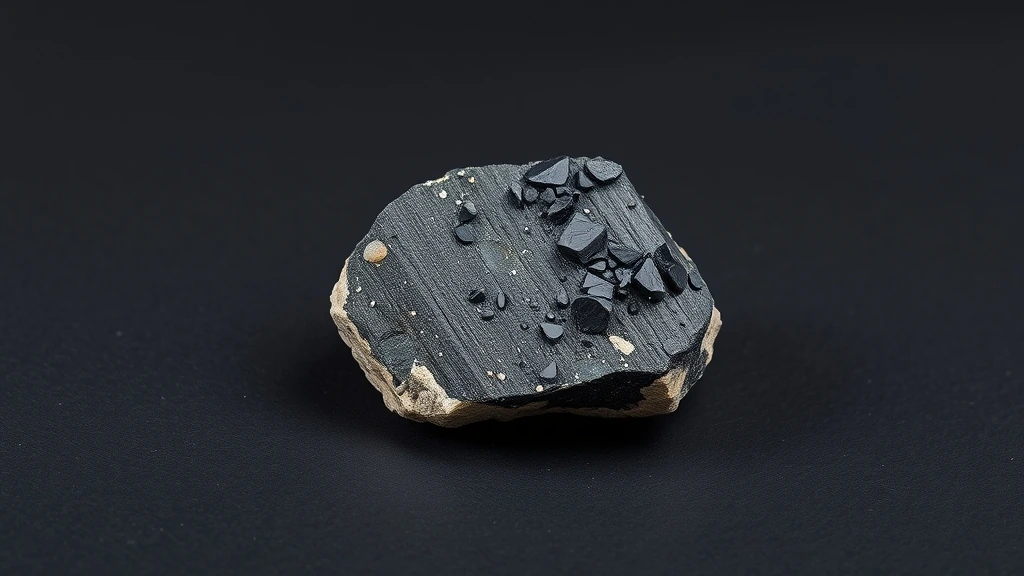
Vivianite belongs to the broader family of phosphate minerals, crystallizing in the monoclinic system. It is typically found as fine, needle‑like crystals or as earthy, fibrous aggregates in low‑temperature, reducing sedimentary environments. The mineral’s low hardness and high water content render it highly susceptible to oxidation when exposed to air, often turning from blue to brownish hues.
What is Vivianite? Geological Overview & Definition
Vivianite is a phosphate mineral that forms in anoxic, iron‑rich sediments, often within coal seams, limestone caves, or marine muds. Its crystals are typically slender, prismatic, and may aggregate into fibrous masses, giving the stone a translucent, sometimes opalescent appearance. The mineral’s defining feature is its hydrous nature, containing eight water molecules per formula unit, which contributes to its softness and sensitivity to light and air.
The mineral is classified under the phosphate group and is closely related to minerals such as phosphosiderite and phosphophyllite. In geological contexts, Vivianite is often a secondary mineral, forming when iron(II) and phosphate ions precipitate under reducing conditions. Its occurrence is widespread, with notable deposits in the United States, Germany, and the former Soviet Union.
Vivianite Chemical Composition & Crystallographic Properties
Vivianite crystallizes in the monoclinic crystal system, specifically in the space group *P2₁/c*. The lattice parameters are *a* ≈ 10.4 Å, *b* ≈ 10.6 Å, *c* ≈ 9.5 Å, with β ≈ 106°. These dimensions accommodate the iron(II) octahedra and phosphate tetrahedra linked by water molecules, creating a robust yet water‑rich framework.
Cation substitution in Vivianite is limited; iron(II) is the primary cation, but minor amounts of manganese or magnesium can replace iron without significantly altering the crystal structure. This substitution can subtly shift the color from a deep indigo to a lighter blue, depending on the degree of replacement.
The mineral’s chromophore centers arise from Fe²⁺–O charge transfer, which imparts its characteristic blue coloration. When exposed to oxygen, these centers oxidize to Fe³⁺, leading to a brownish or greenish discoloration. Acidic solutions can dissolve Vivianite, releasing phosphate ions and iron into solution, a property exploited in geochemical analyses.
Thermally, Vivianite loses its water molecules gradually. Heating to 200 °C causes dehydration, resulting in a loss of the blue hue and a transition to a brown, anhydrous phase. Further heating above 400 °C can lead to the formation of iron(III) oxides and phosphates, indicating the mineral’s sensitivity to temperature changes.
| Property | Specification |
|---|---|
| Mineral Group | Natural Mineral / Crystal |
| Mohs Hardness | 1.5–2 |
| Crystal System | Monoclinic |
| Specific Gravity (Density) | 2.68 |
| Refractive Index | n α = 1.579–1.616, n β = 1.602–1.656, n γ = 1.629–1.675 |
| Color & Optical Properties | Natural Vivianite color spectrum and optical dispersion |
| Primary Mining Localities | Global primary localities |
| Water & Chemical Resistance | High (Safe for gentle water washing) |
| Chakra Alignment (Traditional) | Root Chakra |
| Zodiac Affinity (Traditional) | Virgo |
| Symbolic Meaning (Traditional) | Grounding, endurance, and physical vitality |
Vivianite Varieties & Color Spectrum
Standard Vivianite
The most common variety exhibits a deep green to blue‑green hue, often with a translucent to semi‑opaque appearance. It crystallizes in the monoclinic system, forming prismatic or fibrous crystals. Inclusions of iron oxides can create subtle mottling, while the mineral’s low hardness (1.5–2) makes it fragile yet visually striking. This variety is widely traded in the United States, China, and the Czech Republic, where it is prized for its vivid color and delicate lattice.
Vivianite–Ferruginous
A rarer, iron‑rich form displays a dark green to almost black coloration with pronounced brownish streaks. The high iron content leads to a higher density and a slightly more opaque texture. Geologically, it forms in oxidized zones of iron‑rich phosphate deposits, often in association with phosphorite. Collectors value this variety for its dramatic contrast and the subtle metallic sheen that appears under light.
Vivianite–Blue‑Green (Blue Vivianite)
This variant is distinguished by a bright turquoise tone, sometimes with a slight iridescent sheen. It typically occurs in low‑temperature hydrothermal veins where silica and iron are abundant. The crystals are often small and finely fibrous, giving the stone a velvety surface. Blue‑green vivianite is prized in jewelry, especially in the European market, where its vivid color is considered a symbol of renewal.
Vivianite–Yellowish (Yellow Vivianite)
A less common form shows a pale yellow to ochre tint, occasionally with a subtle greenish cast. The yellow hue results from trace amounts of manganese and lower iron content. These crystals are usually found in sedimentary phosphate beds, often as thin, plate‑like inclusions within phosphatic nodules. Its rarity and gentle color make it a sought‑after specimen among mineralogists and collectors.
Vivianite–Greenish‑Brown (Brown Vivianite)
This variety presents a deep brownish‑green tone, occasionally with a mottled pattern. The brown coloration is due to high iron and manganese concentrations. It is typically found in oxidized zones of phosphate ore bodies, where the mineral has undergone partial weathering. Brown vivianite is prized for its earthy aesthetic and is often used in artisanal jewelry and decorative objects.
Vivianite–Clear (Transparent Vivianite)
A very rare, almost transparent form exhibits a clear to pale green appearance with minimal coloration. It forms in highly purified phosphate environments, often within siliceous cavities of pegmatites. The crystal habit is usually elongated and slender, giving the stone a glass‑like luster. Due to its scarcity and delicate transparency, clear vivianite is highly valued by collectors and is occasionally used in scientific demonstrations of mineral transparency.
Where is Vivianite Found? Geological Mining & Extraction
Vivianite typically occurs in phosphate‑rich sedimentary deposits and in the oxidized zones of iron‑bearing ore bodies. The mineral is often associated with phosphorite, apatite, and serpentine in low‑temperature hydrothermal veins. Major production centers include the United States (particularly the Mississippi Valley), China, the Czech Republic, and parts of Brazil, where large phosphate mines provide the raw material for both scientific study and commercial trade.
Extraction involves careful crushing and flotation of phosphate ores, followed by selective leaching to isolate vivianite. The process must control pH and temperature to preserve the delicate crystal structure, as vivianite’s low hardness makes it susceptible to mechanical damage. Once isolated, the mineral is sorted by color and clarity before being marketed to collectors, gem cutters, and scientific institutions.
Historical Significance & Cultural Lore of Vivianite
Across ancient lapidary traditions, vivianite’s vivid green hues were prized for their resemblance to fertile earth and renewal. In Greco‑Roman antiquity, the mineral was occasionally used as a decorative inlay in mosaics and jewelry, symbolizing growth and prosperity. Egyptian artisans incorporated vivianite into amulets and burial goods, believing its color to protect the deceased in the afterlife.
In Vedic and Chinese lore, vivianite’s green tone was associated with the Root Chakra and the element of earth, respectively, and was thought to promote grounding and endurance. Archaeological findings of vivianite fragments in early Chinese burial sites suggest its use as a talisman for physical vitality. These historical uses underscore the mineral’s enduring appeal across diverse cultures and epochs.
Modern Uses & Jewelry Applications of Vivianite
Vivianite is prized for its striking blue‑green hues, yet its softness (Mohs 1.5–2) limits its use to delicate adornments. Skilled lapidaries cut the mineral into cabochons, preserving the translucent glow, or facet it for small, ornamental pieces that showcase its subtle color variation. The gemstone is also carved into ornamental motifs for display in scientific collections or as a decorative accent in jewelry boxes.
- Cabochon polishing highlights the mineral’s natural sheen.
- Faceted cuts accentuate the internal crystal planes.
- Ornamental carving is favored for specimen displays rather than everyday wear.
Safety & Mineral Profile of Vivianite
Vivianite is a collector’s mineral; it is not intended for crystal‑healing practices. The mineral is chemically stable in dry conditions but can oxidize to a brownish color when exposed to air, so it should be stored in a dry, low‑humidity environment. Handling should be done with gloves to avoid skin irritation from iron‑rich dust. While ancient lapidary lore occasionally associated blue minerals with grounding energies, modern science stresses that any metaphysical claims lack empirical support.
Mineralogical Group and Planetary Lore of Vivianite
Vivianite belongs to the phyllosilicate group, specifically the iron(II) phosphate family, and crystallizes in the monoclinic system. Its structural similarity to other iron‑rich phosphates has led to its classification within the *phosphates, arsenates, and vanadates* supergroup.
Across early archaeological records, iron‑rich blue minerals were sometimes linked to celestial symbolism, with the color blue evoking the sky and the planet *Venus* in Roman iconography. In contemporary mineral lore, Vivianite’s hue has been associated with the *Virgo* zodiac sign, reflecting themes of purity and analytical clarity, though such associations remain cultural rather than scientific.
How to Identify Real vs. Fake Vivianite
Collectors must be wary of artificial imitations such as dyed glass or synthetic iron‑phosphate crystals. These replicas often lack the characteristic greenish‑blue translucency and may exhibit uniform coloration or a glassy luster that differs from natural Vivianite’s subtle, earthy sheen.
Practical At-Home Authenticity Tests
- Temperature Test (Thermal Feel): Hold the stone in the palm; natural Vivianite feels cool due to its low thermal conductivity, whereas glass feels warmer.
- Specific Gravity & Weight Test: A 5 mm cube of Vivianite should weigh roughly 0.2 g, reflecting its density of 2.68 g/cm³; glass replicas are usually lighter.
- Scratch & Hardness Test (Mohs Comparison): Use a steel file (Mohs 5.5) to scratch the surface; natural Vivianite may show faint scratches, whereas glass can be scratched more easily.
- Microscopic & Loupe Inspection (Internal Inclusions): Under a loupe, natural Vivianite often displays fibrous or needle‑like inclusions; synthetic versions tend to be inclusion‑free and uniformly clear.
Vivianite Valuation Factors, Grading & Pricing
Specimen aesthetic quality remains the foremost determinant in market valuation. A crystal with a flawless monoclinic habit and vivid blue‑green hue commands premium prices, especially when the surrounding matrix is pristine and free of inclusions. The overall visual integrity of the specimen, including surface clarity and the absence of surface scratches, directly influences its desirability among collectors.
Rarity and specimen dimensions are critical in establishing a fair market value. Larger, well‑formed crystal clusters measured in centimeters, coupled with a substantial mass in grams, elevate the specimen’s worth. Collectors prize specimens that have remained intact, without handling damage or fragmentation, as these attributes reflect both geological preservation and careful curation.
Mineralogical provenance and locality significantly impact valuation in scientific and museum collector markets. Specimens sourced from renowned localities such as the Bucharest mine or the Moscow Basin carry added prestige, while those with documented geological histories or unique formation environments are highly sought after by research institutions and private collections alike.
How to Clean and Care for Vivianite
Cleaning Vivianite requires gentle handling to preserve its delicate structure. Use warm soapy water and a soft cloth, applying minimal pressure to avoid inducing microfractures. After rinsing, dry the specimen with a lint‑free towel and store it in a low‑humidity environment to prevent moisture‑induced stress. Avoid ultrasonic cleaners, as the vibration can compromise the mineral’s fragile lattice.
Cleansing and Recharging Vivianite (Energetic Care)
Dry holistic methods such as herbal smudging with sage or cedar can be employed to cleanse the energetic field of Vivianite. Expose the specimen to gentle moonlight during a waxing or waning phase, allowing natural lunar energy to recharge its vibrational state. Alternatively, resting the mineral on a selenite charging slab facilitates subtle energetic alignment without exposing it to heat or direct sunlight, which could damage the crystal lattice.
Frequently Asked Questions About Vivianite
What is the chemical composition of Vivianite?
Vivianite is a hydrated iron(II) phosphate with the formula Fe₃(PO₄)₂·8H₂O. This composition gives it a characteristic blue‑green hue and a low hardness of 1.5–2 on the Mohs scale, making it delicate yet visually striking in jewelry and decorative pieces.
How durable is Vivianite for everyday wear?
Vivianite is moderately durable but should be handled with care. Its low hardness means it can scratch easily; however, it is water‑resistant, allowing gentle washing. Avoid abrasive surfaces and keep it out of high‑impact environments to preserve its luster.
Can Vivianite be safely washed in the shower?
Yes, Vivianite can be safely washed in a shower with gentle water. The mineral’s high water resistance permits mild rinsing, but it is advisable to use a soft cloth afterward to prevent accidental scratches or mechanical stress.
What is the best method to clean Vivianite without damaging it?
Use warm soapy water and a soft cloth to clean Vivianite. Avoid ultrasonic cleaners, as the vibrations can cause microfractures in the delicate crystal structure. A gentle wipe with a microfiber cloth is sufficient for routine maintenance.
Is Vivianite suitable for use in jewelry for people with sensitive skin?
Yes, Vivianite is suitable for jewelry on sensitive skin. The mineral does not contain allergens commonly found in metals, and its low reactivity with sweat makes it a good choice for those prone to skin irritation, provided it is kept free from abrasive contact.
Which zodiac sign is associated with Vivianite?
Vivianite is associated with the zodiac sign Virgo. This alignment reflects the mineral’s grounding qualities and its historical use in protective talismans for those born under this sign.
Which chakra does Vivianite correspond to in metaphysical practices?
Vivianite corresponds to the Root Chakra. In esoteric traditions, it is believed to promote grounding, endurance, and physical vitality, helping to stabilize the wearer’s energy and physical well-being.
Can Vivianite be used in a humid environment without degrading?
Vivianite can tolerate humid conditions, but prolonged exposure may affect its crystal structure. While it is water‑resistant, excessive moisture can encourage oxidation of the iron component, potentially darkening the stone; storing it in a dry, low‑humidity setting is best for long‑term preservation.