
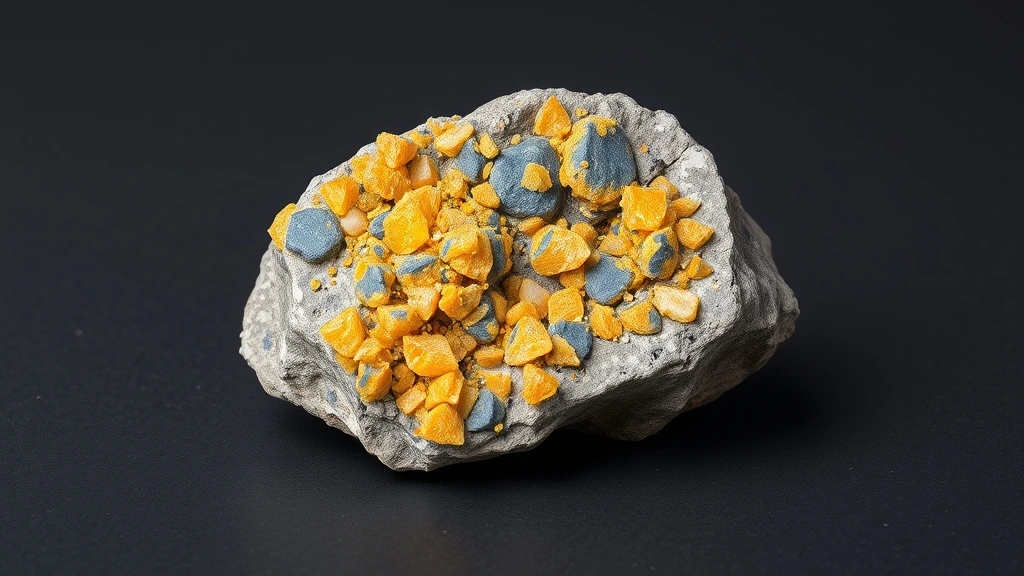
Wulfenite belongs to the natural mineral class, specifically categorized as a lead molybdate crystal. As a primary ore mineral, it forms through hydrothermal processes in oxidized zones of lead deposits. Its distinct crystalline structure sets it apart from amorphous aggregates, placing it firmly within the Tetragonal crystal system. This classification dictates its specific geometric symmetry and physical properties. While Wulfenite’s tetragonal symmetry reflects its ordered molybdate lattice, it stands in stark contrast to the complex, iridescent cubic formations characteristic of Bismuth.
What is Wulfenite? Geological Overview & Definition
Wulfenite typically occurs in the oxidized zones of lead-bearing veins, often associated with galena and other secondary minerals. It forms through the interaction of lead-rich fluids with molybdenum sources in supergene environments. These conditions favor the precipitation of well-formed crystals rather than massive aggregates.
The mineral is prized for its vibrant coloration and distinct crystal habits, which are highly sought after by collectors. Its geological setting often involves carbonate rocks or volcanic intrusions where oxidation processes are active. Understanding this formation context is crucial for identifying authentic specimens. While Wulfenite’s vivid orange hues stand out against its host rocks, collectors often compare its striking coloration to the warm, golden tones found in a Yellow Opal.
Wulfenite Chemical Composition & Crystallographic Properties
Wulfenite crystallizes in the Tetragonal system, characterized by a unit cell where the a and b axes are equal, and the c axis is distinct. This symmetry results in crystals that often appear as square-based pyramids or bipyramids. The lattice structure is defined by the specific arrangement of lead and molybdate ions within this tetragonal framework.
The chemical composition is strictly PbMoO₄, where lead cations substitute for other heavy metals in similar structural sites. The intense orange to red hue arises from the molybdate chromophore, which absorbs specific wavelengths of visible light. This color center is intrinsic to the molybdenum oxidation state within the crystal lattice.
The mineral exhibits significant acid sensitivity, dissolving readily in hydrochloric acid due to its lead content. Thermal behavior indicates that wulfenite is stable at room temperature but may decompose at higher heat levels. These properties necessitate careful storage and cleaning protocols to preserve the specimen’s integrity.
| Property | Specification |
|---|---|
| Mineral Group | Natural Mineral / Crystal |
| Chemical Formula | PbMoO₄ |
| Mohs Hardness | 3 |
| Crystal System | Tetragonal |
| Specific Gravity (Density) | 6.5–7.0 |
| Refractive Index | n ω = 2.405 n ε = 2.283 |
| Color & Optical Properties | Natural Wulfenite color spectrum and optical dispersion |
| Primary Mining Localities | Global primary localities |
| Water & Chemical Resistance | Sensitive (Avoid prolonged water soaking) |
| Chakra Alignment (Traditional) | Solar Plexus Chakra (Manipura) |
| Zodiac Affinity (Traditional) | Capricorn, Taurus |
| Symbolic Meaning (Traditional) | Creativity, motivation and self-confidence |
Wulfenite Varieties & Color Spectrum
Wulfenite displays distinct mineralogical characteristics across its geological varieties and structural habits. Gemologists evaluate these natural varieties based on crystal habit, trace chromophore concentrations, and visual luster.
Primary Natural Wulfenite
The benchmark natural variety exhibiting diagnostic color saturation and classic crystallographic symmetry.
Distinct Geological Morphs of Wulfenite
Secondary regional and structural varieties formed under localized geological temperature and pressure conditions.
Classic Wulfenite
Classic wulfenite displays a bright orange to reddish‑orange hue, often with a translucent to opaque appearance. It crystallizes in the tetragonal system, forming well‑defined prismatic crystals that can reach several centimeters. Inclusions of molybdenite or pyrite are common, giving a subtle metallic sheen. This variety is prized for its vivid color and is relatively abundant in the major deposits of the United States and the Czech Republic.
Wulfenite–Zincite Association (Zincite‑Wulfenite)
When wulfenite co‑crystallizes with zincite, the resulting specimen exhibits a golden‑yellow tint with occasional zincite inclusions that appear as tiny, needle‑like crystals. The zincite gives the stone a subtle luster and can create a striking contrast in polished cuts. This association is rare, primarily found in the Sierra de la Culebra in Spain, and is highly sought after by collectors for its unique color blend.
Wulfenite–Molybdenite (Molybdenite‑Rich)
Molybdenite‑rich wulfenite shows a deep orange‑brown coloration, often with a pearly sheen due to the presence of molybdenite inclusions. These inclusions can produce a characteristic “swirl” effect when viewed under polarized light. The mineral is typically found in the Bucharest region of Romania, where the geological setting favors the growth of both minerals together. Its rarity and distinctive visual signature make it a favorite among gemologists.
Wulfenite–Sphalerite (Sphalerite‑Rich)
Sphalerite‑rich wulfenite presents a pale orange to yellowish tone, with small sphalerite crystals embedded within the matrix. The sphalerite inclusions give the stone a subtle sparkle and a slightly metallic luster. This variety is uncommon, occurring mainly in the Moscow Oblast in Russia, and is prized for its delicate color contrast and the rarity of the sphalerite association.
Wulfenite–Pyrite (Pyrite‑Rich)
Pyrite‑rich wulfenite exhibits a bright orange color with bright, metallic pyrite inclusions that create a glittering effect. The pyrite crystals are often needle‑like, producing a distinctive “fire” when light passes through the stone. This variety is found in the Sierra Nevada of California, USA, and is considered a collector’s item due to its striking visual impact and relative scarcity.
Wulfenite–Arsenopyrite (Arsenopyrite‑Rich)
Arsenopyrite‑rich wulfenite shows a dark orange hue with subtle greenish undertones, caused by the presence of arsenopyrite inclusions. These inclusions can give the stone a faint green sheen under certain lighting conditions. This variety is extremely rare, with known occurrences only in the Karakul region of Central Asia. Its unique color palette and rarity make it a coveted specimen for high‑end collectors.
Where is Wulfenite Found? Geological Mining & Extraction
Wulfenite typically occurs in lead‑rich, molybdenum‑bearing pegmatites and in the oxidized zones of lead‑molybdenum ore deposits. The mineral forms through hydrothermal processes that deposit lead and molybdenum in quartz‑rich environments, often accompanied by secondary minerals such as cerussite and anglesite.
Major mining regions include the United States (especially the New Jersey and New Mexico districts), the Czech Republic (Jáchymov), Romania (Bucharest), and Spain (Sierra de la Culebra). Extraction involves conventional open‑pit or underground mining, followed by crushing and flotation to concentrate the ore. The resulting concentrate is then processed to recover lead and molybdenum, with wulfenite often recovered as a by‑product for gemological use.
Historical Significance & Cultural Lore of Wulfenite
Across ancient Greco‑Roman lapidary traditions, wulfenite was valued for its vibrant orange color, which was associated with the solar plexus chakra and believed to enhance creativity and self‑confidence. Archaeological finds in Roman villas show wulfenite incorporated into decorative mosaics and jewelry, underscoring its aesthetic appeal and symbolic significance.
In Egyptian and Vedic lore, the mineral’s orange hue was linked to the sun deity Ra and the Vedic concept of Manipura, respectively. Artifacts from the Etruscan and Mesoamerican cultures also reveal the use of wulfenite in ceremonial objects, where it was thought to embody the power of the Capricorn and Taurus zodiac signs, symbolizing stability and determination.
Modern Uses & Jewelry Applications of Wulfenite
Due to its low Mohs hardness of 3, wulfenite is primarily valued as a collector’s specimen rather than a durable jewelry stone. Its delicate crystal structure makes it susceptible to rapid wear and chipping in rings or bracelets. Consequently, lapidaries typically reserve this mineral for protective settings, display cases, or ornamental carvings where physical impact is minimized.
- Cabochon Cutting: Polished domes are common, showcasing the stone’s vibrant orange-red hue without risking facet chipping.
- Ornamental Carving: Skilled artisans carve small pendants or decorative inlays, emphasizing the mineral’s aesthetic appeal over durability.
- Specimen Display: Most high-quality crystals are mounted in custom frames for scientific study and visual appreciation.
Safety & Mineral Profile of Wulfenite
Handling wulfenite requires strict adherence to safety protocols because it contains lead (Pb), a toxic heavy metal. Direct skin contact, inhalation of dust, or ingestion poses significant health risks, necessitating the use of nitrile gloves and eye protection during cleaning. The mineral is chemically stable in dry conditions but can degrade if exposed to strong acids or prolonged moisture.
This stone is strictly a collector mineral valued for its scientific and aesthetic properties, not for therapeutic crystal healing. While historical lapidary traditions may associate lead-bearing minerals with various symbolic meanings, these claims lack empirical scientific validation. Prioritize physical safety and proper storage over any unverified metaphysical benefits.
Mineralogical Group and Planetary Lore of Wulfenite
Wulfenite belongs to the molybdate group of minerals, characterized by the molybdate anion (MoO₄²⁻) in its crystal lattice. It forms in the oxidized zones of lead deposits, often associated with galena and other lead sulfides. Its tetragonal crystal system and high refractive index distinguish it from other lead-bearing minerals like pyromorphite.
In historical astrological and alchemical contexts, lead-associated minerals were sometimes linked to Saturn, symbolizing structure, discipline, and transformation. However, these associations are purely cultural and do not reflect any measurable physical or energetic properties. Modern mineralogy focuses on its geological formation and crystallographic data rather than planetary symbolism.
How to Identify Real vs. Fake Wulfenite
Artificial imitations of wulfenite are rare due to the mineral’s specific geological rarity and high value. However, synthetic glass or dyed quartz may be passed off as wulfenite by unscrupulous dealers. These fakes often lack the natural crystal habit and specific gravity of genuine specimens. Careful examination is essential to distinguish authentic wulfenite from these deceptive alternatives.
Practical At-Home Authenticity Tests
- Temperature Test (Thermal Feel): Genuine wulfenite feels cool to the touch initially due to its high thermal conductivity, whereas plastic imitations warm up quickly.
- Specific Gravity & Weight Test: With a density of 6.5–7.0 g/cm³, wulfenite feels significantly heavier than its size suggests, unlike lighter glass or quartz replicas.
- Scratch & Hardness Test (Mohs Comparison): Wulfenite has a Mohs hardness of 3, meaning it can be scratched by a copper coin (hardness 3.5) but will scratch glass (hardness 5.5) only if the glass is flawed; conversely, a steel knife (hardness 5.5) will easily scratch wulfenite.
- Microscopic & Loupe Inspection (Internal Inclusions): Use a 10x loupe to examine for natural crystal terminations and internal fractures. Synthetic glass often contains bubble inclusions or a perfectly uniform, inclusion-free appearance.
Wulfenite Valuation Factors, Grading & Pricing
Specimen aesthetic quality dominates market value. Collectors prize vivid orange‑yellow to deep orange hues, especially when the color is uniform and free of zoning. Crystals that exhibit a flawless, tabular or pyramidal habit with sharp edges and an undamaged matrix command premium prices, while weathered or surface‑etched pieces are discounted.
Rarity and specimen dimensions are the second pricing pillar. Large, intact crystals exceeding 5 cm in length and weighing several grams are scarce, and their size directly influences valuation. Intact clusters that retain their natural growth orientation and show no handling damage are especially prized, whereas fragmented or heavily altered material fetches lower offers.
Mineralogical provenance and locality value complete the valuation equation. Wulfenite from classic deposits such as Mina de la Cañada (Spain), Tsumeb (Namibia), or the historic Red Cloud Mine (USA) carries a historic cachet that appeals to museums and high‑end collectors. Provenance documentation, including original mining records and authenticated locality stamps, can elevate a specimen’s price dramatically.
How to Clean and Care for Wulfenite
Wulfenite should be handled with a soft, dry microfiber cloth to remove loose dust. When a brief cleaning is required, wipe gently with a lightly damp cloth and immediately dry the surface with another dry cloth; this prevents moisture from lingering on the crystal. Ultrasonic cleaners must be avoided, as the rapid vibrations can induce micro‑fractures in the delicate tetragonal lattice.
Cleansing and Recharging Wulfenite (Energetic Care)
For holistic maintenance, place the specimen in a gentle moonlight exposure for a few hours on clear nights, allowing lunar energy to refresh its vibrational field without heat stress. Alternatively, position the crystal on a clean selenite slab for passive recharging, which transmits subtle neutral energy while keeping the mineral physically untouched.
A complementary method involves herbal smudging with sage or cedar; pass the smoke over the crystal without allowing ash or moisture to settle, then let the stone rest in a dry, ventilated space. These dry, low‑energy practices honor both the mineral’s physical integrity and its metaphysical traditions.
Frequently Asked Questions About Wulfenite
Wulfenite displays distinct mineralogical characteristics across its geological varieties and structural habits. Gemologists evaluate these natural varieties based on crystal habit, trace chromophore concentrations, and visual luster.
Primary Natural Wulfenite
The benchmark natural variety exhibiting diagnostic color saturation and classic crystallographic symmetry.
Distinct Geological Morphs of Wulfenite
Secondary regional and structural varieties formed under localized geological temperature and pressure conditions.
What is the chemical composition of wulfenite?
Wulfenite is lead molybdate, PbMoO₄. This tetragonal mineral combines lead (Pb) and molybdenum (Mo) in a tetrahedral oxygen framework, giving it a high specific gravity of 6.5–7.0 and a distinctive bright orange‑yellow hue prized by collectors.
How hard is wulfenite on the Mohs scale?
It rates a 3 on the Mohs hardness scale. This relatively soft rating means wulfenite can be scratched by a copper coin and should be handled with care, especially when set in jewelry, to avoid abrasion or accidental damage.
Can wulfenite be worn in water or during a shower?
No – it is water‑sensitive and should avoid prolonged soaking. Extended exposure to moisture can promote surface deterioration or micro‑fracturing, so it is best to remove wulfenite pieces before bathing, swimming, or heavy rain.
What is the safest way to clean wulfenite jewelry?
Wipe briefly with a damp cloth and dry immediately. Avoid ultrasonic cleaners, as the vibrations can cause internal fractures; instead, use a soft, lint‑free microfiber cloth or a gentle brush to remove dust without introducing moisture.
Which zodiac signs are traditionally linked to wulfenite?
Capricorn and Taurus are the aligned zodiac signs. Across astrological traditions, these earth signs are said to resonate with wulfenite’s grounding energy, enhancing stability and practical creativity for those born under their influence.
Which chakra does wulfenite correspond to in metaphysical practice?
It is associated with the Solar Plexus Chakra (Manipura). This chakra governs personal power, confidence, and motivation, and wulfenite is believed to amplify self‑confidence and creative drive when placed on the upper abdomen.
Is wulfenite suitable for everyday wear despite its softness?
It can be worn daily if protected, but caution is advised. Setting the stone in protective bezel settings, avoiding impact, and limiting exposure to chemicals or harsh environments helps preserve its brilliance while allowing regular use.
How does wulfenite’s refractive index affect its appearance?
Its refractive indices are nω = 2.405 and nε = 2.283, producing high brilliance. The strong optical dispersion gives wulfenite a vivid, fire‑like sparkle, especially when cut as a cabochon or faceted gem, enhancing its appeal in high‑end lapidary work.