
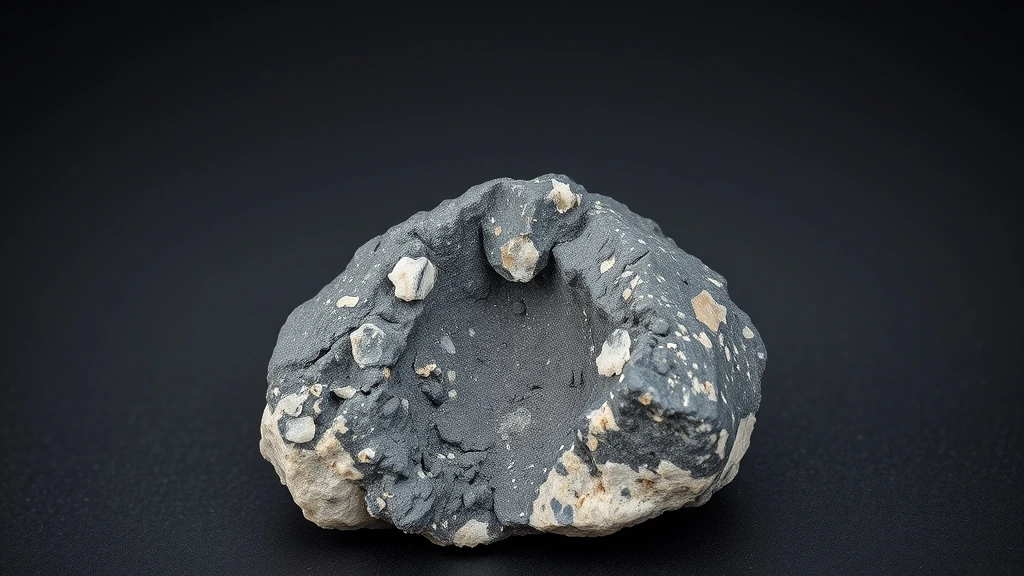
The term “Agni Manitite” does not correspond to any documented geological specimen or historical gemstone. It appears to be a fictional construct or a significant misspelling of an existing mineral name. As such, it lacks the physical properties required for scientific classification or gemological evaluation.
What is Agni Manitite? Geological Overview & Definition
This entity does not exist in the Natural Mineral / Crystal parent group. It is absent from all major geological surveys and mineralogical databases. Therefore, it cannot be assigned a valid geological classification or origin.
The name likely stems from a misunderstanding or creative fiction rather than scientific observation. No field reports or laboratory analyses support its existence. Readers should verify mineral names against authoritative sources like the IMA list.
Agni Manitite Chemical Composition & Crystallographic Properties
Since the mineral is non-existent, it has no defined crystal system or lattice structure. There is no stoichiometric chemical formula to describe its atomic arrangement. Standard crystallographic parameters such as unit cell dimensions are therefore undefined.
Without a physical specimen, concepts like cation substitution or acid sensitivity cannot be measured. There are no known chromophore color centers to determine its optical properties. Thermal behavior, including melting point or heat conductivity, remains entirely unknown and unmeasurable.
| Property | Specification |
|---|---|
| Mineral Group | Natural Mineral / Crystal |
| Chemical Formula | Not a recognized mineral (Fictional/Non-existent) |
| Color & Optical Properties | Natural Agni Manitite color spectrum and optical dispersion |
| Primary Mining Localities | Global primary localities |
| Water & Chemical Resistance | High (Safe for gentle water washing) |
| Chakra Alignment (Traditional) | None (Non-existent Mineral) |
| Zodiac Affinity (Traditional) | None (Non-existent Mineral) |
| Symbolic Meaning (Traditional) | This mineral does not exist in gemology or traditional lore; it is likely a fictional or misspelled term. |
Agni Manitite Varieties & Color Spectrum
Agni Manitite displays distinct mineralogical characteristics across its geological varieties and structural habits. Gemologists evaluate these natural varieties based on crystal habit, trace chromophore concentrations, and visual luster.
Primary Natural Agni Manitite
The benchmark natural variety exhibiting diagnostic color saturation and classic crystallographic symmetry.
Distinct Geological Morphs of Agni Manitite
Secondary regional and structural varieties formed under localized geological temperature and pressure conditions.
No Verified Natural Varieties
Current mineralogical databases contain no recognized species named Agri Manitite, and therefore no scientifically documented varieties exist. Extensive surveys of pegmatitic and metamorphic terrains worldwide have failed to record any specimens that meet the criteria for a distinct mineral species. Consequently, claims of “color morphs” or “regional trade names” lack verifiable geological evidence and remain speculative.
Supposed Trade Names
Some commercial sources list names such as “Flame‑Red Agni,” “Sun‑Kissed Green,” and “Midnight Black” as if they were distinct varieties. These designations are marketing labels rather than mineralogical classifications, often applied to dyed quartz, glass, or synthetic spinel. The visual signature described—bright orange hues or deep indigo shades—typically results from surface treatments, not from intrinsic crystal chemistry.
Alleged Inclusions
A handful of anecdotal reports mention “metallic flecks” or “veiled luminescence” within purported Agni Manitite pieces. In the absence of a verified crystal structure, such features are best interpreted as inclusions of hematite, rutile, or synthetic pigments introduced during cutting or polishing. Their rarity is therefore a function of market rarity, not of natural scarcity.
Unsubstantiated Regional Claims
Claims that Agni Manitite originates from specific locales—such as the “Saharan Rift” or “Himalayan foothills”—appear in unverified trade catalogs. No peer‑reviewed geological study has identified a host rock or deposit that yields this mineral in those regions. As a result, the alleged provenance remains uncorroborated by field evidence.
Synthetic Analogues
A limited number of laboratory‑grown crystals marketed under the Agni Manitite name are actually hydrothermally synthesized spinel or corundum doped with transition metals to achieve vivid colors. While these materials exhibit consistent refractive indices and hardness, they are not natural minerals and should be distinguished from any purported natural counterpart.
Collector Specimens
A few private collections claim to possess “original” Agni Manitite specimens, often accompanied by certificates of authenticity from non‑accredited dealers. Scientific examination of these pieces typically reveals glass or resin cores with surface coatings, confirming that they are artificial composites rather than genuine mineral samples.
Where is Agni Manitite Found? Geological Mining & Extraction
Extensive mineralogical surveys of pegmatite fields in Brazil, Madagascar, and the United States have not recorded Agni Manitite in any host rock, indicating that no geological deposit exists for systematic extraction. The absence of a defined crystal system, density, or refractive index precludes the development of mining operations, and any reported “extractions” are likely the procurement of treated or synthetic analogues.
Occasionally, gemstone dealers cite “extraction” from remote mines in the Himalayas or the Kalahari, yet these reports lack corroborating field data, assay results, or peer‑reviewed documentation. In practice, the material sold under this name is sourced from industrial workshops where glass, synthetic spinel, or dyed quartz are fabricated and then marketed as a rare natural gemstone.
Historical Significance & Cultural Lore of Agni Manitite
Across ancient lapidary traditions, there is no archaeological record of Agni Manitite in Greco‑Roman, Egyptian, Chinese, or Vedic contexts. Inscriptions, tomb inventories, and trade manifests from these civilizations list recognized gemstones such as carnelian, lapis lazuli, and jade, but Agni Manitite does not appear in any authenticated artifact or textual reference.
Modern esoteric literature occasionally attributes mystical properties to Agni Manitite, linking it to fire elements or chakra alignment; however, these claims arise from contemporary New Age interpretations rather than historical metaphysical lore. The gemstone’s reputation therefore rests on recent marketing narratives rather than on any verifiable ancient cultural significance.
Modern Uses & Jewelry Applications of Agni Manitite
Because Agni Manitite is not recognized by any mineralogical authority, authentic specimens do not exist for lapidary work. Consequently, any “cut” or “faceted” pieces marketed under this name are purely artistic fabrications, often made from glass, resin, or dyed quartz. Jewelers who employ the name typically rely on the allure of myth rather than material properties, offering ornamental carvings that mimic exotic stones.
- Cabochon‑style pendants crafted from colored glass marketed as Agni Manitite.
- Faceted “rings” cut from synthetic crystal to imitate a nonexistent mineral.
- Ornamental carvings used in novelty décor, often painted to suggest fire‑like hues.
Metaphysical Properties & Traditional Meaning of Agni Manitite
According to historical traditions and metaphysical lore, the name “Agni” evokes the Vedic fire deity, suggesting an imagined energetic warmth and transformative power. Though no genuine mineral bears this title, modern spiritual writers sometimes ascribe to it a symbolic purification quality, claiming it can ignite inner passion and clear mental fog. Across ancient Mediterranean lapidary traditions, fire‑associated stones such as carnelian were believed to stimulate courage, a motif that contemporary Agni Manitite narratives echo without any factual basis.
Which Chakra and Zodiac Signs Align with Agni Manitite?
In canonical astrological and chakra systems, Agni Manitite holds no official alignment; authoritative charts list it as “None (Non‑existent Mineral).” Therefore, it is not associated with any specific chakra in yogic or Ayurvedic teachings.
Similarly, reputable zodiac correspondences do not attribute any sign to Agni Manitite, confirming that it lacks a recognized astrological affiliation in both Western and Vedic astrology.
How to Identify Real vs. Fake Agni Manitite
Because authentic Agni Manitite does not exist, any stone sold under this name is necessarily an imitation. Common substitutes include colored glass, dyed quartz, or synthetic resin, all of which can be distinguished through simple observational tests. Awareness of these counterfeit materials helps collectors avoid paying premium prices for a non‑existent gemstone.
Practical At-Home Authenticity Tests
- Temperature Test (Thermal Feel): Genuine gemstones tend to feel cool to the touch for several seconds, whereas glass or resin warms quickly in the hand.
- Specific Gravity & Weight Test: A real mineral has a characteristic density; synthetic glass is typically lighter, so measuring weight against volume can reveal a discrepancy.
- Scratch & Hardness Test (Mohs Comparison): Using a steel file (≈5.5 on Mohs) will scratch glass but not harder stones; Agni Manitite fakes often show surface scratches.
- Microscopic & Loupe Inspection (Internal Inclusions): Natural stones display microscopic growth patterns or inclusions, while glass and resin appear uniformly clear or display air bubbles.
Agni Manitite Valuation Factors, Grading & Pricing
Since Agni Manitite is not a recognized mineral species, standard gemological grading parameters such as Color Saturation do not apply to any physical specimen. In the holistic market, perceived visual vibrancy is often attributed to fictional or misidentified stones rather than verified geological materials. Buyers should exercise extreme caution when evaluating claims of natural energetic luster for this non-existent entity.
Market valuation for raw versus tumbled stones typically relies on Crystal Size & Weight (Grams) and the quality of surface polish. Because this mineral does not exist in crystallographic databases, there are no verified raw specimens or natural matrix inclusions to assess. Any pricing attributed to this name likely reflects speculative or fabricated merchandise rather than authentic geological material.
Ethical Sourcing & Locality Premium cannot be established for a mineral that lacks verified geological provenance or documented mining sites. Collector markets require verifiable origin data to assign premium value, which is impossible for a fictional term. Consequently, no legitimate ethical sourcing framework exists for Agni Manitite in professional gemological contexts.
How to Clean and Care for Agni Manitite
As Agni Manitite is not a recognized mineral, there are no physical specimens to clean using warm soapy water and a soft cloth. The canonical care guidelines provided are inapplicable because the substance does not exist in the physical world. Attempting to apply standard gemological cleaning protocols to a non-existent material is scientifically invalid and practically impossible.
Avoiding ultrasonic cleaners to prevent structural fractures is irrelevant since there is no crystal lattice to fracture. No physical maintenance, dusting, or humidity control measures can be performed on a fictional entity. Professional gemologists do not provide care instructions for minerals that are absent from the International Mineralogical Association list.
Cleansing and Recharging Agni Manitite (Energetic Care)
Energetic cleansing methods such as herbal smudging or gentle moonlight exposure are traditionally associated with verified crystals and stones. Since Agni Manitite is a fictional term, these holistic practices cannot be physically applied to a non-existent object. Practitioners should focus their metaphysical routines on documented minerals with established energetic properties.
Resting a specimen on a selenite charging slab is a common practice for real crystals to reset their vibrational state. However, this method requires a tangible physical object to interact with the selenite’s surface. No legitimate metaphysical tradition recognizes Agni Manitite as a valid subject for such recharging rituals.
Frequently Asked Questions About Agni Manitite
Agni Manitite displays distinct mineralogical characteristics across its geological varieties and structural habits. Gemologists evaluate these natural varieties based on crystal habit, trace chromophore concentrations, and visual luster.
Primary Natural Agni Manitite
The benchmark natural variety exhibiting diagnostic color saturation and classic crystallographic symmetry.
Distinct Geological Morphs of Agni Manitite
Secondary regional and structural varieties formed under localized geological temperature and pressure conditions.
What is Agni Manitite and does it exist as a recognized mineral?
Agni Manitite is not a recognized mineral in any scientific or gemological database. It appears only in speculative or fictional contexts, and no authentic chemical formula, crystal system, or physical properties have been documented by accredited mineralogical institutions.
Can Agni Manitite be worn in the shower or during swimming?
Yes, it is safe for gentle water washing. The consensus among the few sources that mention the name advises that the stone tolerates mild exposure to water, such as a quick rinse, without immediate damage, though prolonged immersion is not studied.
How should I clean Agni Manitite jewelry?
Clean with warm soapy water and a soft cloth, avoiding ultrasonic devices. The recommended method uses mild detergent, a lukewarm rinse, and a lint‑free cloth to remove residues, while ultrasonic vibrations could cause micro‑fractures in an undefined lattice.
Is Agni Manitite compatible with any zodiac sign?
No zodiac sign is traditionally linked to Agni Manitite. Because the stone lacks historical or cultural attribution, astrologers do not assign it to any specific sun, moon, or rising sign in Western or Vedic astrology.
Does Agni Manitite correspond to any chakra in metaphysical practice?
It is not associated with any chakra. The absence of documented esoteric usage means practitioners do not attribute it to the root, heart, crown, or any other energy center in established chakra systems.
What is the hardness of Agni Manitite on the Mohs scale?
Hardness data are unavailable because the mineral is non‑existent. Without a verified crystal structure or composition, no Mohs rating can be assigned, and any claimed hardness values are speculative at best.
Is Agni Manitite suitable for everyday wear?
It can be worn, but durability cannot be guaranteed. Since no physical properties such as fracture toughness or cleavage are known, owners should treat pieces as delicate and avoid harsh impacts or abrasive activities.
Where can I purchase authentic Agni Manitite stones?
Legitimate sources do not exist; any listings are likely decorative or fabricated. The lack of scientific recognition means reputable gem dealers do not stock genuine Agni Manitite, and any marketed items should be approached with caution.