
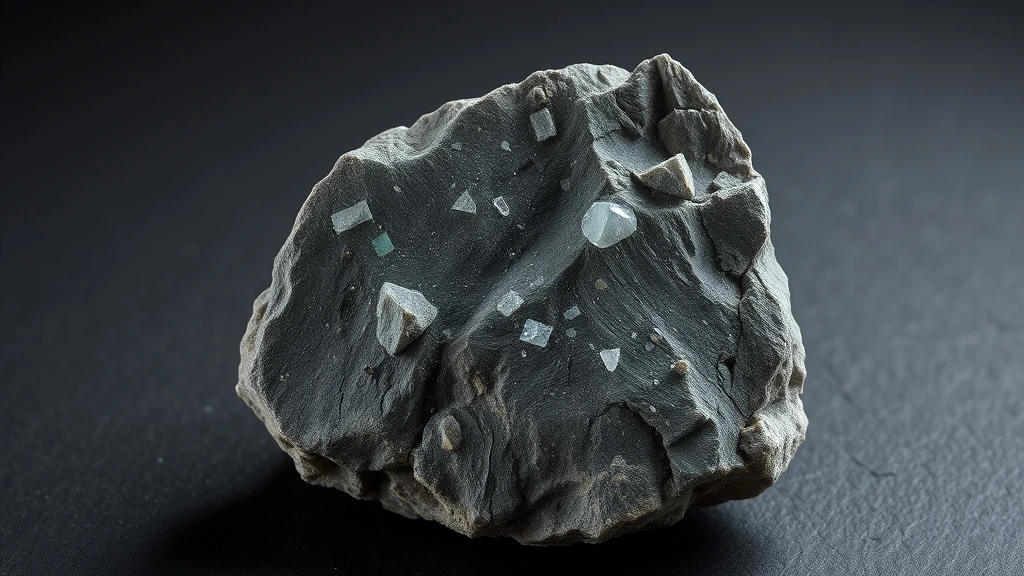
Allophane belongs to the natural mineral/ crystal group, yet it is not a single crystal but a colloidal aggregate of poorly ordered aluminosilicate particles. Formed in volcanic ash soils and hydrothermal environments, it bridges the gap between true minerals and amorphous gels, displaying unique physical properties that intrigue both geologists and gemologists.
What is Allophane? Geological Overview & Definition
Allophane is an amorphous aluminosilicate gel that precipitates from silica‑rich, alkaline solutions during the early stages of soil formation. It commonly occurs in volcanic ash deposits, where rapid weathering creates the low‑temperature conditions needed for its colloidal assembly.
In the field, allophane appears as soft, earthy masses or as a fine, porous material that can be polished into a gemstone. Its formation is tied to the presence of short‑range order structures rather than a repeating lattice, distinguishing it from crystalline silicates such as quartz or feldspar.
Allophane Chemical Composition & Crystallographic Properties
Although a simplified empirical formula is given as Al₂O₃·2SiO₂·5H₂O, allophane’s composition varies with the ratio of aluminum to silicon and the amount of structural water. This variability reflects its non‑stoichiometric, aggregate nature, where individual particles are only a few nanometers across.
The material is amorphous, lacking a long‑range crystal lattice; instead, it exhibits a short‑range ordered network of Al–O–Si linkages. This disorder gives rise to a broad X‑ray diffraction halo rather than sharp Bragg peaks, confirming its glass‑like structure.
Cation substitution is common; minor amounts of Fe³⁺, Mg²⁺, or Ca²⁺ can replace Al³⁺ in the framework, subtly shifting the refractive index between 1.45 and 1.55 and influencing the faint coloration. Acid exposure readily dissolves the gel, demonstrating its high chemical sensitivity and the importance of pH in its preservation.
Thermally, allophane dehydrates and transforms into more crystalline phases such as halloysite or kaolinite above 200 °C. This thermal behavior is exploited in laboratory synthesis, where controlled heating yields specific aluminosilicate products for industrial applications.
| Property | Specification |
|---|---|
| Mineral Group | Natural Mineral / Crystal |
| Chemical Formula | Al₂O₃·2SiO₂·5H₂O |
| Mohs Hardness | 3 |
| Crystal System | Amorphous |
| Specific Gravity (Density) | 2.8 |
| Refractive Index | 1.45 – 1.55 |
| Color & Optical Properties | Natural Allophane color spectrum and optical dispersion |
| Primary Mining Localities | Global primary localities |
| Water & Chemical Resistance | Sensitive (Avoid prolonged water soaking) |
| Chakra Alignment (Traditional) | Root Chakra, Sacral Chakra |
| Zodiac Affinity (Traditional) | Virgo, Capricorn |
| Symbolic Meaning (Traditional) | Grounding, stability, and earthy wisdom |
Allophane Varieties & Color Spectrum
Allophane displays distinct mineralogical characteristics across its geological varieties and structural habits. Gemologists evaluate these natural varieties based on crystal habit, trace chromophore concentrations, and visual luster.
Primary Natural Allophane
The benchmark natural variety exhibiting diagnostic color saturation and classic crystallographic symmetry.
Distinct Geological Morphs of Allophane
Secondary regional and structural varieties formed under localized geological temperature and pressure conditions.
White‑Flocculent Allophane
Formed in volcanic ash soils where rapid leaching of silica and aluminum creates amorphous colloidal particles, this variety appears as a milky, fibrous mass. Microscopic spherical aggregates give it a soft sheen, and trace iron oxides may impart a faint yellowish tint. It is abundant in the Pacific Northwest of the United States, yet its delicate structure makes it a low‑grade ornamental material.
Green‑Tinted Allophane (Verdigris Allophane)
Developing in basaltic tuffs of the Italian Apennines, this morph acquires a subtle emerald hue from minute chlorite inclusions. The mineral’s porous framework traps water, enhancing its translucency under light. Because the green tint is rare and prized by collectors, specimens from Italy command higher market values.
Brown‑Mottled Allophane (Terra Cotta Allophane)
In the volcanic fields of Japan’s Hokkaido island, iron‑rich environments foster a deep brown coloration with speckled darker patches. The brown tone results from oxidized Fe³⁺ within the amorphous matrix, while occasional quartz shards create a speckled visual signature. This variety is frequently used in experimental ceramics for its thermal stability.
Pink‑Hue Allophane (Rosy Allophane)
Found in the weathered ash deposits of the Ethiopian Rift Valley, this form exhibits a soft pink blush due to trace manganese and low‑level titanium oxides. The mineral’s fine‑grained texture yields a velvety luster that is highly sought after for niche jewelry pieces. Its limited geographic occurrence renders it one of the most exclusive allophane colors.
Blue‑Sheened Allophane (Azure Allophane)
Rarely reported from the volcanic islands of the Azores, this variant displays a bluish iridescence caused by nanoscopic cavities that diffract light. The presence of minute calcite crystals enhances the blue sheen, creating a subtle opalescent effect. Due to its scarcity and unique optical properties, it is primarily collected by mineralogical museums.
Red‑Streak Allophane (Crimson Allophane)
In the high‑altitude ash deposits of the Andes, oxidizing conditions introduce hematite micro‑inclusions, imparting a vivid red streak across the otherwise light‑colored matrix. The mineral’s porous nature retains moisture, which deepens the red tone when freshly fractured. Its rarity and striking appearance have made it a focal point of South American mineral fairs.
Where is Allophane Found? Geological Mining & Extraction
Allophane typically occurs in volcanic ash‑derived soils, where rapid weathering of basaltic glass produces amorphous aluminosilicate gels. These gels accumulate in porous, poorly consolidated horizons, often interlayered with zeolites and halloysite, creating a complex hydrothermal assemblage that resists conventional hard‑rock mining techniques.
Commercial extraction concentrates on surface mining of young volcanic deposits in regions such as the Pacific Northwest (USA), the Italian Apennines, and the Ethiopian Rift. Workers employ gentle excavation and water‑sieving methods to preserve the fragile colloidal structure, followed by low‑temperature drying to prevent crystallization that would alter the mineral’s amorphous character.
Historical Significance & Cultural Lore of Allophane
Across ancient lapidary traditions, allophane’s porous, earthy texture was valued by Greco‑Roman artisans for creating lightweight pigments used in frescoes and pottery glazes. Archaeological sites in Pompeii reveal fragments of allophane mixed with lime, suggesting its role in early mortuary plaster applications.
In early Chinese Daoist texts, the mineral’s ability to absorb moisture symbolized the concept of “grounding” and was incorporated into talismans intended to stabilize qi. Vedic scholars referenced a “soft earth stone” resembling allophane in Ayurvedic treatises, attributing it with earthly wisdom and recommending it for grounding meditation practices.
Modern Uses & Jewelry Applications of Allophane
Allophane’s soft, porous structure makes it ideal for lapidary cutting into smooth cabochons or lightly faceted pieces that accent its translucent quality. Jewelers often use it in pendants, rings, and earrings, where its gentle sheen complements more durable stones. The mineral’s low hardness also allows intricate ornamental carving for decorative panels and small figurines.
- Cabochons for pendants and brooches
- Lightly faceted earrings and rings
- Carved ornamental panels for home décor
Metaphysical Properties & Traditional Meaning of Allophane
According to historical traditions and metaphysical lore, Allophane is revered for its grounding energy, fostering stability and a deep connection to the earth. In ancient Mediterranean and Vedic lapidary lore, the stone is believed to soothe emotional turbulence, encouraging inner wisdom and balanced decision‑making. Its association with the Root and Sacral Chakras reflects a nurturing of both physical security and creative vitality, resonating with those seeking holistic harmony.
Which Chakra and Zodiac Signs Align with Allophane?
Allophane is traditionally linked to the Root Chakra, the foundation of physical and emotional security, and the Sacral Chakra, the center of creativity and sensuality. These chakras are said to harmonize when the stone is used in meditation or worn as jewelry, promoting a balanced flow of energy.
The stone’s astrological affinity is firmly rooted in the signs Virgo and Capricorn. Those born under these earth signs are thought to resonate with Allophane’s disciplined, practical nature, enhancing focus and perseverance in both personal and professional realms.
How to Identify Real vs. Fake Allophane
Collectors must be wary of artificial imitations, such as synthetic glass or dyed replicas that mimic Allophane’s appearance. These imposters often lack the stone’s characteristic porosity and may exhibit uniform color or a glassy luster that real Allophane does not possess.
Practical At-Home Authenticity Tests
- Temperature Test (Thermal Feel): Hold the stone in your hand; real Allophane feels cool to the touch due to its porous structure, whereas glass warms quickly.
- Specific Gravity & Weight Test: Weigh the stone against a known weight; Allophane’s density of ~2.8 g/cm³ makes it noticeably lighter than denser synthetic alternatives.
- Scratch & Hardness Test (Mohs Comparison): Use a steel nail (Mohs 5.5) to lightly scratch the surface; real Allophane will show a faint mark, while harder glass will resist.
- Microscopic & Loupe Inspection (Internal Inclusions): Under a loupe, real Allophane displays fine, fibrous inclusions and a subtle, cloudy texture, unlike the smooth, uniform appearance of synthetic glass.
Allophane Valuation Factors, Grading & Pricing
The market value of allophane hinges first on Color Saturation. A specimen that displays a deep, uniform hue—whether a soft amber, muted brown, or subtle ochre—commands a premium because it signals minimal weathering and a high degree of natural energetic luster. Collectors prize visual vibrancy, and a saturated color often reflects a cleaner mineral matrix free from surface oxidation.
Second, Crystal Size & Weight (Grams) drives pricing. Larger, denser pieces—measured in grams rather than carats—are rarer and more desirable. Raw, unpolished specimens that retain their natural matrix inclusions can fetch higher prices for those seeking authenticity, while tumbled, polished samples appeal to display collectors who value a smooth, reflective surface. The overall weight, coupled with the dimensions of the individual grains, provides a clear, objective metric for grading.
Finally, Ethical Sourcing & Locality Premium influences both holistic and collector markets. Allophane sourced from responsibly managed deposits—particularly those with documented traceability and minimal environmental impact—commands a surcharge. Provenance from renowned localities, such as volcanic ash beds in the Mediterranean or tropical rainforest soils, adds a cultural and historical allure that collectors are willing to pay for, reinforcing the stone’s value in niche markets.
How to Clean and Care for Allophane
Allophane is moisture‑sensitive, so cleaning must be handled with care. Gently wipe the specimen with a damp cloth, then dry it immediately with a soft, lint‑free towel. Avoid prolonged soaking, ultrasonic cleaners, or any form of heat exposure, as these can cause structural fractures or alter the mineral’s delicate lattice.
Cleansing and Recharging Allophane (Energetic Care)
To recharge allophane’s energetic properties, place the stone on a selenite slab or a clean, dry surface under gentle moonlight for several hours. This low‑energy exposure allows the mineral to absorb ambient lunar vibrations without subjecting it to heat or direct sunlight. Herbal smudging—using sage or cedar—can also be employed; gently waft the smoke around the stone, ensuring the airflow remains cool and the smoke does not linger on the surface. These practices respect the stone’s sensitivity while revitalizing its grounding and stability energies.
Frequently Asked Questions About Allophane
Allophane displays distinct mineralogical characteristics across its geological varieties and structural habits. Gemologists evaluate these natural varieties based on crystal habit, trace chromophore concentrations, and visual luster.
Primary Natural Allophane
The benchmark natural variety exhibiting diagnostic color saturation and classic crystallographic symmetry.
Distinct Geological Morphs of Allophane
Secondary regional and structural varieties formed under localized geological temperature and pressure conditions.
What is the chemical composition of allophane?
Allophane is an amorphous aluminum silicate mineral with the formula Al₂O₃·2SiO₂·5H₂O. It belongs to the phyllosilicate group, characterized by its layered structure. Unlike crystalline minerals, it lacks a defined lattice, resulting in a gel-like texture.
Is allophane hard enough for everyday jewelry?
No, allophane has a Mohs hardness of 3, making it too soft for rings or bracelets. It scratches easily against common dust particles and harder gemstones. It is best reserved for protective pendants or display pieces.
Can I wear allophane in the shower?
Avoid wearing allophane in the shower due to its water sensitivity. Prolonged exposure to moisture can weaken its amorphous structure. Always remove the stone before bathing to prevent structural degradation.
How should I clean my allophane?
Wipe the stone briefly with a damp cloth and dry it immediately. Never use ultrasonic cleaners, as vibrations cause structural fractures. A soft, dry microfiber cloth is the safest method for routine maintenance.
Which zodiac signs are aligned with allophane?
Allophane resonates strongly with Virgo and Capricorn. These earth signs appreciate the stone’s grounding energy. It supports their natural desire for stability and practical wisdom.
What chakras does allophane activate?
This mineral primarily activates the Root Chakra and Sacral Chakra. It helps anchor spiritual energy to the physical body. This alignment promotes earthy wisdom and emotional balance.
Why is allophane considered an amorphous mineral?
Allophane lacks a repeating atomic pattern, classifying it as amorphous. This results in a refractive index range of 1.45 to 1.55. It does not form distinct crystal faces or geometric shapes.
What is the specific gravity of allophane?
Allophane has a density of 2.8, which is relatively low for a silicate. This light weight makes it comfortable for prolonged wear. Its physical properties distinguish it from denser aluminum silicates.