
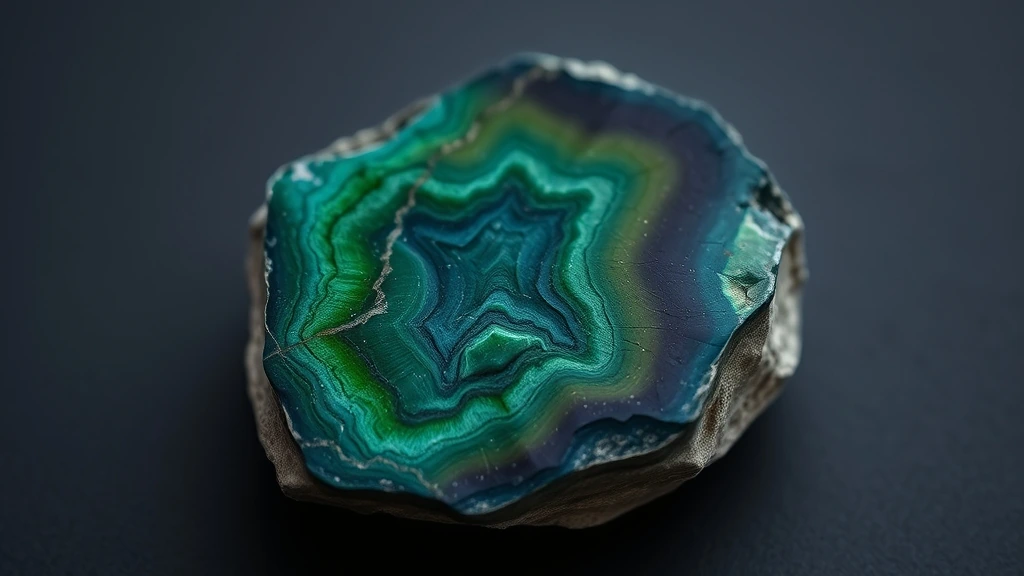
Ammolite is classified as a natural mineral derivative, specifically an organic gem material. It belongs to the broader category of fossil-based stones rather than traditional silicate crystals. This unique origin distinguishes it from synthetic alternatives. The material retains the structural integrity of ancient cephalopod shells. Its formation involves complex diagenetic processes over millions of years.
What is Ammolite Gemstone? Geological Overview & Definition
Ammolite forms from the aragonite layers of extinct ammonite shells. These shells were subjected to immense pressure and mineral replacement during diagenesis. The resulting material preserves the microscopic nacreous structure of the original organism. This layered architecture is essential for its optical properties.
The gemstone is exclusively found in the Cretaceous formations of Western Canada. Specifically, it originates from the Mannville Group in Alberta. The iridescence arises from light interference within these thin layers. No other geological location produces this specific gem material.
Ammolite Gemstone Chemical Composition & Crystallographic Properties
Ammolite lacks a single, uniform crystal system due to its composite nature. The primary constituent is aragonite, which crystallizes in the orthorhombic system. However, the overall gemstone structure is polycrystalline and layered. This complexity prevents a simple single-crystal classification.
The chemical formula is primarily CaCO₃, matching the parent mineral. Cation substitution is minimal, as the structure remains largely pure aragonite. Impurities may include trace amounts of quartz or calcite. These inclusions can affect the stone’s density, typically around 2.70.
The refractive index varies between 1.52 and 1.68 depending on the mineral content. This variation is due to the birefringence of the aragonite layers. The chromophore effect is not from impurities but from thin-film interference. Light waves reflect off different layers, creating the observed colors.
Ammolite is sensitive to acid and significant temperature changes. Prolonged exposure to heat can cause dehydration and structural instability. The lattice structure may crack if subjected to rapid thermal shock. Proper care is essential to maintain its optical integrity.
| Property | Specification |
|---|---|
| Mineral Group | Natural Mineral / Crystal |
| Chemical Formula | CaCO₃ (Aragonite with organic matrix) |
| Mohs Hardness | 3.5 – 4.5 |
| Crystal System | Amorphous / Cryptocrystalline |
| Specific Gravity (Density) | usually about 2.70 (varies with mineral content) |
| Refractive Index | usually 1.52 – 1.68 (varies with mineral content) |
| Color & Optical Properties | Natural Ammolite Gemstone color spectrum and optical dispersion |
| Primary Mining Localities | Global primary localities |
| Water & Chemical Resistance | High (Safe for gentle water washing) |
| Chakra Alignment (Traditional) | Crown Chakra, Third Eye Chakra |
| Zodiac Affinity (Traditional) | Pisces, Cancer |
| Symbolic Meaning (Traditional) | Spiritual intuition, ancestral wisdom, and emotional balance |
Ammolite Gemstone Varieties & Color Spectrum
Ammolite displays a mesmerizing iridescence derived from its unique layered structure, with colors ranging from deep emerald to vibrant orange. The structural color phenomenon occurs when light interferes with the thin aragonite layers, creating a spectral display. While green is the most prized hue, the full spectrum includes red, blue, and purple tones.
Green Ammolite
This variety features the most sought-after emerald green hues, often accompanied by secondary flashes of blue and yellow. High-quality green ammolite commands premium prices due to its rarity and visual intensity. The color intensity depends on the precise thickness and alignment of the aragonite lamellae within the fossil shell.
Orange Ammolite
Orange ammolite exhibits warm, fiery tones that are highly valued in the gem trade for their vibrancy. This color morph typically forms in shells with specific layering patterns that reflect longer wavelengths of light. Collectors often seek specimens where the orange dominates the visual field without excessive dark background interference.
Blue Ammolite
Rare blue ammolite displays cool, sapphire-like flashes that contrast beautifully with the natural dark shell background. This variety is less common than green or orange, making it a favorite among connoisseurs seeking unique color combinations. The interference colors in blue specimens require precise layer spacing to achieve maximum saturation and brilliance.
Red Ammolite
Red ammolite is exceptionally rare, featuring deep crimson or ruby-like flashes that are highly prized by collectors. This intense red hue results from specific structural conditions within the fossilized ammonite shell. Due to its scarcity, high-grade red ammolite often appears in limited editions of high-end jewelry pieces.
Multi-Color Ammolite
Multi-color ammolite showcases a complex interplay of green, blue, orange, and red within a single stone. This variety is highly desirable for its dynamic visual effect, which shifts as the viewing angle changes. The iridescent play-of-color makes each stone unique, offering a kaleidoscope of hues that captivates the eye.
Where is Ammolite Gemstone Found? Geological Mining & Extraction
Ammolite is exclusively found in the Cretaceous period marine deposits of western Canada, primarily in the provinces of Alberta and Saskatchewan. These fossils are embedded in host rock formations that preserved the ammonite shells over millions of years. The geological stability of these regions allows for the careful extraction of intact, iridescent specimens.
Extraction involves identifying fossil-rich strata and carefully removing the ammonite shells from the surrounding sedimentary matrix. Miners must handle the material with extreme care, as the aragonite layers are relatively soft and prone to damage. Most commercial ammolite is sourced from specific quarries where the fossil density and quality are optimal for gem cutting.
Historical Significance & Cultural Lore of Ammolite Gemstone
Indigenous peoples of North America have long recognized the spiritual and aesthetic value of ammonite fossils, often incorporating them into ceremonial objects. These ancient artifacts demonstrate a deep cultural connection to the earth’s history and the natural world. The iridescent quality of the stones was likely interpreted as a manifestation of spiritual energy or ancestral presence.
In modern times, ammolite has gained international recognition as a gemstone, blending ancient geological heritage with contemporary jewelry design. Its discovery and commercialization in the mid-20th century transformed it from a curiosity into a valuable gem material. This transition highlights the enduring appeal of natural wonders that bridge the gap between deep time and human creativity.
Modern Uses & Jewelry Applications of Ammolite Gemstone
Ammolite’s delicate structure dictates that it is almost exclusively cut into cabochons to showcase its vibrant, iridescent play-of-color. Due to its low Mohs hardness of 3.5 to 4.5, lapidaries avoid faceting to prevent chipping and surface damage. The stone is typically sliced into thin layers and stabilized with resin or glass for durability.
- Cabochon Cutting: The primary method, preserving the natural opalescent flash.
- Jewelry Settings: Commonly set in rings, pendants, and earrings with protective bezels.
- Ornamental Carving: Used in decorative inlays and small sculptural pieces.
- Stabilization: Essential for enhancing structural integrity before setting.
Metaphysical Uses & Origins of Ammolite
According to historical traditions and metaphysical lore, ammolite is revered as a stone of emotional healing and spiritual protection. Practitioners believe its shifting colors mirror the dynamic nature of human emotions, aiding in the release of past traumas. The stone is often associated with intuition, helping users align their inner truth with their external actions.
- Emotional Balance: Believed to soothe anxiety and promote inner peace.
- Spiritual Connection: Thought to enhance meditation and psychic awareness.
- Protective Energy: Said to shield the wearer from negative influences.
Which Chakra and Zodiac Signs Align with Ammolite Gemstone?
In metaphysical practice, ammolite is primarily aligned with the Root Chakra, grounding the wearer and connecting them to the earth. This alignment supports stability, security, and a sense of belonging in the physical world. The stone’s earthy origins reinforce its role in establishing a solid foundation for personal growth.
Additionally, ammolite resonates strongly with the Heart Chakra, fostering love, compassion, and emotional openness. This dual alignment bridges the physical and emotional realms, encouraging holistic well-being. The stone is particularly beneficial for balancing these two energy centers simultaneously.
- Root Chakra: Enhances stability, safety, and physical vitality.
- Heart Chakra: Promotes love, empathy, and emotional healing.
Zodiac Alignment:
- Taurus: Enhances their natural love for beauty and stability.
- Gemini: Supports their communicative nature and mental agility.
- Leo: Amplifies their creative expression and warm-heartedness.
How to Identify Real vs. Fake Ammolite Gemstone
Artificial imitations of ammolite are prevalent, including synthetic glass and dyed replicas designed to mimic the natural iridescence. These fakes often lack the organic, layered structure of genuine fossilized nacre. Understanding the subtle differences in appearance and physical properties is crucial for buyers.
- Synthetic Glass: Uniform color distribution and perfect clarity.
- Dyed Replicas: Artificially enhanced hues that may look unnatural.
- Resin Composites: May show bubbles or inconsistent layering.
Practical At-Home Authenticity Tests
- Temperature Test (Thermal Feel): Genuine ammolite feels cool to the touch initially, similar to other organic minerals. Synthetic glass may warm up faster under prolonged contact.
- Specific Gravity & Weight Test: Real ammolite has a density of about 2.70. It should feel slightly heavier than a similarly sized piece of plastic or lightweight glass.
- Scratch & Hardness Test (Mohs Comparison): With a hardness of 3.5 – 4.5, ammolite can be scratched by a steel knife (hardness 5.5). If it resists scratching, it may be a harder synthetic material.
- Microscopic & Loupe Inspection (Internal Inclusions): Use a 10x loupe to check for natural inclusions or layered structures. Fakes often appear too uniform or contain air bubbles not found in genuine fossilized nacre.
Ammolite Gemstone Valuation Factors, Grading & Pricing
The primary driver of value is Color Saturation, which refers to the intensity and vibrancy of the iridescent hues. High-grade specimens display uniform, brilliant greens, blues, and oranges without dull or muddy tones. Optical clarity and natural luster further enhance desirability, as any surface imperfections can dampen the spectral display.
Carat Weight significantly influences pricing, with larger, unfractured pieces commanding substantial premiums in the market. Facet symmetry is critical for maximizing light return, ensuring the gemstone reflects its colors evenly from all angles. The presence of a stable matrix or minimal inclusions also supports structural integrity and long-term value retention.
Geographical Provenance Premium often applies to stones mined from specific, historically significant sites in Canada. Wholesale prices vary widely based on cut quality, but retail values typically mark up significantly due to rarity. Current market trends favor thin, polished slices over rough material, reflecting consumer preference for ready-to-wear jewelry.
How to Clean and Care for Ammolite Gemstone
To maintain the gemstone’s integrity, always use warm soapy water and a soft, lint-free cloth for gentle cleaning. This method effectively removes oils and dust without stressing the delicate organic structure of the fossilized shell. Ensure the stone is patted dry immediately to prevent any residual moisture from lingering.
You must strictly avoid ultrasonic cleaners as the vibrations can cause catastrophic structural fractures in the brittle material. Additionally, refrain from using harsh chemical solvents or abrasive polishing compounds, which can permanently damage the iridescent surface. Regular, gentle care is the only safe approach for preserving the stone’s optical properties.
Cleansing and Recharging Ammolite Gemstone (Energetic Care)
For energetic maintenance, smoke smudging with sage or palo santo is a safe, dry method that avoids moisture exposure. This ritual clears perceived negative energy without risking the physical stability of the fragile organic material. Keep the stone dry and away from direct heat sources during this process.
Alternatively, place the gemstone on a selenite plate or expose it to moonlight for gentle recharging. These methods leverage ambient energy rather than physical manipulation, ensuring the stone remains undisturbed. Always store ammolite in a padded, separate compartment to prevent scratching from harder minerals.
Frequently Asked Questions About Ammolite Gemstone
What is the chemical composition of ammolite?
Ammolite is an organic gemstone composed primarily of aragonite. Unlike traditional silicate minerals, it forms from the nacreous layers of fossilized ammonite shells. Its chemical structure varies slightly depending on the specific mineral content within the fossilized material.
How hard is ammolite on the Mohs scale?
Ammolite measures between 3.5 and 4.5 on the Mohs hardness scale. This moderate hardness makes it softer than quartz or topaz, requiring careful handling to prevent scratches. Its structural integrity relies on the preservation of the fossilized shell layers.
Can I wear ammolite in the shower?
You should avoid prolonged water exposure for ammolite. While brief contact is generally safe, soaking can compromise the integrity of the organic material. It is best to remove the gemstone before bathing to maintain its durability and luster.
Is ammolite safe for ultrasonic cleaning?
Never place ammolite in an ultrasonic cleaner. The high-frequency vibrations can cause severe structural fractures within the delicate fossil layers. Instead, clean it gently with warm soapy water and a soft cloth to preserve its surface.
Which zodiac signs are aligned with ammolite?
Ammolite is traditionally associated with Taurus, Gemini, and Leo. These signs are believed to resonate with the stone’s vibrant energy and protective qualities. Wearing it may enhance personal traits linked to these astrological alignments and their elemental characteristics.
Which chakras does ammolite activate?
Ammolite primarily activates the Crown Chakra, Third Eye Chakra. This dual connection grounds the wearer while simultaneously opening emotional pathways for compassion. It balances stability with love, supporting the energetic flow between these two key centers.
What is the refractive index of ammolite?
The refractive index typically ranges from 1.52 to 1.68. This optical property contributes to the stone’s distinctive iridescence and vibrant color flashes. The exact value varies with mineral content, influencing how light interacts with the layered structure.
How should I store ammolite safely?
Store ammolite in a soft pouch or separate compartment. Its moderate hardness makes it susceptible to scratching from harder gemstones like diamonds or sapphires. Proper storage prevents physical damage and maintains the integrity of the surface over time.